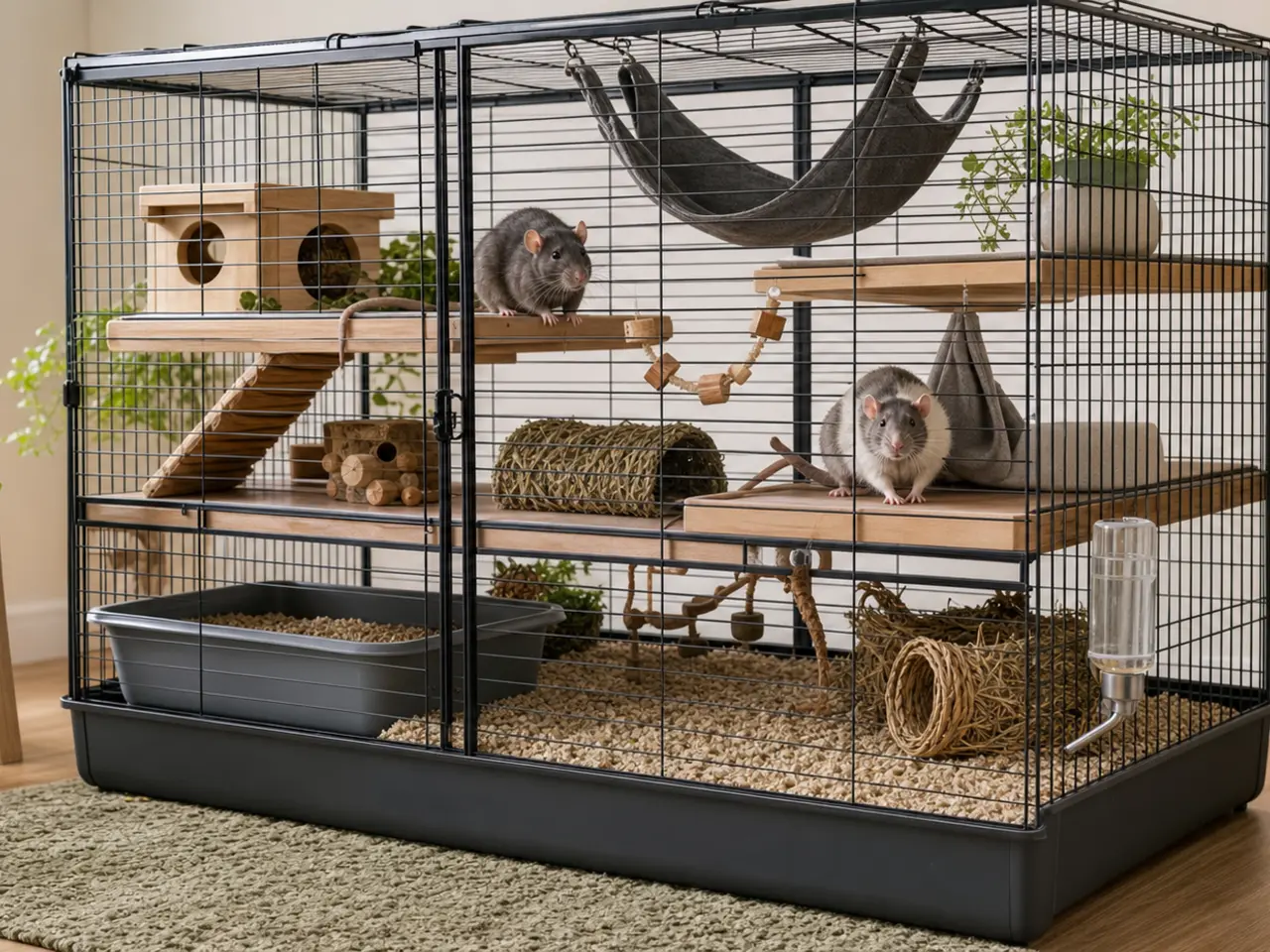
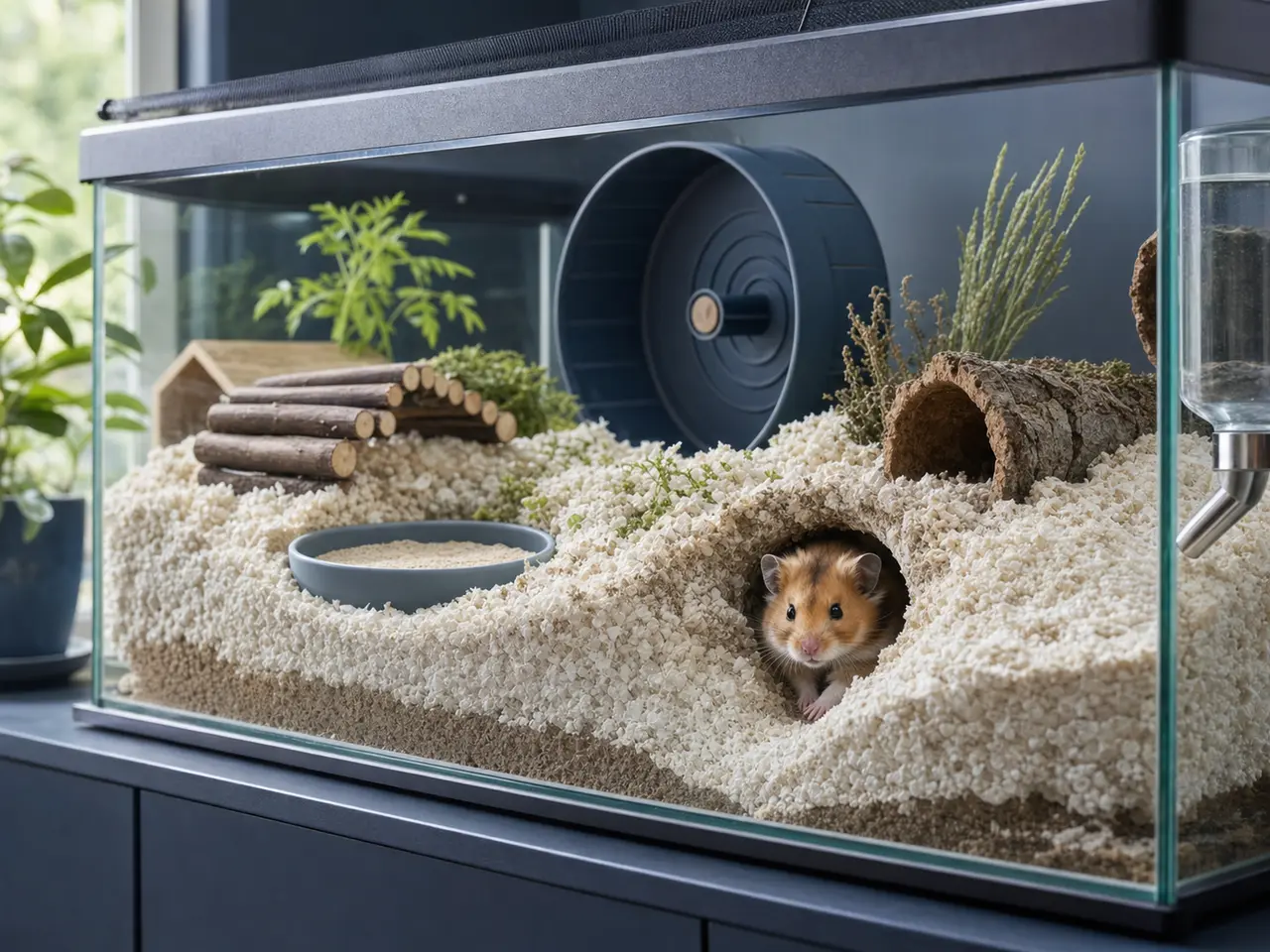
Keep rat cages fresh with frequent spot-cleaning, washed hammocks, litter management, low-dust bedding, good ventilation, and enough space. Avoid scented coverups.
Think in pairs or groups, clean air, and daily interaction.
Find the smell at the source
Start with the adult habitat and the animal's natural behavior, not the smallest product that looks convenient.
Check adult size, bedding depth, wheel or tube fit, ventilation, chew points, escape gaps, water placement, cleaning reach, and fall risk.
Housing differs by species
Rat housing has to balance companions, climbing, fall breaks, clean air, washable fabric, and safe out-of-cage time.
A cage that looks tall can still fail if shelves, hammocks, litter areas, and breathing-friendly bedding are wrong.
Build around the behavior
Build the adult habitat around the behavior in the question: burrowing, running, chewing, climbing, hiding, or escape testing.
The routine should keep companions, air quality, fabric, food, water, and body checks easy to manage.
Remove unsafe setup signs
Bar chewing, pacing, escape attempts, trapped feet, damp bedding, blocked water, heavy chewing, or sleep disruption means the setup needs a closer look.
Measure the adult enclosure, bedding depth, wheel or tube fit, escape gaps, chew risk, ventilation, and cleaning reach before buying gear.
Before you decide
Does the habitat fit the adult animal's normal behavior?
Are bedding depth, wheel or tube fit, water, hides, and cleaning access right?
Can the animal escape, fall, chew a hazard, get trapped, or lose sleep?
Have you opened the species housing guide before buying gear?
Next best moves
Plan for compatible companions, clean air, climbing, and washable fabric.
Check breathing, weight, appetite, lumps, wounds, and group behavior often.
Make free-roam or handling safer before adding more time.
Common rat questions
Does this answer apply to every small mammal?
No. The page gives the practical rule, then the species profile should decide the final housing, food, handling, and vet plan.
When should I ask a veterinarian?
Ask an exotic-pet veterinarian promptly for appetite loss, fewer droppings, labored breathing, collapse, severe lethargy, wounds, heat stress, or sudden weight change.