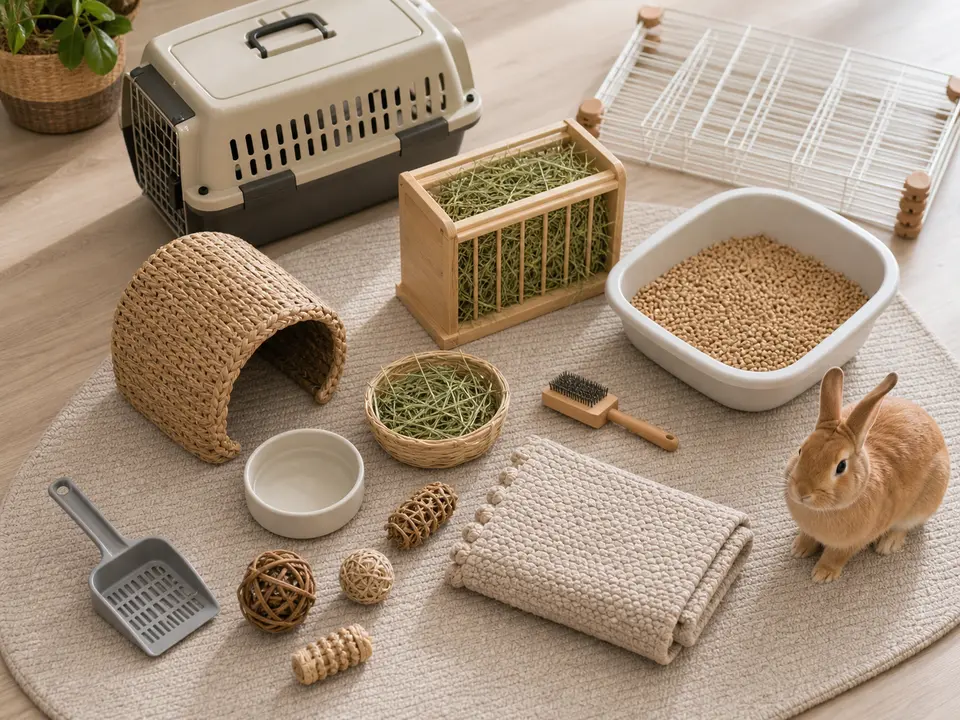
A new rabbit needs a roomy pen or safe room, hay, water bowl, litter box, paper-based litter, hideout, traction, chew options, carrier, and simple cleaning tools before cute extras.
Rabbit supplies should earn their space in the daily routine. The best choice is the one that makes hay, litter, traction, chewing, transport, hiding, water, or cleanup easier tomorrow.
Start the supply list with a roomy home base
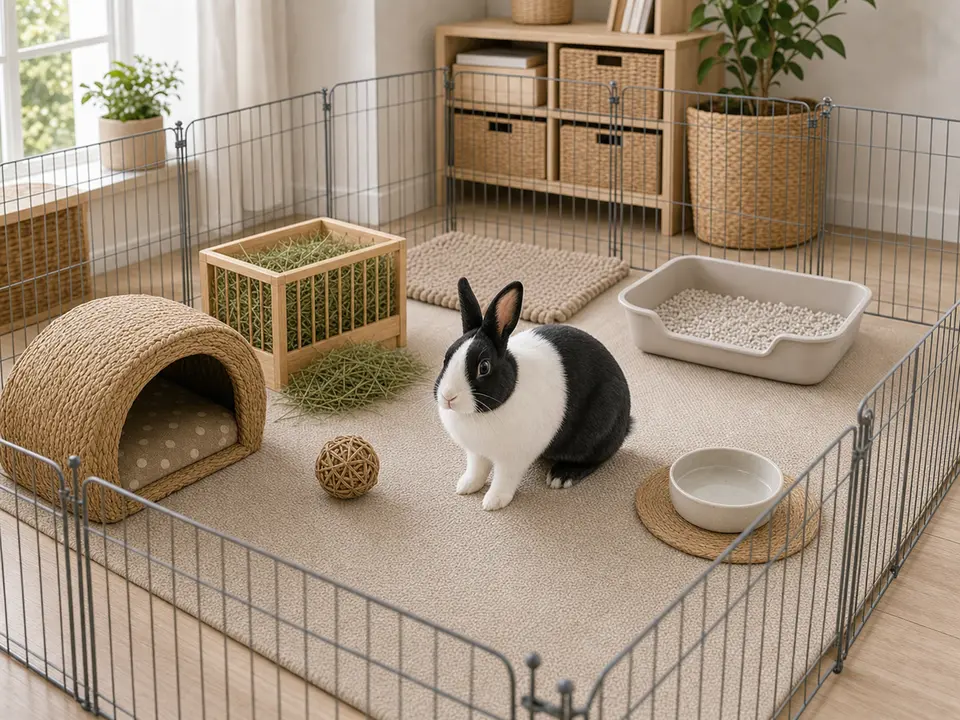
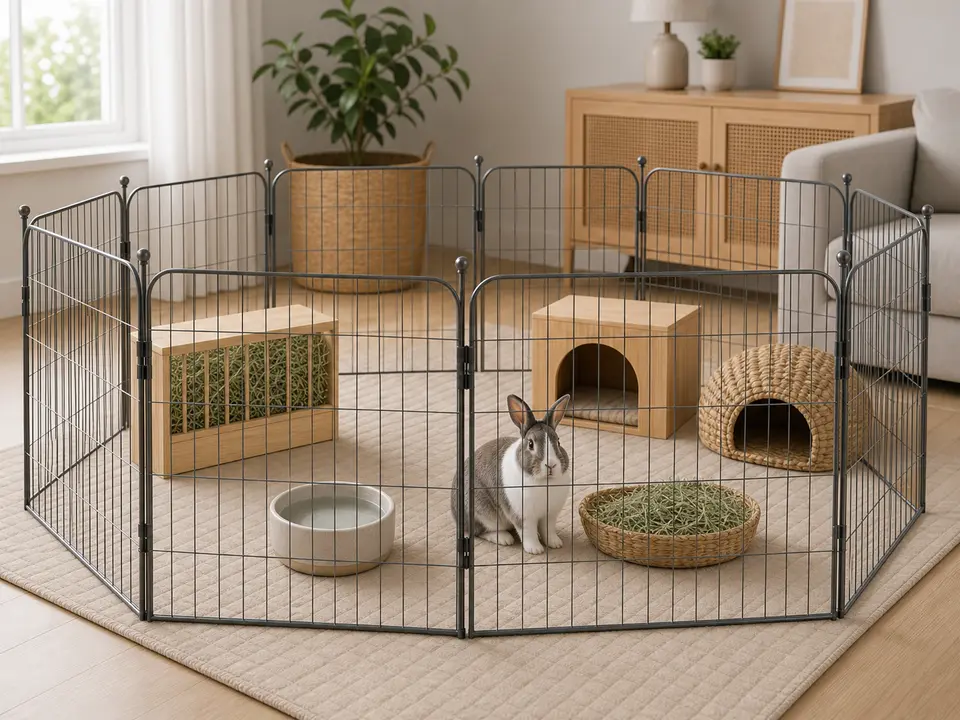
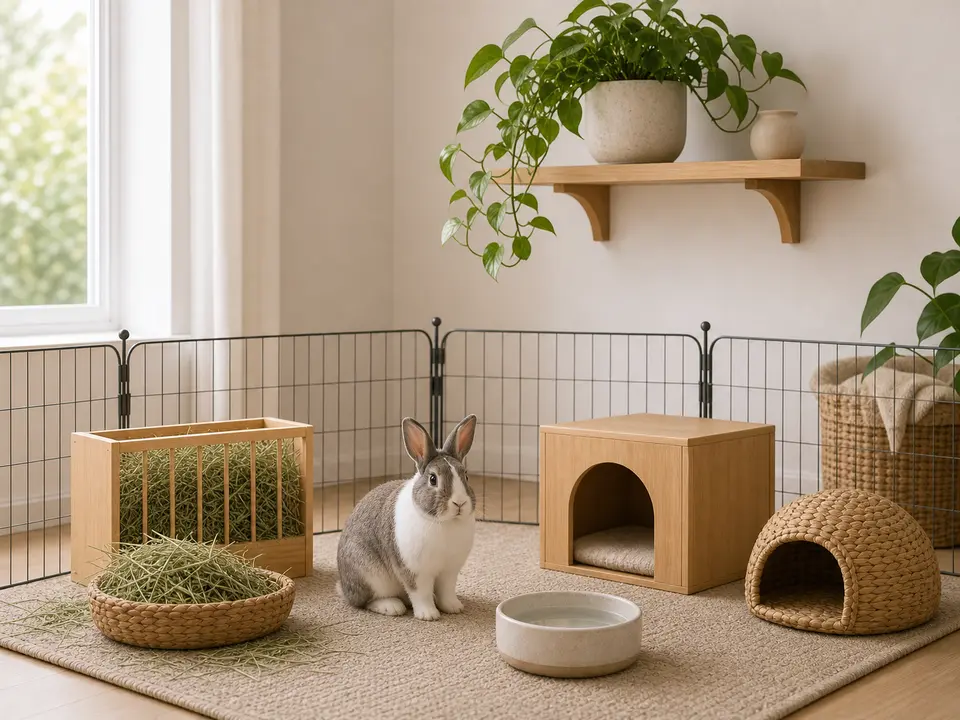
Start with a roomy exercise pen or rabbit-safe room, not a tiny cage. Your rabbit needs space to hop, stretch out, reach hay and water, use the litter box, and retreat without everything crowding the same corner.
A simple first setup is easier to understand than a busy one. If you can reset it every morning without moving ten decorative pieces, you are much more likely to keep it clean and calm.
Think of the first setup as a working apartment for the rabbit: eating, bathroom, rest, movement, and safe chewing all need a place.
Put hay and litter before extras
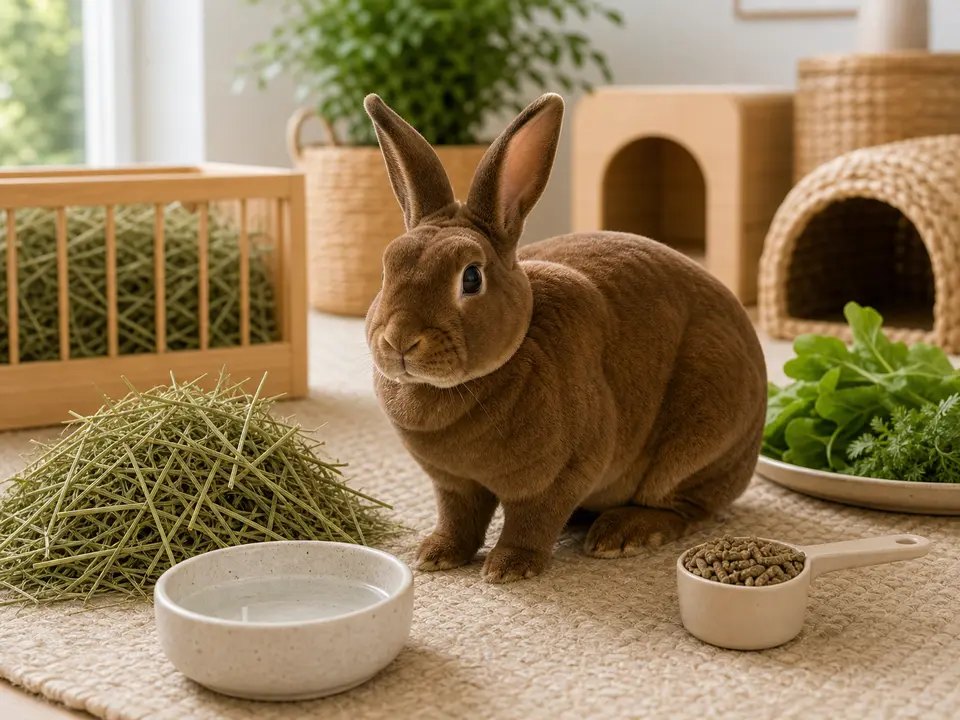
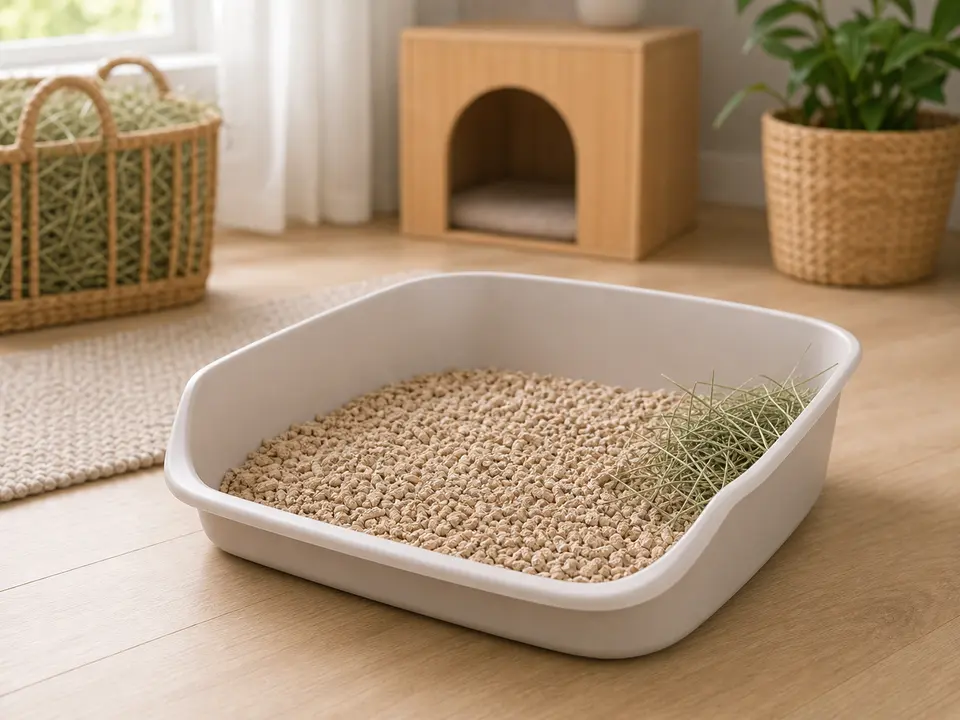
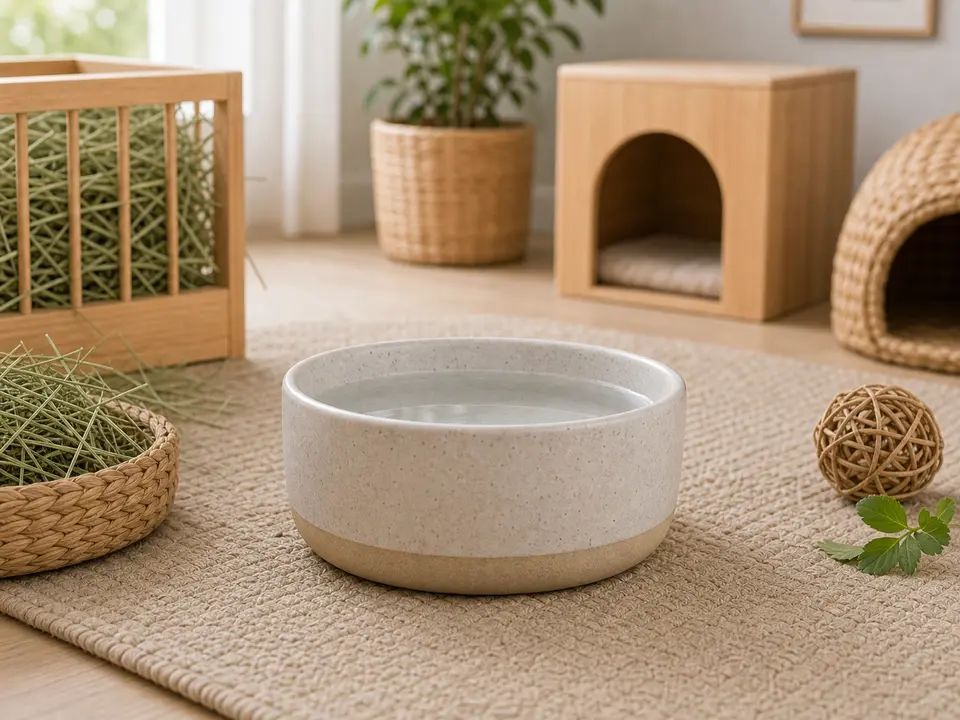
Hay, water, and a roomy litter box are the supplies that shape the day. Put hay where your rabbit naturally pauses, keep water stable and clean, and choose paper-based litter that is unscented and easy to refresh.
Many rabbits eat hay while using the box, so those supplies should work together instead of sitting at opposite ends of the room.
Before cute extras, make sure you can see hay being eaten and the litter box being used.
Add traction and chew protection early
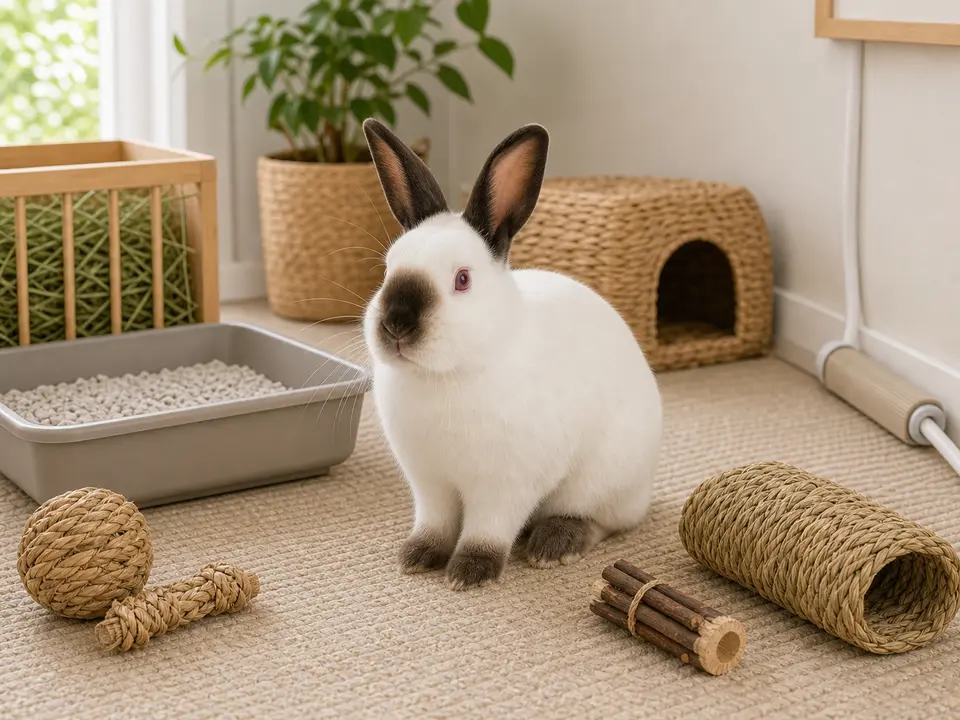
New rabbits need flooring they can trust and a room that does not punish normal chewing. Add washable mats or rugs where feet slide, and protect cords, rug edges, baseboards, and low furniture before floor time expands.
Safe chew textures matter too: cardboard, willow, hay-stuffed toys, or seagrass can give teeth a better job than the corner of your rental trim.
The room should make the right choice easy before your rabbit finds the expensive choice.
Keep travel and cleanup on the list
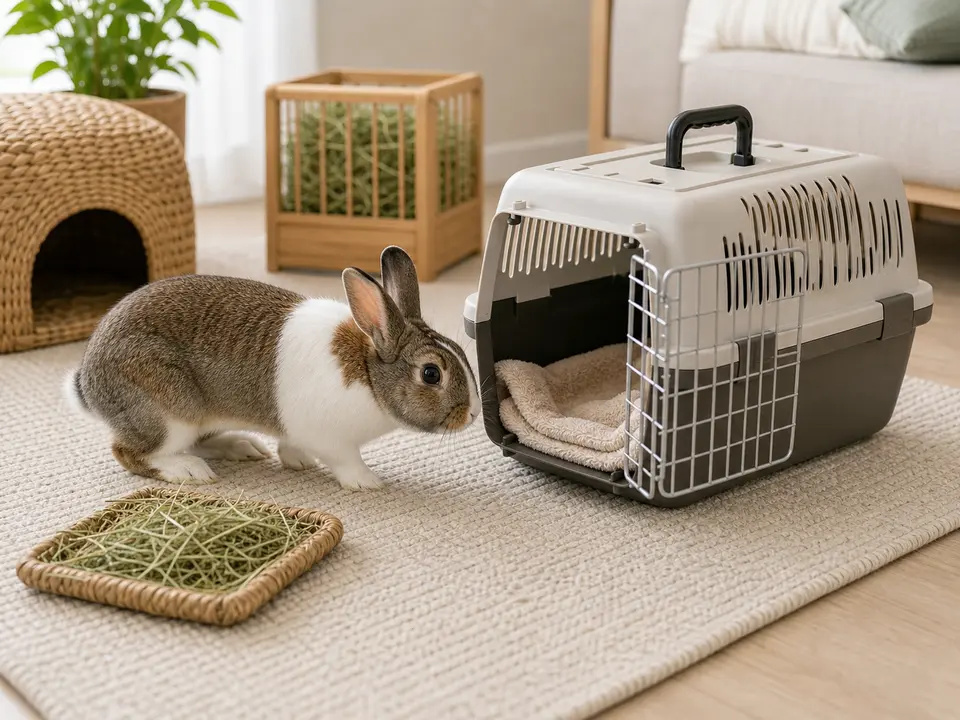
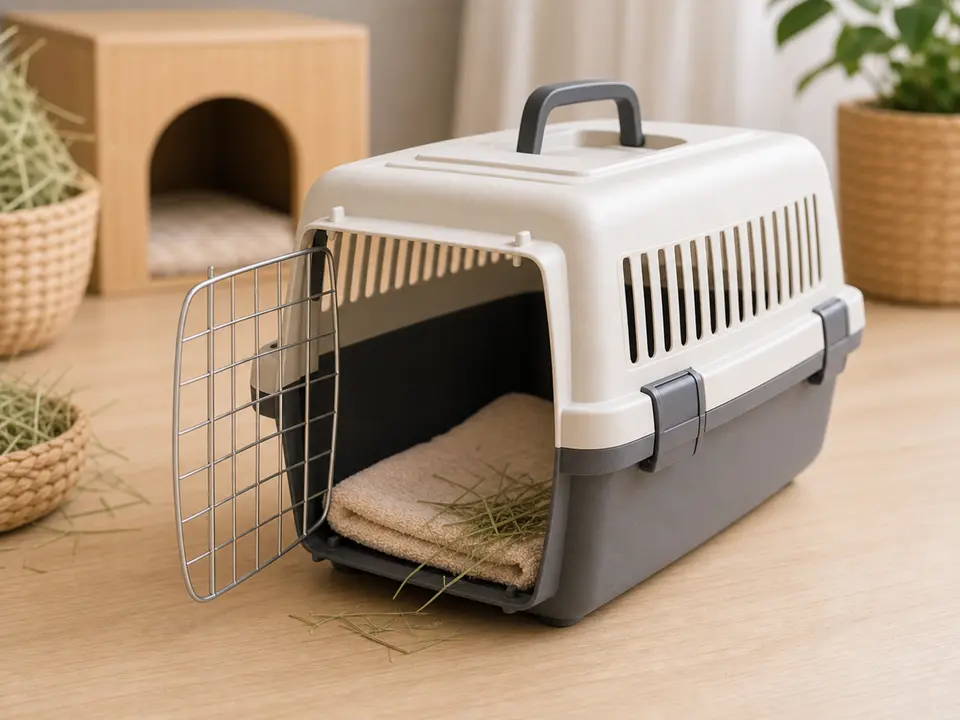
A hard-sided carrier belongs in the first shopping list because vet trips and pickup days are much easier when the carrier is already ready. Add a towel or washable liner so the carrier has traction and is easy to reset.
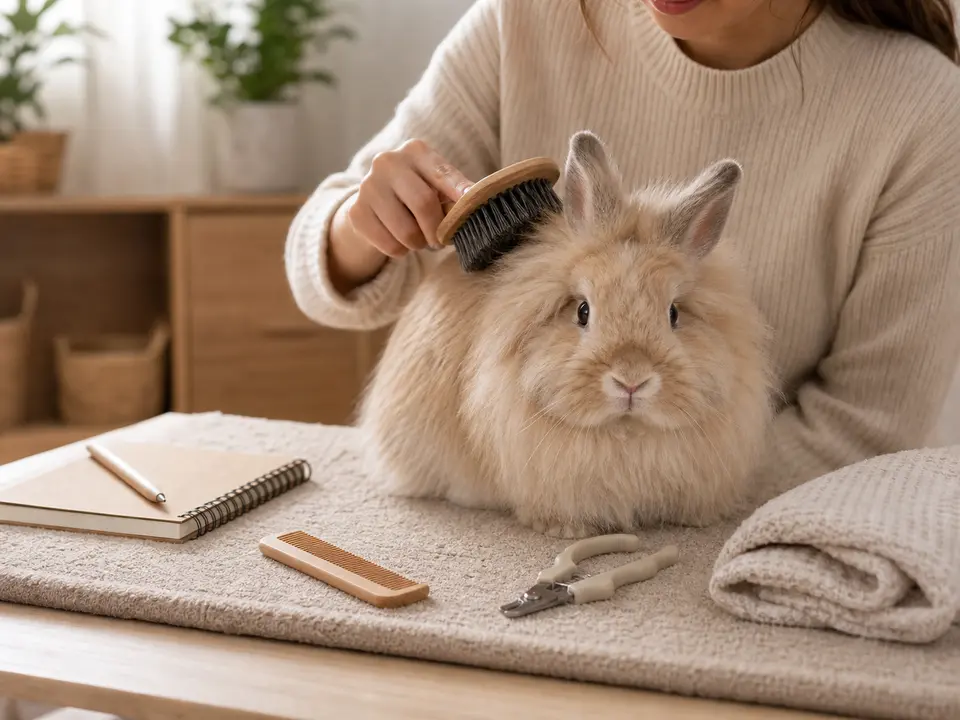
Simple cleaning supplies matter just as much: a hand broom, dustpan, spare mat, and mild unscented cleanup routine will get used far more often than novelty toys.
Premium rabbit care often looks boring: fewer pieces, better placement, and supplies you can actually clean.
Wait on cute extras until the routine works
Once hay, litter, water, traction, hideout, carrier, safe chewing, and cleaning are handled, then you can add extras based on the rabbit in front of you. A shy rabbit may need another hideout; a busy chewer may need more textures; a tidy rabbit may enjoy foraging toys.
Buying slowly is not stingy. It lets your rabbit tell you what actually improves daily life instead of filling the room with products no one uses.
The best new-rabbit setup feels calm, open, and easy to repeat.
Before you decide
What changed recently?
Can your rabbit choose a quiet retreat?
Are hay, water, litter, and footing easy?
Is this normal for your individual rabbit?
Next best moves
Make one small change.
Watch what your rabbit chooses next.
Keep the setup calm enough to repeat tomorrow.
Helpful rabbit supplies
These are practical pieces for the routine, not clutter to buy all at once.
Affiliate links: Furball Cove may earn from qualifying purchases at no extra cost to you.
A new rabbit needs a roomy pen or safe room, hay, water bowl, litter box, paper-based litter, hideout, traction, chew options, carrier, and simple cleaning tools before cute extras.
What should I change first?
Choose one small setup change that makes the daily routine easier: closer hay, better traction, a calmer hideout, a larger box, or a shorter handling session.
When should I get extra help?
If your rabbit stops eating or pooping, seems painful, breathes strangely, or changes suddenly, call a rabbit-savvy vet. For bonding or handling problems, an experienced rabbit rescue can also help.