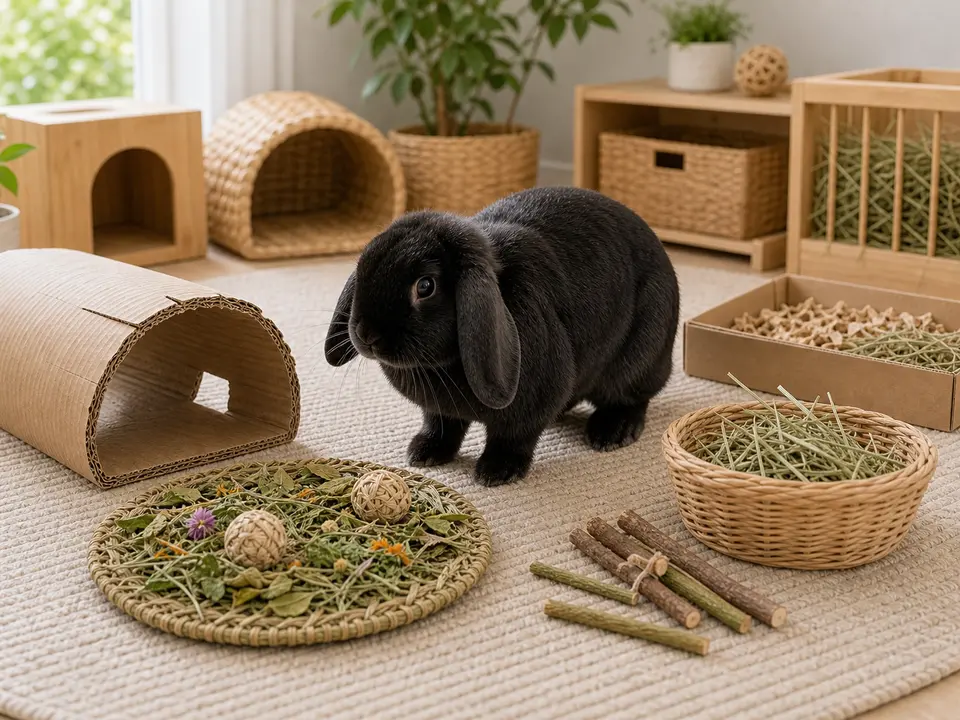
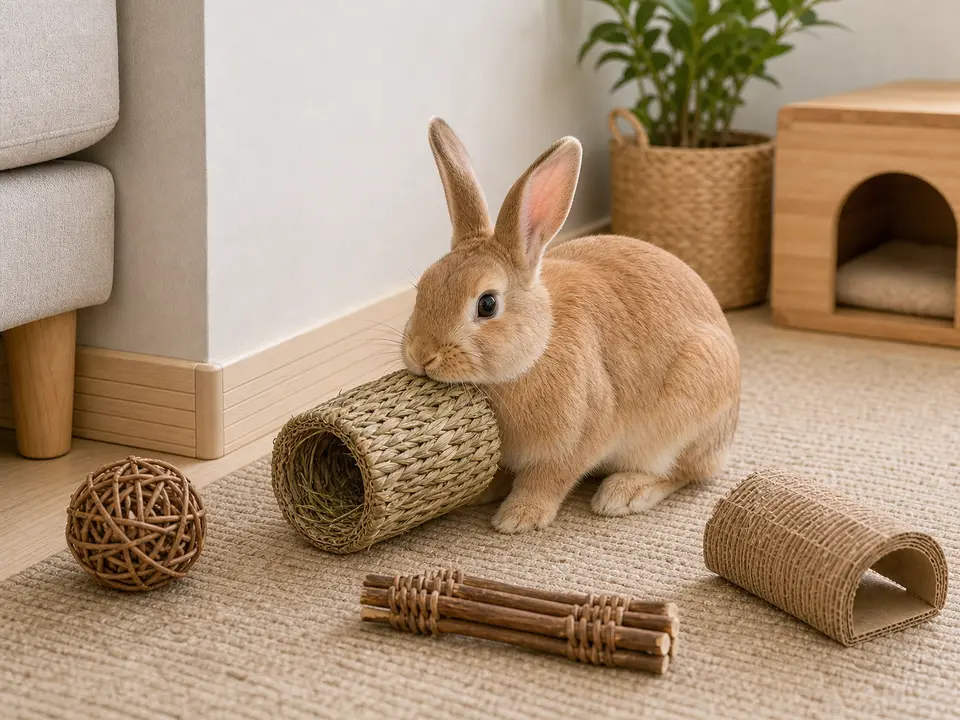
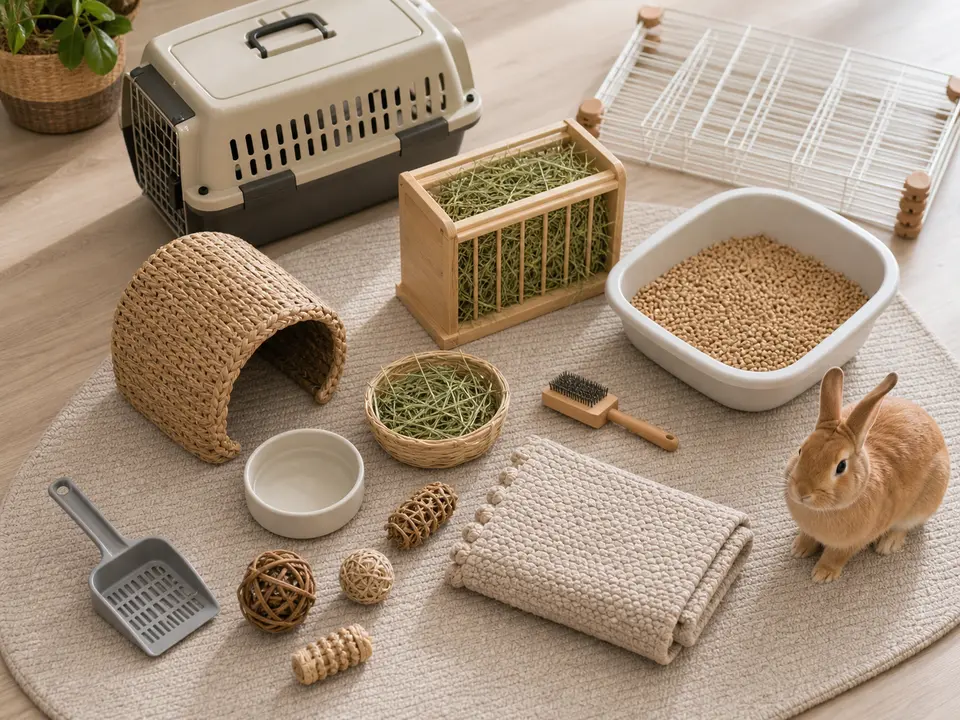
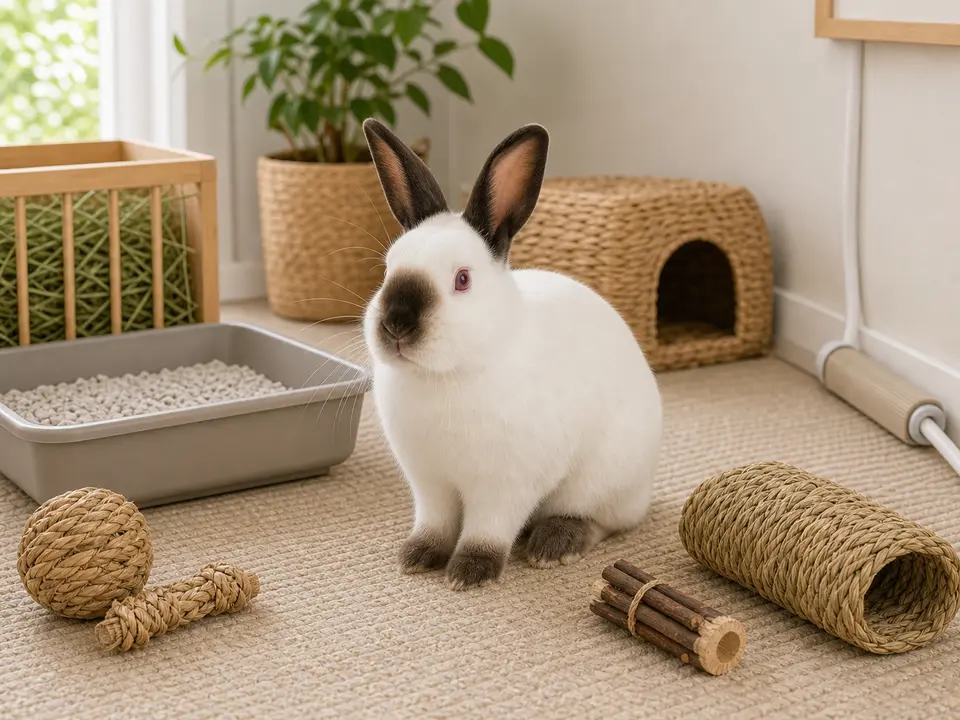
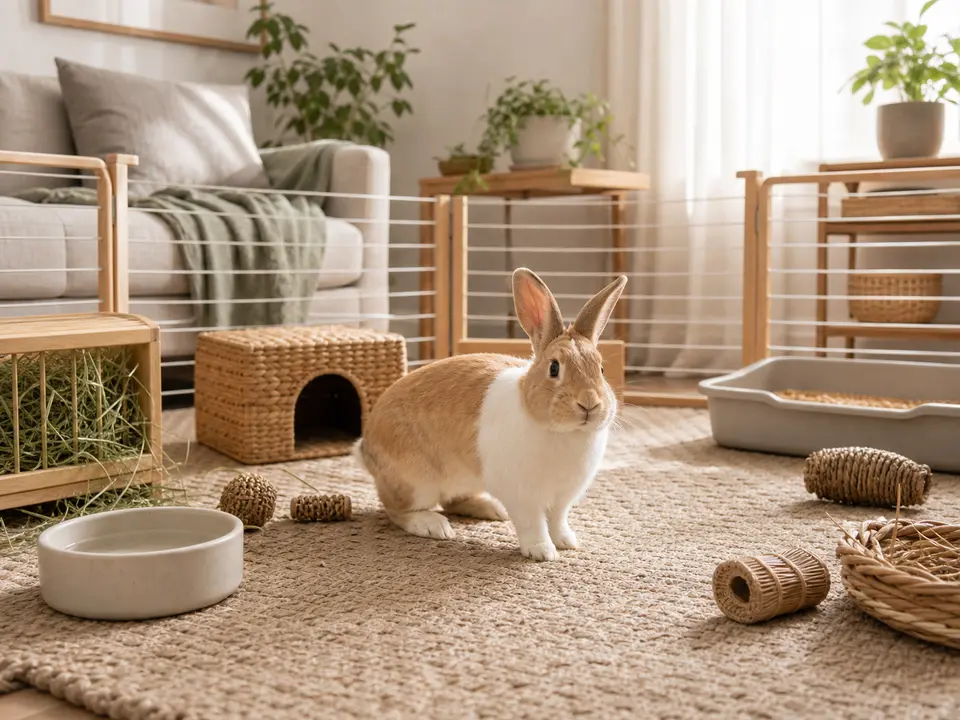
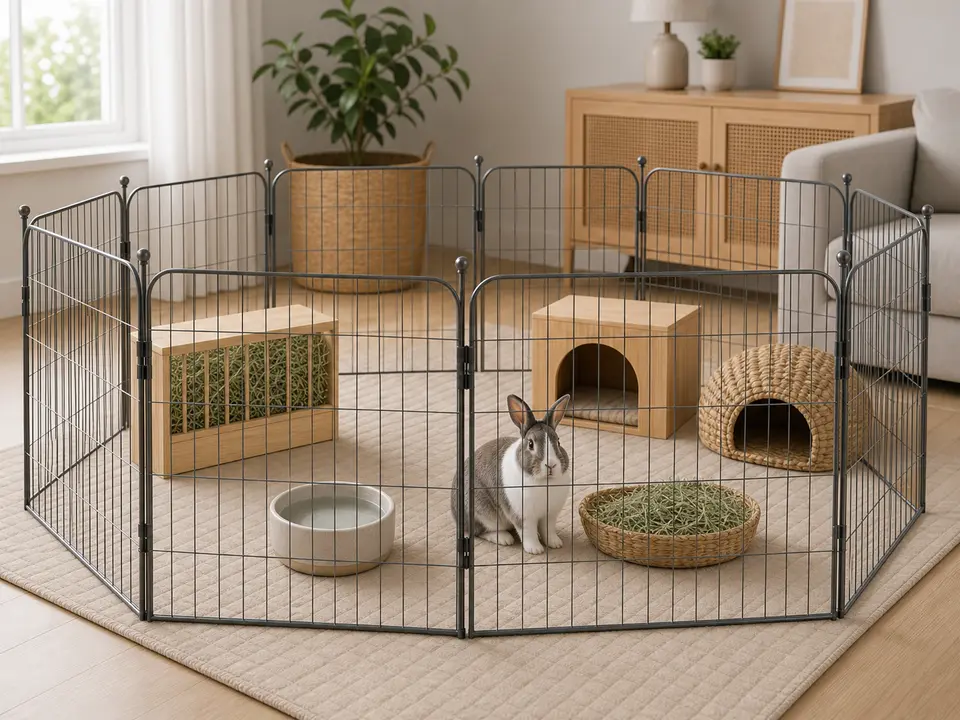
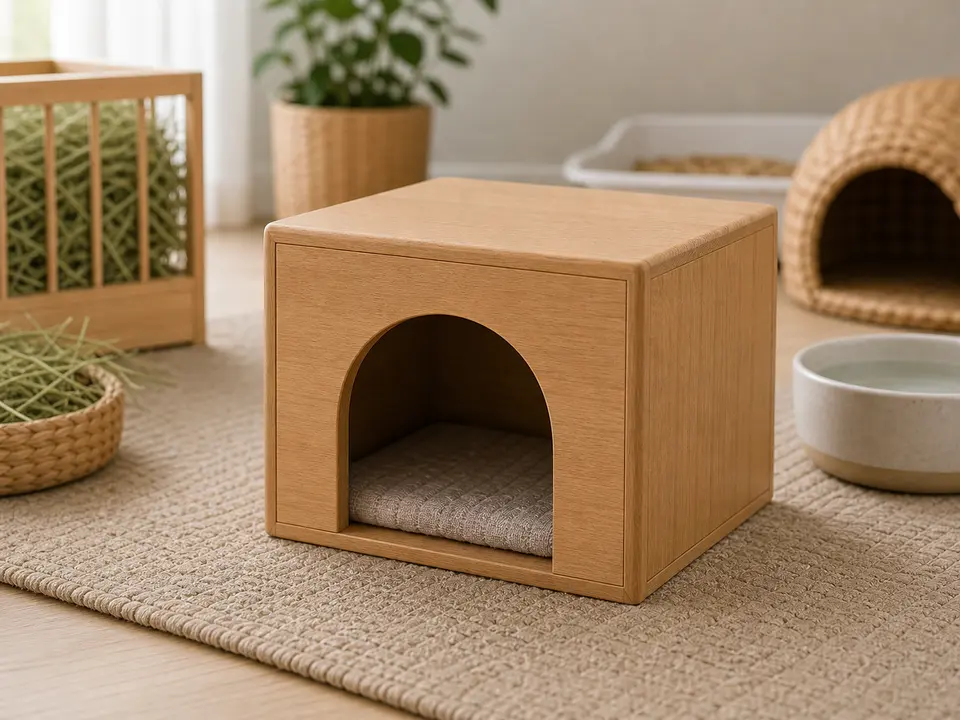
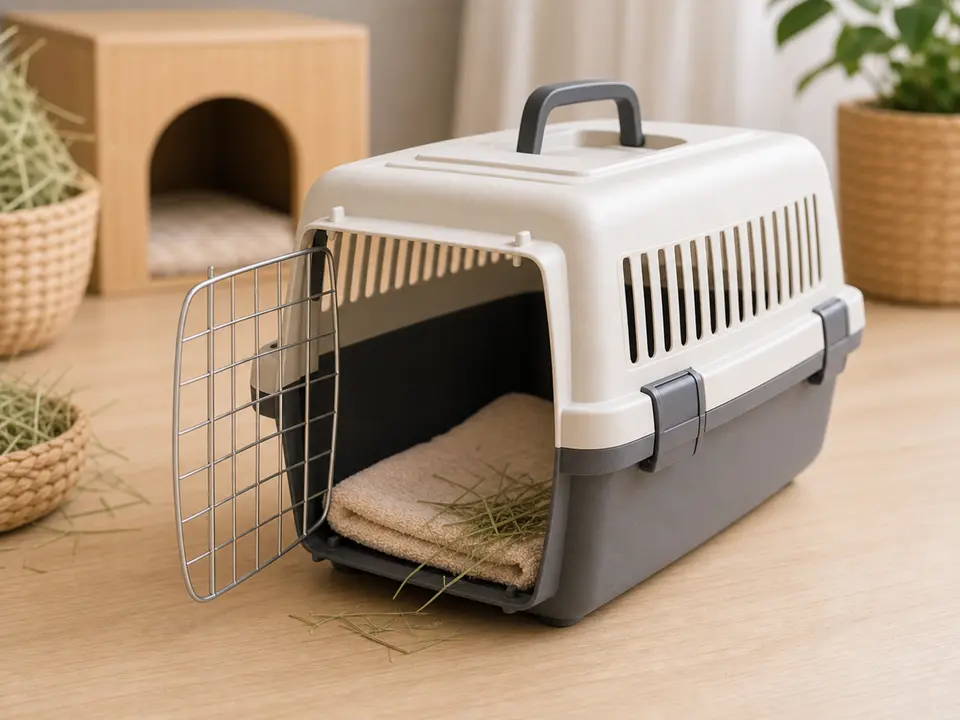
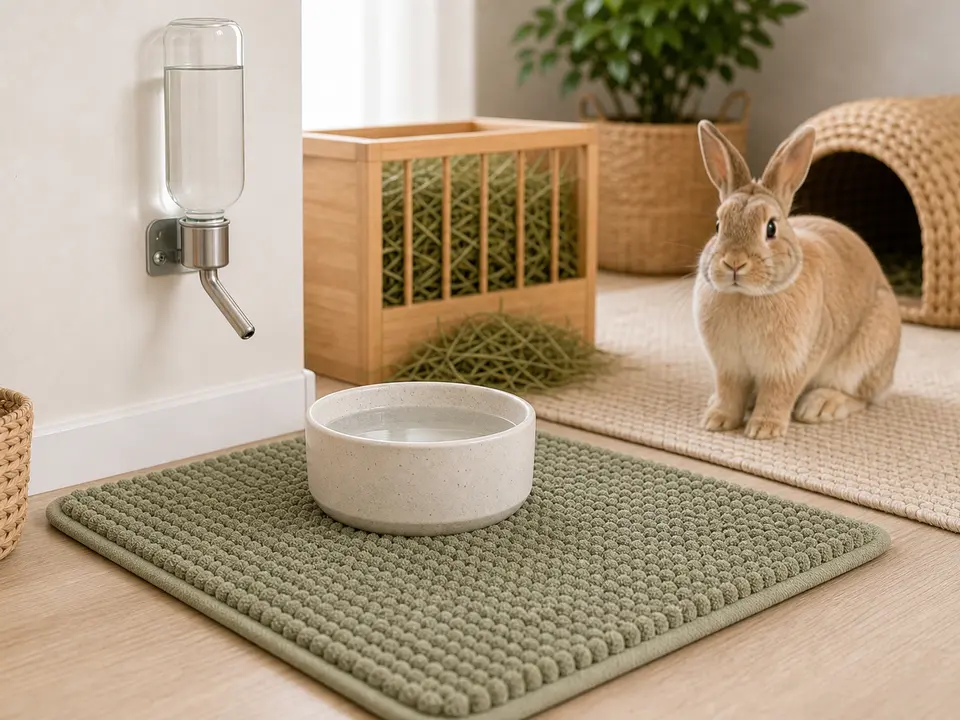
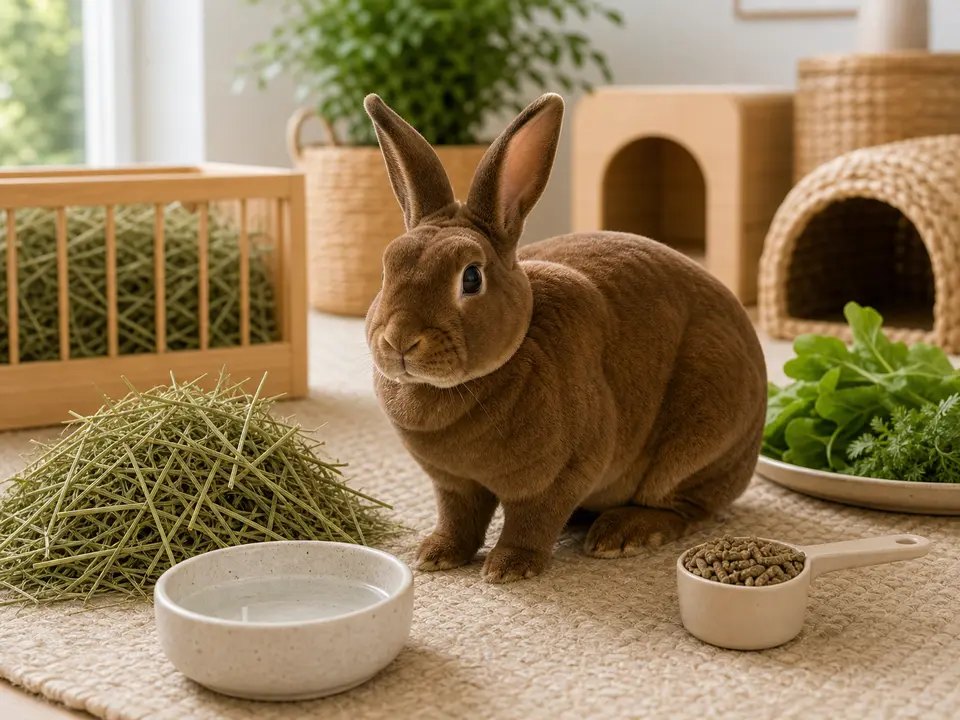
The toys rabbits actually use usually match real rabbit jobs: chewing, digging, tossing, foraging, and exploring. A few good textures beat a pile of cute toys your rabbit ignores.
Rabbit supplies should earn their space in the daily routine. The best choice is the one that makes hay, litter, traction, chewing, transport, hiding, water, or cleanup easier tomorrow.
Choose toys with rabbit jobs
The toys rabbits actually use usually match real rabbit jobs: chewing, digging, tossing, foraging, and exploring. A few good textures beat a pile of cute toys your rabbit ignores. Useful toys usually let a rabbit chew, shred, dig, toss, forage, or explore. They work because they match normal rabbit behavior, not because they look cute to people.
Start with a few simple options and watch which job your rabbit repeats.
Useful means your rabbit returns to it after the first sniff. A toy that never gets chewed, moved, searched, or investigated is not doing much work.
Match the texture they already choose
A rabbit who chews cardboard may like shreddable boxes or hay-stuffed rolls. A rabbit who works on rug edges may need seagrass, woven mats, and better edge protection.
Use the problem behavior as a clue, then move the safer texture near the tempting area.
Avoid solving a chew problem with only more toys across the room. Put the legal texture where the illegal texture is winning.
Keep the toy count small
Five toys scattered everywhere can become clutter faster than enrichment. Two or three good textures tell you more because you can see what your rabbit returns to.
Rotate toys instead of adding a permanent pile to the floor.
A small number also makes safety checks easier. You can notice soggy cardboard, loose fibers, sharp edges, or missing pieces before they become a risk.
Inspect what gets chewed
A useful toy still needs checking. Remove pieces that become sharp, soggy, splintery, glued, stringy, or small enough to swallow.
Safe enrichment is not set-and-forget. It works because you keep the allowed chewing cleaner and safer than the forbidden target.
Check after heavy chewing sessions, not only on cleaning day. The best toy can become the wrong toy once it breaks down.
Use toys before the trouble window
If chewing, digging, or tossing happens at the same time each day, refresh a legal toy before that window. A hay refill, dig box, or chew texture can redirect energy before the room becomes the toy.
The best toy makes the day calmer for both the rabbit and the person cleaning up.
Track what works for your individual rabbit. Some rabbits want shredding, some want tossing, and some prefer foraging over anything sold as a toy.
Before you decide
What changed recently?
Can your rabbit choose a quiet retreat?
Are hay, water, litter, and footing easy?
Is this normal for your individual rabbit?
Next best moves
Make one small change.
Watch what your rabbit chooses next.
Keep the setup calm enough to repeat tomorrow.
Helpful rabbit supplies
These are practical pieces for the routine, not clutter to buy all at once.
Affiliate links: Furball Cove may earn from qualifying purchases at no extra cost to you.
The toys rabbits actually use usually match real rabbit jobs: chewing, digging, tossing, foraging, and exploring. A few good textures beat a pile of cute toys your rabbit ignores.
What should I change first?
Choose one small setup change that makes the daily routine easier: closer hay, better traction, a calmer hideout, a larger box, or a shorter handling session.
When should I get extra help?
If your rabbit stops eating or pooping, seems painful, breathes strangely, or changes suddenly, call a rabbit-savvy vet. For bonding or handling problems, an experienced rabbit rescue can also help.