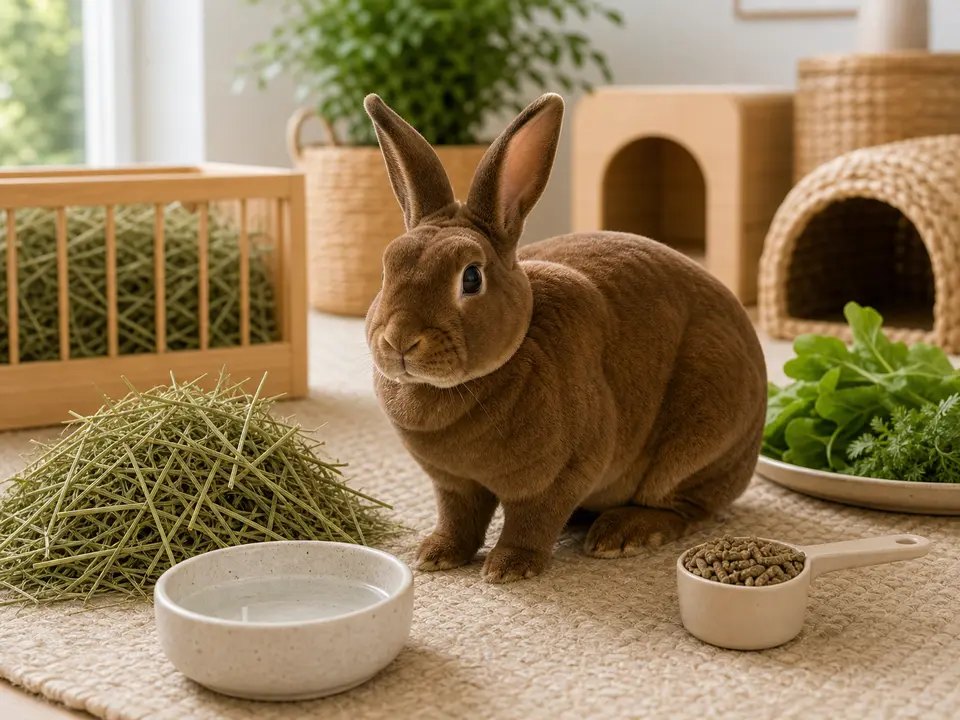
Rabbits thump for several reasons: alarm, surprise, frustration, warning, a strange sound, a new smell, or sometimes discomfort. The thump is a clue, not a final diagnosis. Look at what happened right before it, what your rabbit does next, and whether eating, poop, posture, or breathing changed too.
A thump can feel dramatic, especially in a quiet room at night. Before you decide your rabbit is angry or scared, slow down and read the whole scene the way a rabbit might: sound, movement, scent, light, distance, and escape options.
Look for the trigger first
Check what changed just before the thump: a hallway sound, a door closing, a dog barking outside, a visitor, a vacuum, a new box, or someone reaching too quickly. Rabbits notice small changes at floor level. The trigger is often obvious only after you pause and look around.
Read the body after the thump
A rabbit who thumps and then goes back to hay is different from a rabbit who freezes, hides, breathes fast, or keeps thumping. Ears, posture, eyes, and movement help you decide whether this was a quick alert or a sign your rabbit still feels unsafe. Watch where your rabbit looks too; they often stare toward the sound, doorway, window, or pet that worried them.
Give more space before more attention
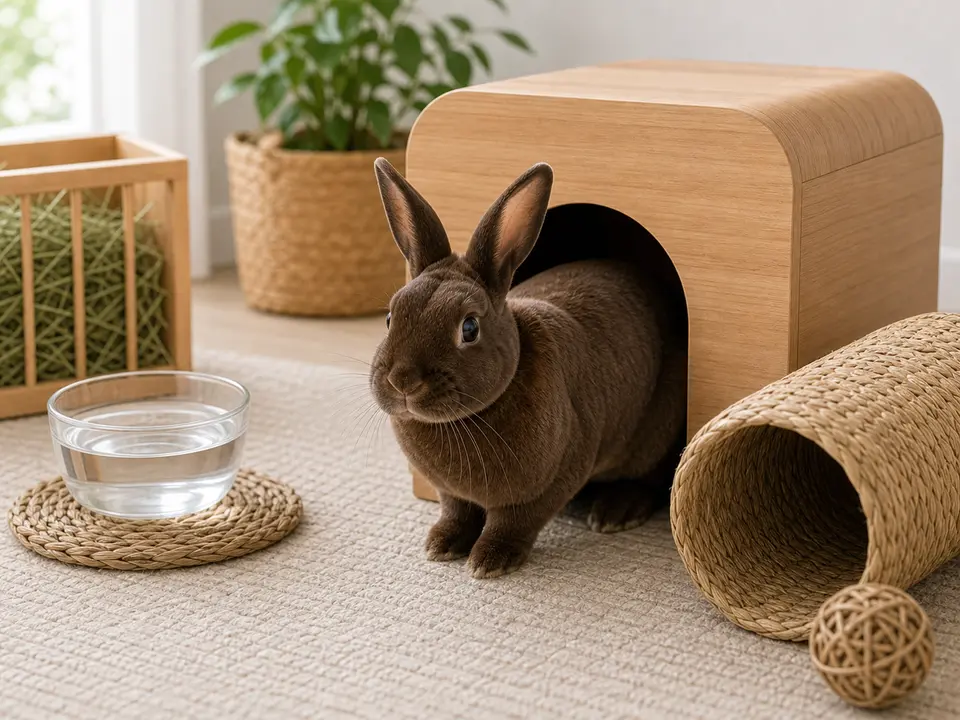
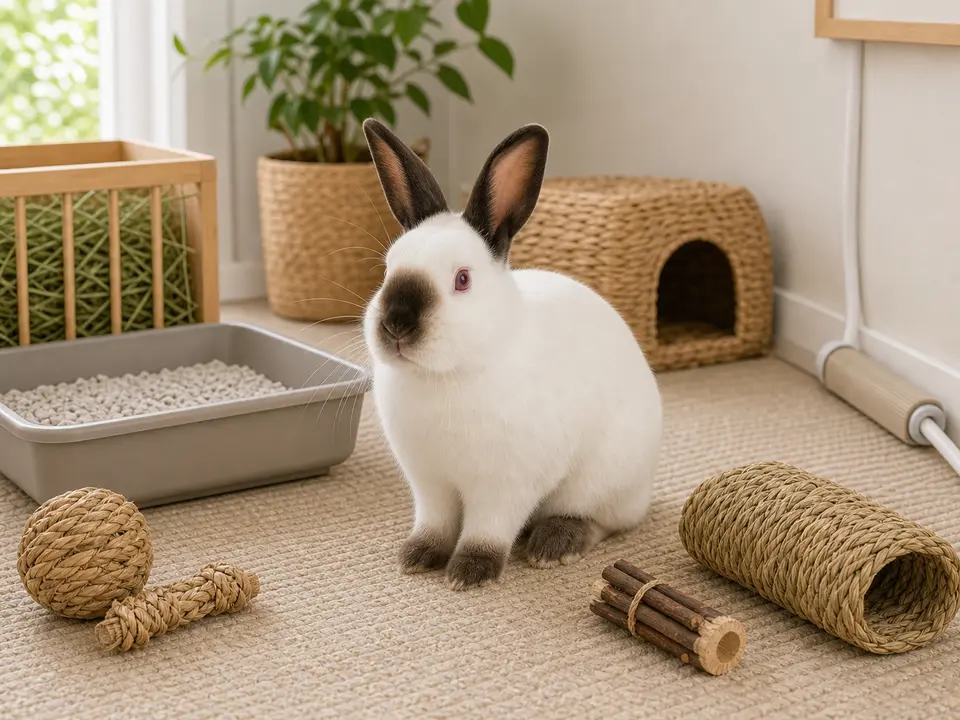
If the thump seems connected to people, hands, noise, or another pet, give your rabbit an open exit and a quiet hideout. Do not chase the rabbit to prove everything is fine. A calmer room teaches more than crowding a worried animal. Let the next interaction be slower.
Notice repeated timing
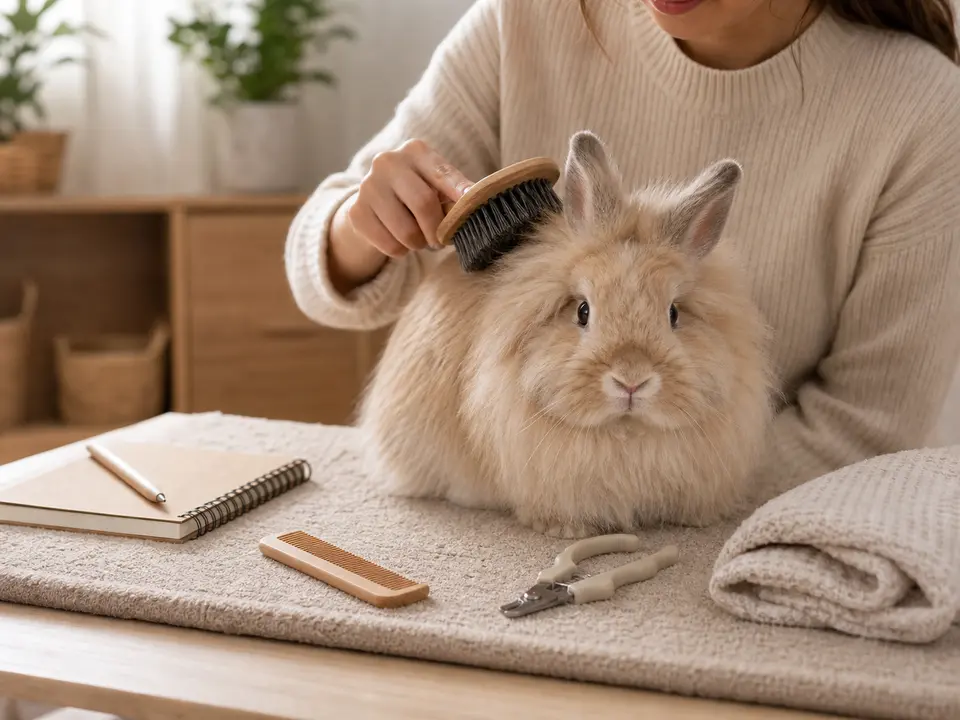
Some thumps happen at the same time every day: evening noises, breakfast delays, cleaning, visitors, or another pet passing the room. Write a quick note about timing and context. Patterns help you fix the room instead of guessing at your rabbit's personality. If the pattern is always near a doorway, heater, window, or feeding time, the room is giving you a practical clue.
Connect thumping to appetite and comfort
Thumping can be behavioral, but a rabbit who also stops eating, leaves fewer poops, looks hunched, drools, breathes strangely, or refuses favorite food needs rabbit-savvy vet help. The thump matters more when it arrives with other changes in the normal routine.
Make the room feel predictable
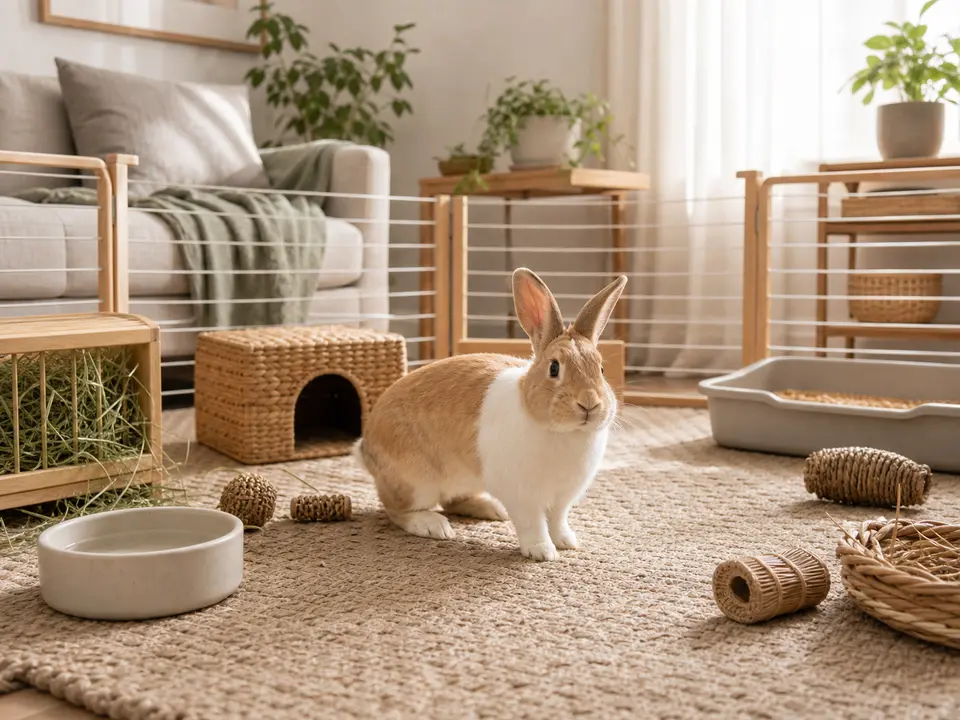
Reduce the repeating trigger where you can: soften sudden sounds, protect the hideout, keep dogs and cats out of the rabbit room, and move slowly during floor time. You cannot remove every surprise, but you can make your rabbit's main space feel safer and easier to read. A predictable room gives your rabbit fewer reasons to sound the alarm. Keep the fix simple enough to repeat tomorrow.
Before you decide
What changed in the room right before the thump?
Did your rabbit return to normal eating and movement afterward?
Is there a repeating sound, visitor, pet, or handling trigger?
Did appetite, poop, posture, or breathing change too?
Next best moves
Treat thumping as information about the room, timing, or your rabbit's comfort.
Give a worried rabbit space and a clear exit before trying to interact.
Track repeated thumps so you can adjust the setup instead of guessing.
Call a rabbit-savvy vet if thumping comes with not eating, fewer poops, pain signs, drooling, weakness, or breathing changes.
Setup pieces that make behavior easier
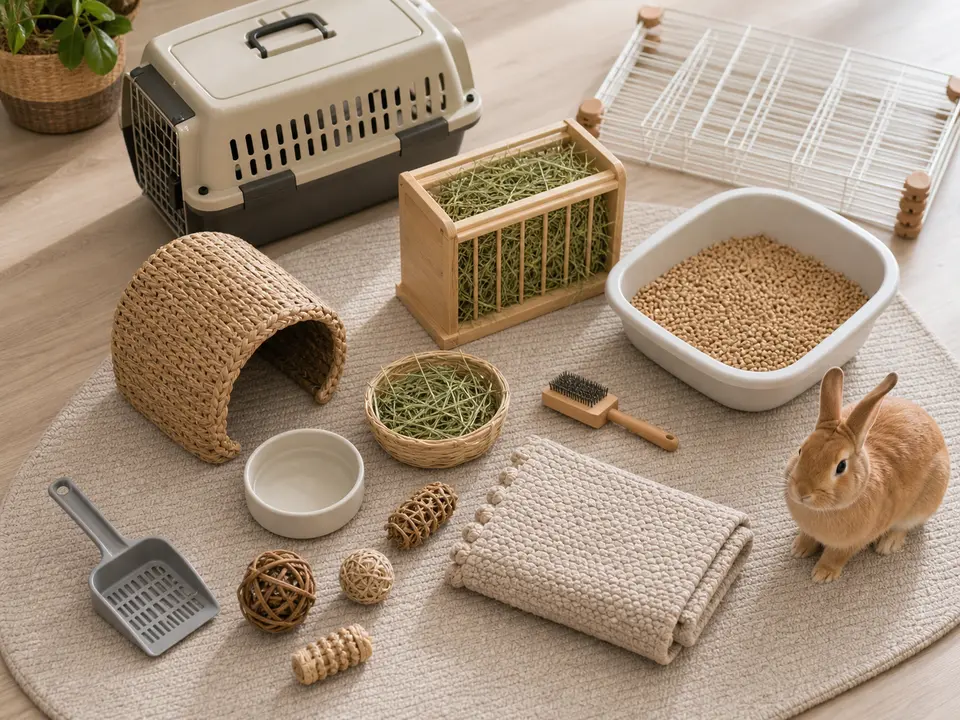
Use supplies to protect the room and give normal rabbit behavior a better job.
Affiliate links: Furball Cove may earn from qualifying purchases at no extra cost to you.