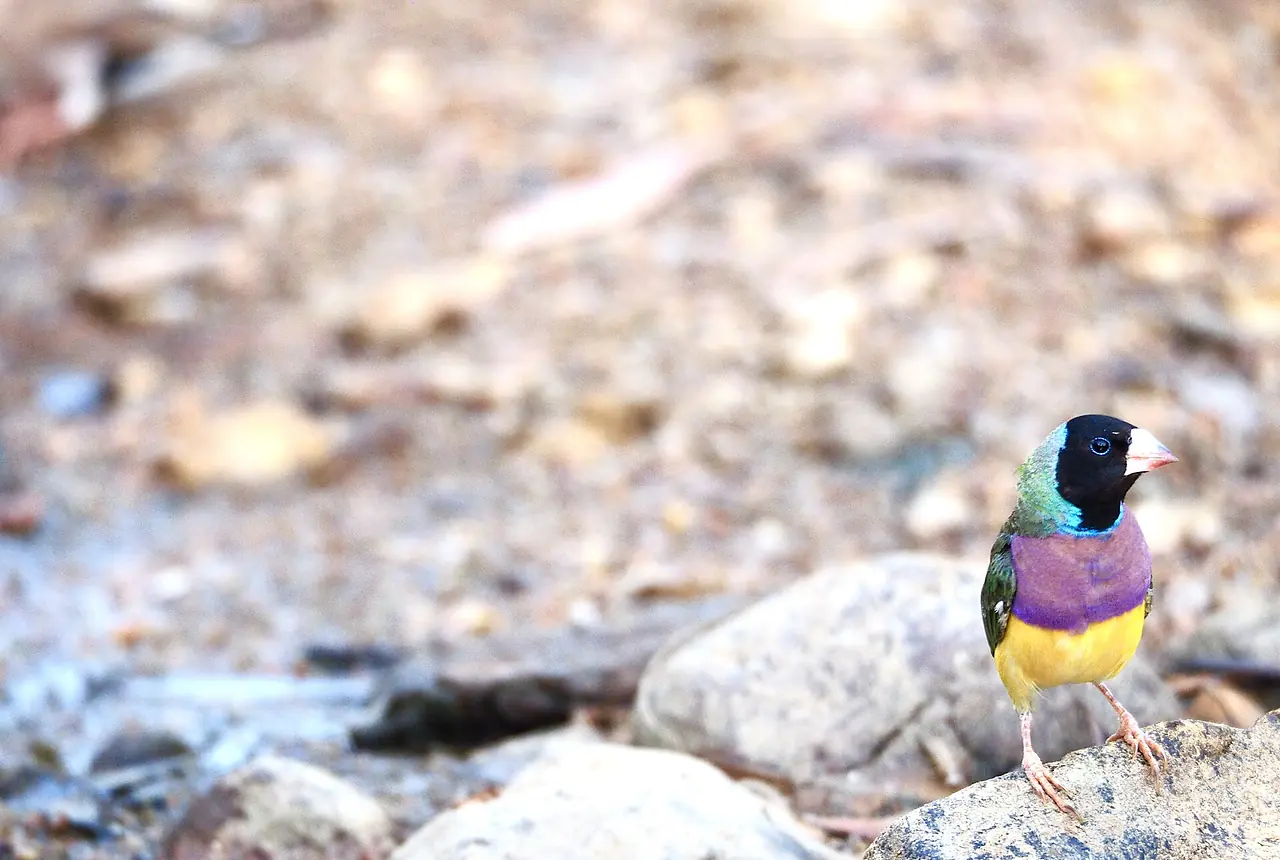
Gouldian Finches are brilliantly colored Australian finches kept for quiet flock observation, not touch. Their beauty can distract from their sensitivity to stress, temperature extremes, rough handling, and subtle illness. They suit experienced small-bird homes with stable conditions, spacious flight housing, and time to watch every bird eat and move.
Choose Gouldians for calm observation and compatible company, with practical handling reserved for necessary care.
Lifespan
Typical group range: 5-10 years
Noise
Soft busy chatter, not hands-on parrot noise
Daily social time
Usually watch-and-listen birds that need compatible flock or pair planning
Space
Needs horizontal flight space, safe perches, and group-aware layout
Handling style
Gouldian Finches do best with calm, choice-based handling
Experience
Better for prepared homes that can support flight space, independent behavior, and species-specific care
The honest fit
Could this bird fit your life?
The match may work if…
Gouldians fit prepared keepers who want beauty and observation, not hands-on interaction, and can keep stress low.
You are comfortable with the bird's normal sound, movement, and daily social rhythm.
You have room for the recommended enclosure, safe movement, and a practical cleaning area.
Think twice if…
The room cannot fit a horizontal flight cage, safe placement, and daily cleanup without crowding the bird.
Feeding would likely become loose seed refills instead of seed or pellet base plus greens and clean daily water.
The household wants a bird to hold instead of an observation-first bird whose handling stays rare, calm, and practical.
The daily rhythm
A normal day with Gouldian Finches
Gouldian Finches bring brilliant color to a quiet flock routine built around compatible company, warmth, bathing, and clear horizontal flight lanes. Observe who eats, rests, and flies normally because a subdued bird can disappear visually within a group.
The surprise with gouldian finches is sensitivity. A beautiful finch can still struggle with drafts, stress, crowding, diet swings, or rough flock mixing.
Gouldian Finches are Australian estrildid finches known for sharply divided areas of vivid plumage.
Adult males are generally brighter than females, while juvenile plumage changes during the first molt.
Home and movement
Use a warm, calm flight cage with safe perches, bathing, clean food, and a low-stress location away from drafts and chaos.
Food and daily care
Use a balanced finch diet with clean water and suitable greens or other additions introduced steadily. Watch every Gouldian reach the food, and ask an avian veterinarian about minerals, breeding foods, or grit instead of treating them as universal requirements.
Gouldians move fine hulls and feather debris through a warm flight enclosure where stale damp waste must not collect. Clean gently with plain products and keep smoke, sprays, candles, perfume, and overheated nonstick cookware out of their air.
Social life, sound and handling
Gouldians make soft peeps and male song that may continue frequently without becoming a parrot-like scream. Keep nights calm and dark, and treat a clear drop in an individual bird's usual voice and activity as useful health information.
Usually watch-and-listen birds that need compatible flock or pair planning. Short, calm training sessions work better than chasing, grabbing, or forcing contact. Let the bird choose to step closer, then reward the behavior you want to see again.
Careful, not fearful
Health and safety considerations
Compare Gouldian Finches as a finch, with the final choice based on noise, space, diet, social routine, legal sourcing, and avian-vet access.
Sudden changes in appetite, breathing, posture, droppings, weight or usual voice deserve a call to an avian veterinarian.
Before adoption
Before you bring one home
Ask about age, molt, diet, temperature, flock history, and whether the birds are active, smooth-feathered, and eating well.
Confirm what species the bird is and ask for any available health and history records.
Ask what the bird currently eats, how it uses its enclosure, and how it responds to handling.
Measure the enclosure location, doorway route, and safe out-of-cage area before committing.
Confirm an avian veterinarian is accessible before the bird comes home.