Updated
Cat food safety
Can Cats Eat Tomato Sauce? Usually No
Usually no
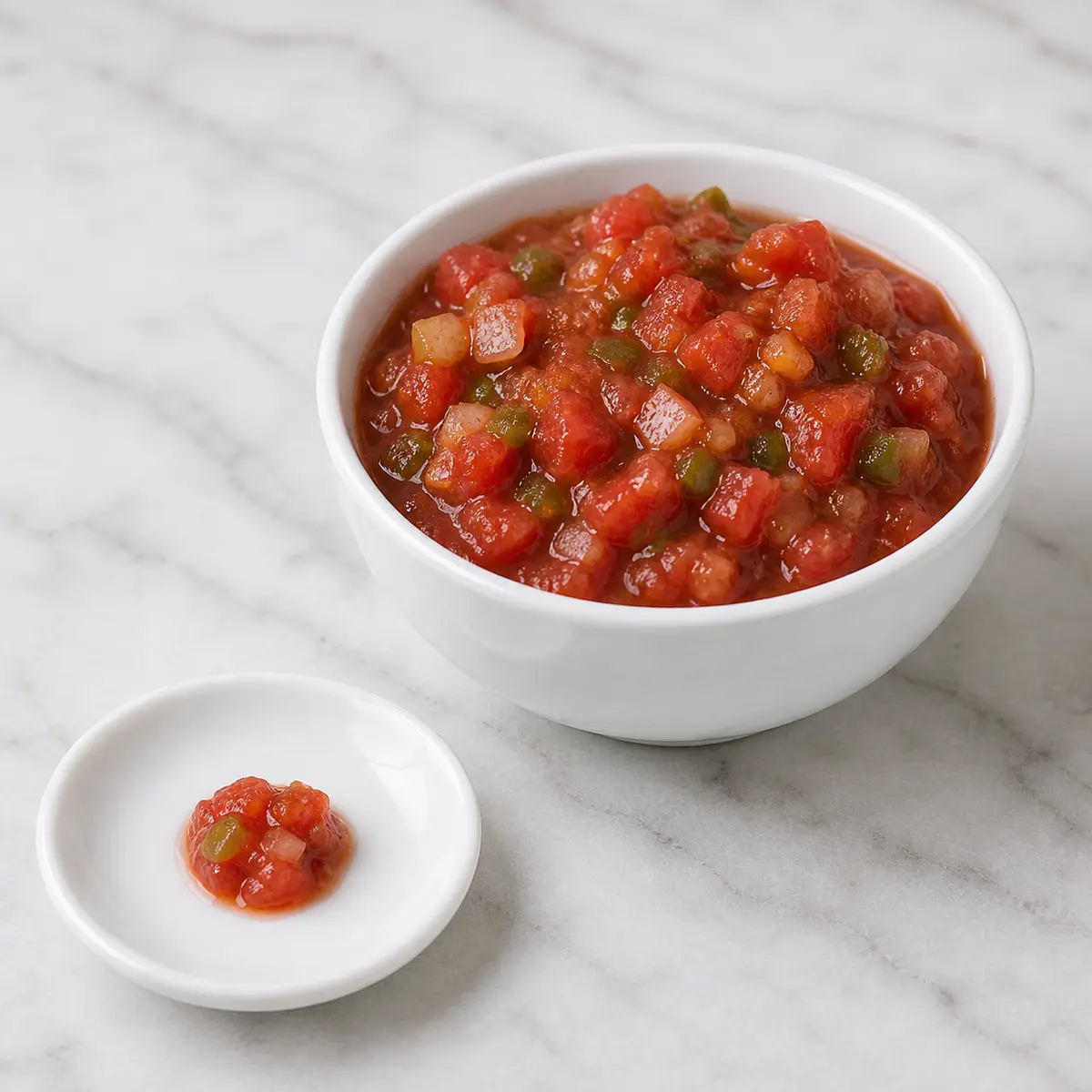
Usually no. Tomato sauce often contains onion, garlic, salt, sugar, oil, or spice, so it should not be shared.
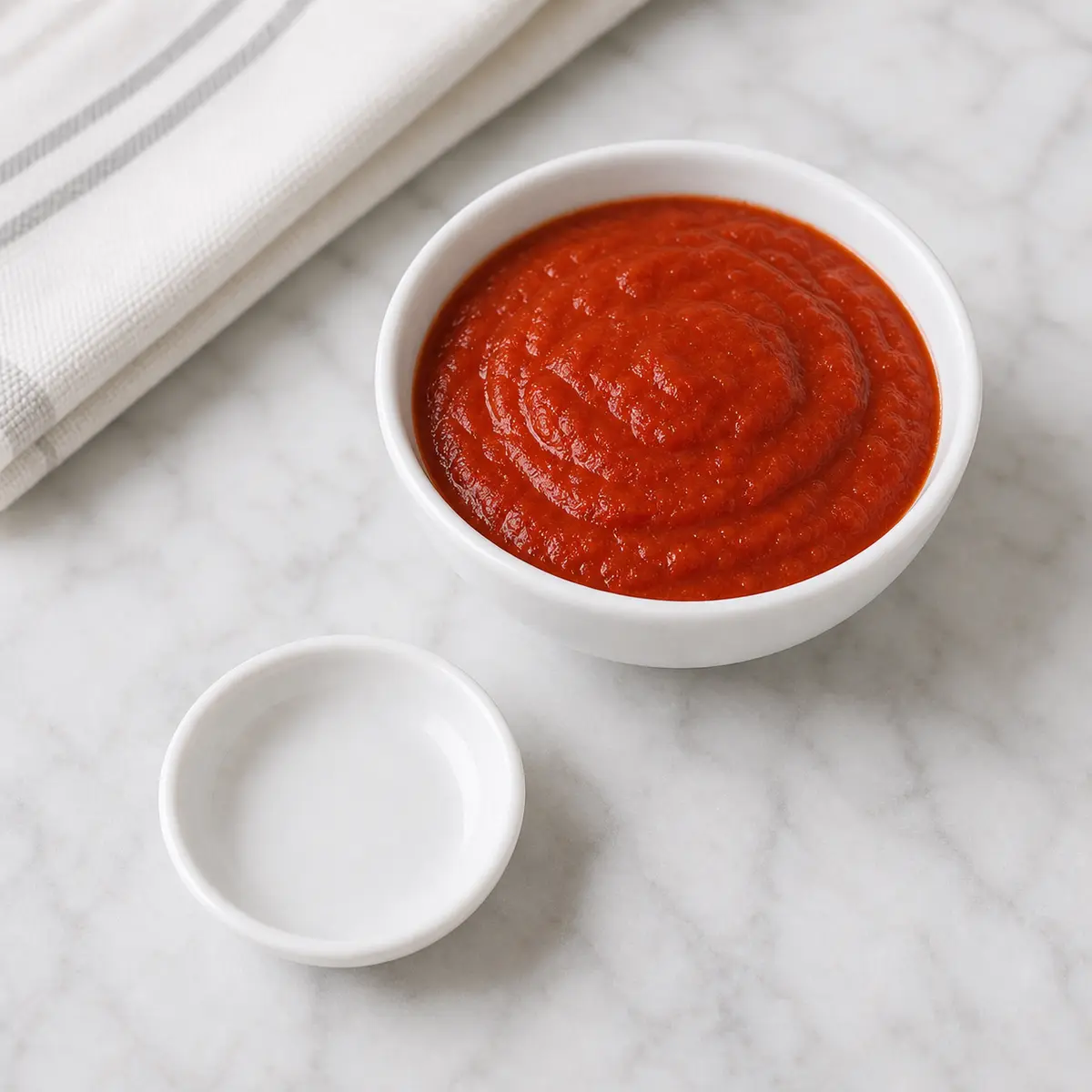 Tomato Sauce
Call for onion or garlic
Call your veterinarian if the sauce included onion or garlic, or if vomiting, weakness, pale gums, or repeated diarrhea occurs.
Onion and garlic are common
Many sauces include onion powder, garlic powder, or cooked alliums.
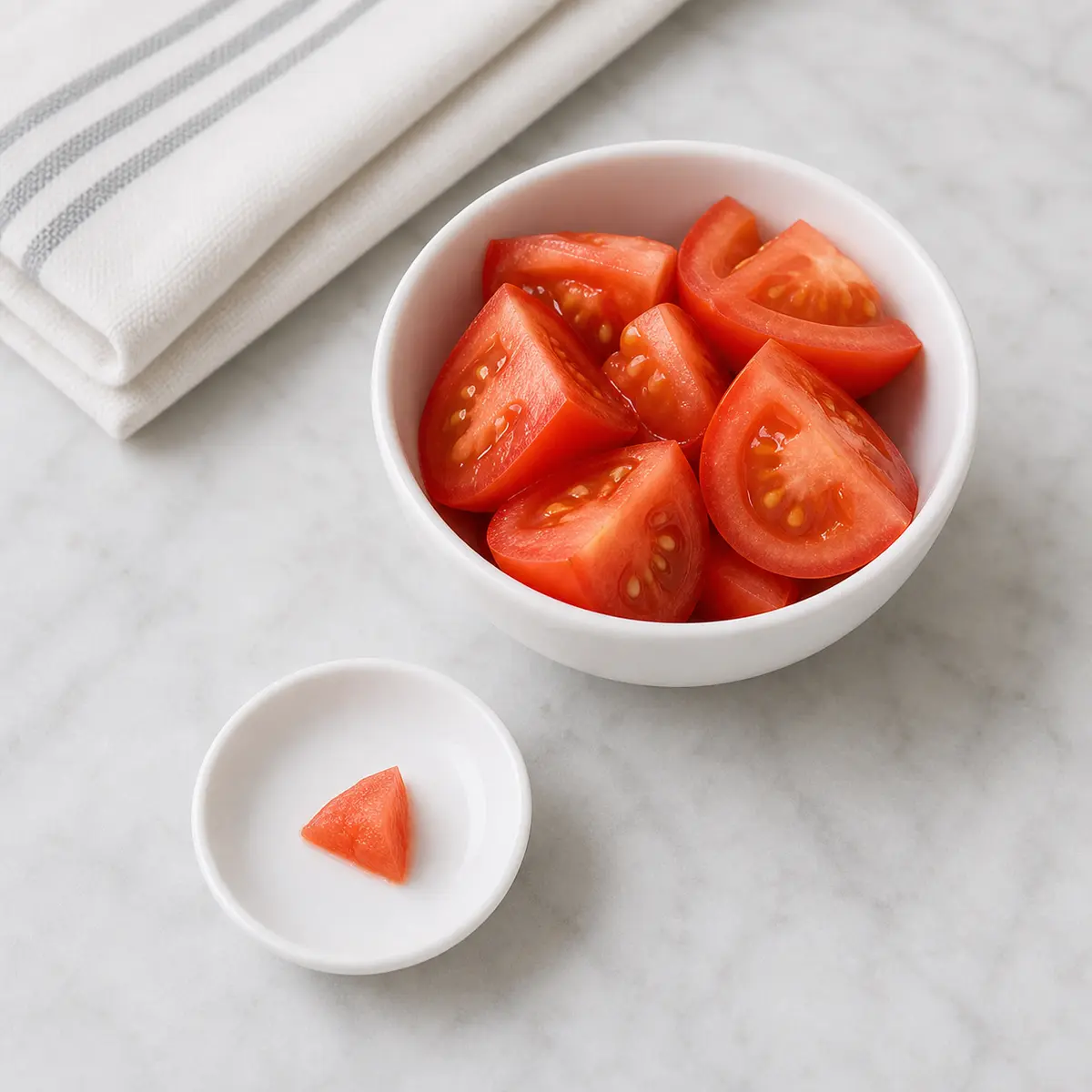
Plain tomato is different
A tiny ripe tomato piece does not make sauce a good cat treat.
Check the ingredients
- If your cat licked sauce, check the ingredient list for onion, garlic, salt, spices, dairy, meat, and sweeteners.
- Offer water and watch for stomach upset after a tiny accidental lick.
Avoid mixed sauces
- Pasta sauce, pizza sauce, marinara, canned tomato sauce with salt, sauces with onion or garlic, spicy sauce, meat sauce, and large amounts.
- Assuming tomato sauce is safe just because ripe tomato flesh can be a tiny occasional bite.
Watch
- Vomiting, diarrhea, drooling, belly pain, appetite changes, lethargy, pale gums, or weakness after onion or garlic exposure.
Portion
No planned portion is recommended.
Helpful food-safety supplies
Optional tools for measuring, storing, serving, and cleaning up tiny portions safely.
Affiliate links: Furball Cove may earn from qualifying purchases at no extra cost to you.