Updated
Rabbit food check
Can Rabbits Eat Banana Peel? Better to Skip It
Optional—better skipped
Fresh banana peel is not known to be poisonous after washing, but it remains an optional fruit scrap with no job in a rabbit diet. Compost is simplest.
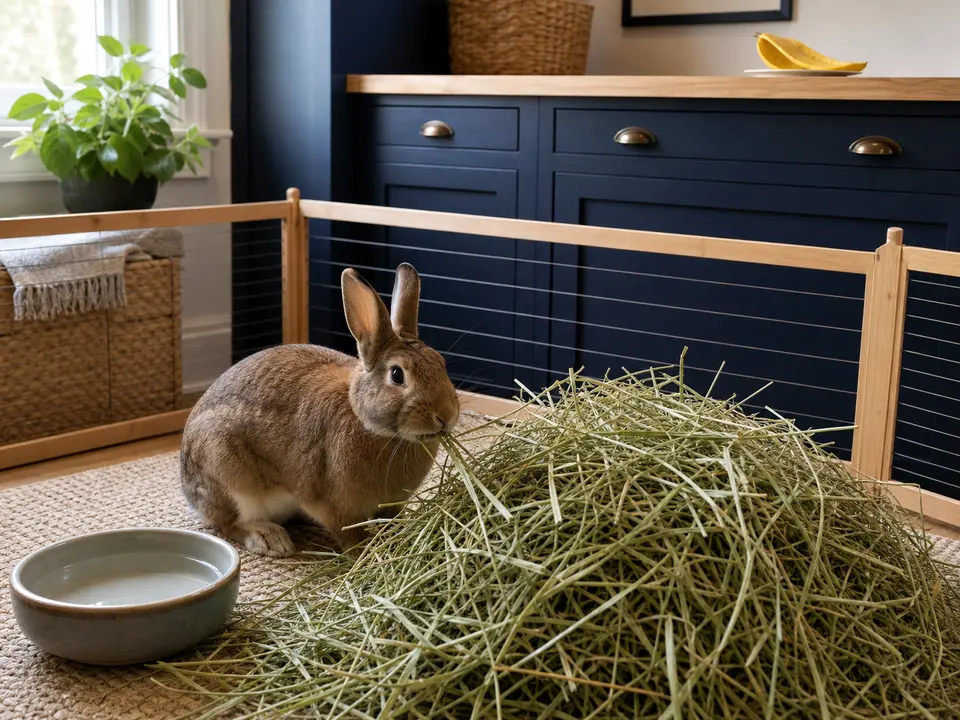 Banana Peel
Edible does not automatically mean useful
Vet-reviewed guidance describes a tiny washed peel piece as non-toxic, but the established rabbit organizations are clearer about banana flesh than banana skin. House Rabbit Society calls banana a high-glycemic occasional treat, and PDSA keeps all fruit very small. With that evidence gap, compost is a perfectly good answer.
Peel and fruit share one treat budget
Do not serve a banana coin and call the attached skin free fibre. If a strip of peel reaches the rabbit dish, it replaces the fruit portion rather than joining it. The rest of dinner should look ordinary: familiar greens, measured pellets if due, clean water, and abundant hay.
Wash before the banana is opened
Rinsing a floppy peel after breakfast is awkward and misses the sticker glue. Wash and rub the intact yellow banana under running water, dry it, then open it. Remove the label, stem, and dark tip before taking one small strip from a sound section.
The rabbit's response settles the question
Many rabbits will ignore the tougher skin and hunt for sweeter flesh. Do not coax or refill. If the strip is eaten, inspect the hay rack and toilet corner later. Normal chewing and dry round pellets are the useful result; a peel does not need a second audition.
Decide before breakfast prep begins
The easiest limit is made while the banana is still whole. Choose compost, or wash it and mark one clean patch for a thumbnail strip. Do not wait until the fruit is sliced and the rabbit is circling your feet.
Remove the parts that are not food
At the kitchen sink, peel off the sticker and wipe away every trace of adhesive. Trim the woody stem and black blossom button. Check the remaining skin; if it is split, wet, sour-smelling, or moldy, send everything to the compost caddy and choose hay instead.
Use the dish as a hard stop
Lay one short yellow strip on a shallow saucer beside the hay station. Move the long leftover peel to the compost bin immediately. An empty saucer does not earn a refill; fresh hay is what you top up.
Check the litter corner after the novelty
Later that evening, lift the hay handful and look at the toilet area. You want fresh bite marks through coarse stems and the usual scattering of dry pellets. If either rhythm changes, banana peel leaves the treat list.
How to offer it
- Wash the outside of the intact banana under running water before opening it, since the peel is the part under discussion.
- Remove the produce sticker, adhesive, woody stem, dark blossom tip, and any bruised, split, or sticky patch.
- Cut one thin thumbnail-sized strip from fresh yellow peel; move the remaining peel and banana flesh back to human food or compost.
- Introduce nothing else new that day, and leave a large clean hay pile available before and after the strip.
Avoid
- An entire peel, a long dangling ribbon, or several pieces simply because the peel feels fibrous.
- Banana flesh and peel together; both belong in the same tightly limited fruit-treat decision.
- Unwashed peel, produce stickers, adhesive, tough stem ends, mold, slime, fermentation smell, or leaking black patches.
- Fried banana, banana chips, sweetened dried banana, baked peel recipes, smoothies, or any human preparation with other ingredients.
Watch
- Long grass-hay strands being chewed after the strip is gone
- Fresh round dry pellets in this rabbit's normal litter corner
- Normal enthusiasm for the evening greens and an easy hop across the pen
- Soft stool, a swollen or tense belly, unusual quietness, or reduced eating or droppings; stop the new food and call a rabbit-savvy vet if these appear
Portion
One thumbnail strip is the whole experiment. It replaces fruit that day; do not add banana flesh, berries, or another sweet extra.
Tools for washing one peel strip—or composting the whole thing
Banana skin is slippery, stickered, and easy to overestimate once it unfolds. These picks support the only sensible workflows: clean one truly small strip on purpose, or contain the entire peel and return to hay.
Affiliate links: Furball Cove may earn from qualifying purchases at no extra cost to you.
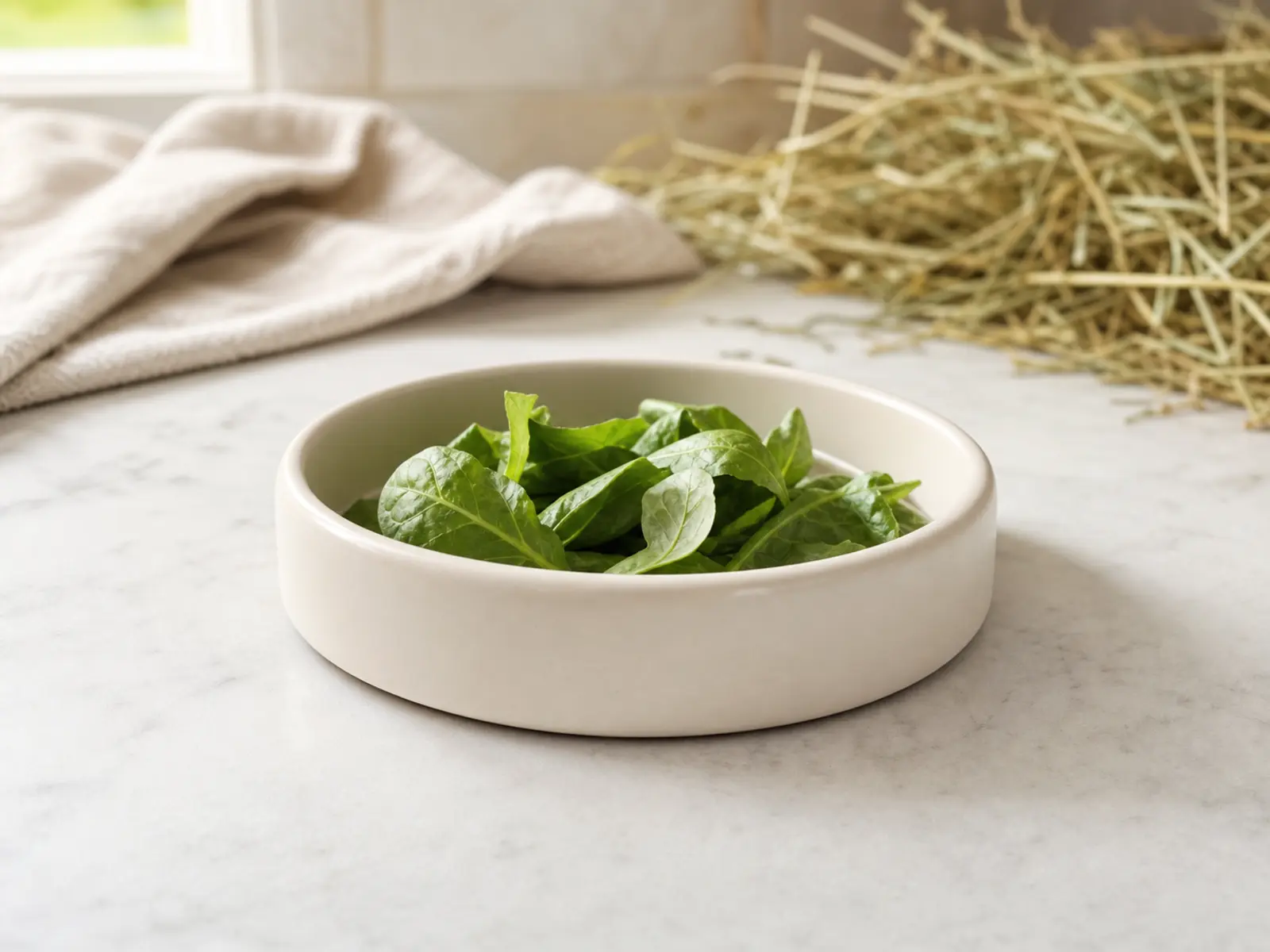
Ceramic food dish
Place one short strip on a shallow stable saucer; when the dish is empty, the peel serving is finished.
Shop ceramic food dish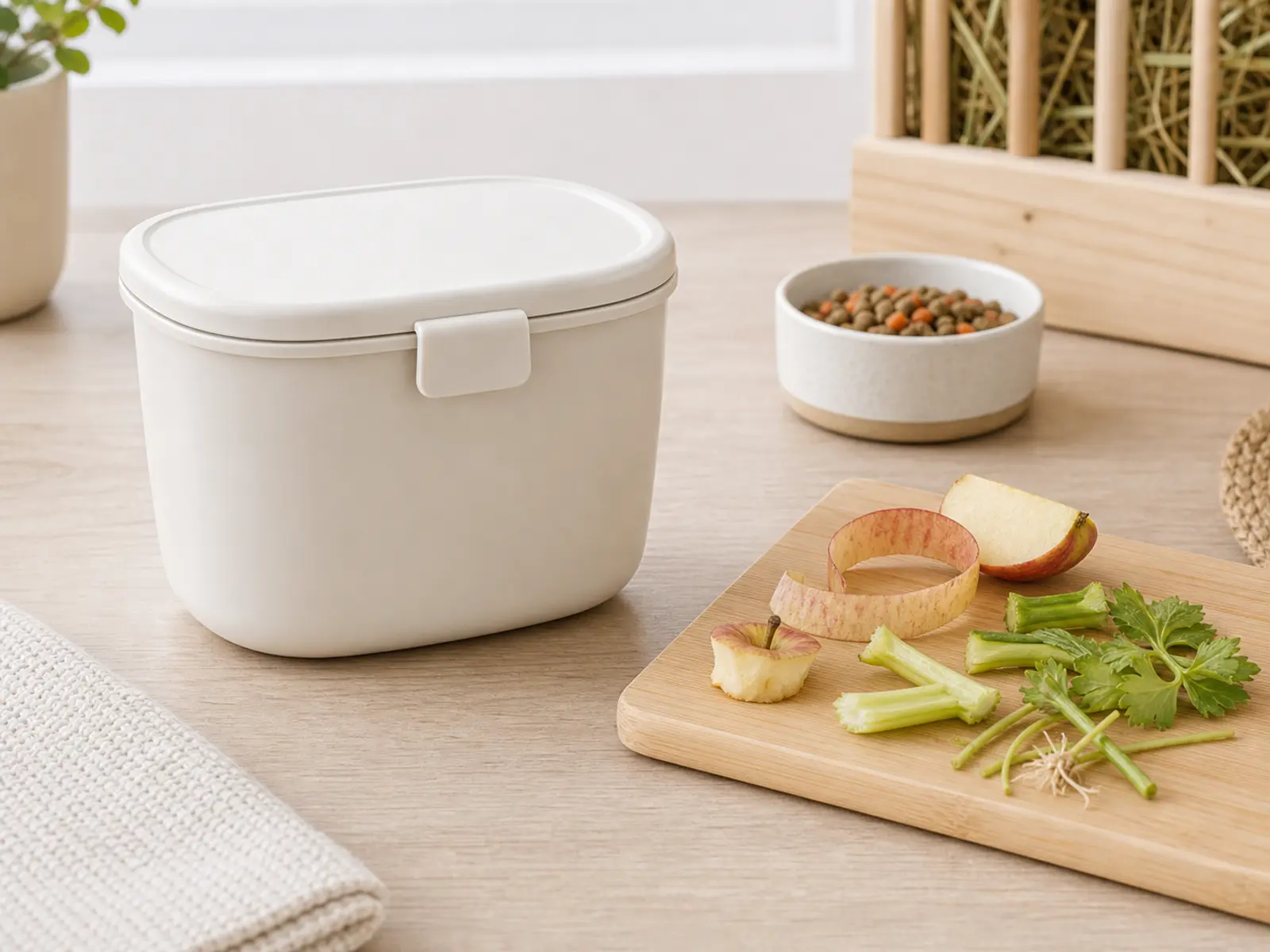
Lidded scrap bin
Close the sticker, stem, dark tip, leftover peel, and any bruised section away before the rabbit reaches the kitchen.
Shop lidded scrap bin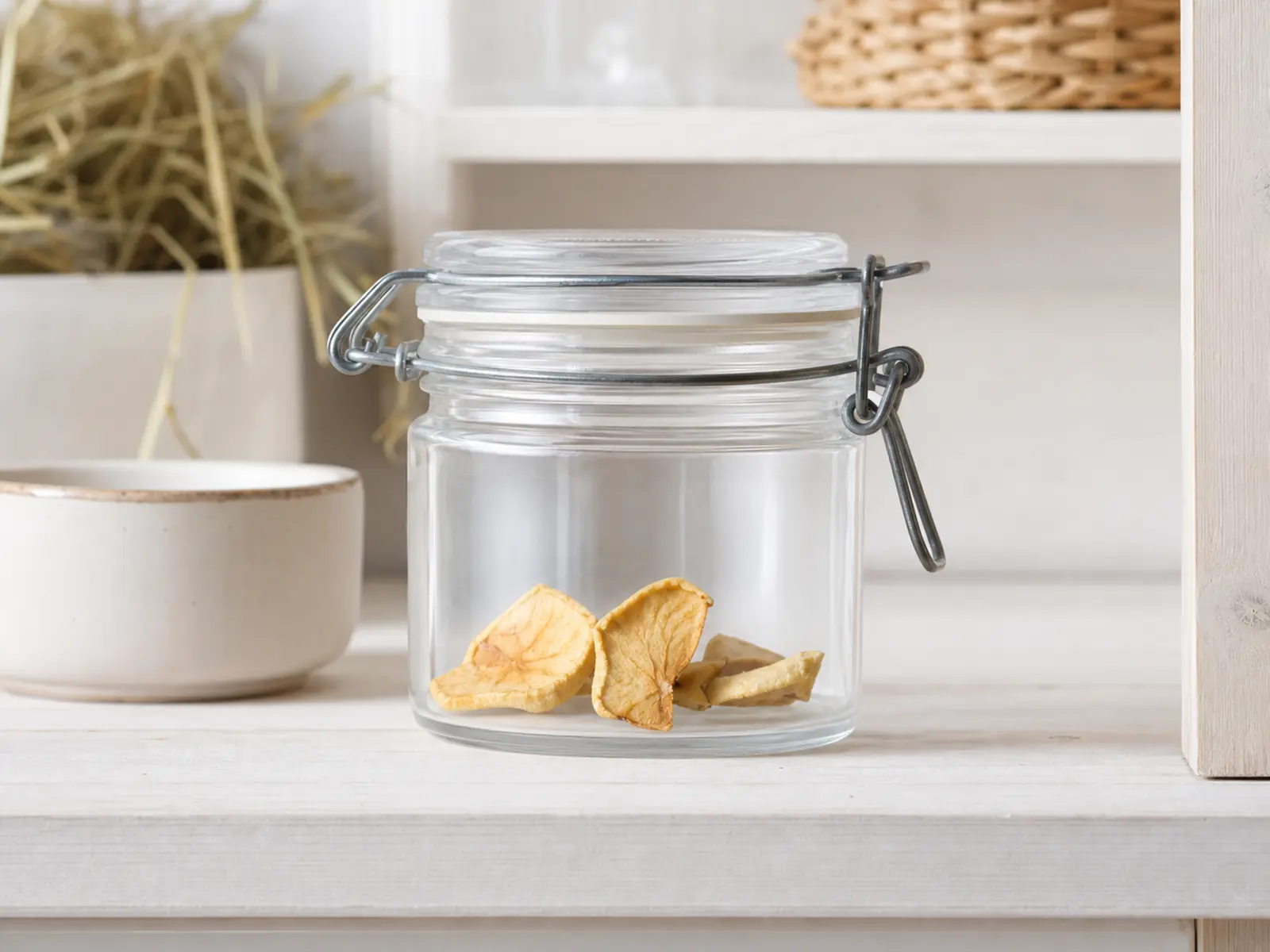
Small treat jar
Reserve the jar for dry, pre-portioned rabbit treats—not damp banana peel that can spoil behind a lid.
Shop small treat jar