Updated
Rabbit food check
Can Rabbits Eat Cooked Vegetables? Fresh Is Better
No—keep cooked vegetables for people
Keep cooked vegetables on the dinner table. Rabbits have their own meal: hay, water, and familiar fresh leaves. When a bite goes missing, check the entire dish. Phone the veterinarian without delay for onion, garlic, chocolate, or anything else that causes concern.
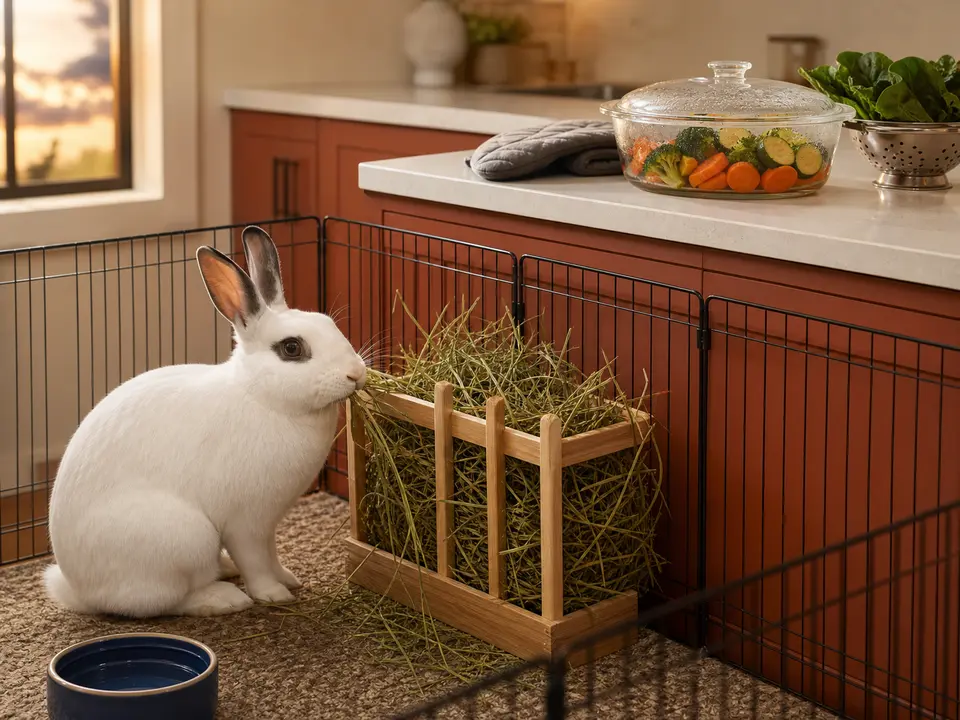 Cooked Vegetables
Ask your vet if they ate it
If your rabbit ate cooked vegetables and seems off, has stopped eating, or you do not know the amount, call a rabbit-savvy veterinarian or pet poison hotline.
Cooking changes the question
Fresh broccoli and zucchini have their own rabbit portions. A casserole, roast tray, stir-fry, or mash tells a different story because everything in the pan comes with the bite. Start with the recipe that was actually cooked.
Soft food does not do hay's job
Hay keeps a rabbit chewing for much longer than a soft carrot coin. That chewing supports the teeth as well as the gut. If your rabbit suddenly wants soft food and turns away from hay, do not hide the problem with mash—book a rabbit-savvy dental and medical check.
Check the whole recipe
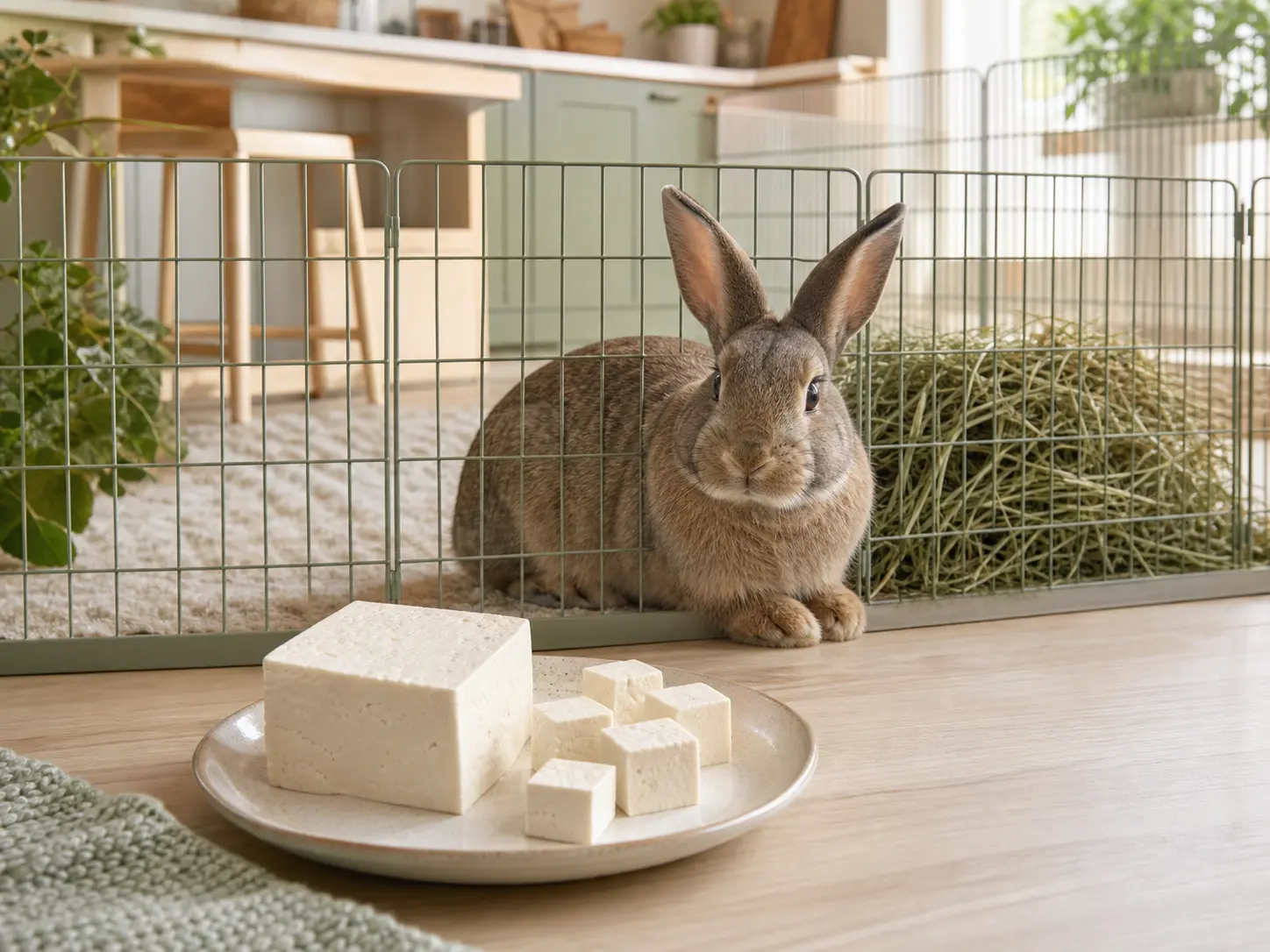
A bare cooled zucchini slice and a cheesy roast are very different finds beside a rabbit pen. Check the pan and recipe card, then estimate the missing piece. If you phone the clinic, name the dish and amount instead of saying only that vegetables were eaten.
Fresh greens are already enough
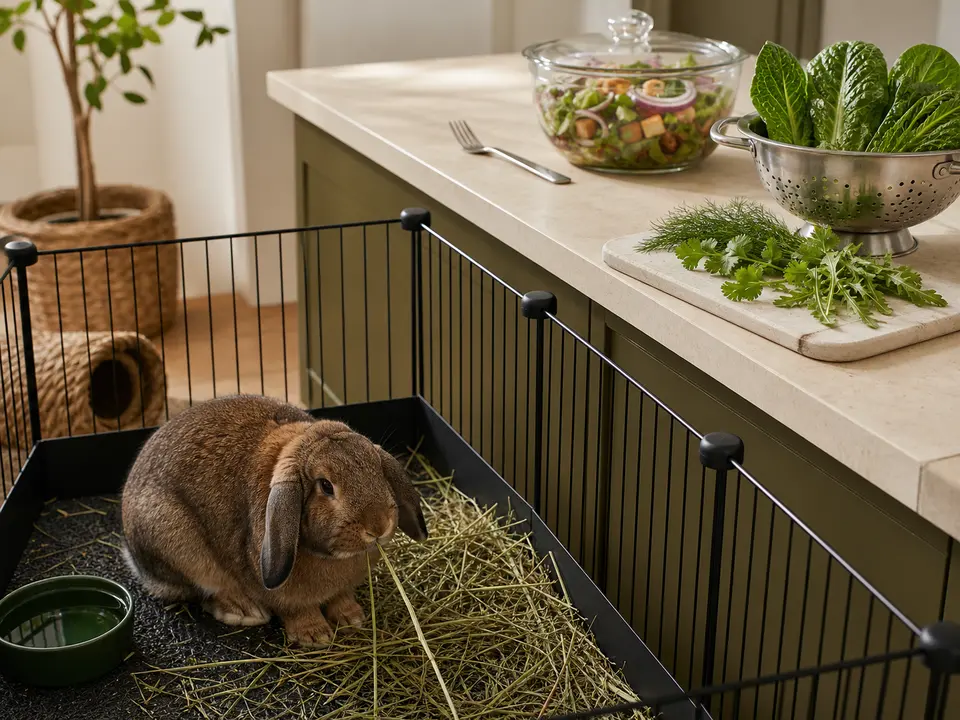
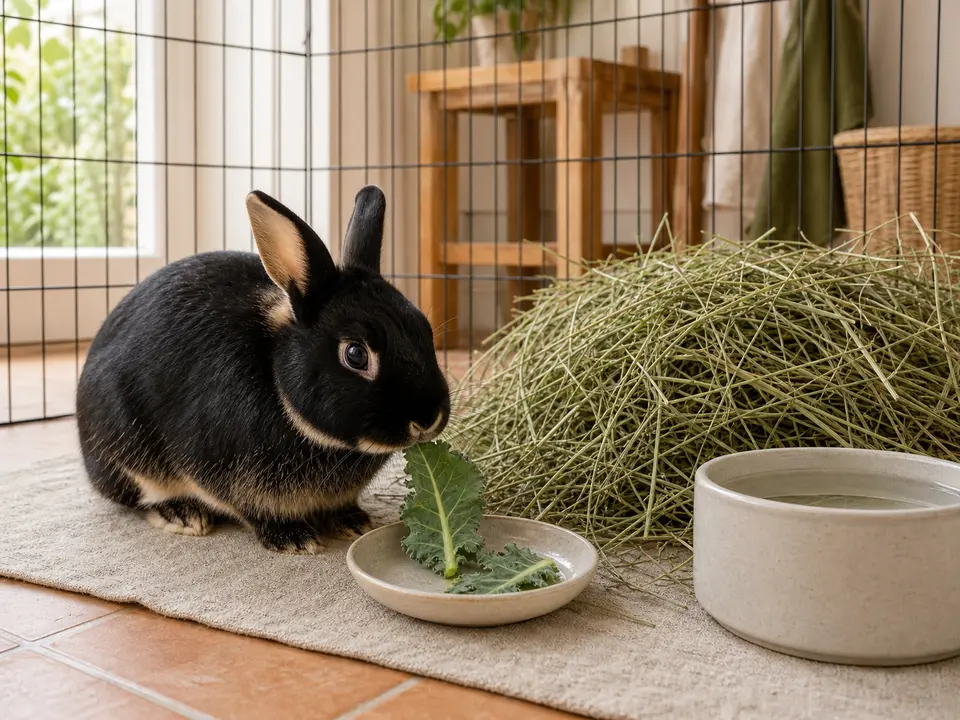
Romaine, coriander, dill, or another familiar leaf can go straight from the colander to the rabbit bowl. Skip the spoonful from dinner. Hay remains the main food, with the normal fresh portion alongside it.
Cover the dish before floor time
Put the lid on dinner and move the serving spoon away from the counter edge. Check the floor for a dropped carrot or broccoli piece, wipe up any sauce, and then open the pen.
Keep rabbit greens separate
Use a clean colander for the rabbit's fresh leaves and a separate spoon for the family dish. Serve the familiar greens, refill the timothy hay, and put the cooked vegetables on the table for people.
If a bite goes missing
Look at the dish and decide whether a bare edge piece or a sauced center portion disappeared. Keep the ingredient card and estimate the amount. Call your veterinarian if the food contained onion, garlic, or another worrying ingredient, or if you cannot tell what was eaten.
Watch the next ordinary meal
Look for tugged hay stems and a fresh batch of round droppings. Fruit can hide a weak appetite, so leave treats in the cupboard. A full hay rack, sparse litter box, painful posture, or unusual quietness deserves a call to the clinic.
How to handle it
- Do not cook a special rabbit portion. Wash one of the familiar fresh greens instead.
- If a bite is missing, keep the recipe card or package and check every ingredient.
- Pick up dropped pieces, sauce, foil, skewers, and hot dishes before opening the pen.
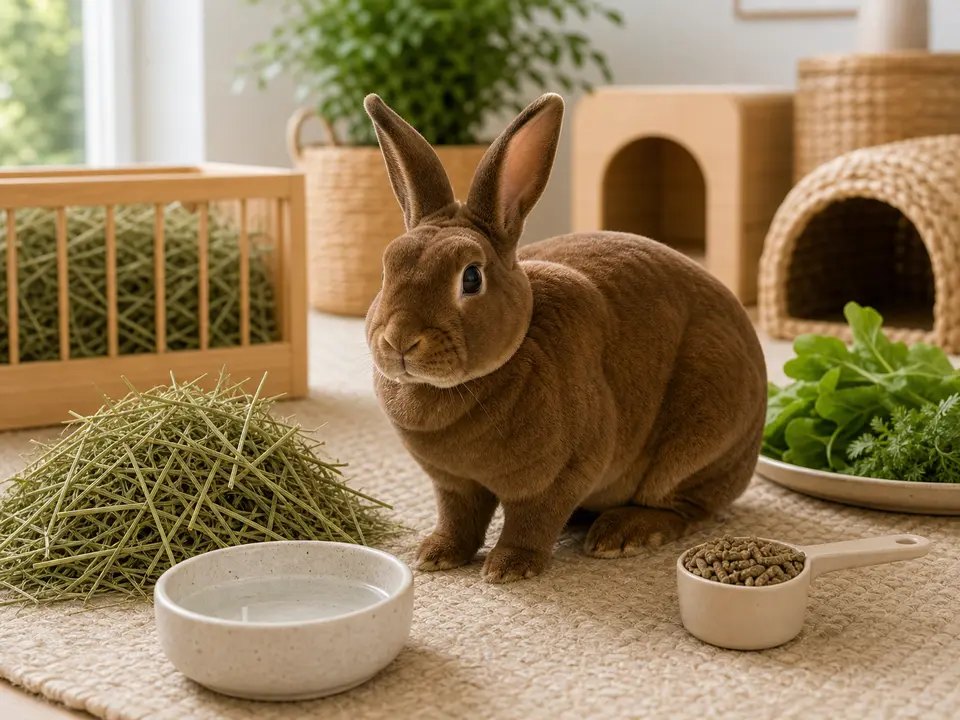
- Refill hay and water, and serve the next greens and pellets at their usual times unless your veterinarian says otherwise.
Avoid
- Vegetables cooked with butter, oil, cream, cheese, salt, stock, gravy, glaze, sugar, spice blends, or sauce.
- Onion, garlic, chives, or chocolate; phone your veterinarian promptly if any was eaten. Ask for advice too when the recipe cannot be reconstructed.
- Mash, purée, canned vegetables, or baby food offered because chewing looks difficult. A rabbit avoiding normal food needs a veterinary exam.
- Food that is hot, spoiled, moldy, left out for hours, or contaminated by meat juices.
Watch
- Steady chewing at the hay rack after the kitchen is cleaned
- The usual interest when familiar greens or pellets arrive
- Plenty of round droppings in their normal size
- Reduced eating or droppings, diarrhea, a swollen or painful-looking belly, hunching, tooth grinding, weakness, or unusual quietness; call a rabbit-savvy veterinarian promptly
Portion
Do not set aside a cooked portion for a rabbit. When a small unseasoned piece disappears, take away the rest and watch the next normal meal. Ring the clinic if several pieces are gone, the recipe is unclear, or your rabbit already has a health or appetite problem.
Keep family dinner separate from rabbit food
These kitchen basics help cover leftovers, contain scraps, prepare fresh greens, and keep hay ready while people eat.
Affiliate links: Furball Cove may earn from qualifying purchases at no extra cost to you.
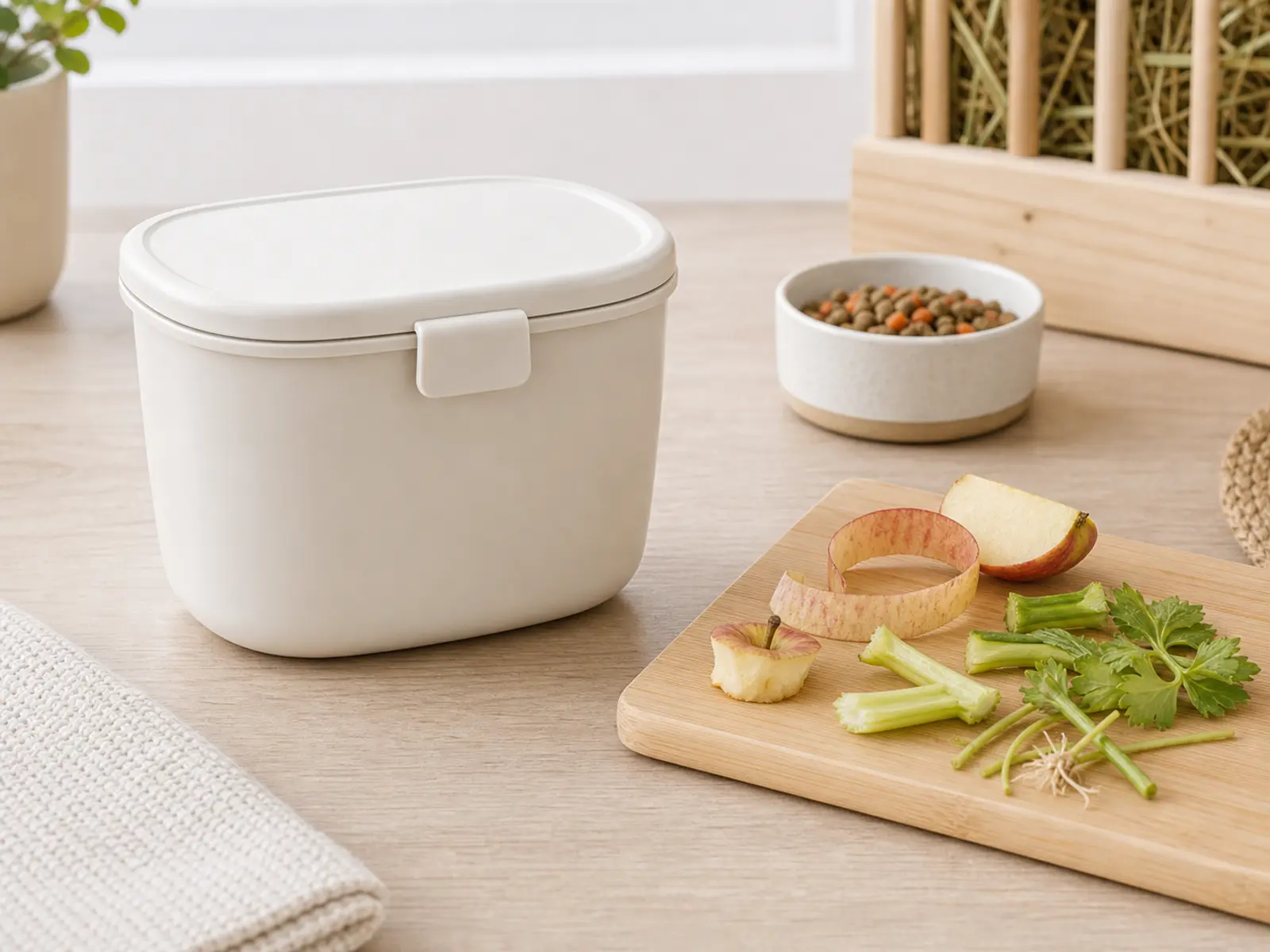
Lidded scrap bin
A covered bin keeps cooked scraps, foil, and sauce-covered napkins away from a rabbit exploring the floor.
Shop lidded scrap bin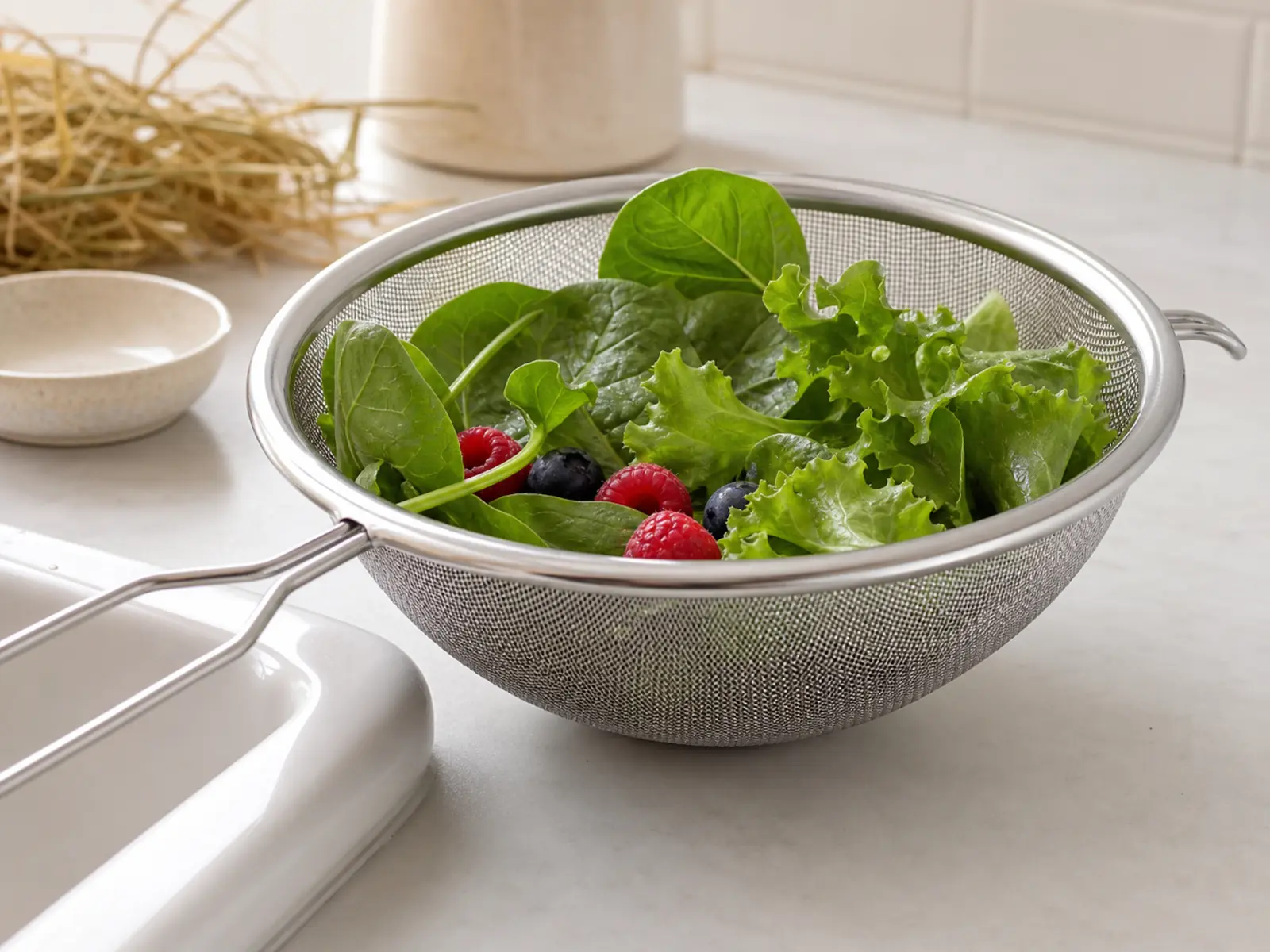
Produce strainer
Rinse a familiar fresh leaf instead of taking a softened vegetable from the family dish.
Shop produce strainer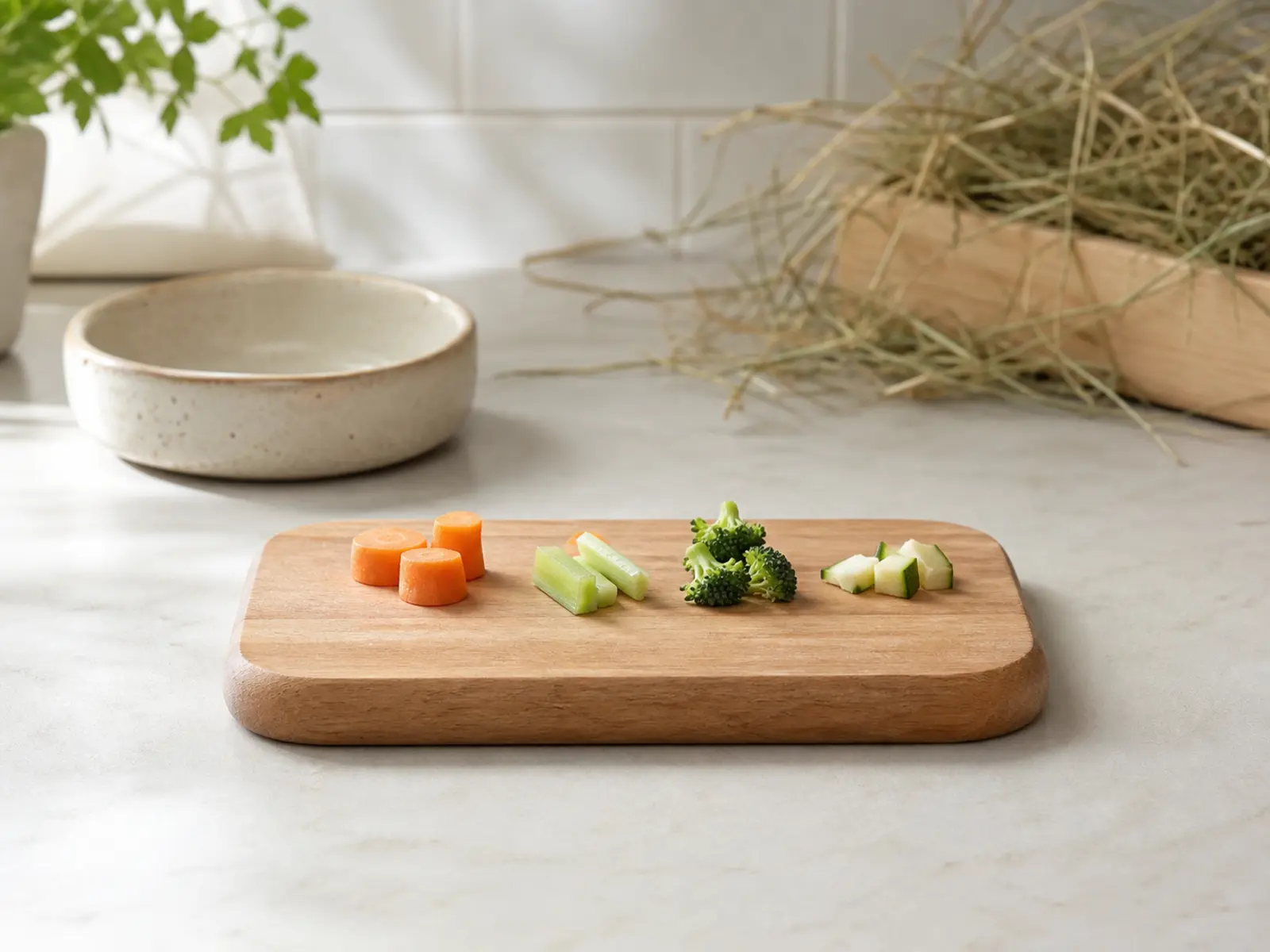
Mini cutting board
Use a dedicated cutting board for rabbit greens, away from cooked food, strong seasoning, and meat juices.
Shop mini cutting board