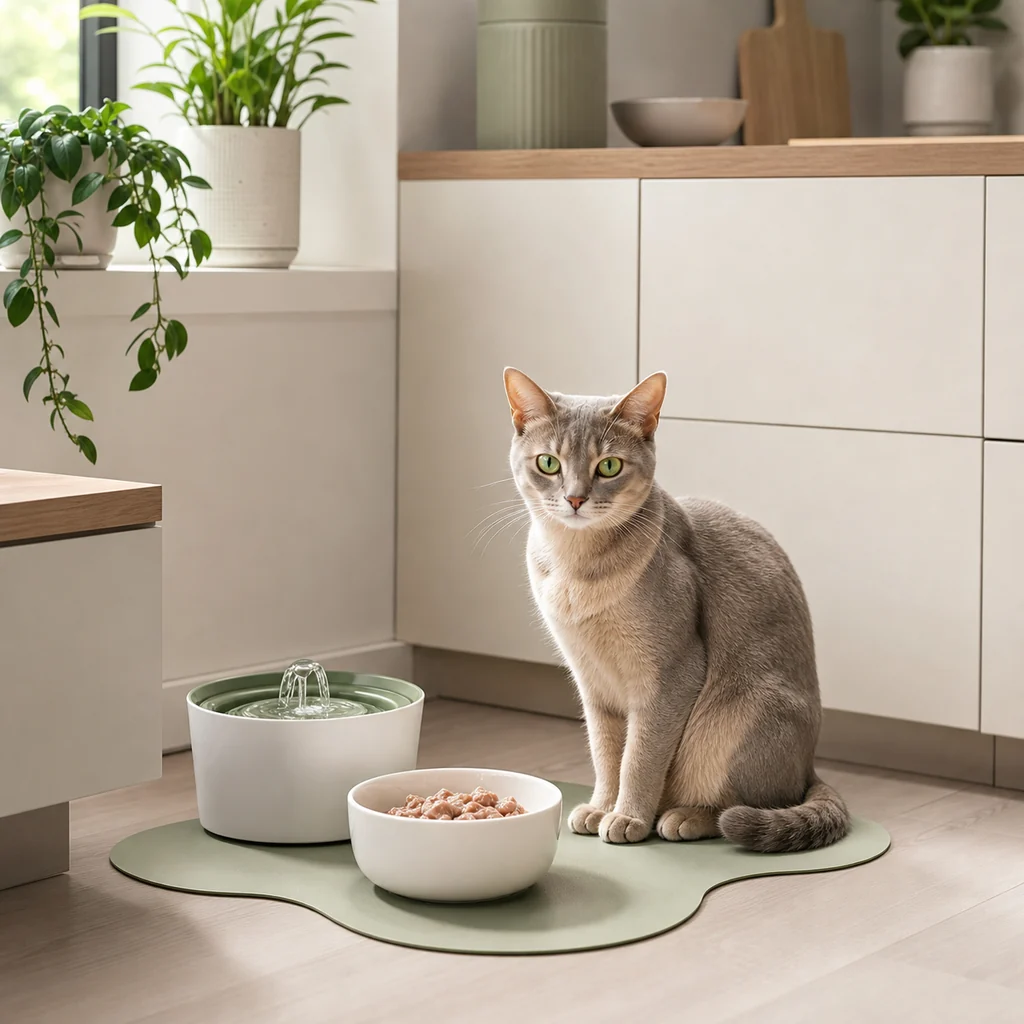
Confirm the portion
Use the food label as a starting point, then adjust with your veterinarian around body condition, age, and activity.
Updated
Begging after meals
A cat acting starving after meals may be eating too fast, expecting treats, competing with another pet, bored, underfed, or showing a medical change.
Do not solve it by guessing at extra scoops. Measure the meal, slow the routine, and watch weight, thirst, stool, vomiting, and energy.
Use the food label as a starting point, then adjust with your veterinarian around body condition, age, and activity.
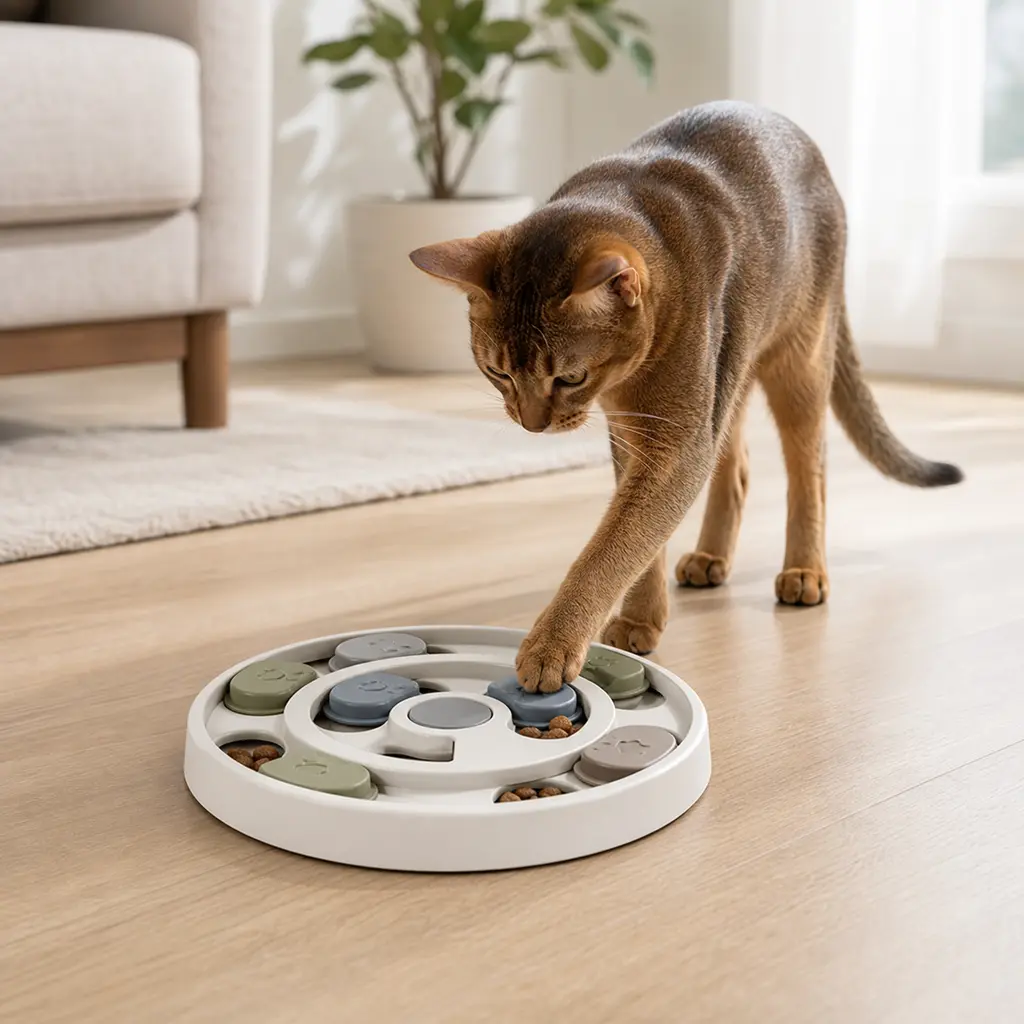
Fast eating can leave a cat restless after the bowl is empty. A simple puzzle or smaller split meals can help.

If begging reliably earns treats or attention, the behavior can grow even when the meal is enough.

New intense hunger, weight loss, vomiting, diarrhea, increased thirst, or behavior change deserves a veterinary conversation.
Use tools that make portions visible and meals slower without adding calories.
Affiliate links: Furball Cove may earn from qualifying purchases at no extra cost to you.
Common causes include fast eating, learned begging, boredom, meal competition, under-measuring, or a medical change.
Measure first. Extra food may be right for some cats, but sudden hunger or weight change should be discussed with your veterinarian.