My cat's breath smells worse than usual: is that normal?
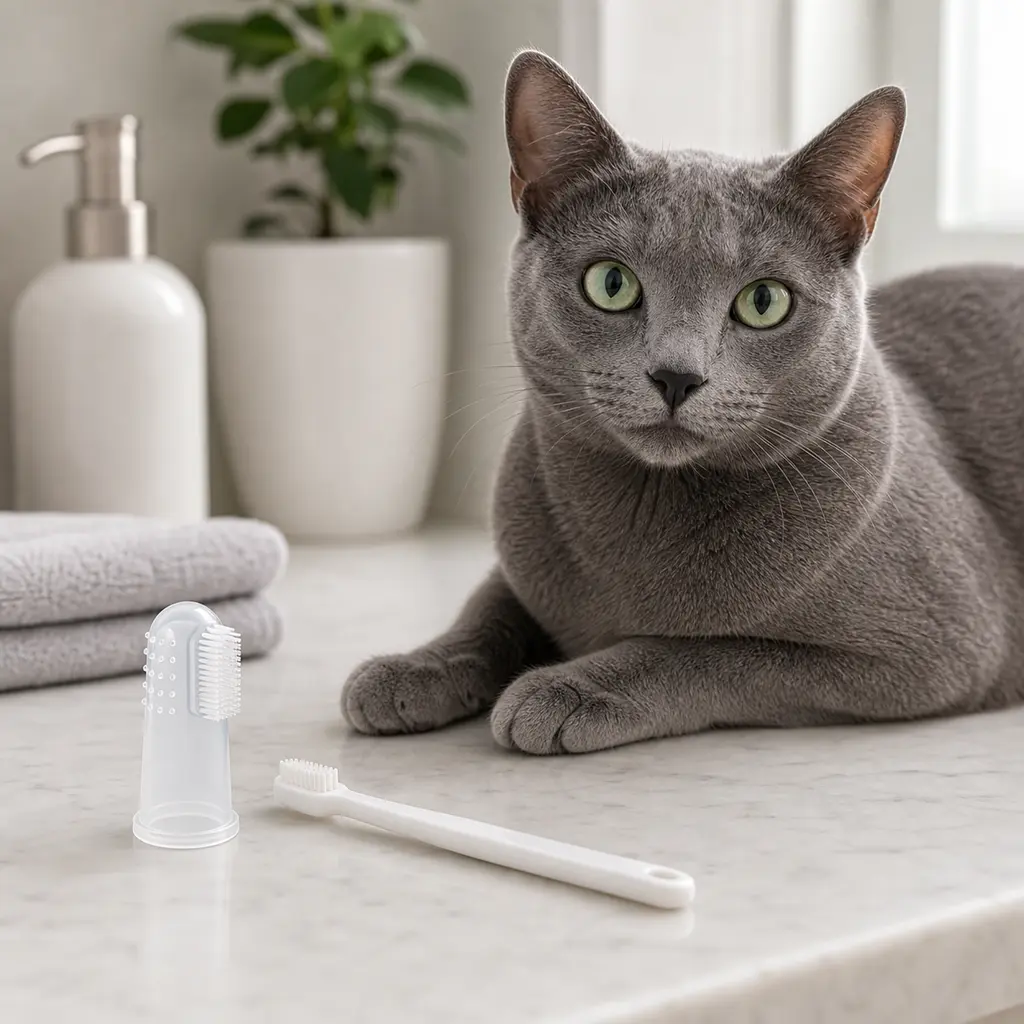
Sudden bad breath or breath that smells worse than usual is not something to shrug off, especially if your cat is drooling, dropping food, pawing at the mouth, or eating differently.
A little food smell is one thing. A new, strong, rotten, sweet, or unusual mouth smell deserves a closer look at the bowl, gums, chewing, appetite, and comfort.
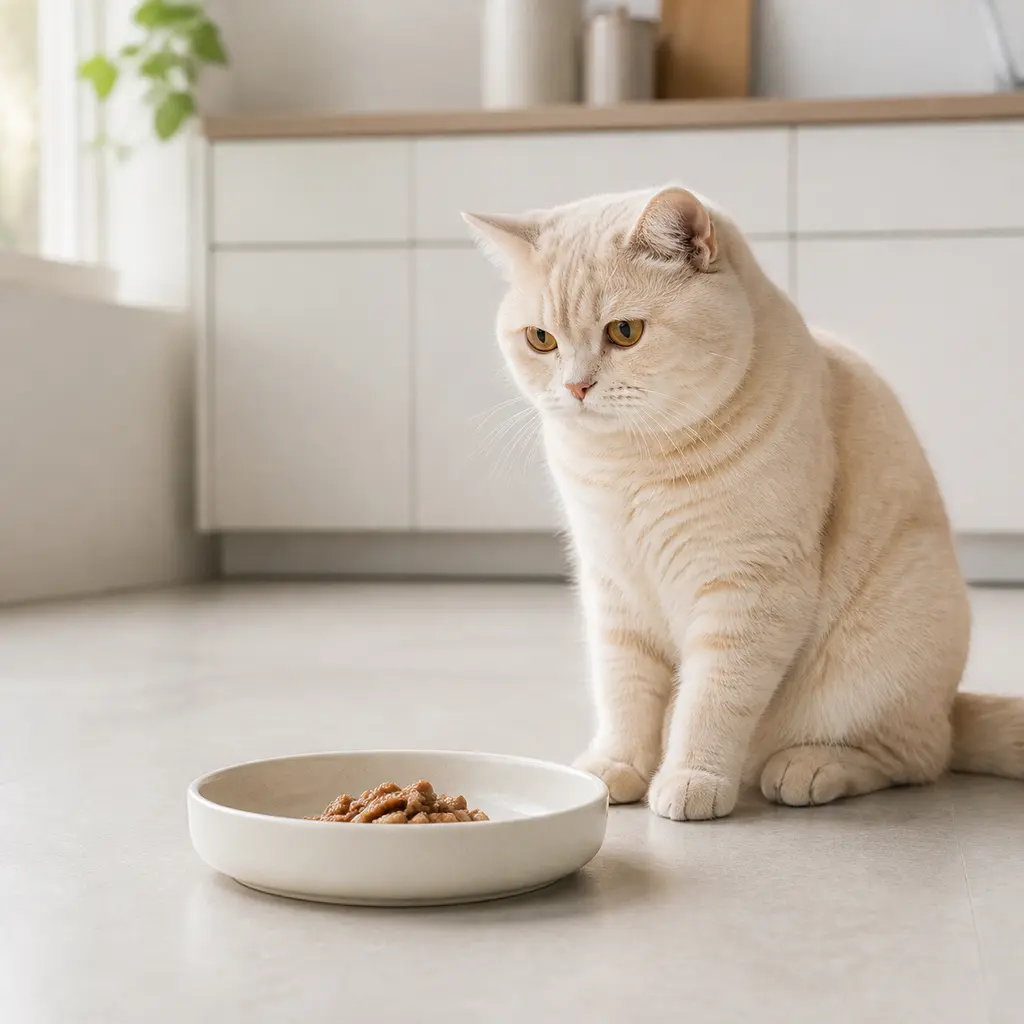
Start at the food bowl
Watch one normal meal. Dropping kibble, chewing on one side, backing away from food, preferring soft food, drooling, pawing at the mouth, or resisting face touch can make bad breath more concerning.
Start by deciding whether this can wait. Breathing trouble, urine changes, appetite loss, severe pain, collapse, toxin exposure, or sudden decline means the next step is a vet call.
Look gently, without forcing the mouth
If your cat allows it calmly, check for red gums, swelling, bleeding, tartar, broken-looking teeth, or anything stuck. Stop if your cat pulls away or seems painful; forcing the mouth open can make a sore cat panic.
Treat symptom pages as triage support, not a diagnosis. Appetite, water, urine, stool, breathing, mobility, gums, pain signs, and energy matter more than one isolated symptom word.
Separate a one-day smell from a pattern
A single fishy meal can change breath for a short time. Sudden bad breath that keeps coming back, smells unusually strong, or arrives with appetite, weight, grooming, or behavior changes belongs in your notes for the vet.
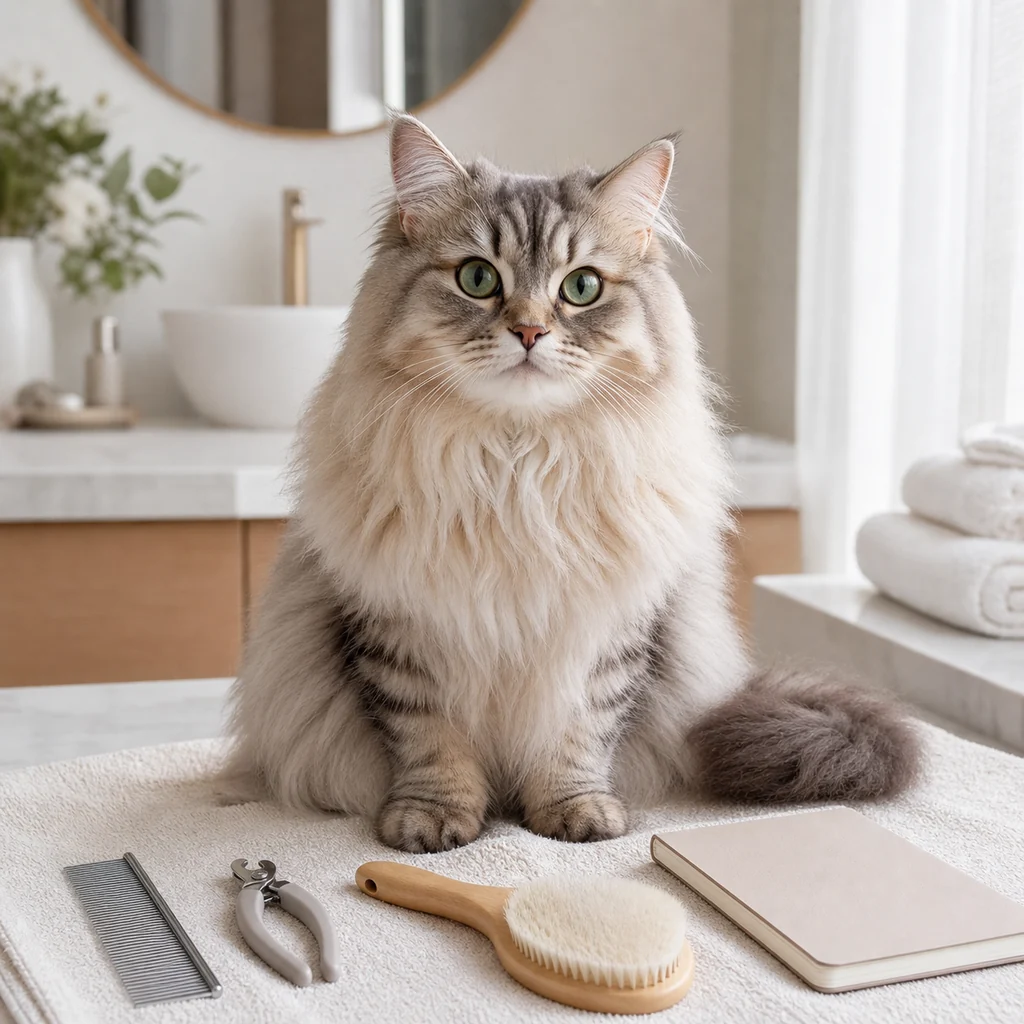
Write down timing, frequency, appetite, litter use, breathing, movement, and any trigger you saw. A short video is often more useful to your veterinarian than a long description.
Call sooner when eating looks hard
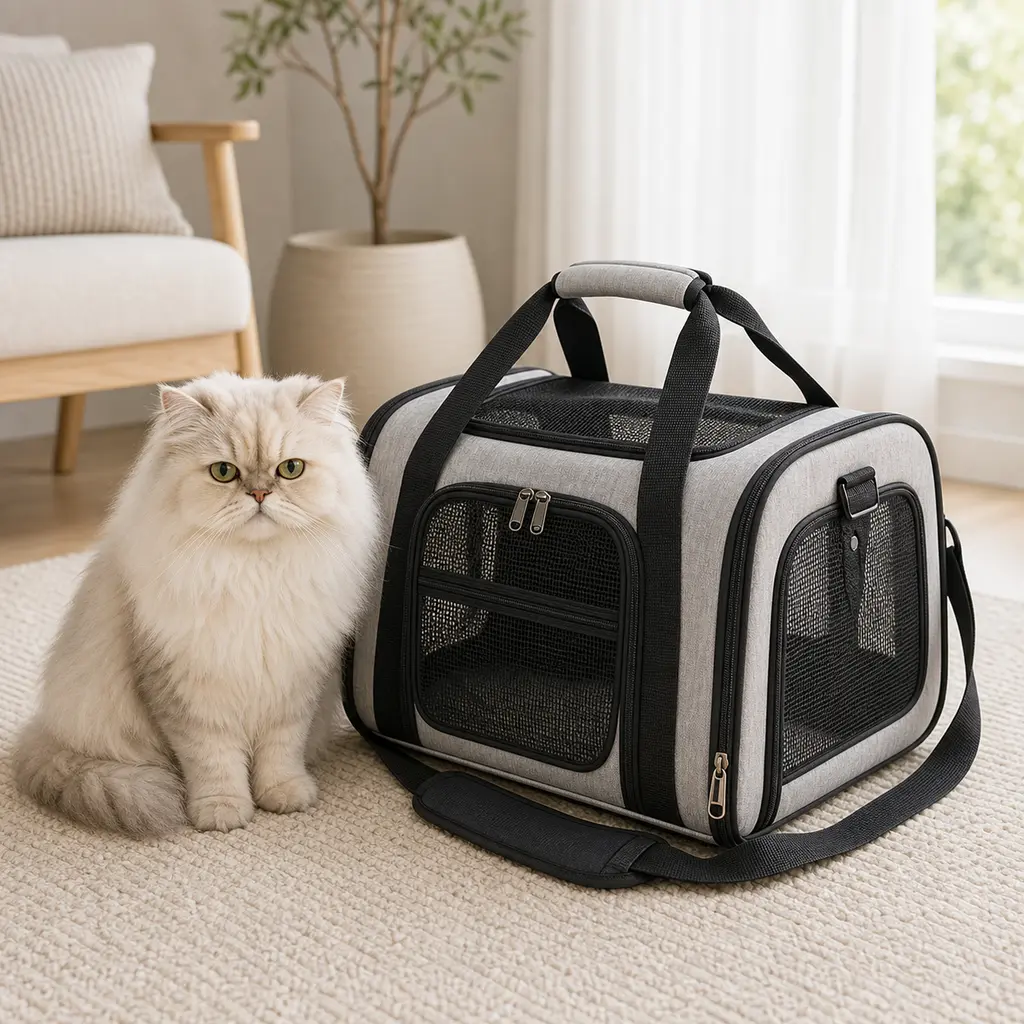
Call your veterinarian promptly if bad breath comes with drooling, bleeding, facial swelling, appetite loss, weight loss, mouth pain, trouble chewing, or a cat who suddenly hides or seems unwell.
Do not monitor at home when breathing is hard, gums look pale or blue, the cat cannot stand, pain is obvious, appetite stops, urination changes, or symptoms escalate.
Before you decide
Did the bad breath start suddenly or get worse than usual?
Any drooling, dropped food, pawing, swelling, bleeding, or red gums?
Is your cat eating normally and keeping weight steady?
Does your cat resist face touch or prefer softer food?
Next best moves
Watch one meal closely and write down chewing or drooling changes.
Check only what your cat calmly allows.
Call your vet if the smell is new, strong, repeated, or paired with mouth or appetite changes.
Quick cat question
My cat's breath smells worse than usual: is that normal?
Sudden bad breath or breath that smells worse than usual is not something to shrug off, especially if your cat is drooling, dropping food, pawing at the mouth, or eating differently.
When should I get help?
Call your veterinarian if your cat cannot eat comfortably, drools heavily, bleeds, has facial swelling, struggles to breathe, loses appetite, or seems painful.