Choose the brush by the coat and the cat's tolerance, not by the biggest grooming kit on the shelf.
A brush that works for one cat can be too much for another. Match the tool to the coat, then make the session short enough that your cat will let you try again tomorrow.
Use a comb for tangles
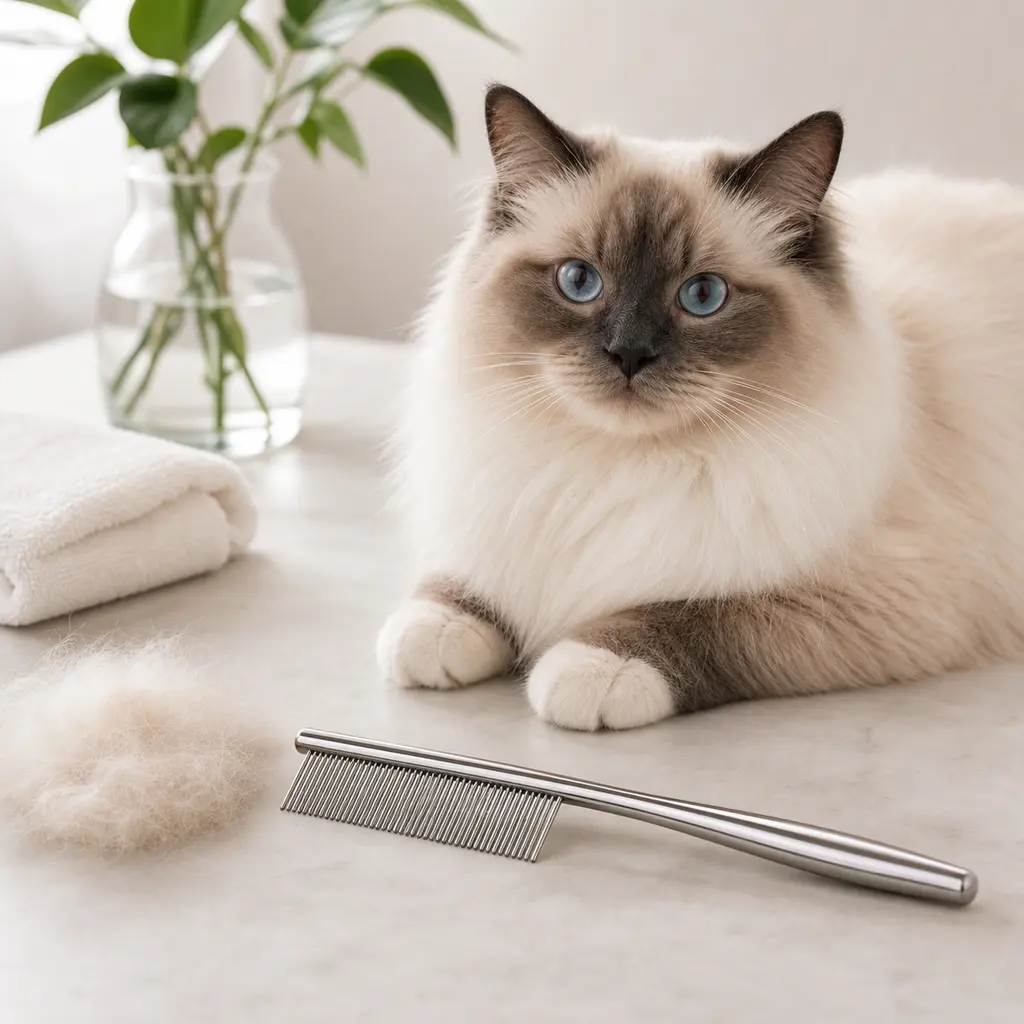
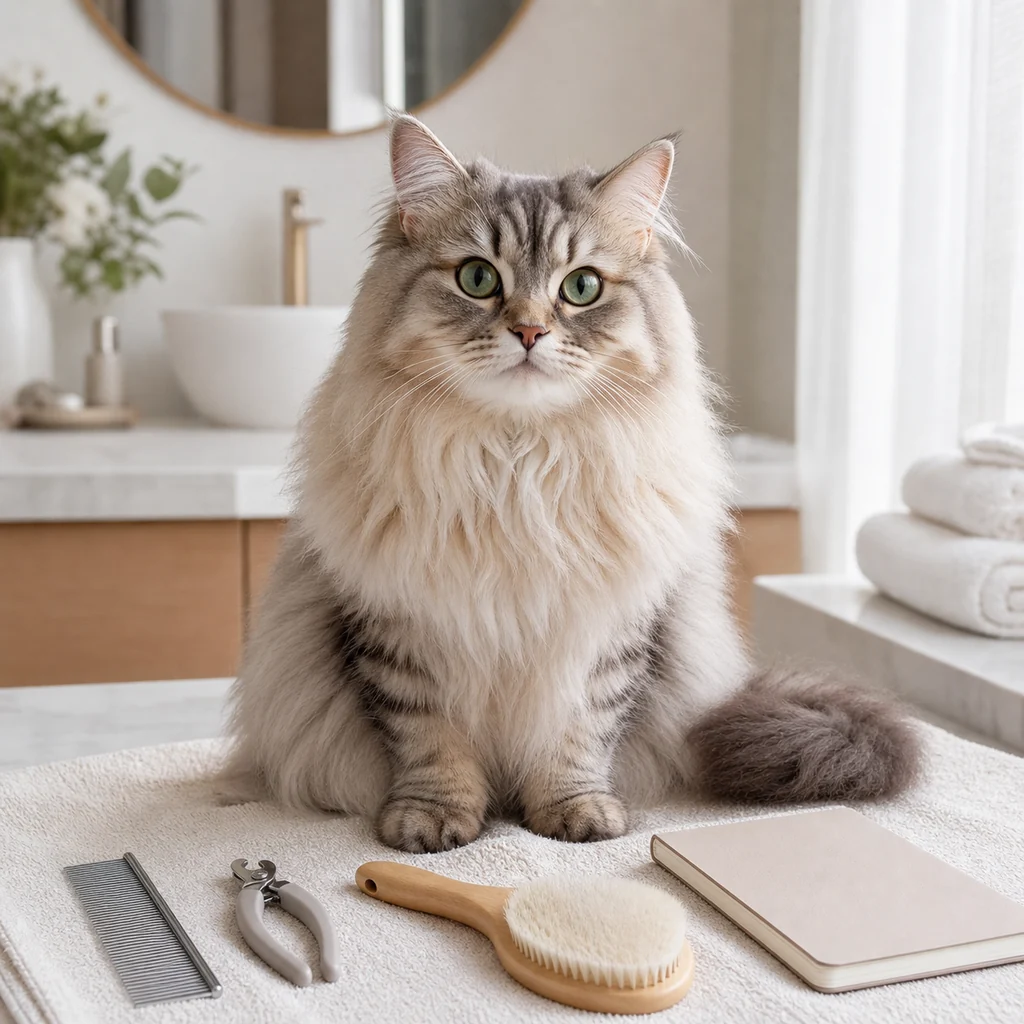
A stainless steel comb is often the honest tool for finding tangles behind ears, under legs, around collars, and near the tail before they tighten. Start with one change, then leave the room predictable enough for your cat to investigate.
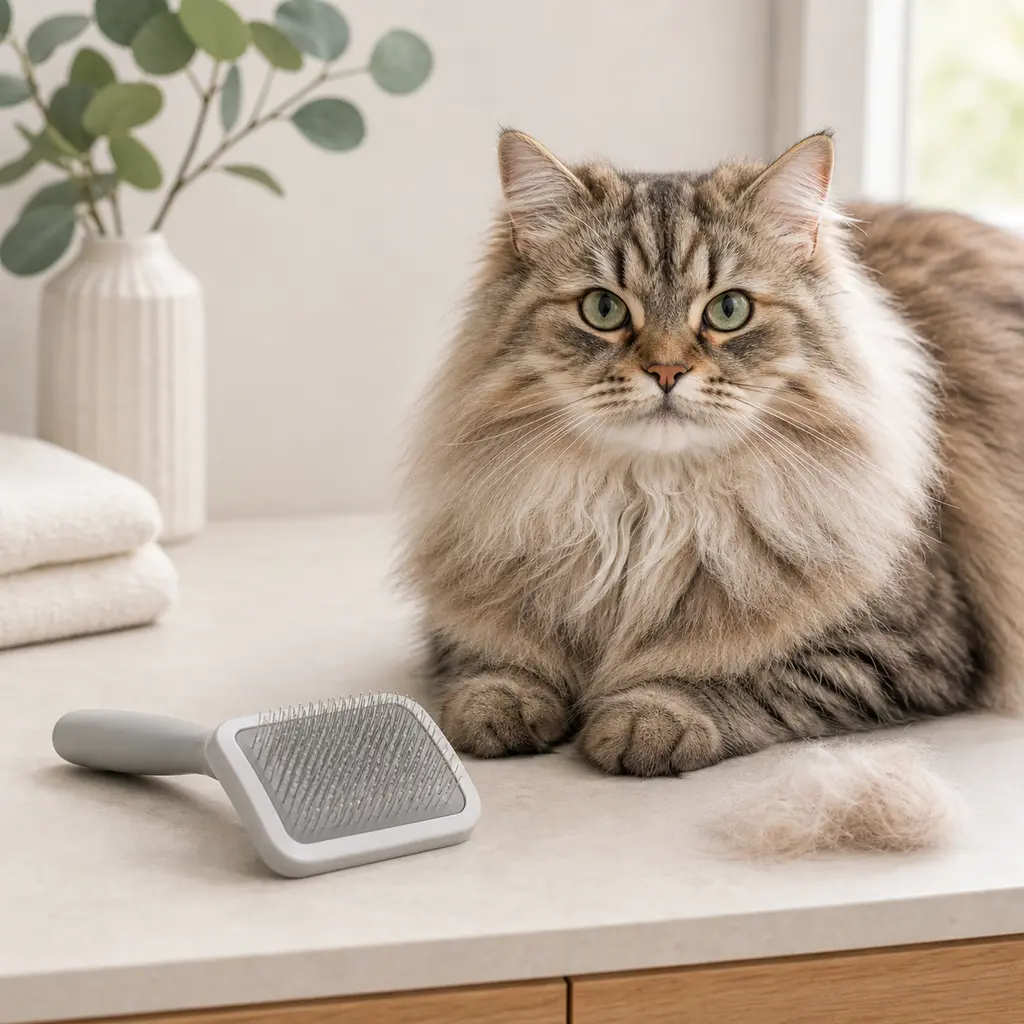
Use a slicker with care
A gentle slicker can help with fluffy or dense coats, but pressure matters. Keep passes light, stop early, and avoid scraping sensitive skin. Treat hesitation as design feedback: height, wobble, smell, texture, and placement all matter.
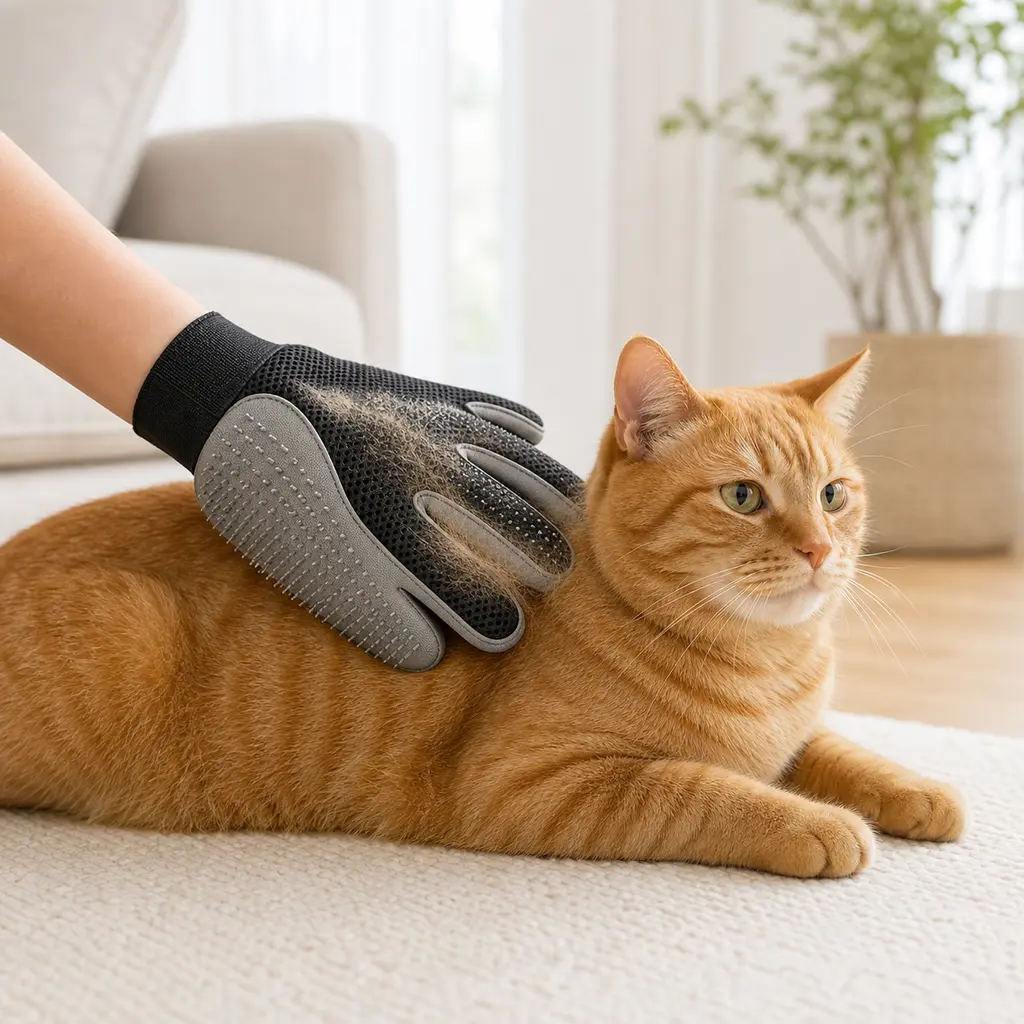
Use a glove for suspicious cats
A grooming glove can feel more like petting and less like a tool. It is not a mat remover, but it can help with loose hair and touch practice.
Know when tools are not enough
Painful mats, sudden coat changes, bald spots, sores, fleas, or skin that smells bad should go to a groomer or veterinarian instead of another rough brushing session. A useful supply should make the room easier to use, not just add another object to step around.
Watch the quiet test
With cat brushes by coat type, the real test happens when nobody is coaxing. Does your cat approach it during a normal room pass, use it without bracing, and leave calmly afterward? If not, change the location, texture, height, or stability before buying a second version.
Before you decide
Are you choosing by coat type?
Can your cat handle the tool calmly?
Are mats small and loose enough for home care?
Would painful skin get professional help?
Next best moves
Try one short session before buying more tools.
Use a comb to find tangles early.
Ask a groomer or vet about painful mats.
Helpful cat setup picks
For cat brushes by coat type, a few well-placed pieces beat a crowded room your cat has to navigate.
Affiliate links: Furball Cove may earn from qualifying purchases at no extra cost to you.
How do I know if cat brushes by coat type is working?
A grooming tool is working when you can use it briefly without chasing, pinning, or turning the session into a fight. The coat should feel easier to check, and your cat should still be willing to come back later.
When should I get help with cat brushes by coat type?
Ask a groomer or veterinarian for tight mats, painful skin, sudden bald spots, sores, fleas, or coat changes that do not feel normal for your cat. Some problems need skilled hands, not a stronger brush.