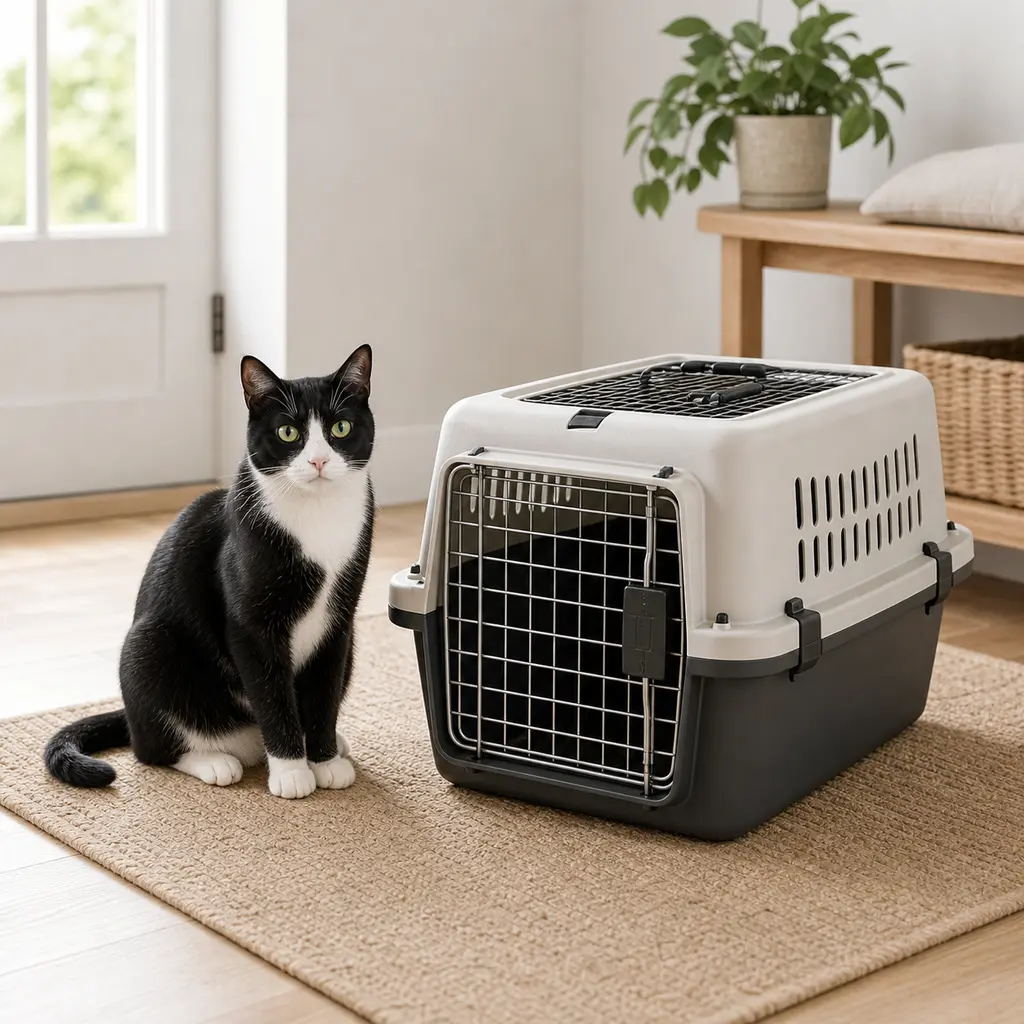
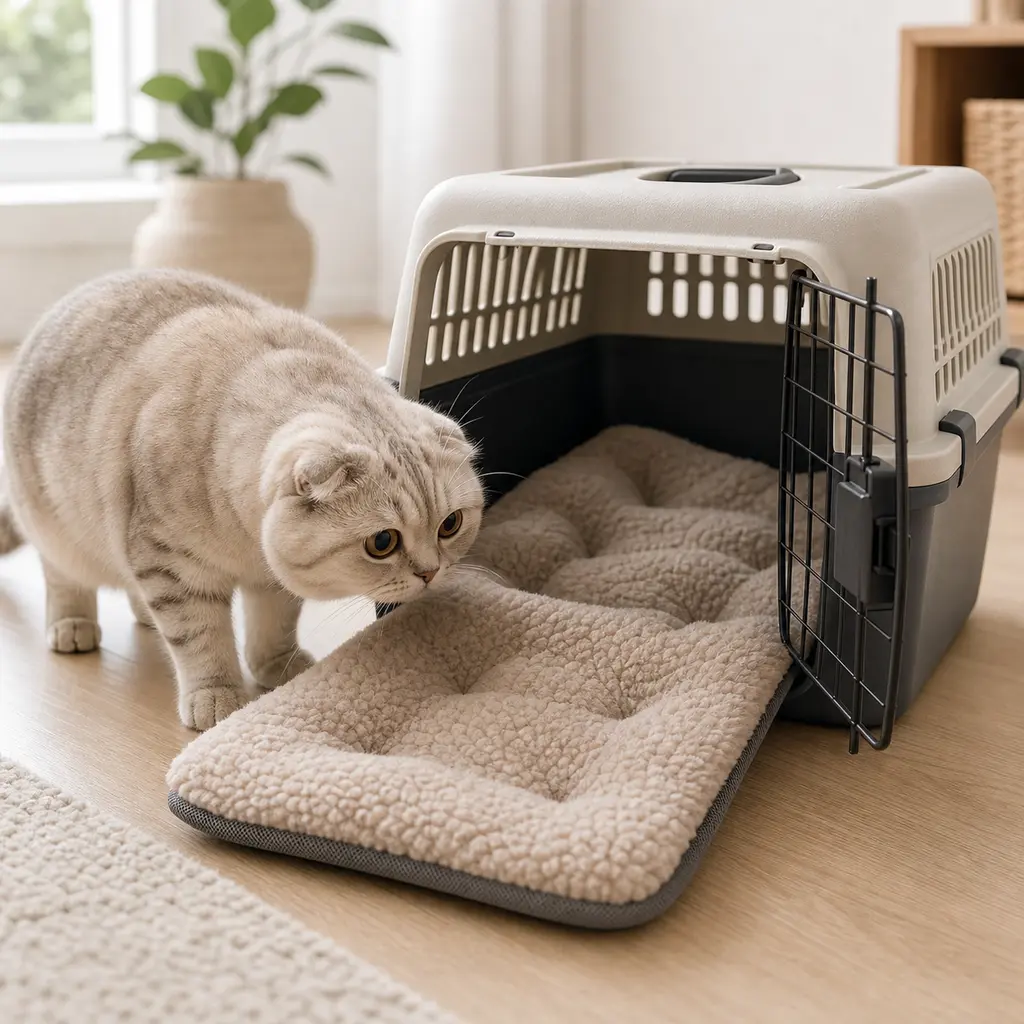
A limping cat is showing pain, weakness, or injury until proven otherwise, and sudden, severe, or persistent limping deserves a veterinarian call.
Cats hide discomfort well. A limp may be the only visible clue that a paw, nail, joint, muscle, bite wound, jump, or deeper health issue is bothering your cat.
Limit jumping while you assess
Keep your cat indoors, reduce big jumps, and make food, water, litter, and rest easy to reach. A sore cat should not have to climb to prove the problem is real.
Treat symptom pages as triage support, not a diagnosis. Appetite, water, urine, stool, breathing, mobility, gums, pain signs, and energy matter more than one isolated symptom word.
Check only what is safe to see
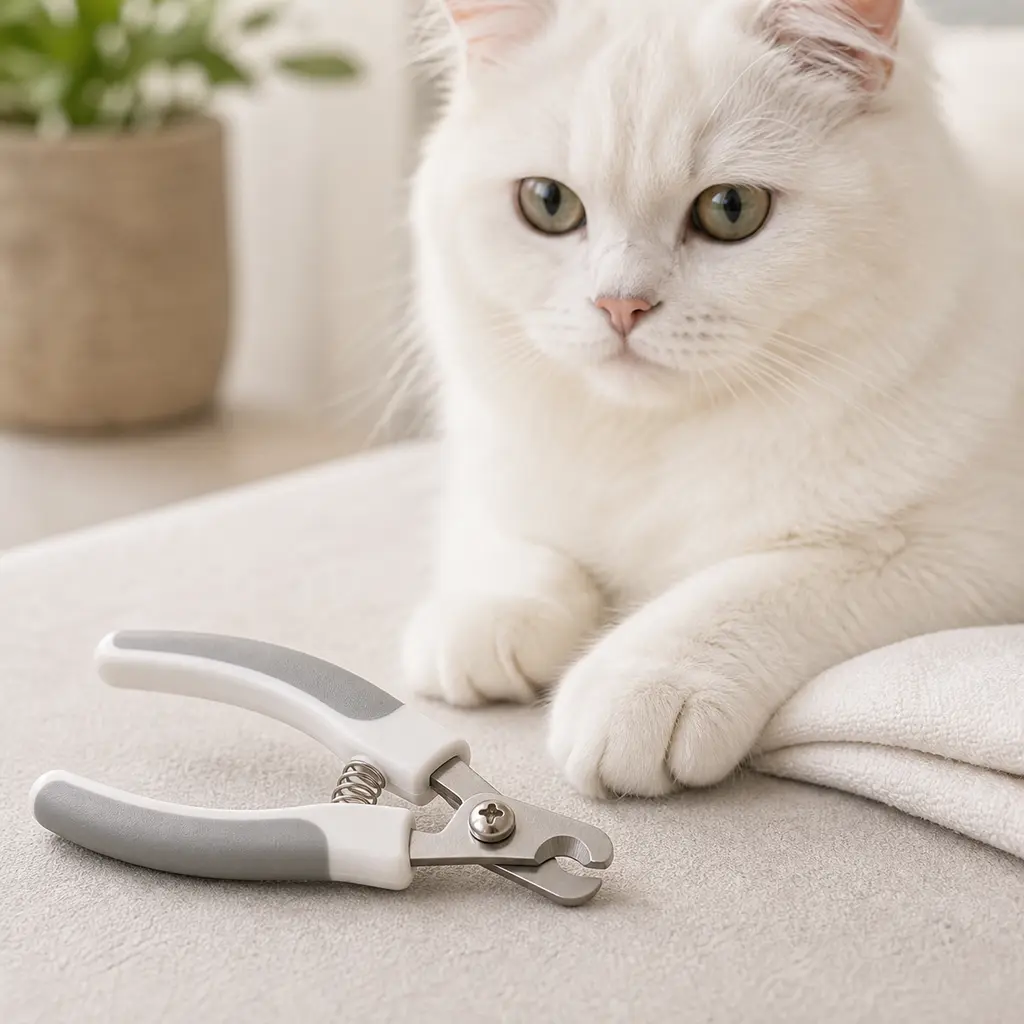
If your cat allows it calmly, look for a torn nail, swelling, a stuck object, heat, bleeding, or a tender paw. Stop if your cat resists; pain can make even a gentle cat react.
Start by deciding whether this can wait. Breathing trouble, urine changes, appetite loss, severe pain, collapse, toxin exposure, or sudden decline means the next step is a vet call.
Watch the whole routine
Reluctance to jump, hiding, lower appetite, growling when touched, missing the box, or sleeping in unusual places can matter as much as the limp itself.
Write down timing, frequency, appetite, litter use, breathing, movement, and any trigger you saw. A short video is often more useful to your veterinarian than a long description.
Do not use human pain medicine
Human pain relievers can be dangerous for cats. Call your veterinarian for sudden, severe, worsening, or persistent limping, swelling, wounds, suspected falls, or a cat who seems painful.
Do not monitor at home when breathing is hard, gums look pale or blue, the cat cannot stand, pain is obvious, appetite stops, urination changes, or symptoms escalate.
Bring movement details
Tell the clinic which leg, when it started, whether your cat can bear weight, recent jumps or fights, appetite, litter use, and whether the limp improves or worsens after rest.
Treat symptom pages as triage support, not a diagnosis. Appetite, water, urine, stool, breathing, mobility, gums, pain signs, and energy matter more than one isolated symptom word.
Before you decide
Can your cat bear weight?
Any swelling, wound, bleeding, torn nail, or suspected fall?
Is your cat hiding, painful, not eating, or avoiding the box?
Has the limp persisted or worsened?
Next best moves
Restrict jumping and keep resources close.
Do not give human medication.
Call your vet for sudden, severe, persistent, or painful limping.
Quick cat question
Why is my cat limping?
A limping cat is showing pain, weakness, or injury until proven otherwise, and sudden, severe, or persistent limping deserves a veterinarian call.
When should I get help?
Call your veterinarian if the change is sudden, painful, repeated, worsening, or paired with appetite, litter, breathing, movement, or behavior changes.