One missed meal is not always urgent, but it becomes a vet-call issue faster if your cat is a kitten, senior, already ill, hiding, vomiting, weak, painful, or still refusing food.
Cats are not small dogs when it comes to appetite changes. A skipped meal can be stress or dislike, but the timeline, water, litter, energy, and nausea signs decide how worried to be.
Check the last normal meal
Write down when your cat last ate normally, what food was offered, whether treats were eaten, and whether anything changed in smell, texture, bowl location, noise, or another pet near the food.
Treat symptom pages as triage support, not a diagnosis. Appetite, water, urine, stool, breathing, mobility, gums, pain signs, and energy matter more than one isolated symptom word.
Check the whole cat, not just the bowl
Water interest, litter use, vomiting, drooling, hiding, weakness, mouth discomfort, belly discomfort, and energy matter. A bright cat who skipped breakfast is different from a quiet cat who will not come out.
Start by deciding whether this can wait. Breathing trouble, urine changes, appetite loss, severe pain, collapse, toxin exposure, or sudden decline means the next step is a vet call.
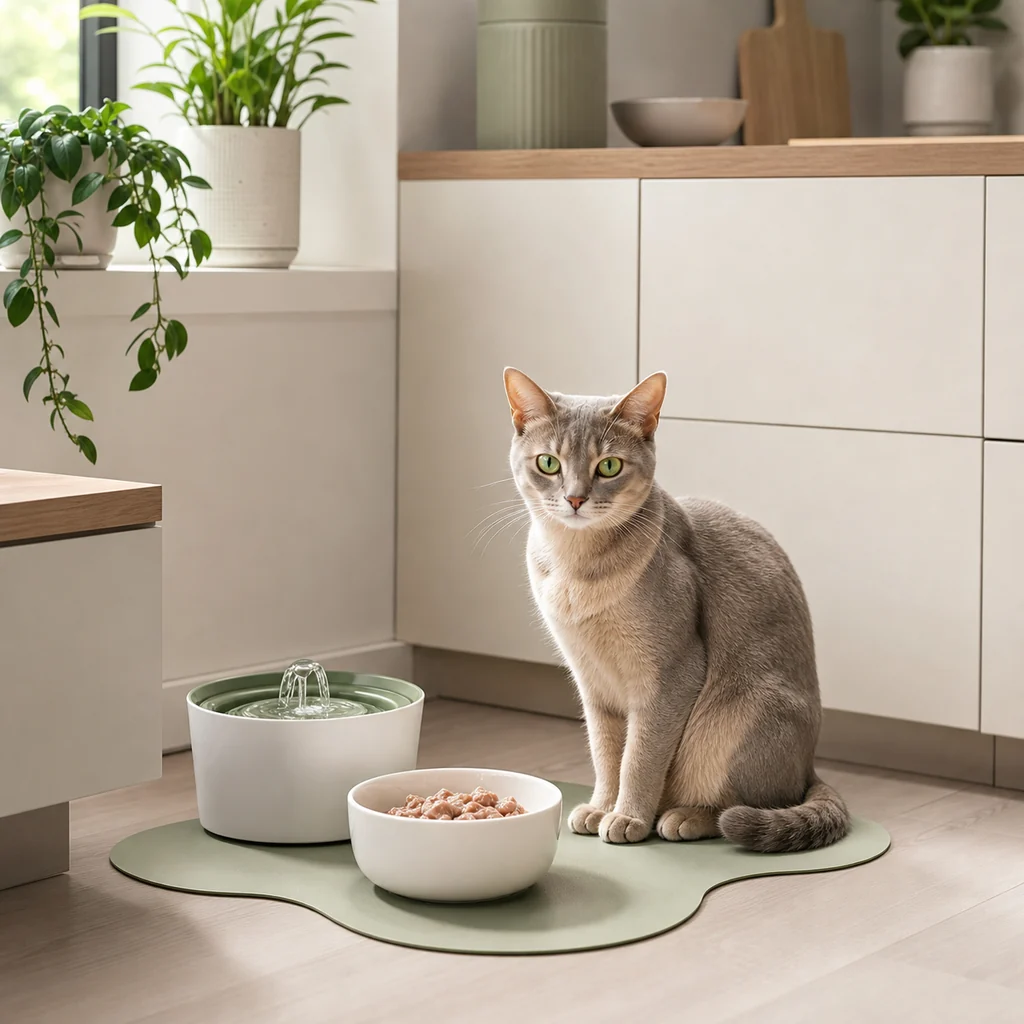
Offer familiar food calmly
Try a normal favorite in a quiet spot and avoid turning the moment into a chase or force-feeding scene. Do not stack new foods, toppers, and treats so quickly that you lose the pattern.
Write down timing, frequency, appetite, litter use, breathing, movement, and any trigger you saw. A short video is often more useful to your veterinarian than a long description.
Know when it is urgent
Call your veterinarian promptly if your cat keeps refusing food, is a kitten or senior, vomits, hides, drools, seems painful, appears weak, may have eaten something unsafe, or has litter-box changes.
Do not monitor at home when breathing is hard, gums look pale or blue, the cat cannot stand, pain is obvious, appetite stops, urination changes, or symptoms escalate.
Before you decide
How long since the last normal meal?
Is your cat drinking, using the box, and acting like themselves?
Any vomiting, drooling, hiding, pain, weakness, or toxin risk?
Is this a kitten, senior, or cat with a known health issue?
Next best moves
Offer familiar food in a quiet place without forcing.
Write down the meal timeline, water, litter, and energy.
Call your vet quickly if refusal continues or your cat seems unwell.
Quick cat question
My cat missed one meal: when is it urgent?
One missed meal is not always urgent, but it becomes a vet-call issue faster if your cat is a kitten, senior, already ill, hiding, vomiting, weak, painful, or still refusing food.
When should I get help?
Call your veterinarian promptly if your cat refuses food, seems weak, vomits, hides, drools, appears painful, or is a kitten, senior, or cat with a known health issue.