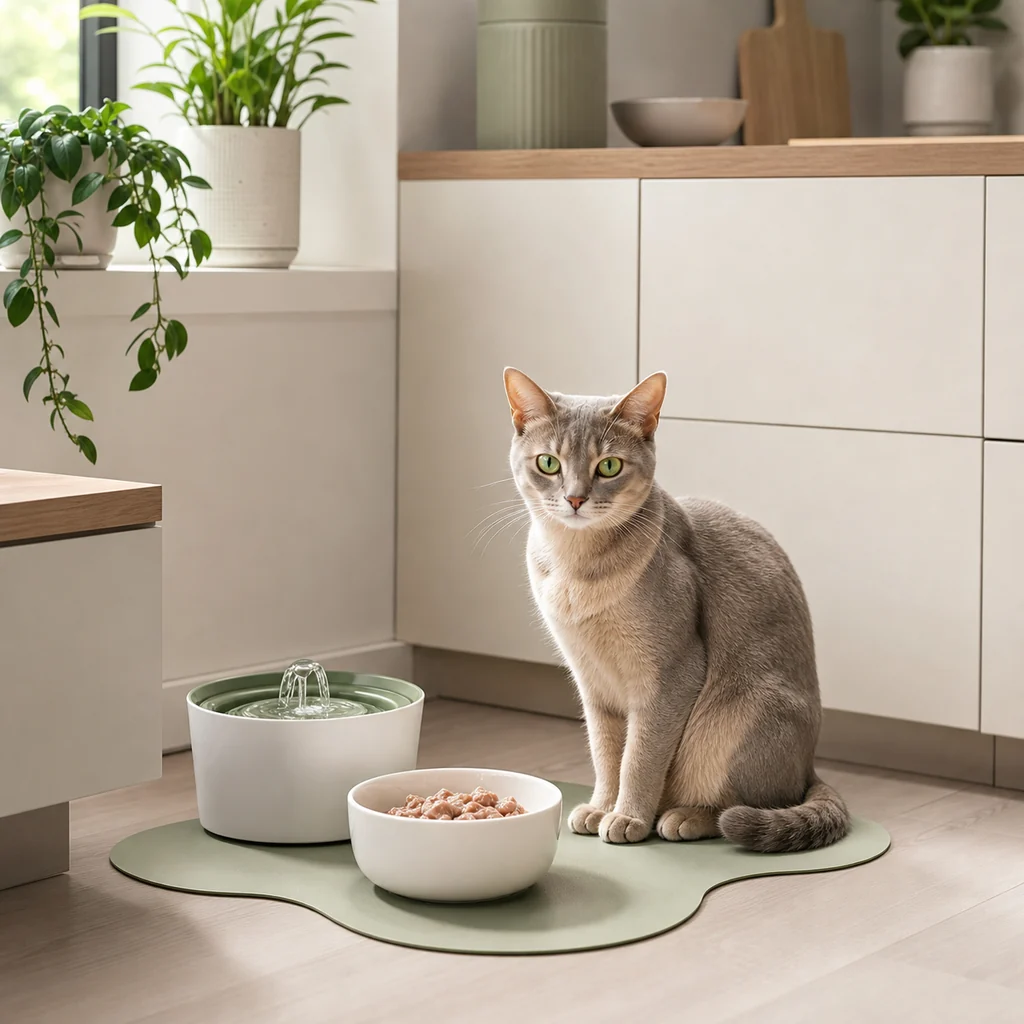
A cat who is not eating deserves quick attention, especially with hiding, vomiting, pain, weakness, toxin risk, or litter changes.
Start with the bowl, but do not stay there. Appetite can change because of stress, stale food, mouth pain, nausea, fever, another pet near the dish, or a medical problem that needs care.
Check the easy bowl problems
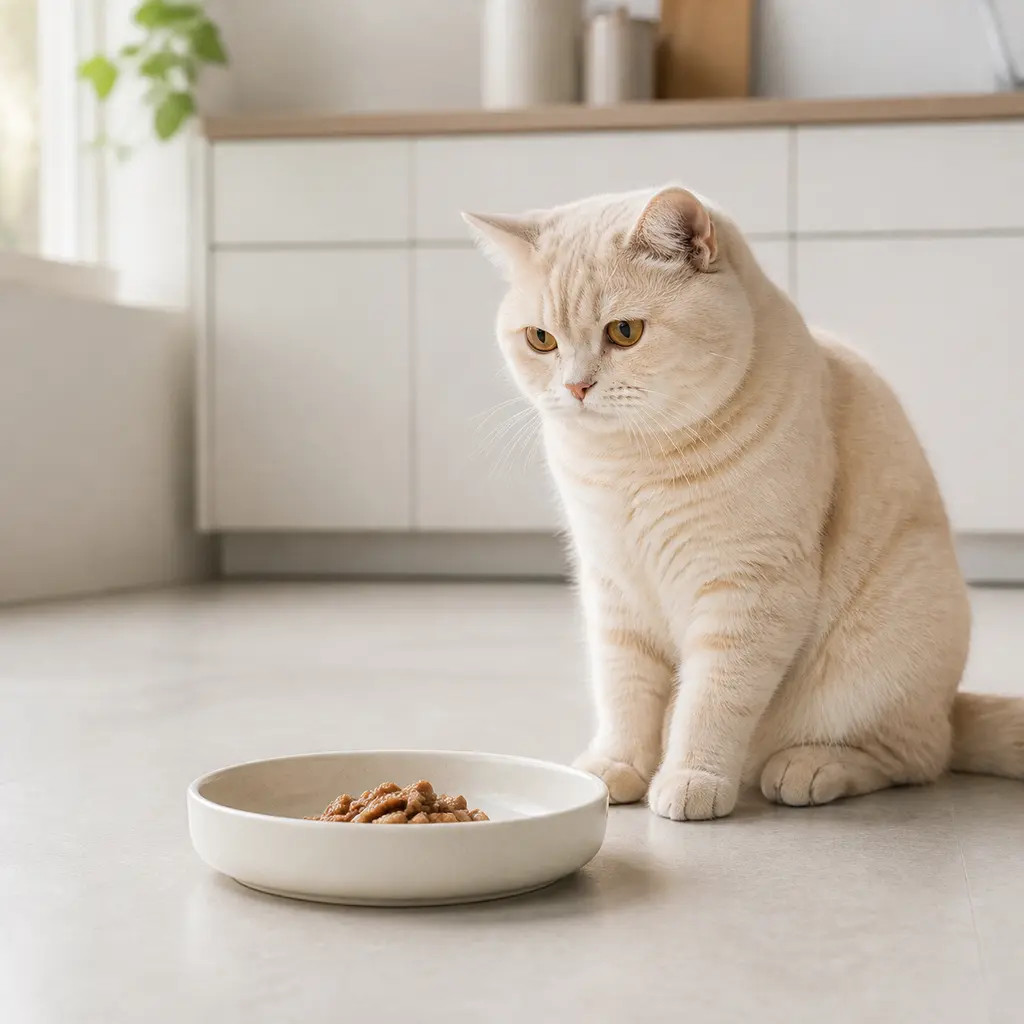
Look for stale food, a dirty dish, cold wet food, a noisy feeding spot, a deep bowl, or another pet crowding the station. Offer familiar food in a quiet place without forcing it.
Do not turn the first check into a long experiment. If your cat seems sick, the next step is a vet call.
Look for mouth or nausea clues
Drooling, bad breath, pawing at the mouth, dropping food, lip licking, vomiting, hiding, or sitting hunched changes the meaning of a skipped meal.
Write those details down. They are more useful to your veterinarian than a guess that the cat is picky.
Watch water and litter too
Appetite makes more sense when you also know whether your cat is drinking, urinating, passing stool, vomiting, or acting weak.
A quiet cat who is not eating and not using the litter box normally should not be treated like a routine food refusal.
Call sooner when the cat seems unwell
Call your veterinarian quickly if your cat refuses food, is a kitten or senior, vomits repeatedly, hides, seems painful, may have eaten something toxic, has trouble breathing, or has urine changes.
Do not give human medicine or try to force food unless your veterinarian tells you exactly what to do.
Bring a clear timeline
Note the last normal meal, what foods were offered, water interest, litter changes, vomiting, medications, treats, possible toxins, and recent stress.
A short video of the behavior can help your veterinarian see posture, breathing, walking, or mouth discomfort.
Before you decide
How long since a normal meal?
Is your cat drinking and using the litter box normally?
Any vomiting, drooling, hiding, pain, weakness, or toxin risk?
Is this a kitten, senior, or cat with a known health issue?
Next best moves
Offer familiar food quietly without forcing.
Write down the timeline and symptoms.
Call your vet quickly if appetite does not return or your cat seems unwell.
Helpful appetite-check picks
These are support tools for observing and getting care, not substitutes for a veterinarian.
Affiliate links: Furball Cove may earn from qualifying purchases at no extra cost to you.
It can be stress, stale food, mouth pain, nausea, fever, toxin exposure, another pet near the bowl, or another medical problem. The timeline and the rest of your cat's behavior matter.
Should I wait to see if my cat eats tomorrow?
Do not wait if your cat seems sick, is very young or senior, vomits, hides, has urine changes, or refuses food for more than a short time. Call your veterinarian for guidance.