Height matters
Watch your cat after a nap: many plant their paws, spread their toes, drag claws through sisal, and pull through the shoulders. A tall post beside the couch has to feel better than the sofa arm.
Updated
Scratchers
A strong scratching post gives your cat a full shoulder stretch in the room where claws already come out.
Cats do not scratch the sofa because they missed the memo. They scratch where the surface, location, stretch, and attention all make sense. A simple setup is kinder than a crowded one. Watch where your cat relaxes, hesitates, scratches, drinks, hides, and returns.
Watch your cat after a nap: many plant their paws, spread their toes, drag claws through sisal, and pull through the shoulders. A tall post beside the couch has to feel better than the sofa arm.
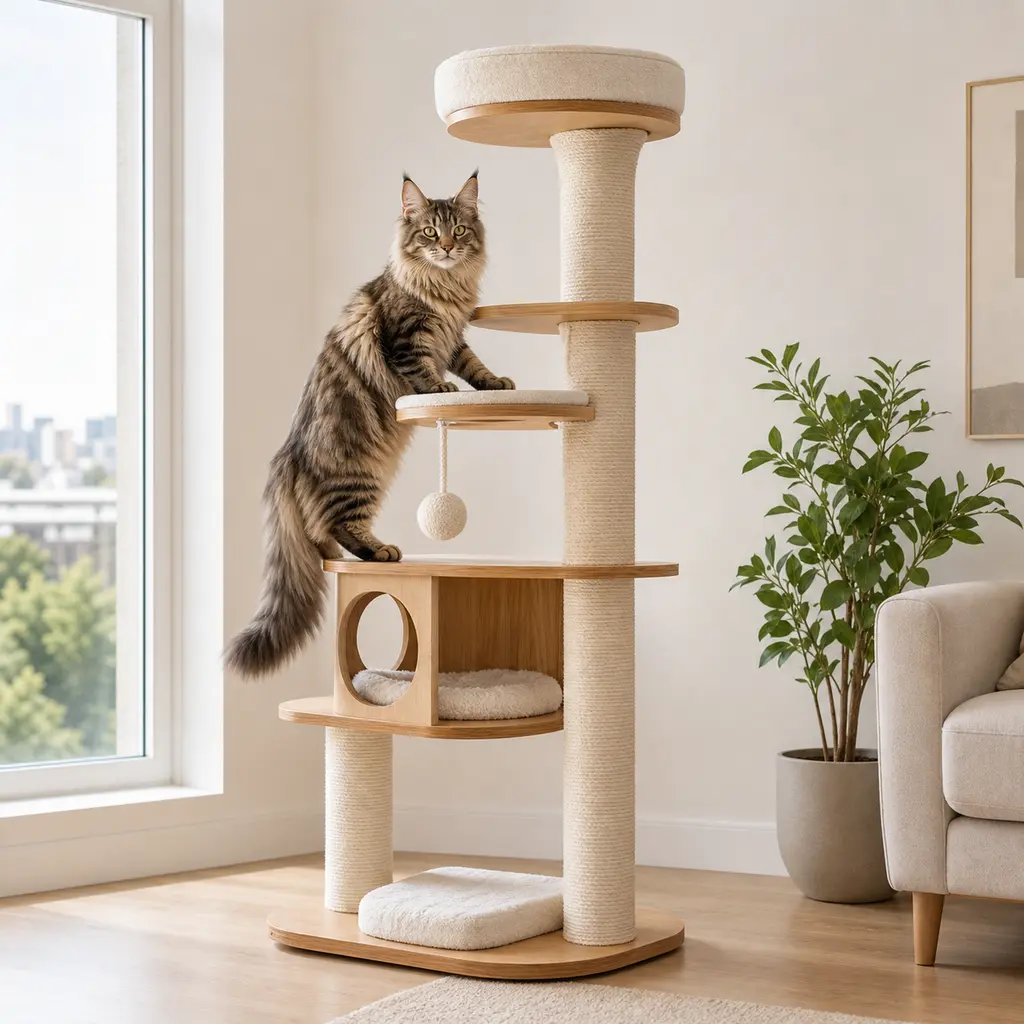
If the post wobbles, your cat may not trust it. A heavy base, wall support, or sturdy tree can make the approved target feel safe to use. Put it near a route your cat already uses instead of asking them to discover it in a forgotten corner.
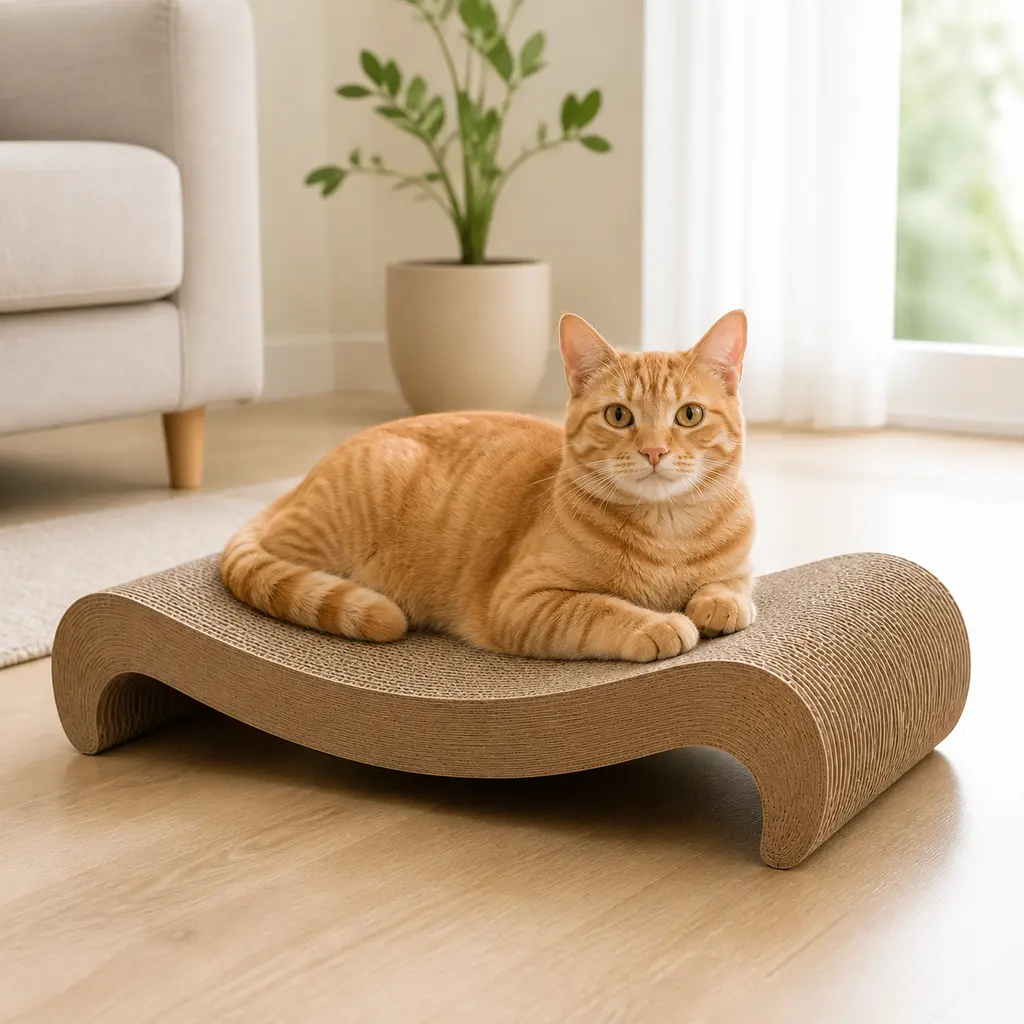
Some cats love sisal. Some prefer cardboard, carpet, wood, or a horizontal lounge. The right answer is the one your cat uses without being begged. The best version is usually the one your cat uses calmly while you can still clean and maintain it.
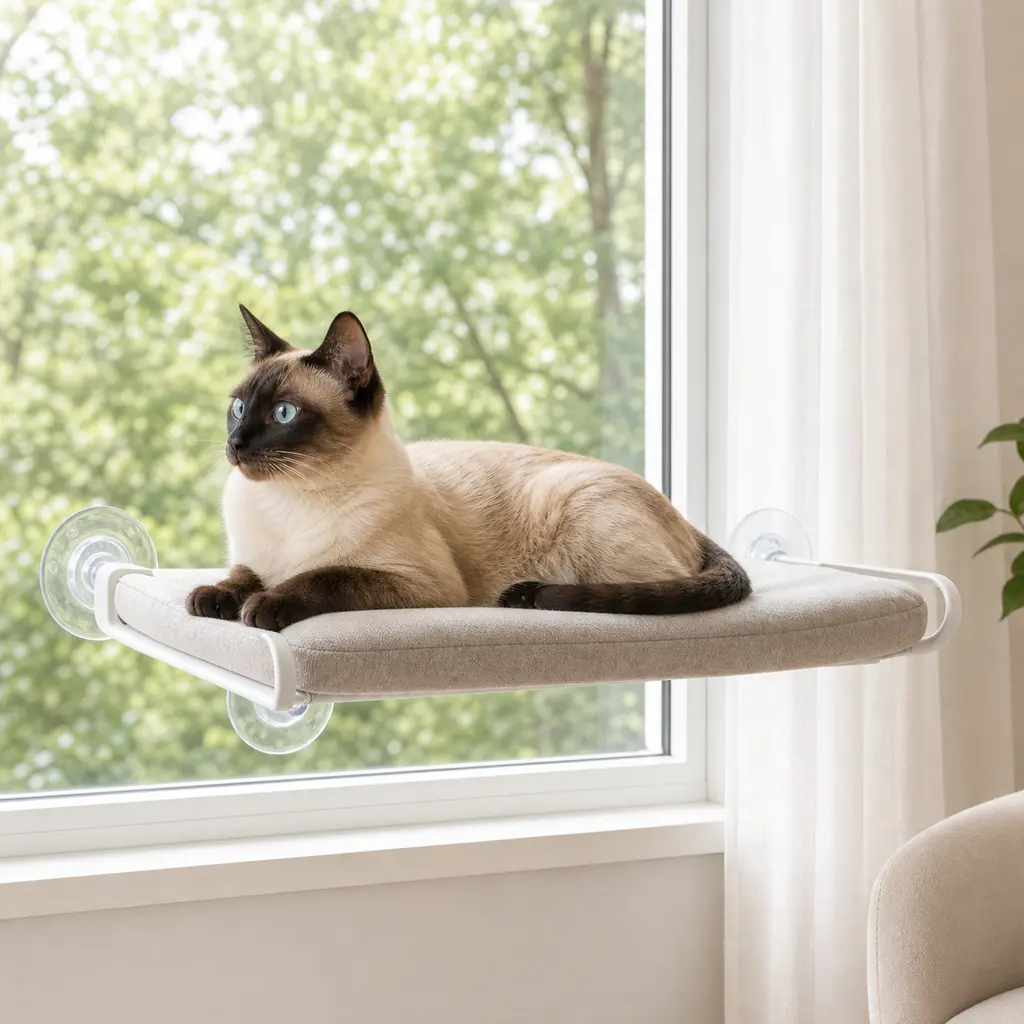
Place the post near the sofa arm, doorway, bed, or window route already being scratched. Once the new habit is strong, you can sometimes move it gradually. Start with one change, then leave the room predictable enough for your cat to investigate.
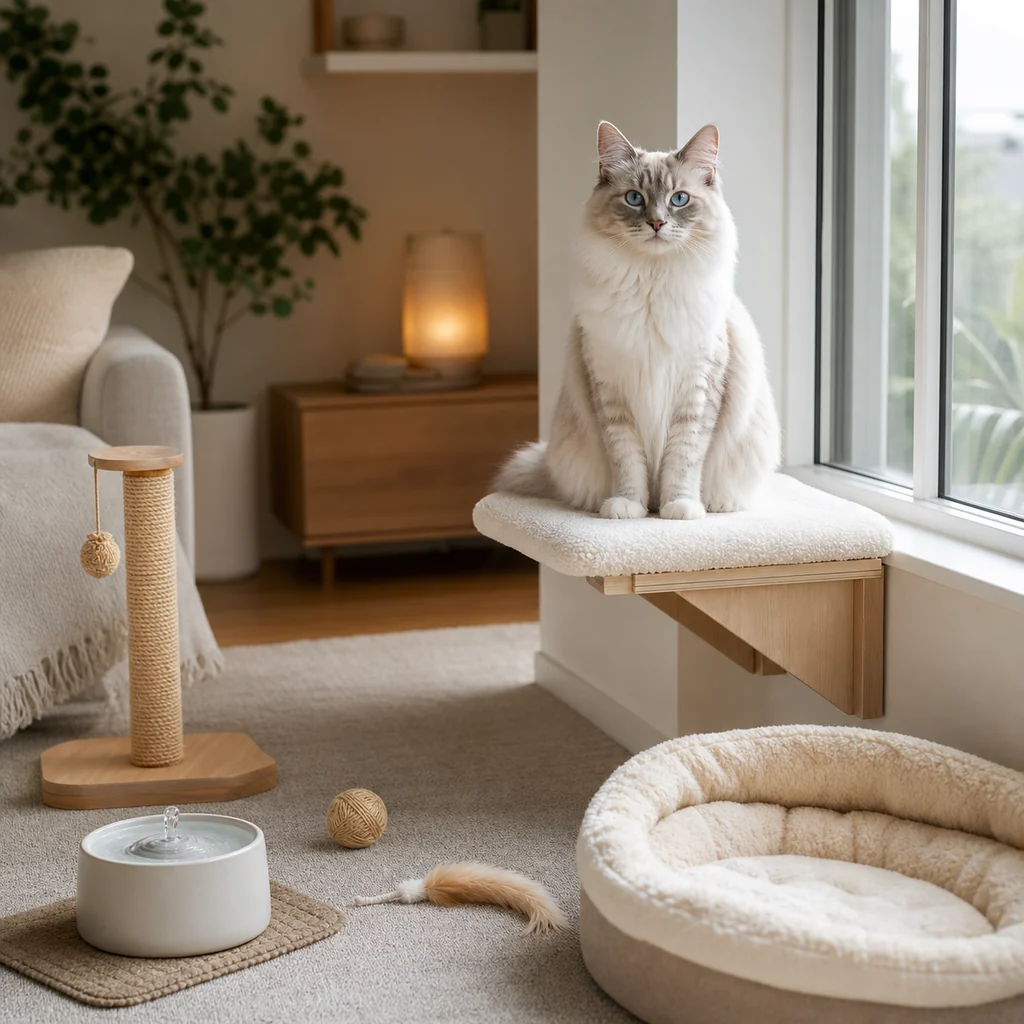
With cat scratching posts, the real test happens when nobody is coaxing. Does your cat approach it during a normal room pass, use it without bracing, and leave calmly afterward? If not, change the location, texture, height, or stability before buying a second version.
The right setup for cat scratching posts should be easy for your cat to use and easy for you to clean.
Affiliate links: Furball Cove may earn from qualifying purchases at no extra cost to you.
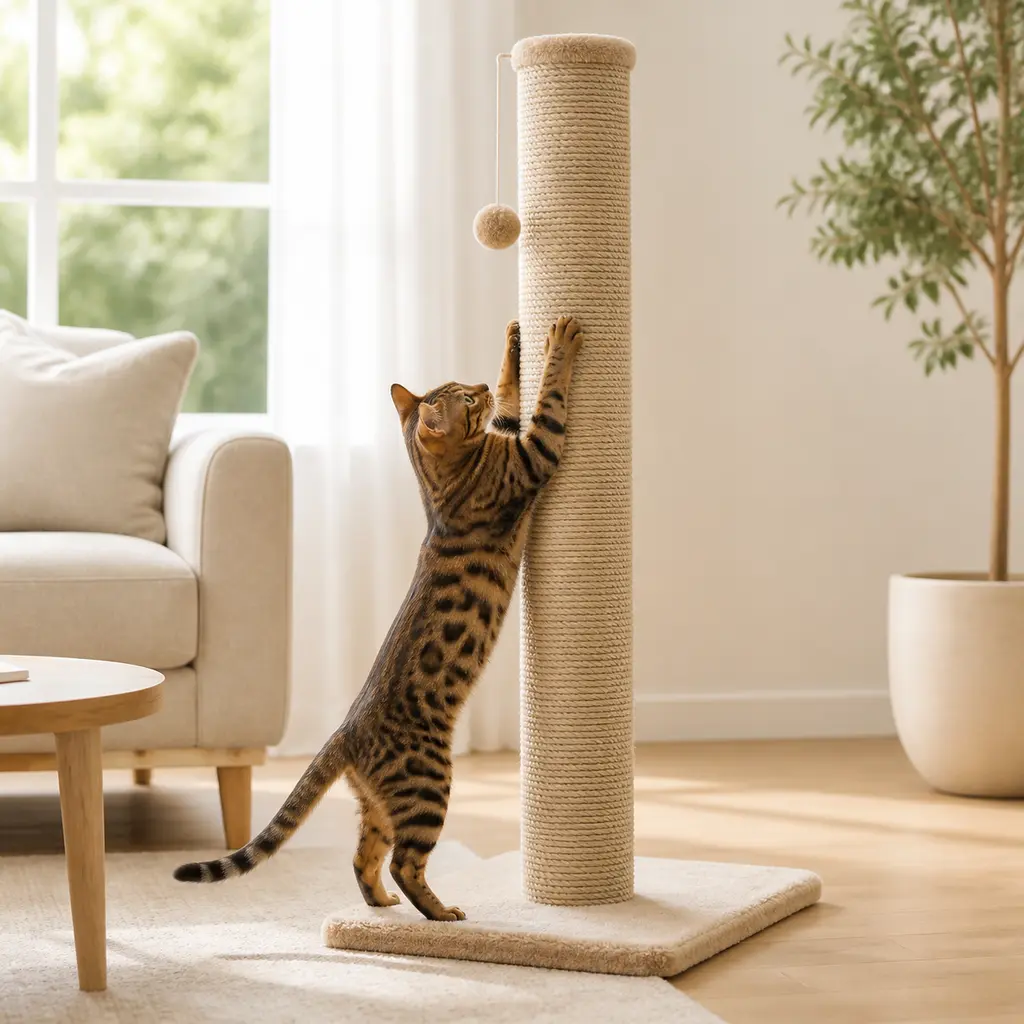
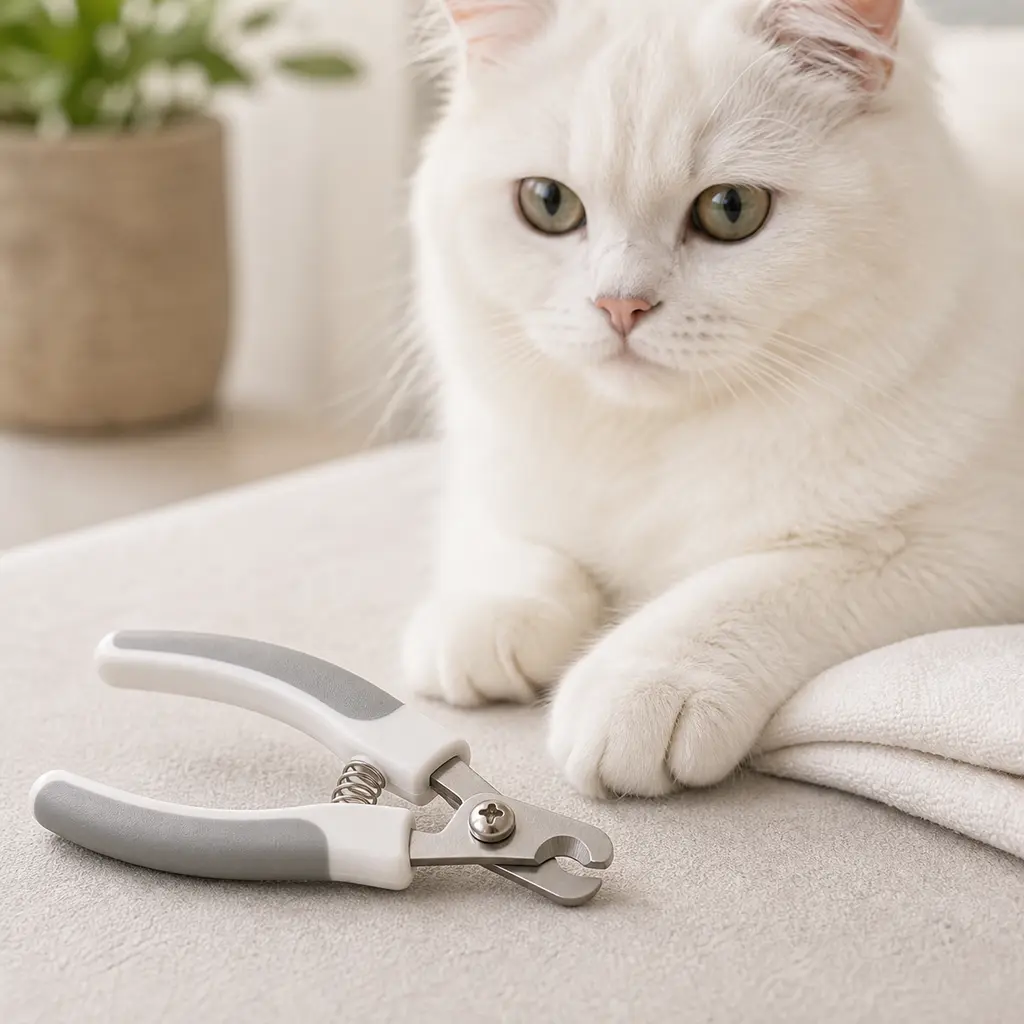
Use it in a cat scratching posts routine to make claw care part of the room instead of a scolding moment.
For cat scratching posts, choose this when you want to make the easy choice more appealing than the rug edge.
For cat scratching posts, choose this when you want to help a busy cat move up and down without using curtains or shelves.

A good pick for cat scratching posts: it can keep rewards ready so tiny training wins arrive on time.
A scratcher is working when your cat chooses it after naps, meals, greetings, or zoomies without you begging for the behavior. Good height, a steady base, and a surface your cat likes matter more than matching the furniture.
Move the sisal post beside the sofa arm, doorway, bed corner, or window route where claws already land. If your cat ignores upright sisal but shreds cardboard or carpet, offer that surface in a stable scratcher.