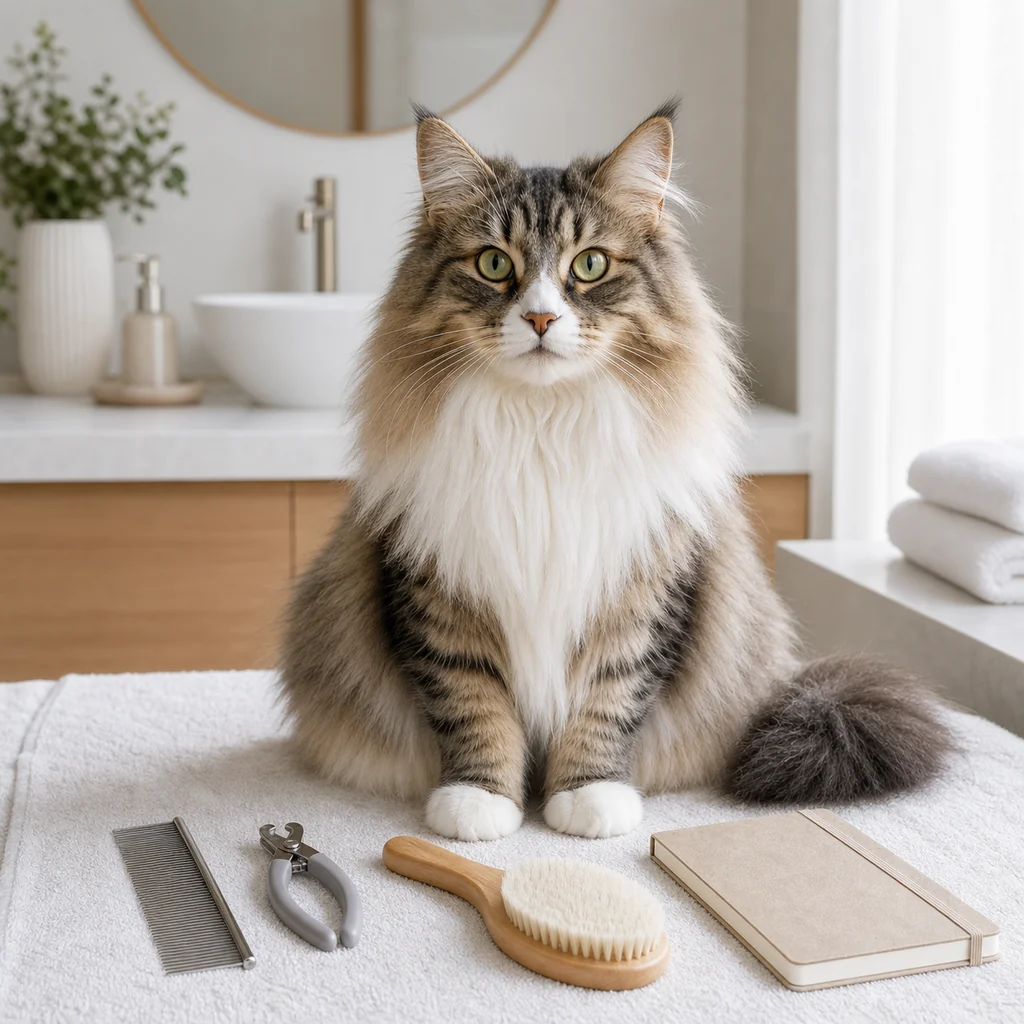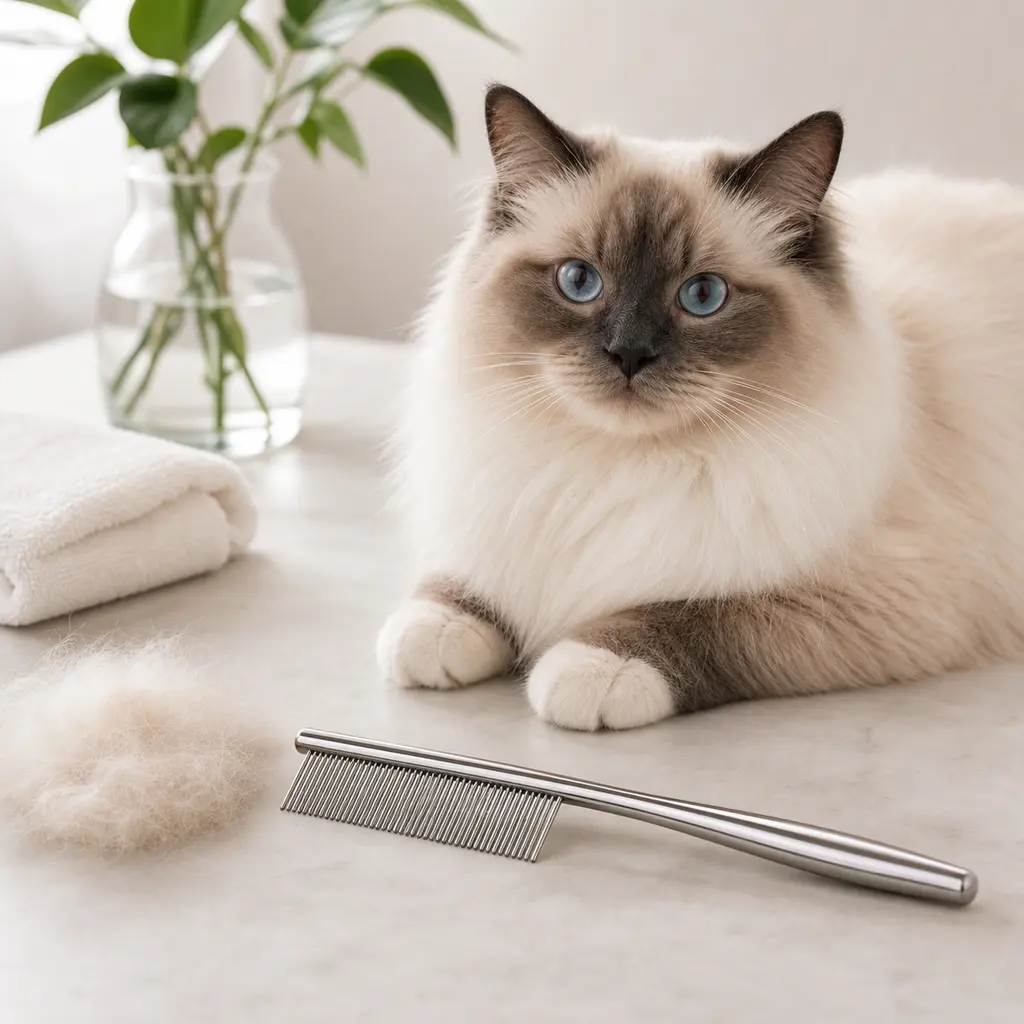
Comb before mats hurt
A steel comb finds tangles early, especially behind ears, under legs, and around collars. Stop before your cat gets irritated and ask a groomer or vet about painful mats.
Updated
Grooming
Cat grooming works best in tiny calm moments before mats, snags, or coat problems take over.
The goal is not a dramatic spa day. It is a regular habit where the cat can stay relaxed and small problems are noticed early. Think of supplies as invitations, not decorations. Put the useful things where your cat already feels safe enough to try them.
A steel comb finds tangles early, especially behind ears, under legs, and around collars. Stop before your cat gets irritated and ask a groomer or vet about painful mats.
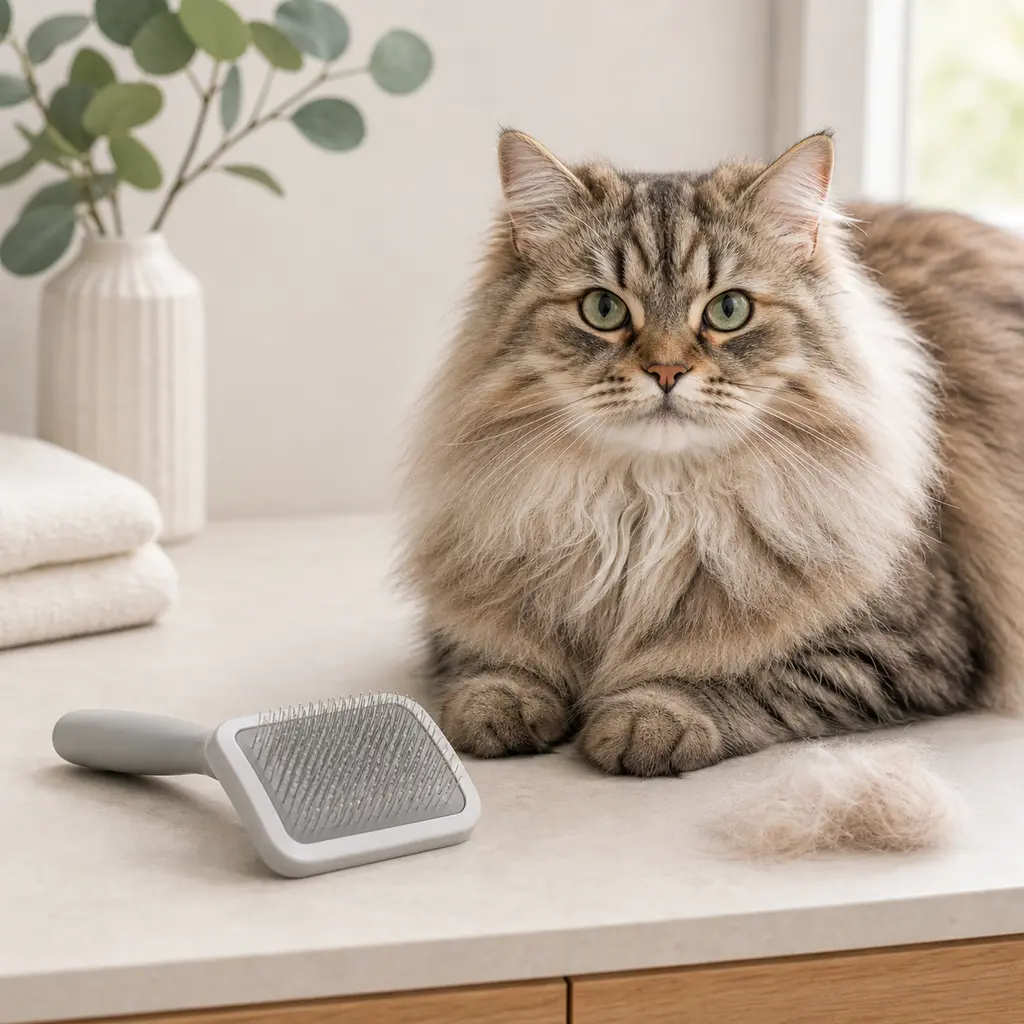
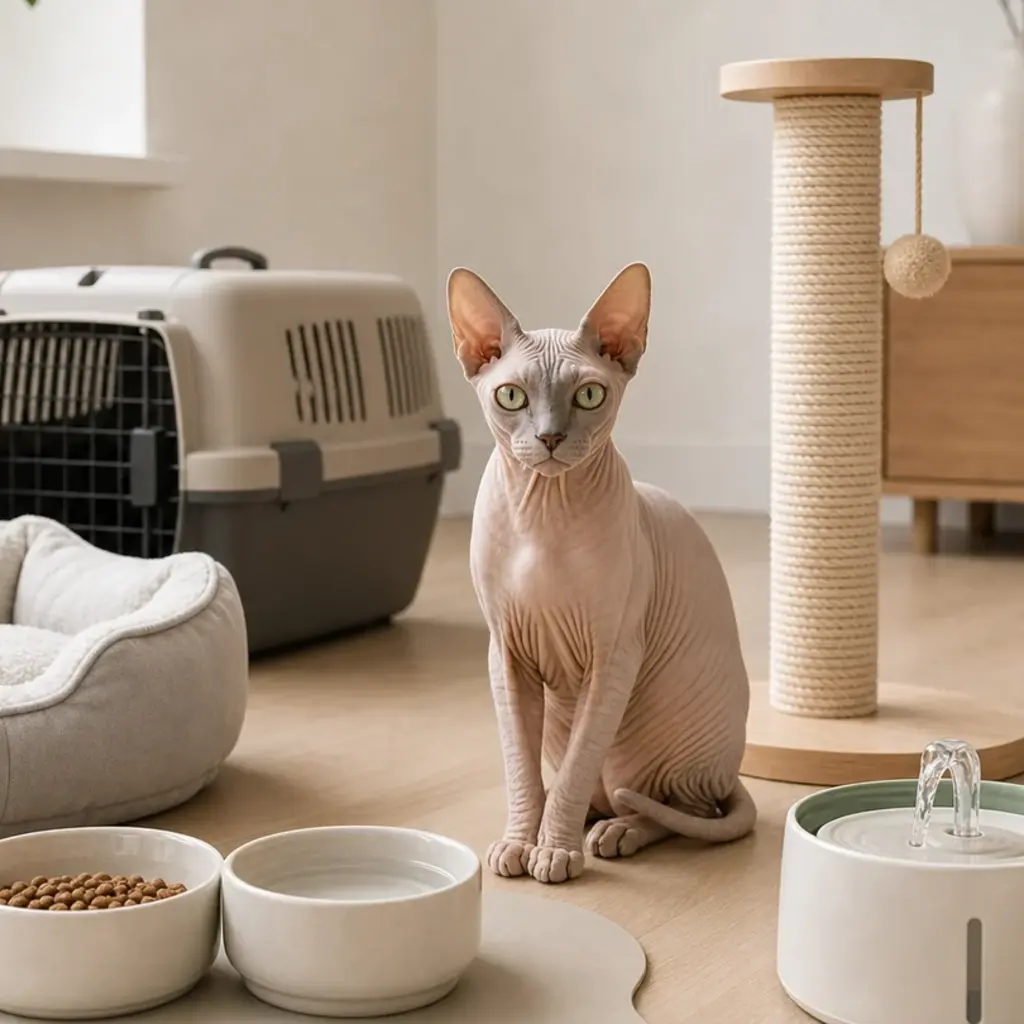
Short coats may only need a grooming glove or light brush. Long coats often need combing. Curly, hairless, or dense coats may need a more specific routine. Start with one change, then leave the room predictable enough for your cat to investigate.
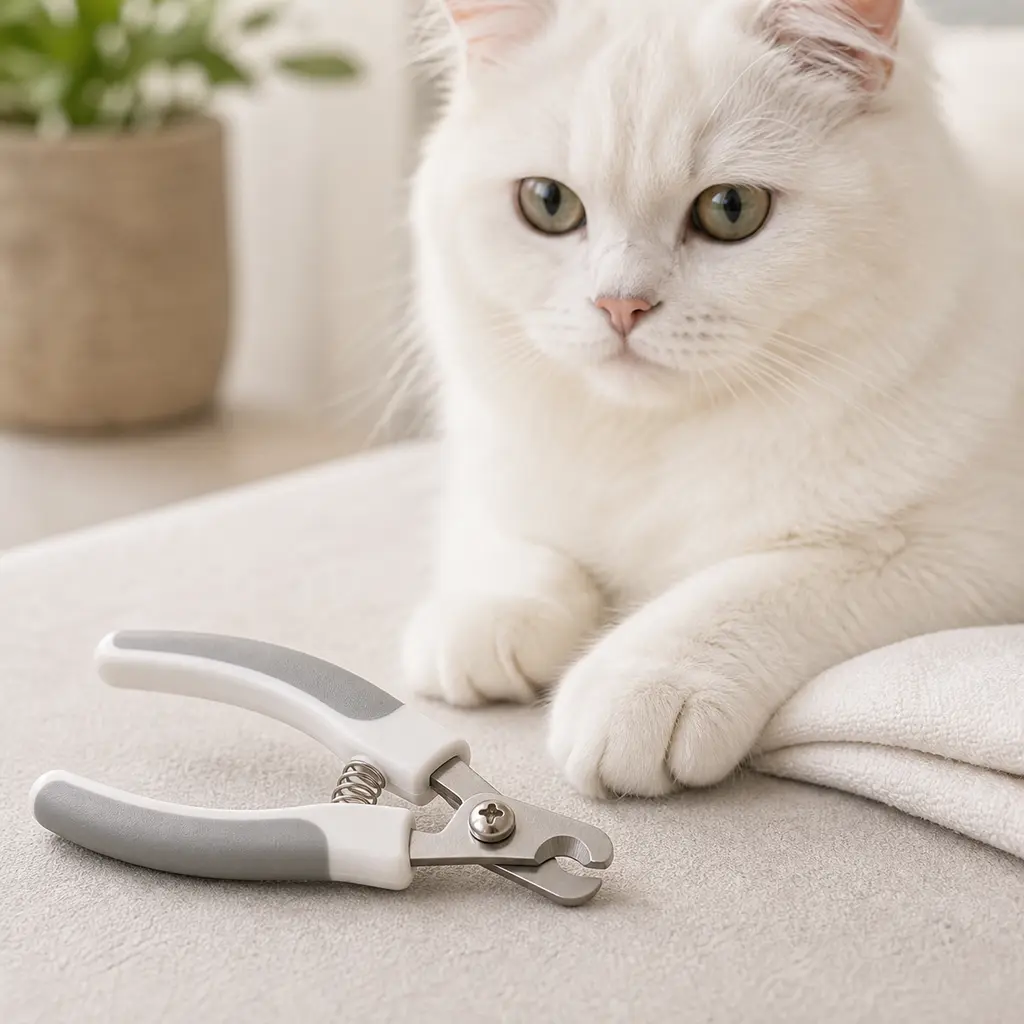
Touch the paw, reward, stop. Later press gently, reward, stop. Trim tiny tips only when the cat is calm enough for a clean moment. Your cat may need time to sniff, circle, rub, or ignore the new thing before using it confidently.
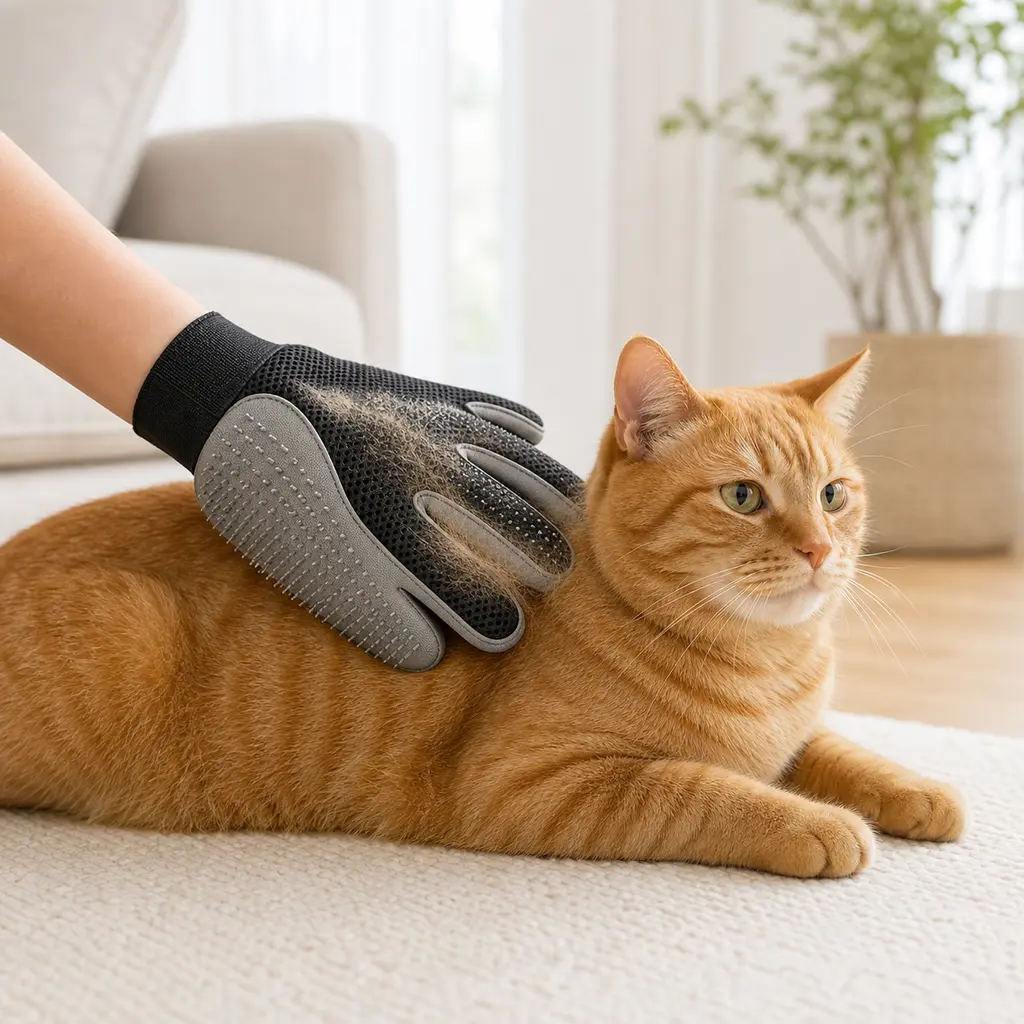
Look for sore skin, fleas, flakes, sudden hair loss, lumps, or coat changes. Call your vet if skin looks painful, smells bad, bleeds, or changes suddenly. Give the setup a few quiet days before deciding whether your cat truly likes it.
Regular brushing and hydration can help with normal swallowed hair. Frequent vomiting, appetite changes, or a cat who seems unwell should be discussed with your veterinarian. If your cat avoids it, move the item before you buy another version.
The right setup for cat grooming should be easy for your cat to use and easy for you to clean.
Affiliate links: Furball Cove may earn from qualifying purchases at no extra cost to you.
Use it in a cat grooming routine to find small tangles before they tighten behind ears, legs, or collars.
A good pick for cat grooming: it can support coat care when you pair each pass with calm handling.
This earns its spot in cat grooming because it can keep paw care quick when your cat is ready for only a tiny win.
Use it in a cat grooming routine to make coat checks feel closer to petting for brush-suspicious cats.
A grooming tool is working when you can use it briefly without chasing, pinning, or turning the session into a fight. The coat should feel easier to check, and your cat should still be willing to come back later.
Ask a groomer or veterinarian for tight mats, painful skin, sudden bald spots, sores, fleas, or coat changes that do not feel normal for your cat. Some problems need skilled hands, not a stronger brush.