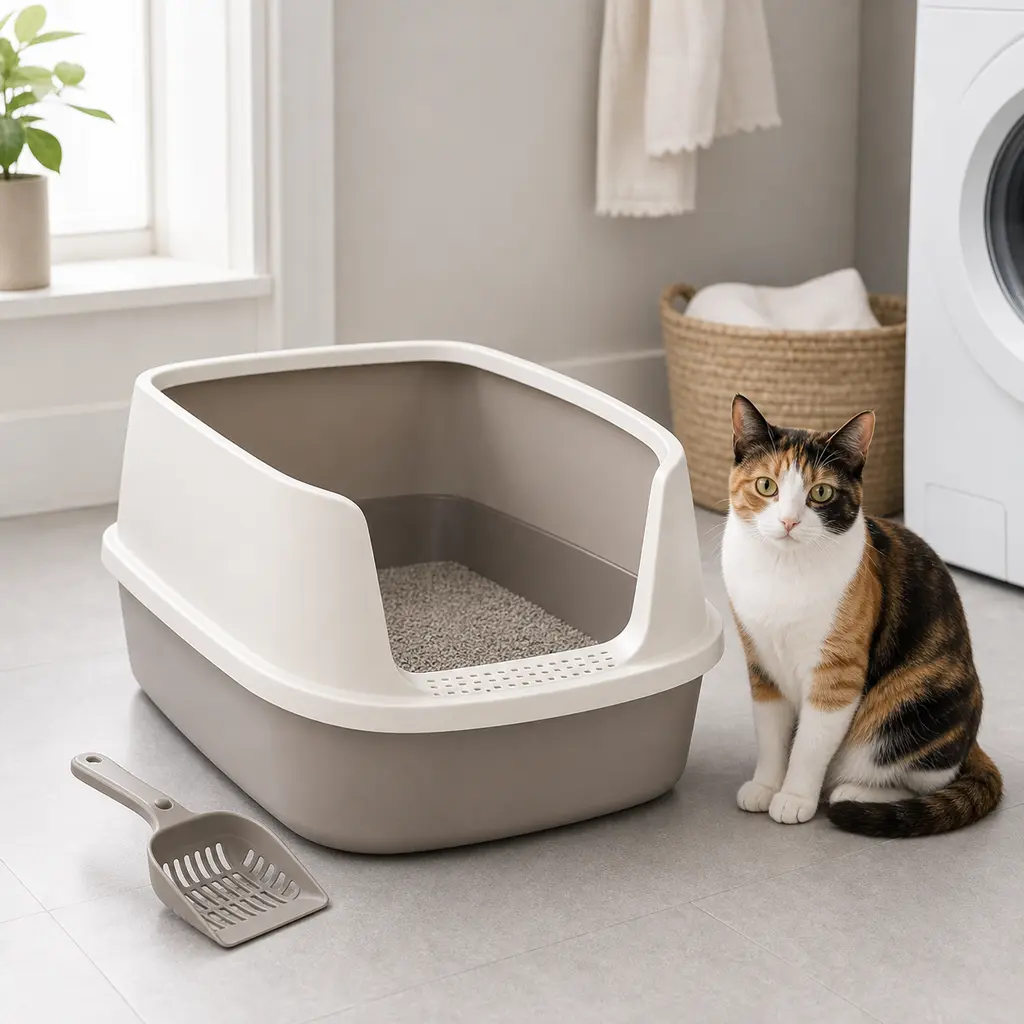
Start with access
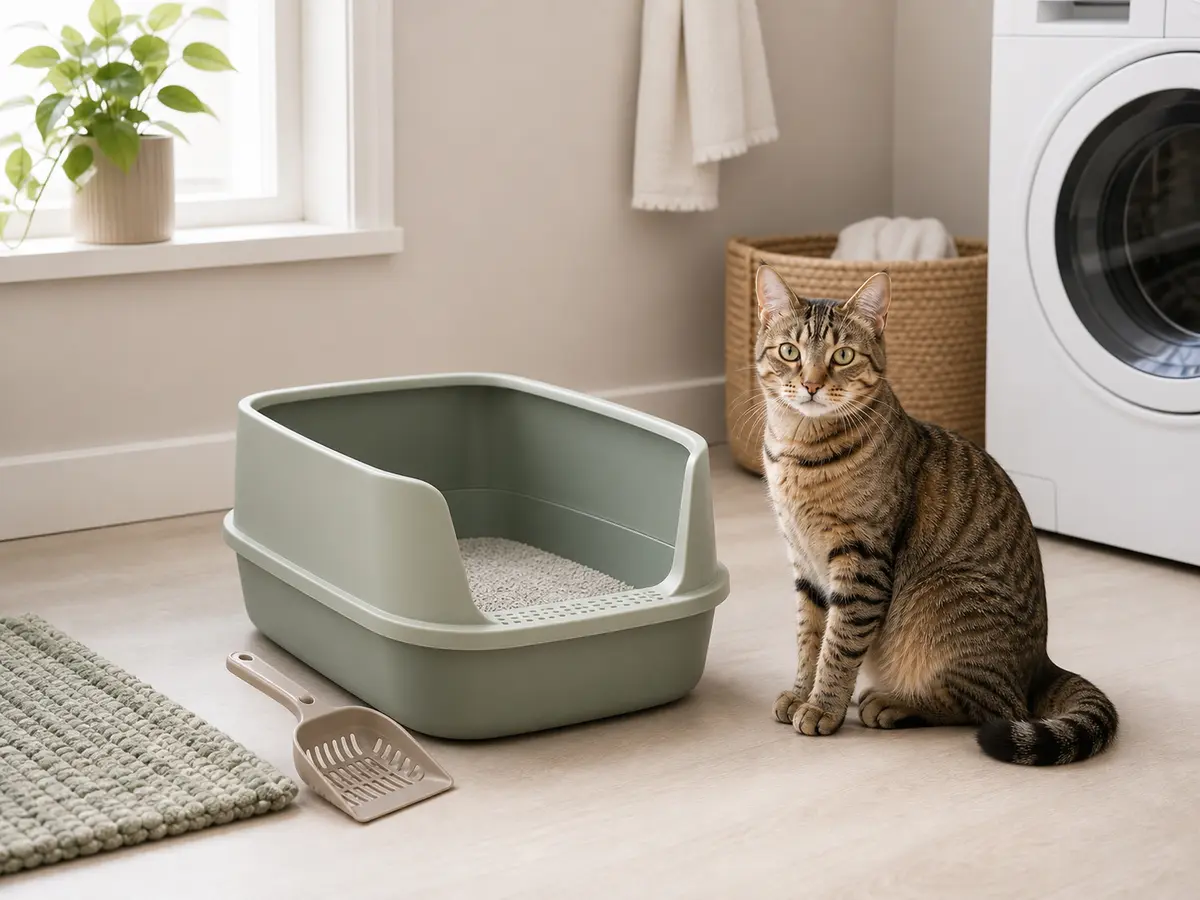
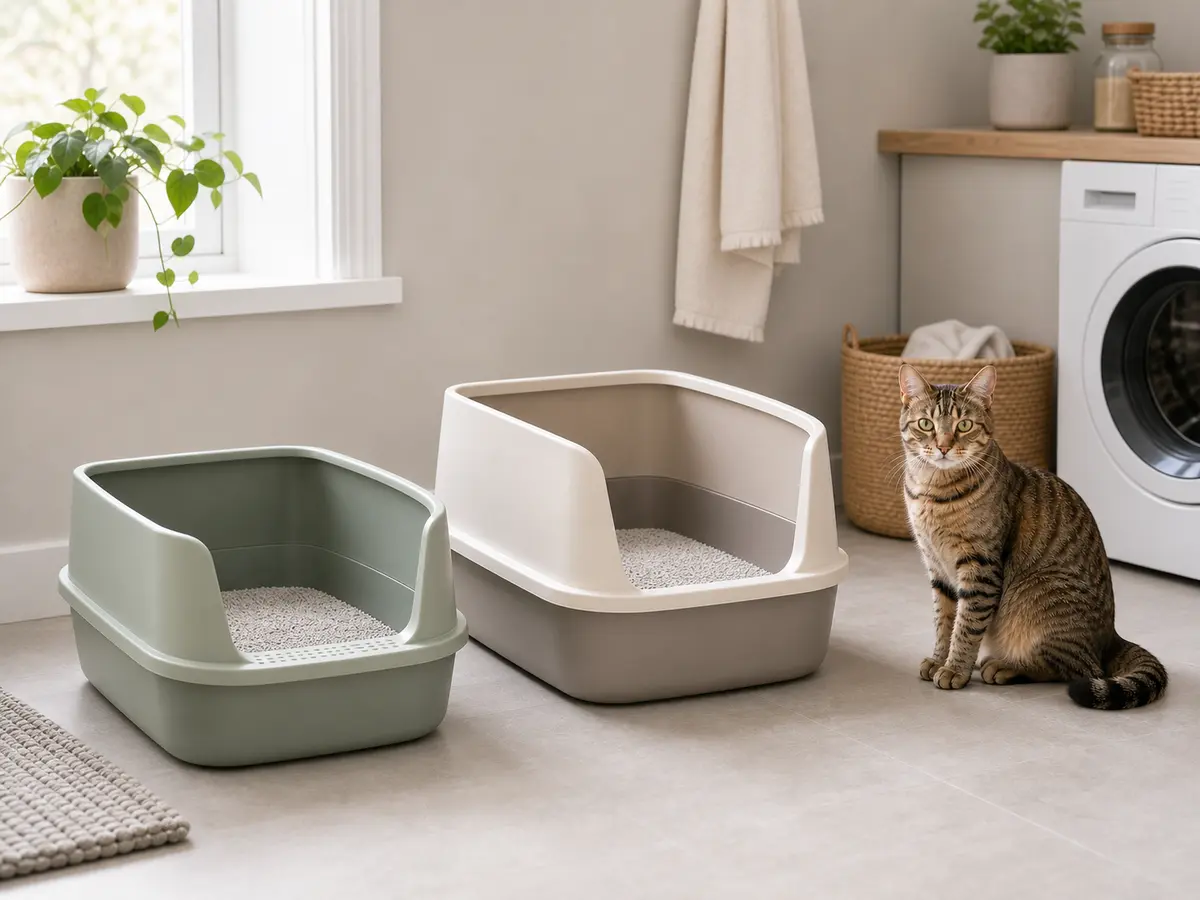
A common starting point is one box per cat, plus one extra when space allows. In real homes, placement matters as much as the number: the cat should not have to pass a bully, washing machine, or closed door.
Updated
Litter
A good litter setup is clean, easy to reach, and safe to leave.
Most litter problems make more sense when you look at box size, box count, traffic, cleaning, pain, stress, and whether another pet can block the path.
A common starting point is one box per cat, plus one extra when space allows. In real homes, placement matters as much as the number: the cat should not have to pass a bully, washing machine, or closed door.
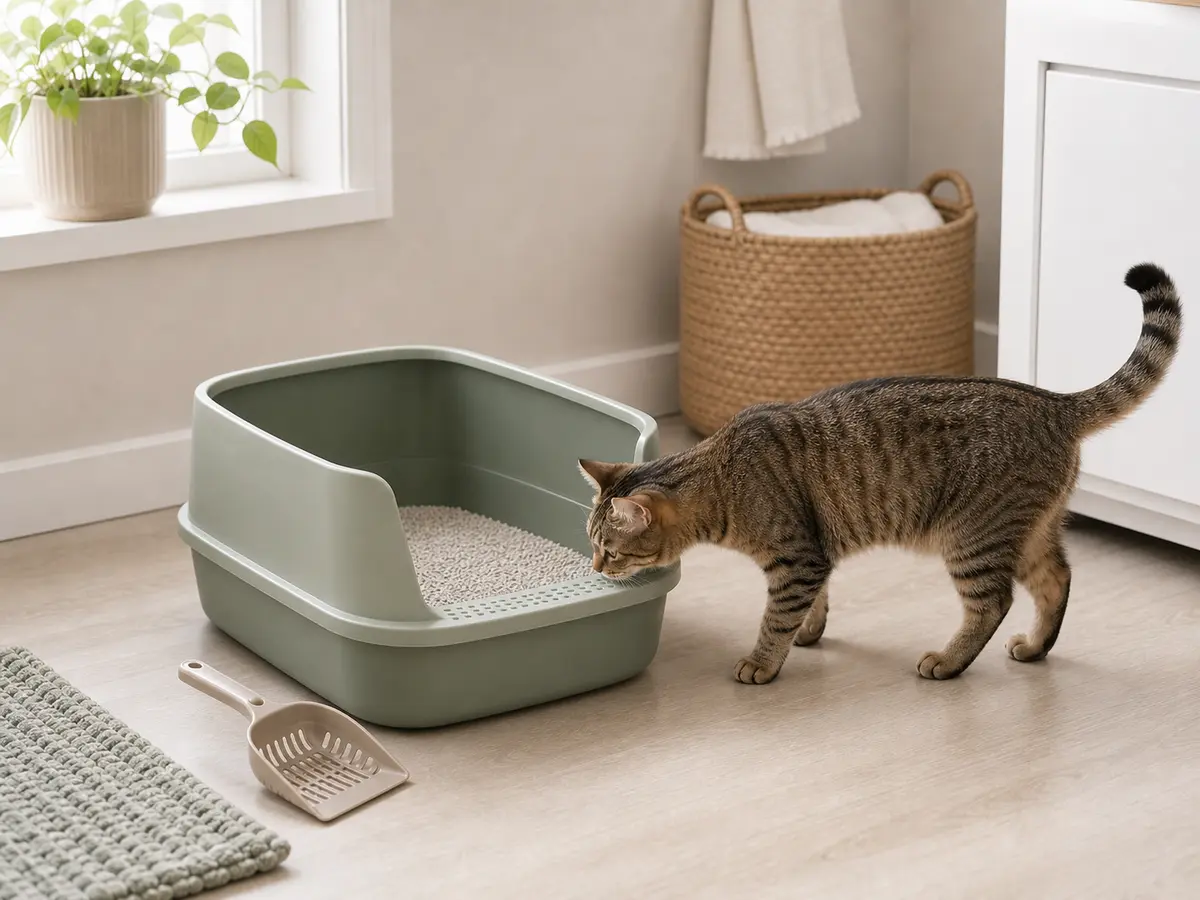
Bigger boxes are usually easier for cats to use. Covered boxes can help people with smell, but some cats dislike trapped odor, cramped turns, or no clear escape route.
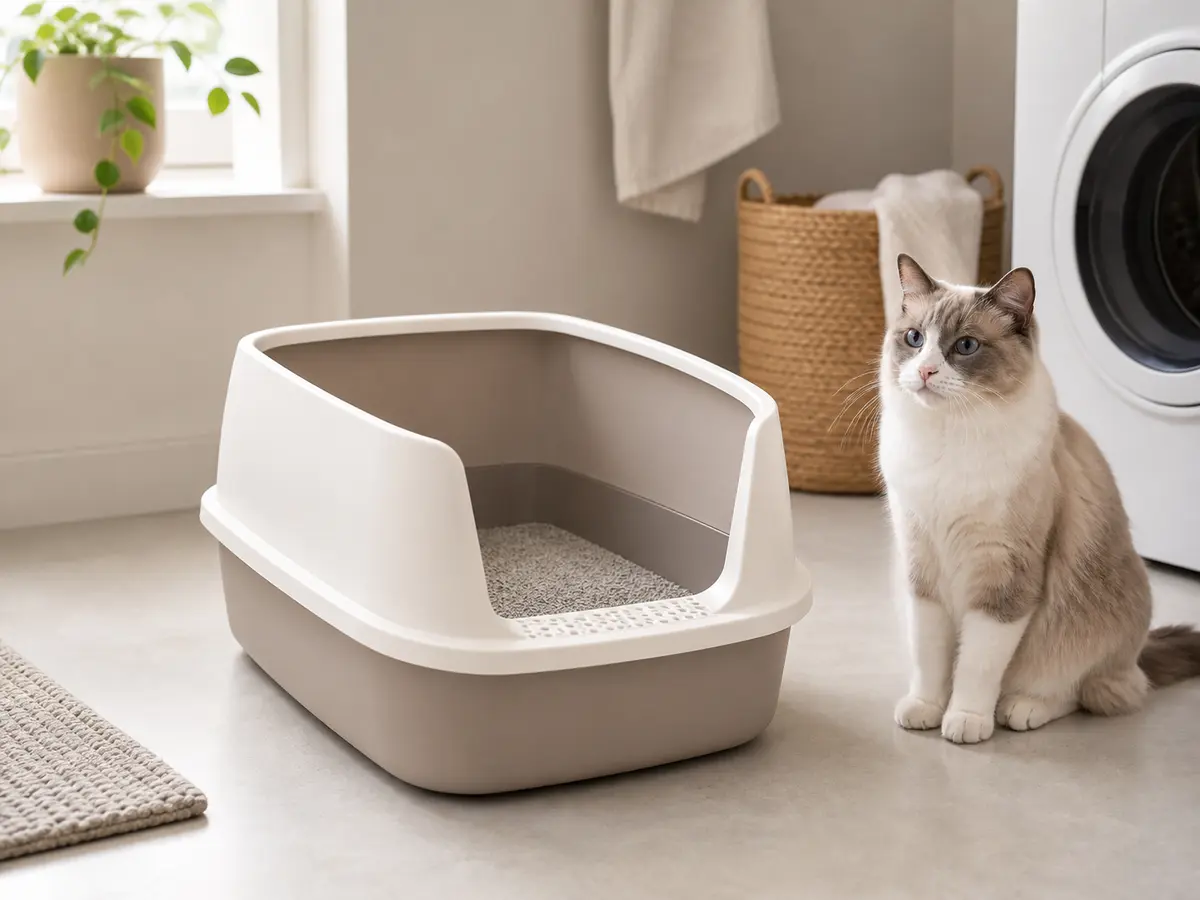
Texture and smell matter. If you need to switch litter, mix gradually unless your veterinarian gives a different plan, and watch whether the cat hesitates before stepping in.
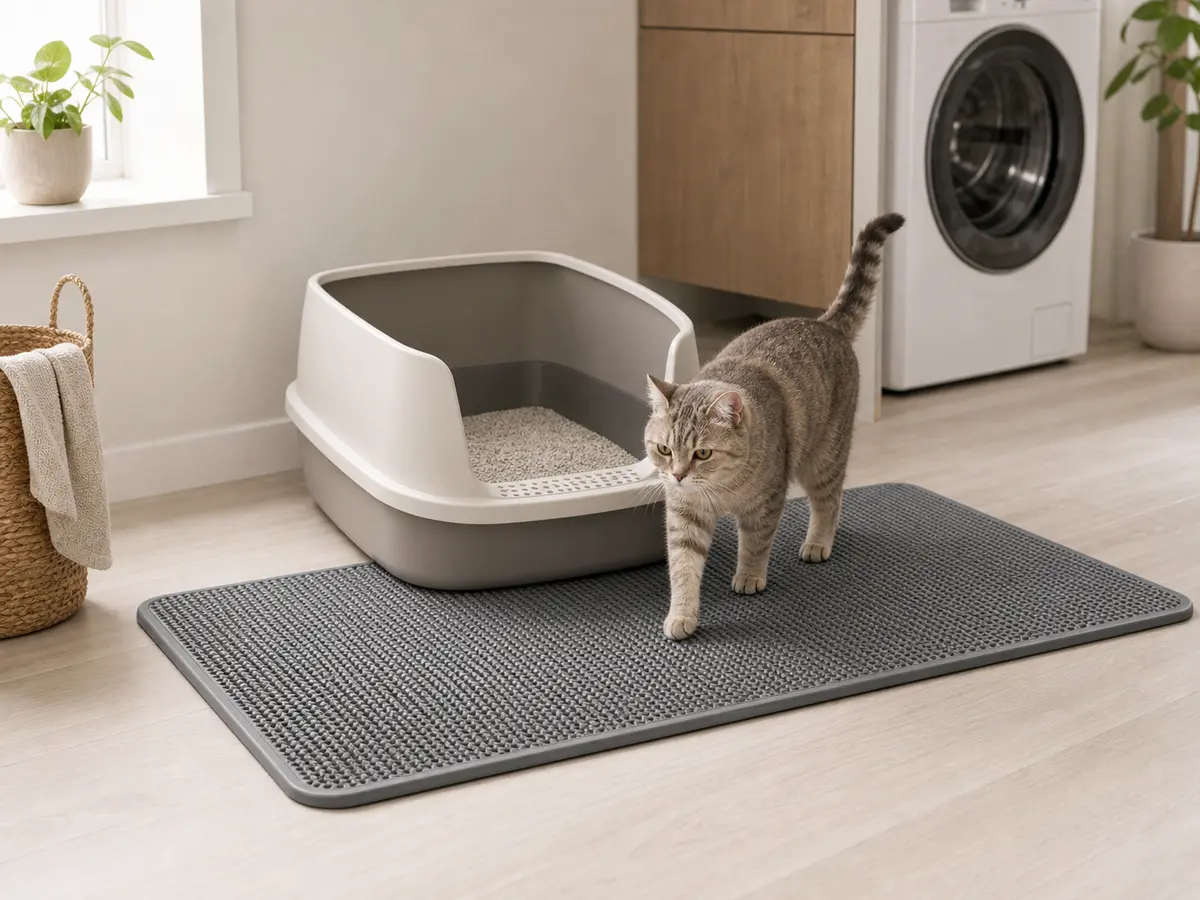
Scoop often enough that the box still feels usable from a cat's point of view. A clean box is not a luxury; it is part of keeping the bathroom obvious.
Straining, crying in the box, repeated trips, blood, sudden accidents, or not urinating can be urgent. Call your vet right away if litter behavior suddenly changes or your cat seems uncomfortable.
With cat litter, look beyond the box itself. A tight hallway, loud appliance, guarded doorway, slippery mat, or tall entry can make the bathroom feel harder than it needs to be.
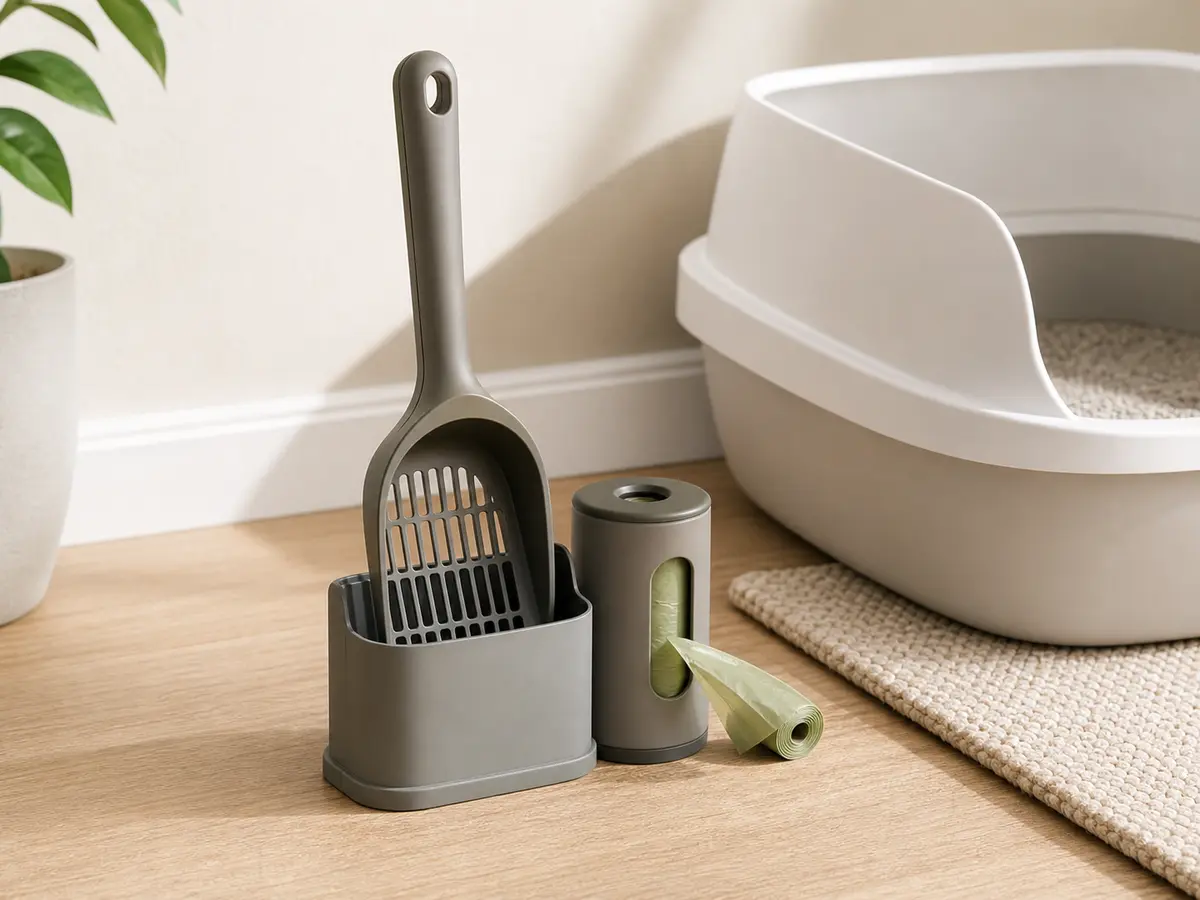
Good litter supplies make the daily habit easier to keep clean. Choose a box your cat can comfortably enter, then add tools that help you scoop, contain tracking, and control odor.
Affiliate links: Furball Cove may earn from qualifying purchases at no extra cost to you.
A good pick for cat litter: it can contain busy digging while still giving many cats an easy way in.
Use it in a cat litter routine to help you test whether box entry is part of the problem.
Cat Litter works better when the setup can catch the scatter right where paws leave the box.
This earns its spot in cat litter because it can keep daily scooping visible, sanitary, and harder to postpone.
Read the full litter-box scene: entry height, room to turn, smell, cleaning rhythm, location, privacy, and whether another pet can block the route.
Do not treat sudden accidents, tiny clumps, huge clumps, repeated box visits, or painful posture as just a preference problem. Those patterns need veterinary guidance.