Are Dehumidifiers Safe for Cats? A Practical Setup
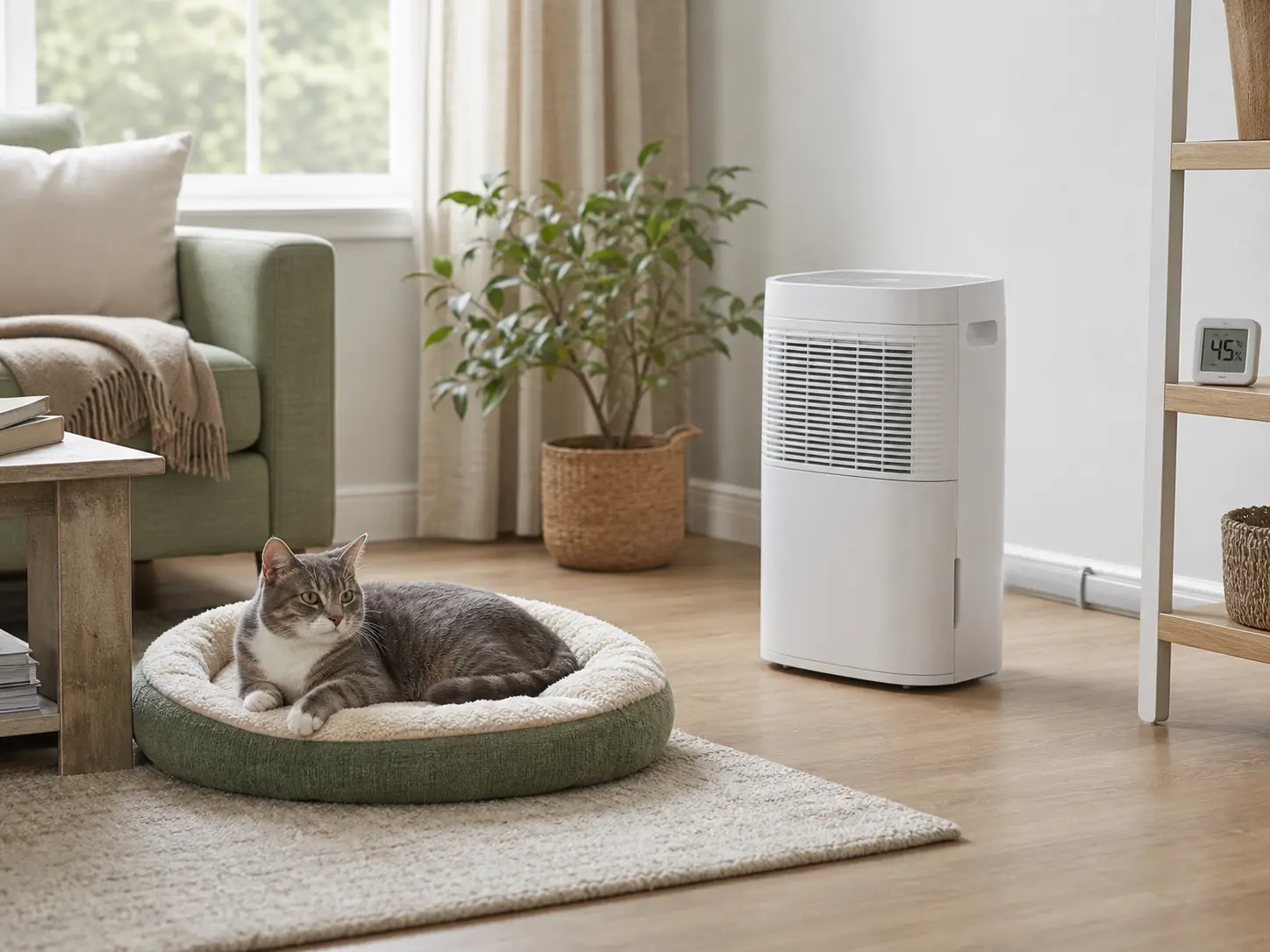
Yes. A dehumidifier is generally safe to run around a cat. Set it where it cannot tip, keep the cord and collected water out of reach, and use a hygrometer so the room does not become too dry.
The useful setup is pleasantly boring: a measured room, a steady machine, a cord your cat cannot reach, and a clean tank. Humidity control can help with a damp room, but it is not a treatment for coughing or difficult breathing.
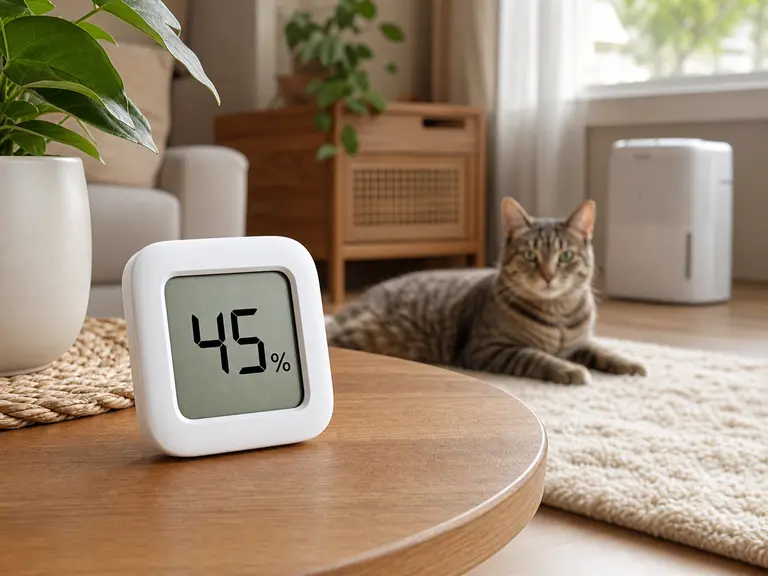
Measure the room before chasing a number
Use a hygrometer instead of judging humidity by how the air feels. The U.S. EPA recommends keeping indoor relative humidity ideally between 30% and 50% to control moisture and mold. Check the reading where your cat actually rests, then use the dehumidifier only as much as the room needs.
Make the machine uninteresting
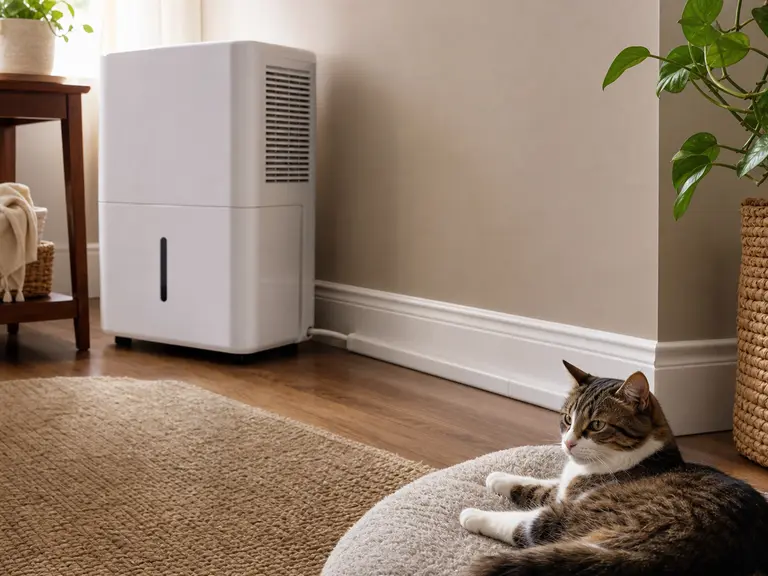
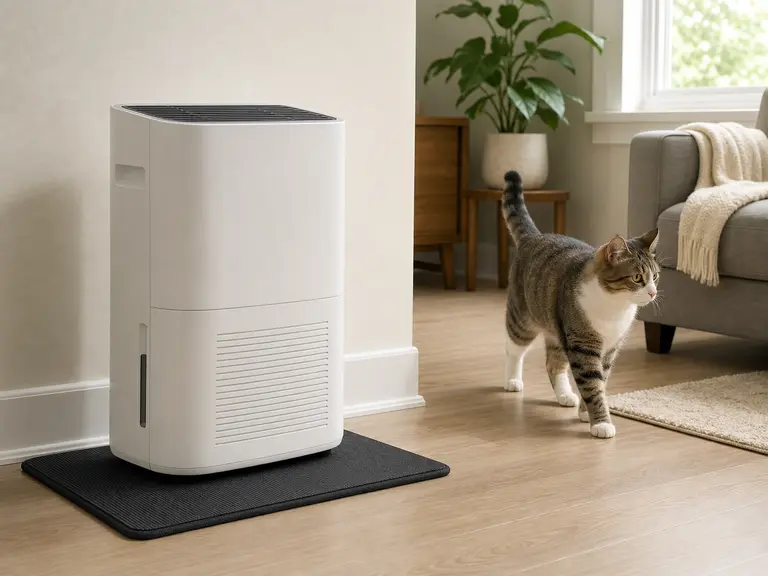
Place the unit on a level, stable surface with its intake and exhaust clear. Route the power cord behind furniture or inside a sturdy cable protector rather than leaving a tempting loop on the floor. Keep the tank latched, and do not let a curious cat sit on the machine or press against its vents.
Keep collected water and filters clean
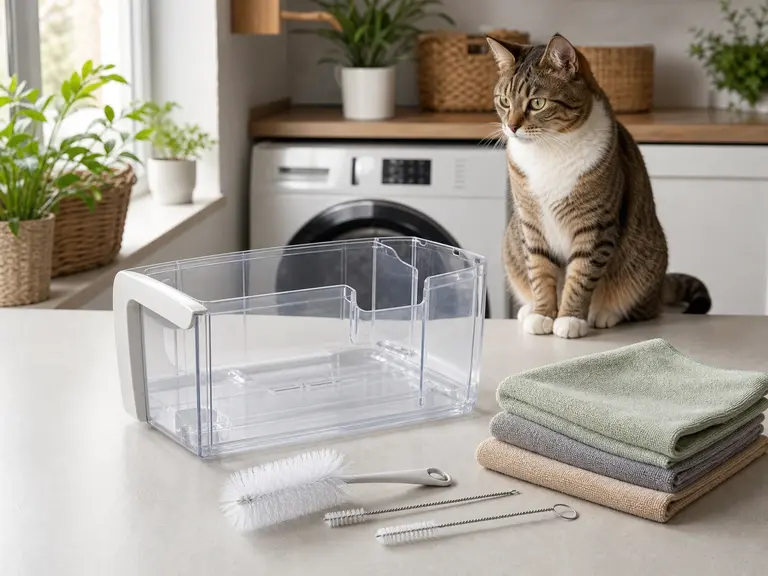
Empty and clean the tank and service the filter on the manufacturer’s schedule. Unplug the unit before removing parts. Do not add fragrance, essential oils, cleaners, or other products to the reservoir, and fix leaks or damp materials instead of asking the machine to hide an ongoing moisture problem.
When the dehumidifier is not the answer
Ask your veterinarian before making a sick cat’s room much drier. Cats with coughing, rapid or labored breathing, open-mouth breathing, nasal discharge, or another respiratory change need veterinary assessment; humidity is not a substitute for diagnosis or treatment.
Before you decide
What does a hygrometer read near your cat’s usual bed or perch?
Is the unit level, steady, and clear of curtains, bedding, and furniture?
Is every reachable section of cord protected or physically blocked?
Is the tank closed, clean, and free of fragrance, oils, and cleaning products?
Has your cat started coughing, breathing rapidly, breathing with effort, or avoiding the room?
Next best moves
Measure humidity before switching the unit on and check again after it has run.
Protect the cord, keep the walking path open, and give the cat another quiet resting place.
Clean the tank and filter exactly as the manufacturer directs, with the unit unplugged.
Repair leaks and remove damp material instead of relying on the dehumidifier alone.
Call your veterinarian about a new breathing change rather than adjusting humidity and waiting.
Useful setup tools
These are practical helpers for measuring the room, protecting the cord, and keeping the machine clean. Check the dehumidifier manual before adding a mat or changing its placement, and keep every vent clear.
Affiliate links: Furball Cove may earn from qualifying purchases at no extra cost to you.
Yes. Keep the unit stable, protect the cord and collection tank, clean the filter and tank, and do not make the room excessively dry.
When should I get help?
Ask your veterinarian before making a sick cat’s room much drier. Cats with coughing, rapid or labored breathing, open-mouth breathing, nasal discharge, or another respiratory change need veterinary assessment; humidity is not a substitute for diagnosis or treatment.