Updated
Puppy training cue
Teach Your Puppy Touch
Touch teaches your puppy to tap your hand with their nose when they need an easy way back to you.
It is simple, cheerful, and useful everywhere: recall, leash walks, grooming, vet handling, doorways, and little resets when your puppy is distracted.
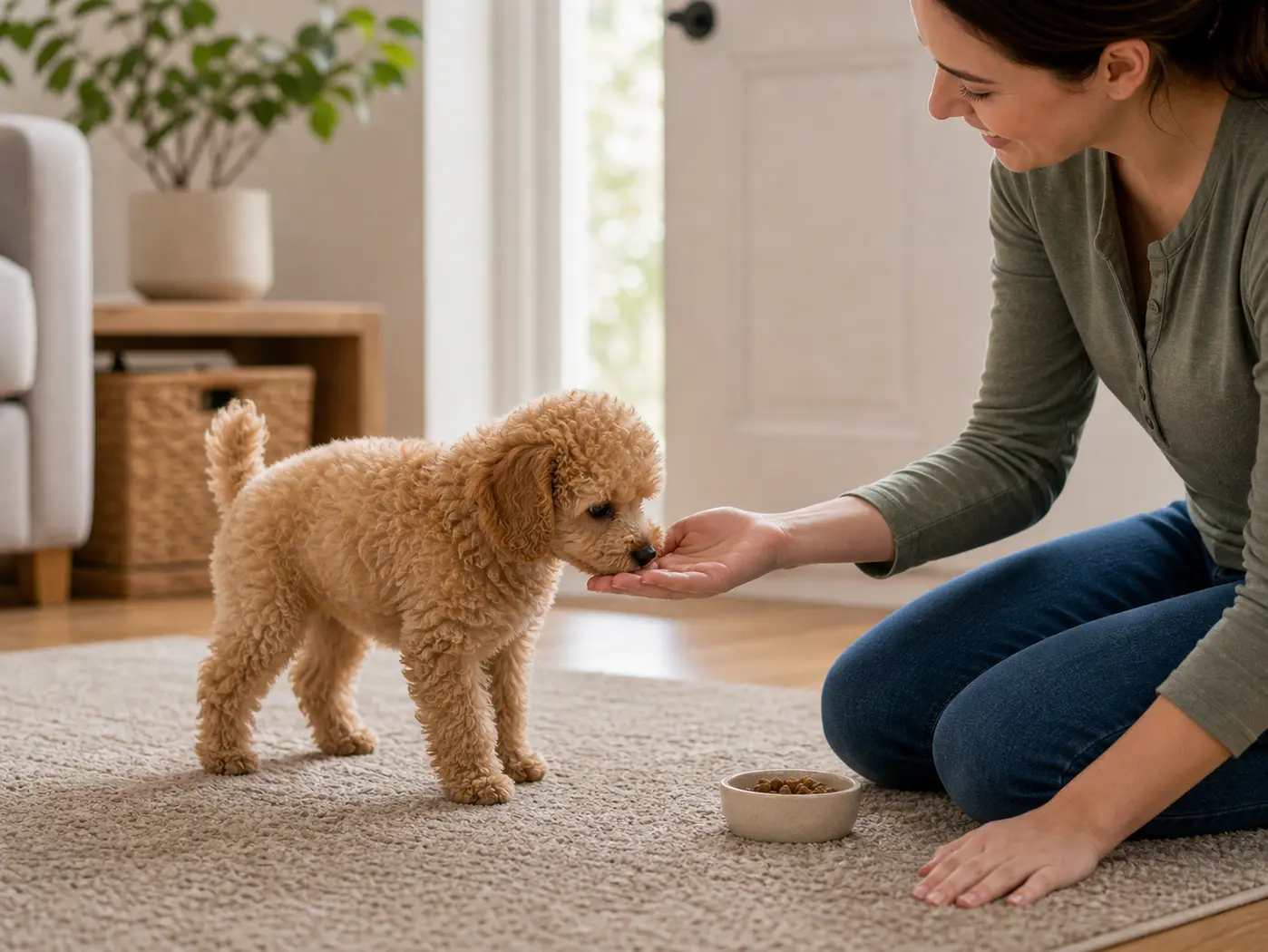
Touch is one of the kindest first cues because it gives your puppy a clear, tiny job. They do not have to guess whether to sit, stare, jump, or follow. They just find your hand.
That little nose tap becomes surprisingly useful. You can guide your puppy away from trouble, help them reorient on walks, start gentle handling, or turn a distracted moment into an easy win.
Great for
- Puppies learning focus, recall, leash check-ins, and gentle handling.
- Shy puppies who need a low-pressure way to approach a hand.
- Families who want a safe first cue children can understand with adult help.
Wait a bit if
- Moments when your puppy is scared of hands or leaning away from you.
- Using your hand to lure a puppy into something they find frightening.
- Long sessions where the puppy starts pawing, mouthing, or jumping.
Turn practice into a habit
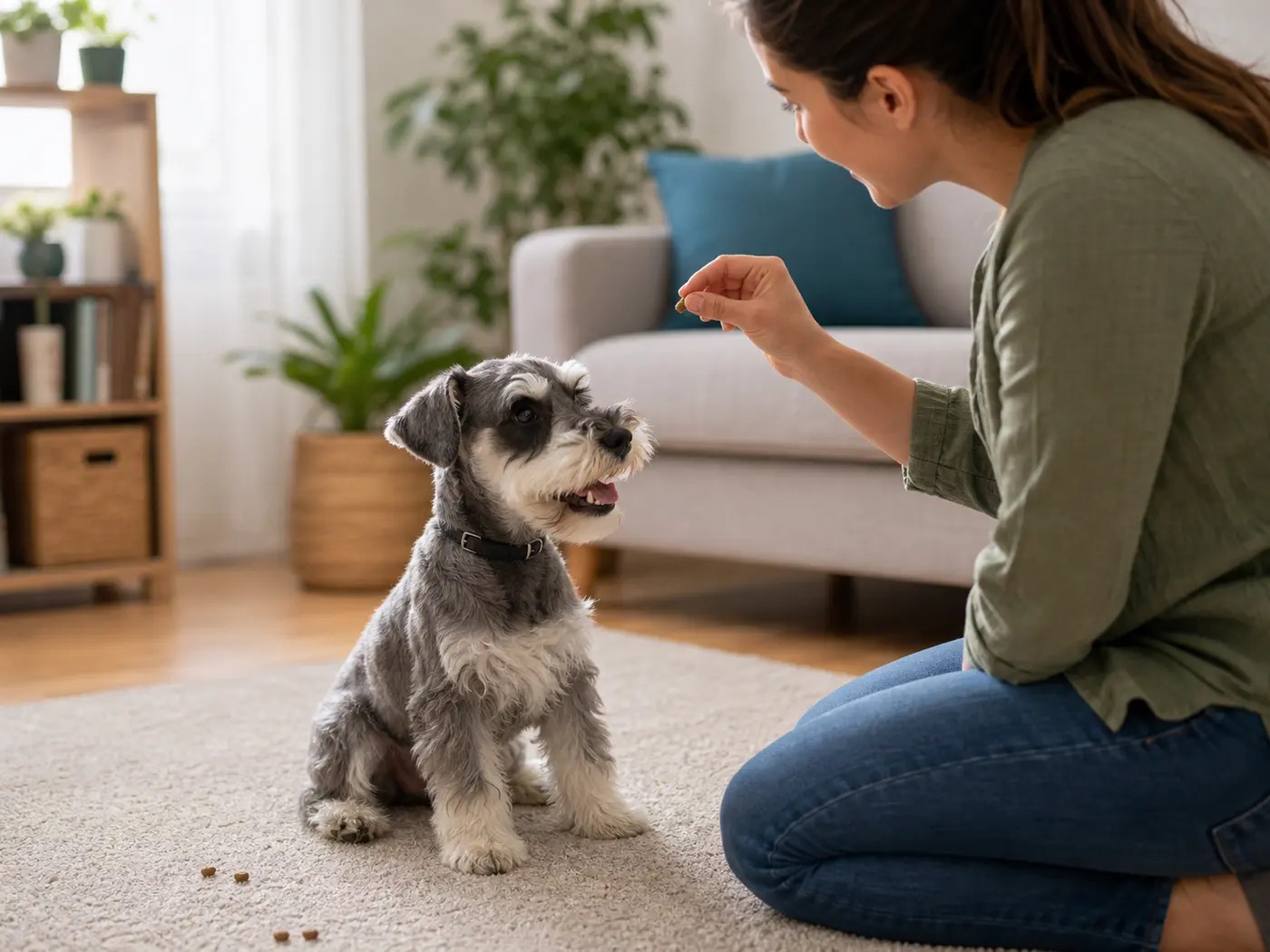
Open your hand near the nose
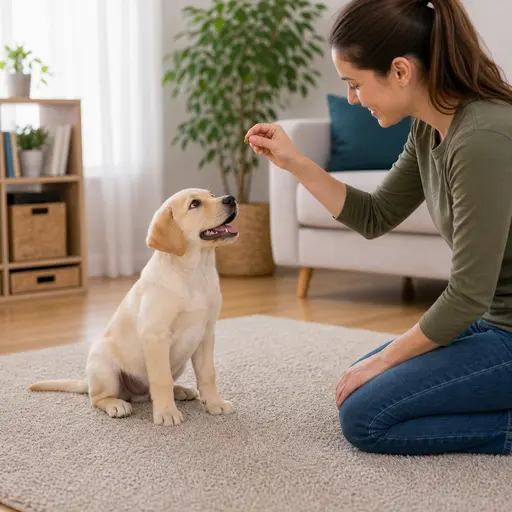
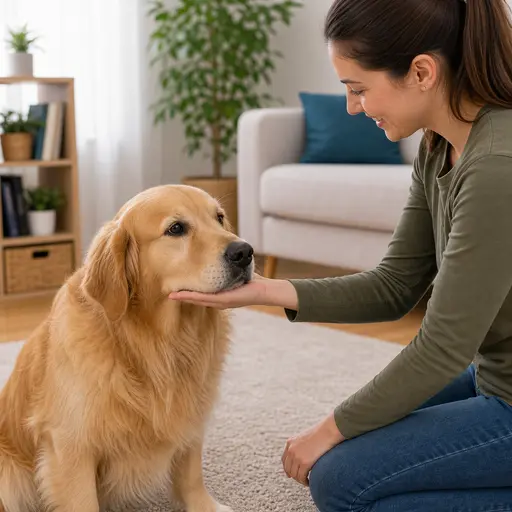
Hold a flat hand a few inches from your puppy's nose. Most puppies will sniff it. Mark that tiny nose movement and reward right away.
Reward the nose, not the paw
If your puppy paws, mouths, or jumps, make the hand lower and closer. You are looking for a soft nose tap, even if it is tiny.
Move the hand one inch
When the first version is easy, move your hand slightly left, right, lower, or higher. Keep the movement small so your puppy can still win.
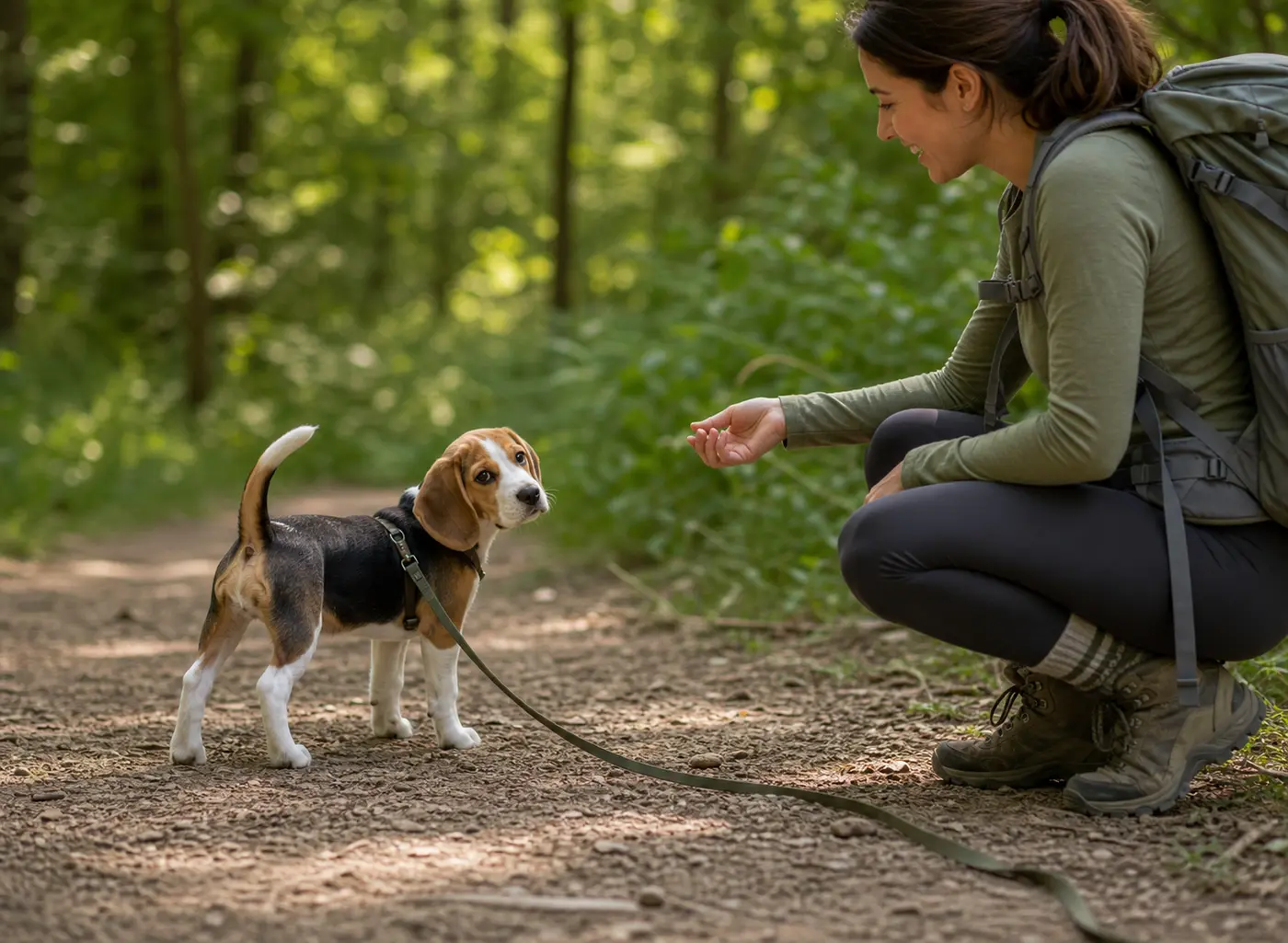
Add the word
Say touch once right before presenting your hand. The word should predict the easy target, not become background noise.
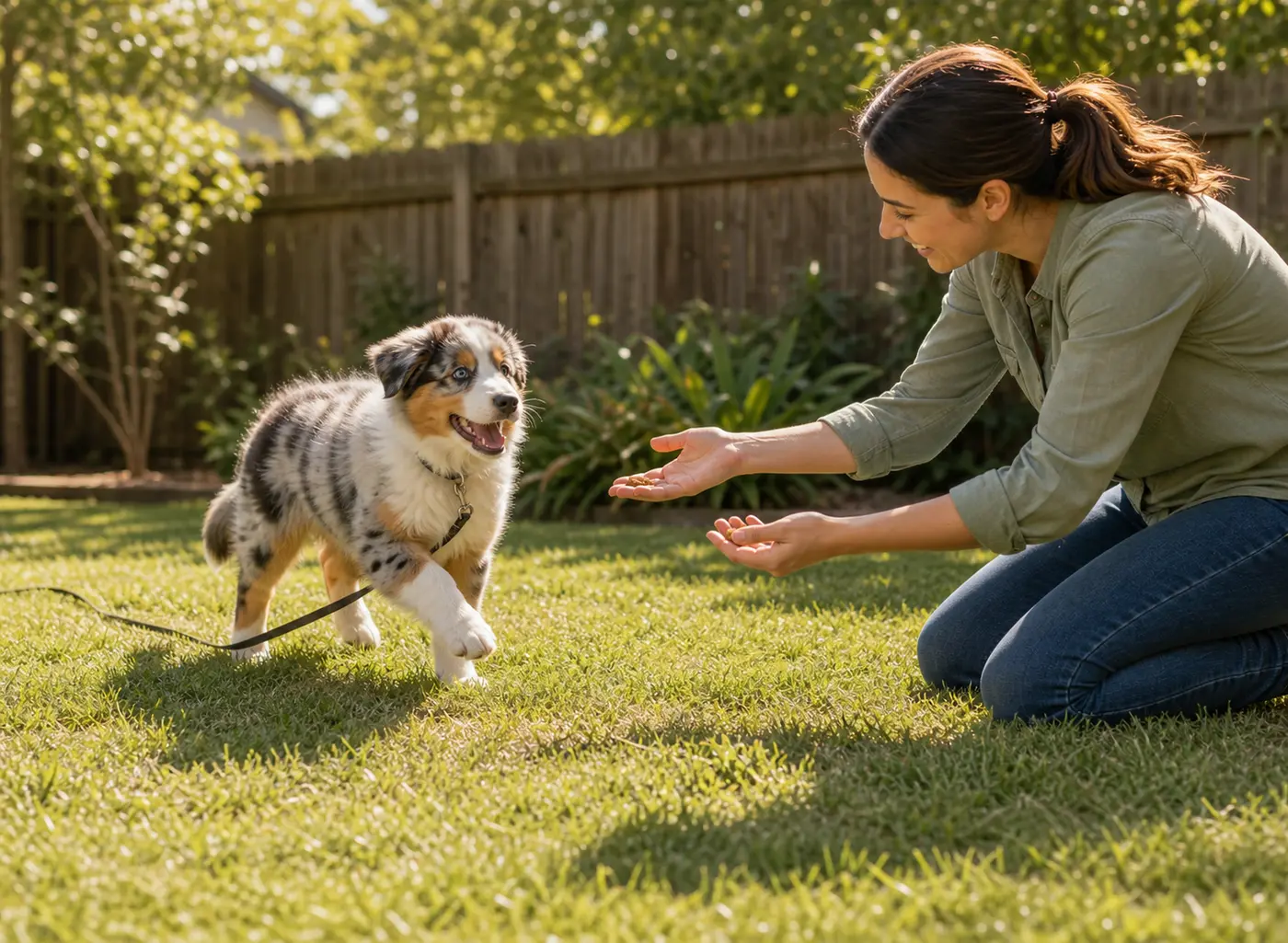
Use it as a reset
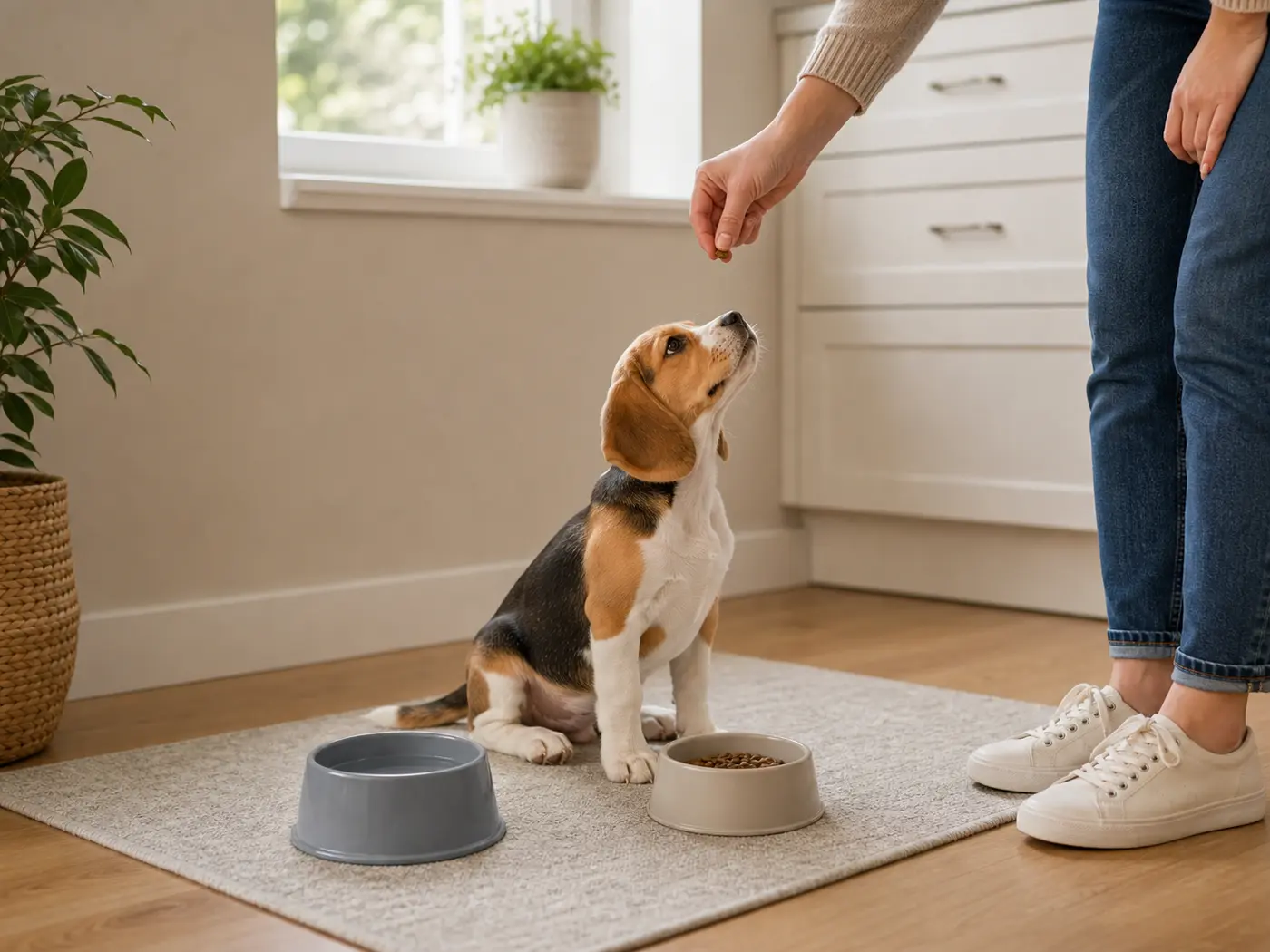
Ask for touch when your puppy notices a sound, person, doorway, or toy but can still think. Reward the tap, then decide whether to move away, continue, or settle.
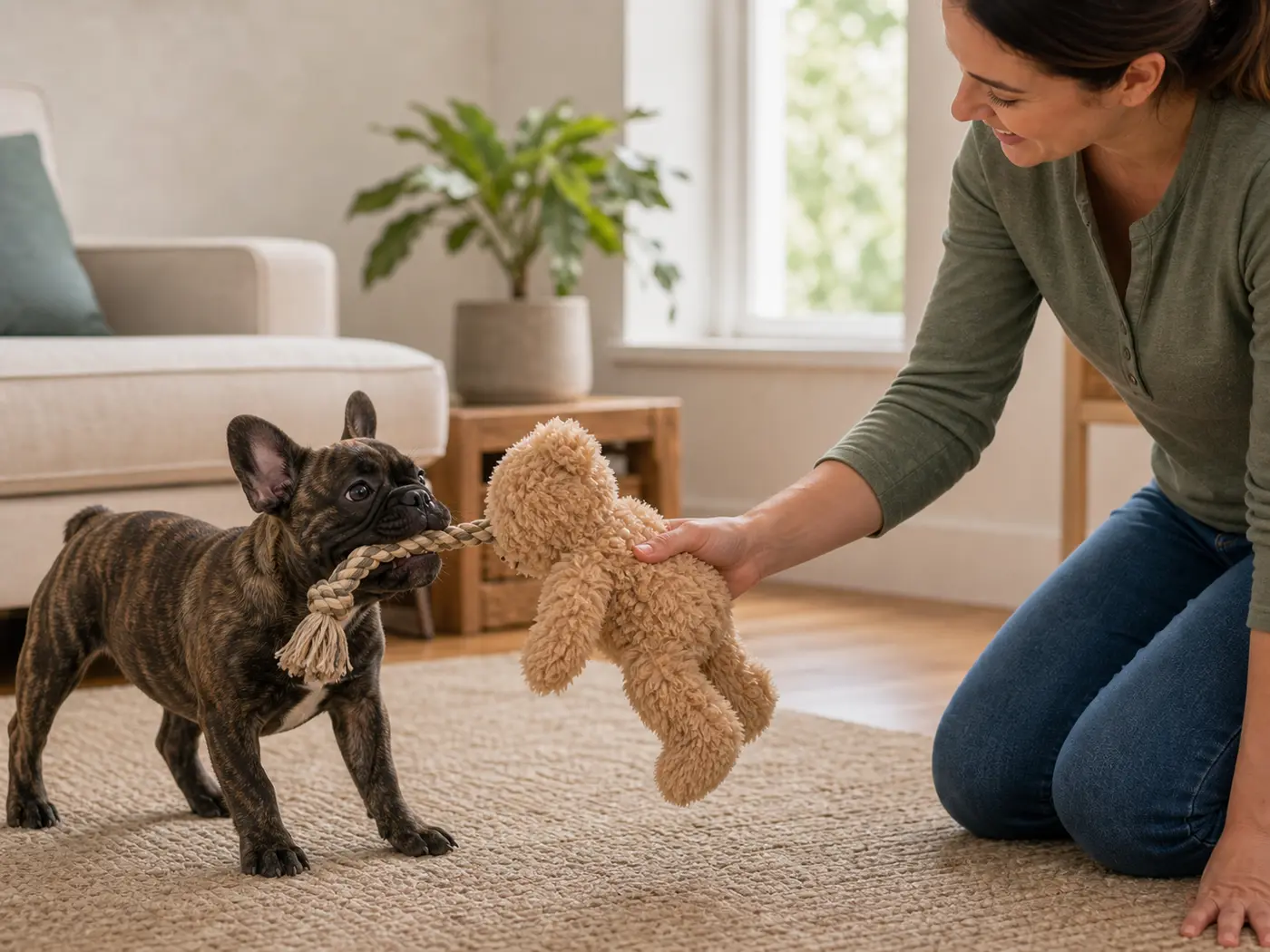
Keep the cue happy
Sometimes touch earns food. Sometimes it earns movement, greeting permission, a toy, or a release back to sniffing. A useful touch cue stays worth answering.
Little things that help
If your puppy ignores the hand
Move closer, use a quieter room, or rub a treat scent lightly on your fingers for the first rep. Fade that help quickly.
If your puppy bites the hand
End the rep calmly, use lower excitement, and reward sooner for a tiny nose movement. Mouthy puppies often need shorter sessions.
If your puppy is hand shy
Do not push the hand toward them. Let them choose to approach, reward any calm look or lean, and keep sessions very soft.
Helpful little extras
Affiliate links: Furball Cove may earn from qualifying purchases at no extra cost to you.
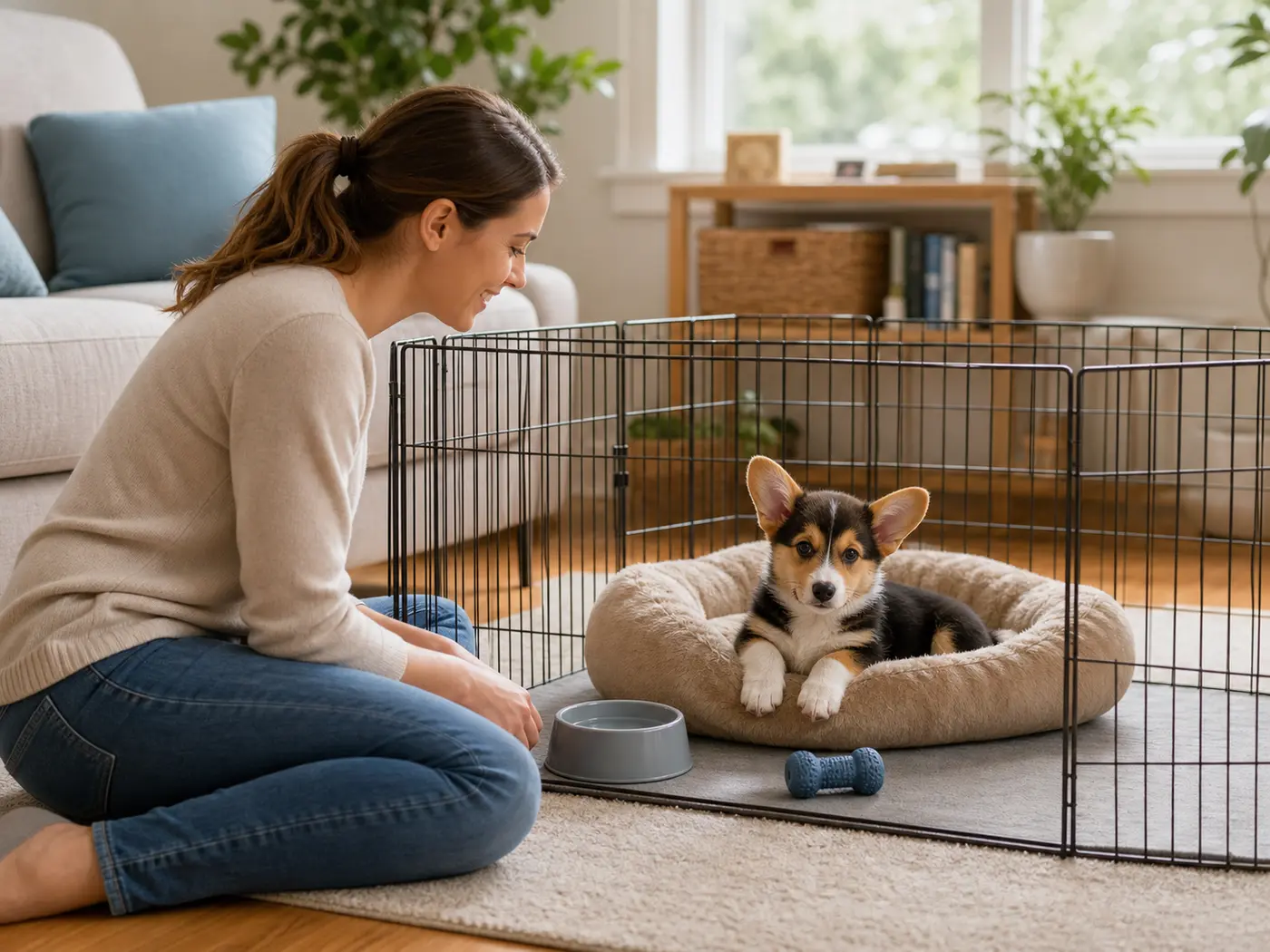
Soft training treats
Tiny rewards let you pay the exact nose tap before your puppy starts guessing.
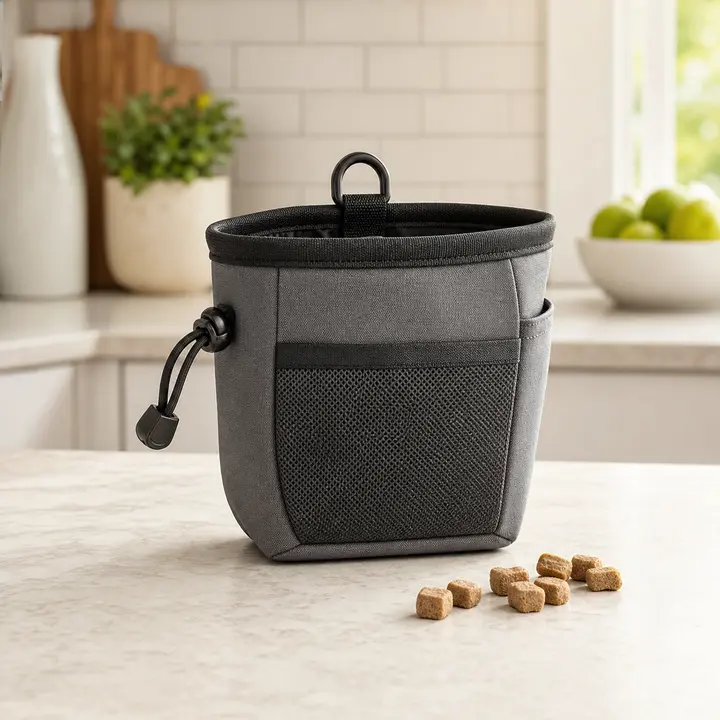
Training treat pouch
Keeps rewards ready so touch stays quick, clean, and easy to practice in real life.
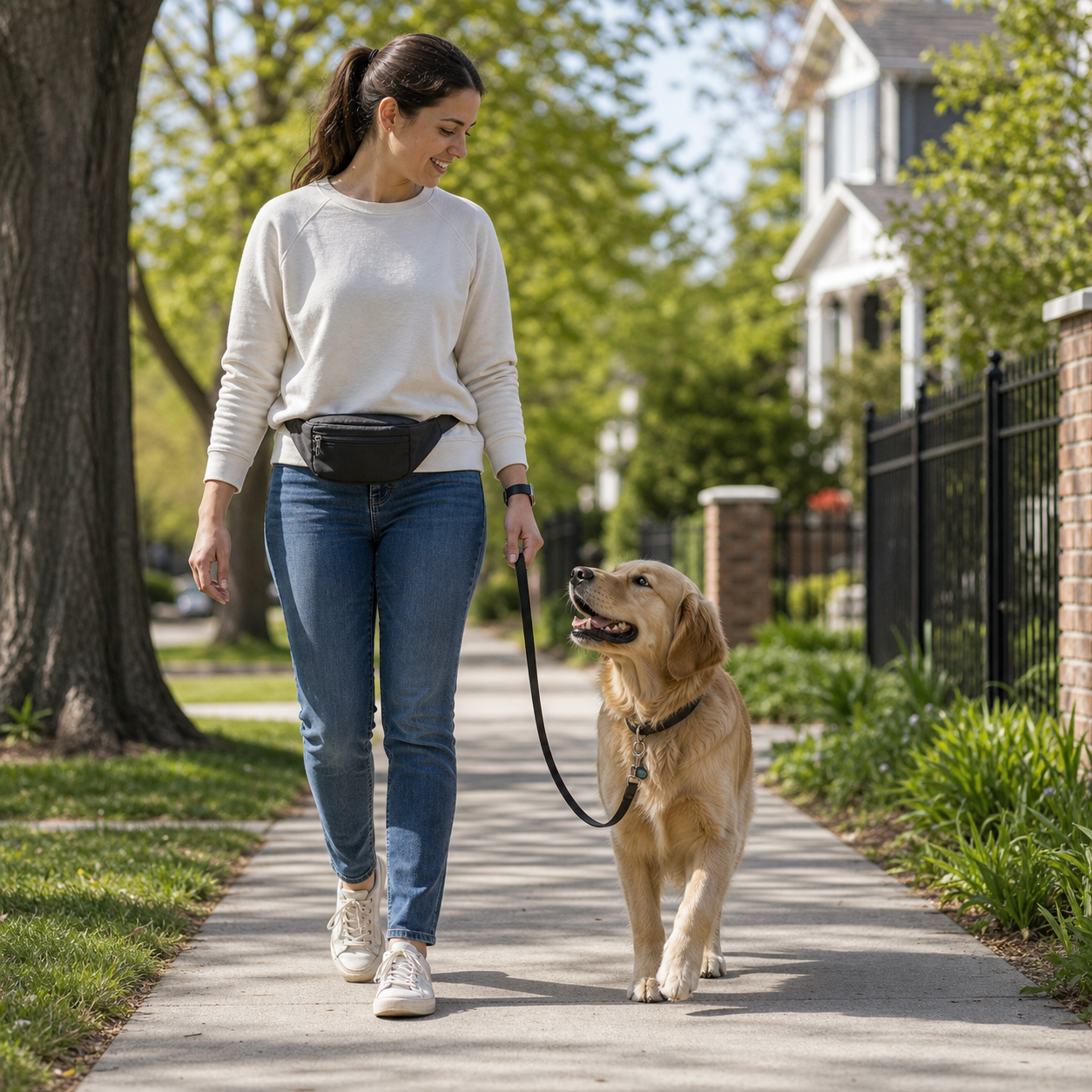
Lightweight leash
Helpful when you start using touch for outdoor check-ins and gentle direction changes.
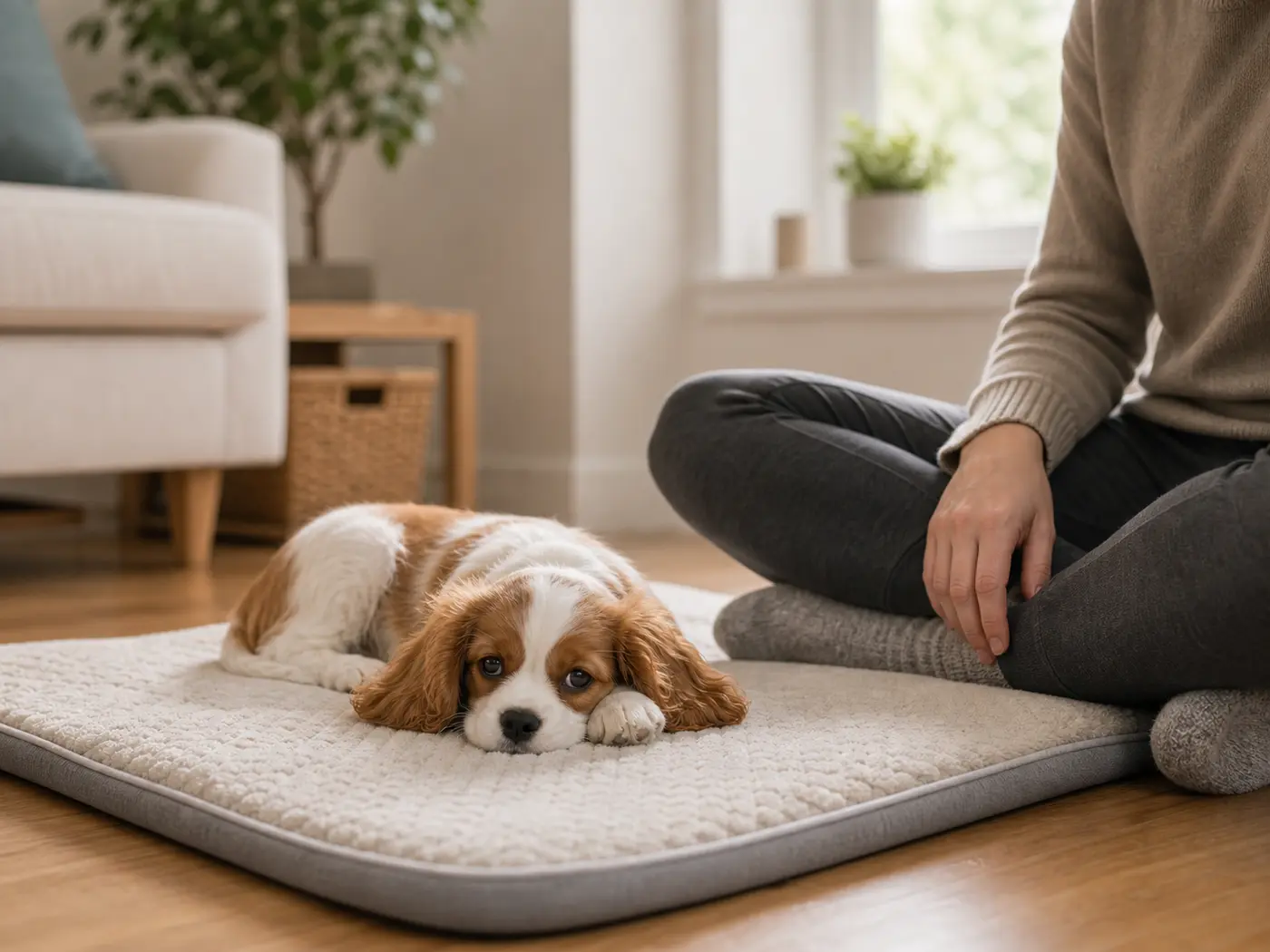
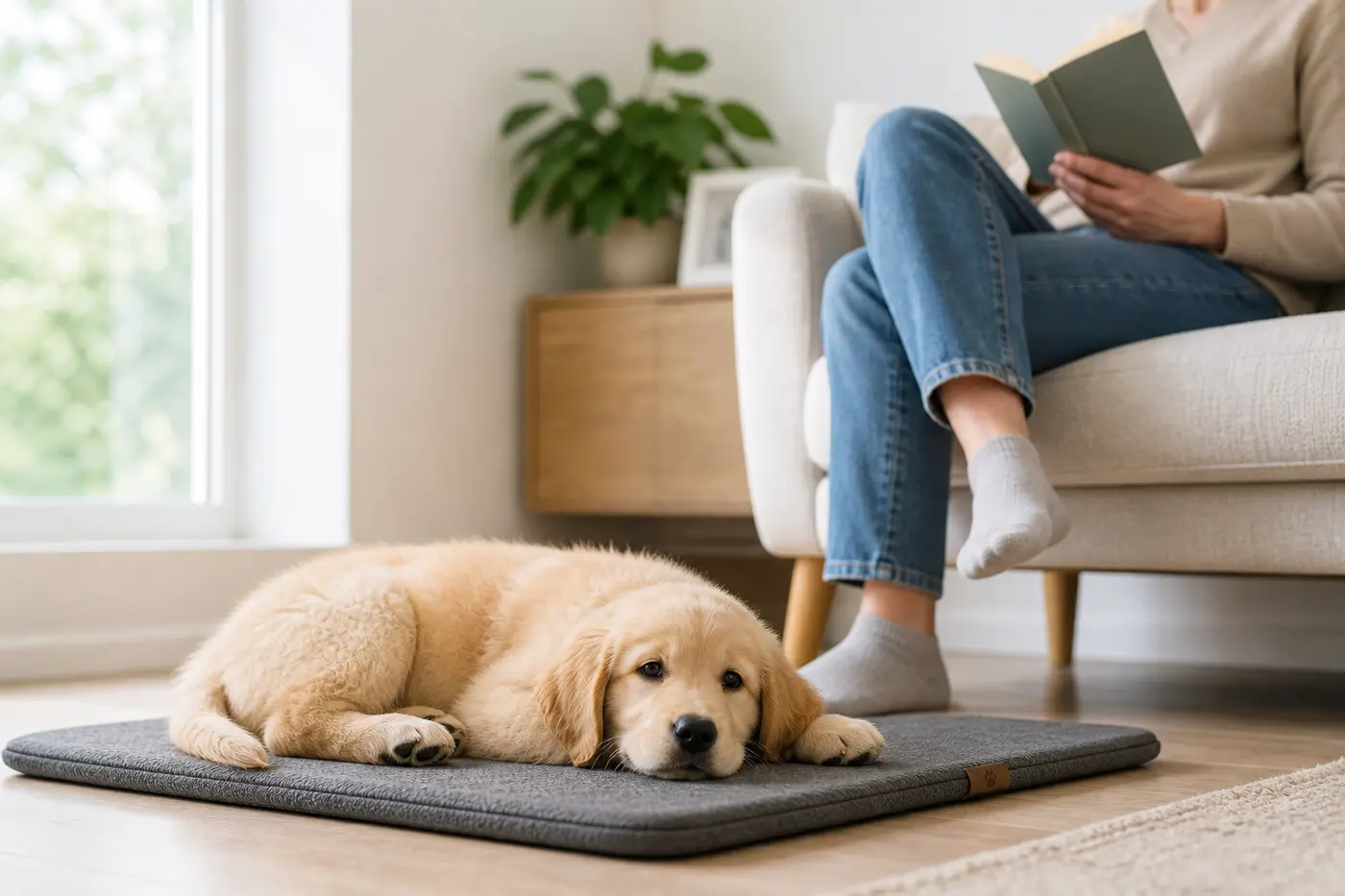
Washable mat
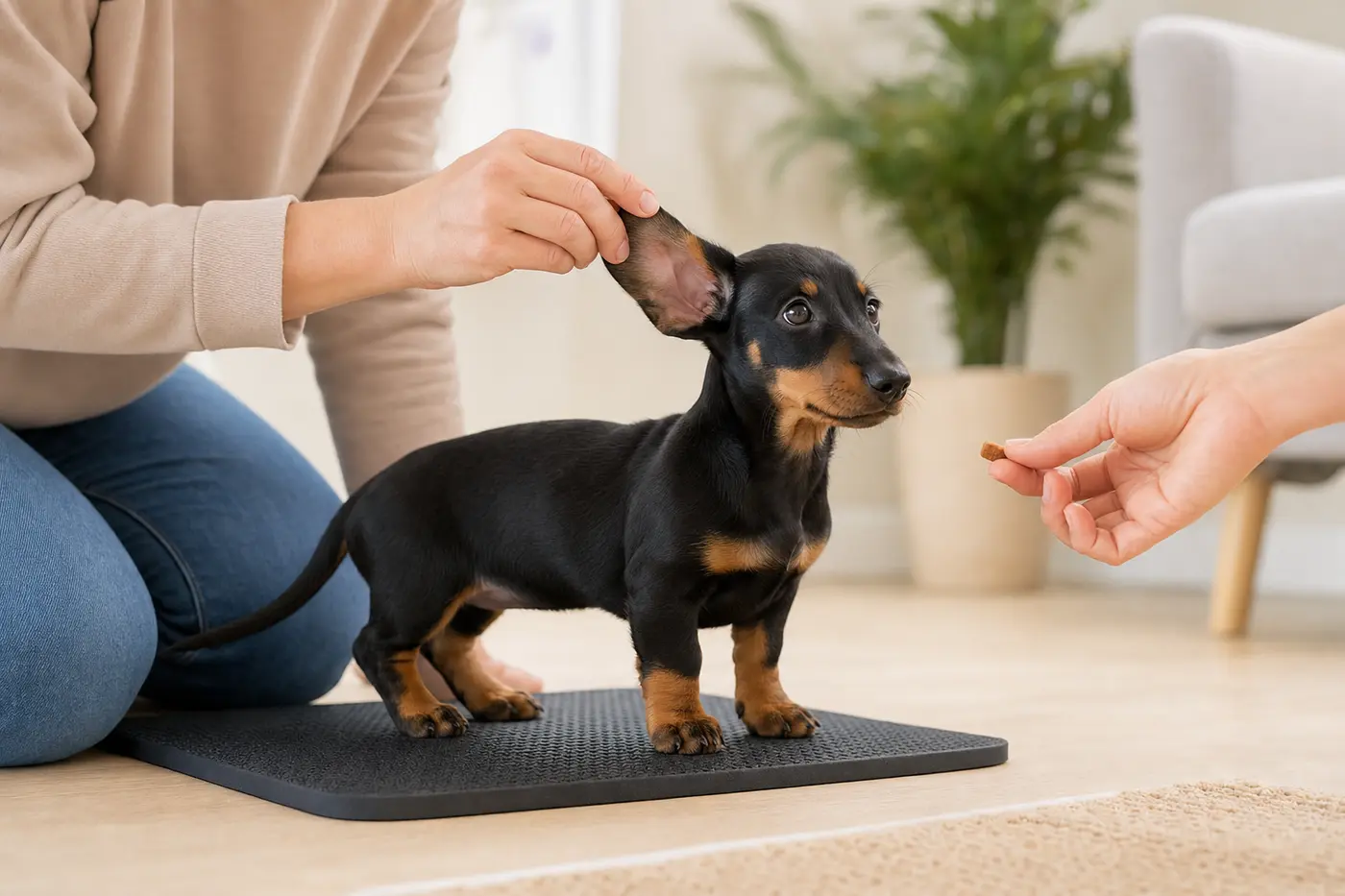
A steady practice spot helps excited puppies keep their feet still while learning the nose target.
Questions people ask
Why teach touch to a puppy?
Touch gives your puppy an easy way to reconnect with you. It supports recall, leash walking, handling, grooming, and calm redirects.
What if my puppy paws my hand instead?
Lower the hand, move it closer to the nose, and reward the smallest nose movement before pawing starts. Keep the session shorter.
Can children teach touch?
Yes, with adult help. Children should hold a still open palm, say the cue once, and let an adult manage treats until the puppy is gentle.