Updated
Puppy calm cue
Teach Your Puppy Settle
Settle teaches your puppy how to rest near family life instead of hunting for the next thing to do.
Start when your puppy is already close to calm. Reward softness, keep the first sessions short, and let the mat become a peaceful landing place.
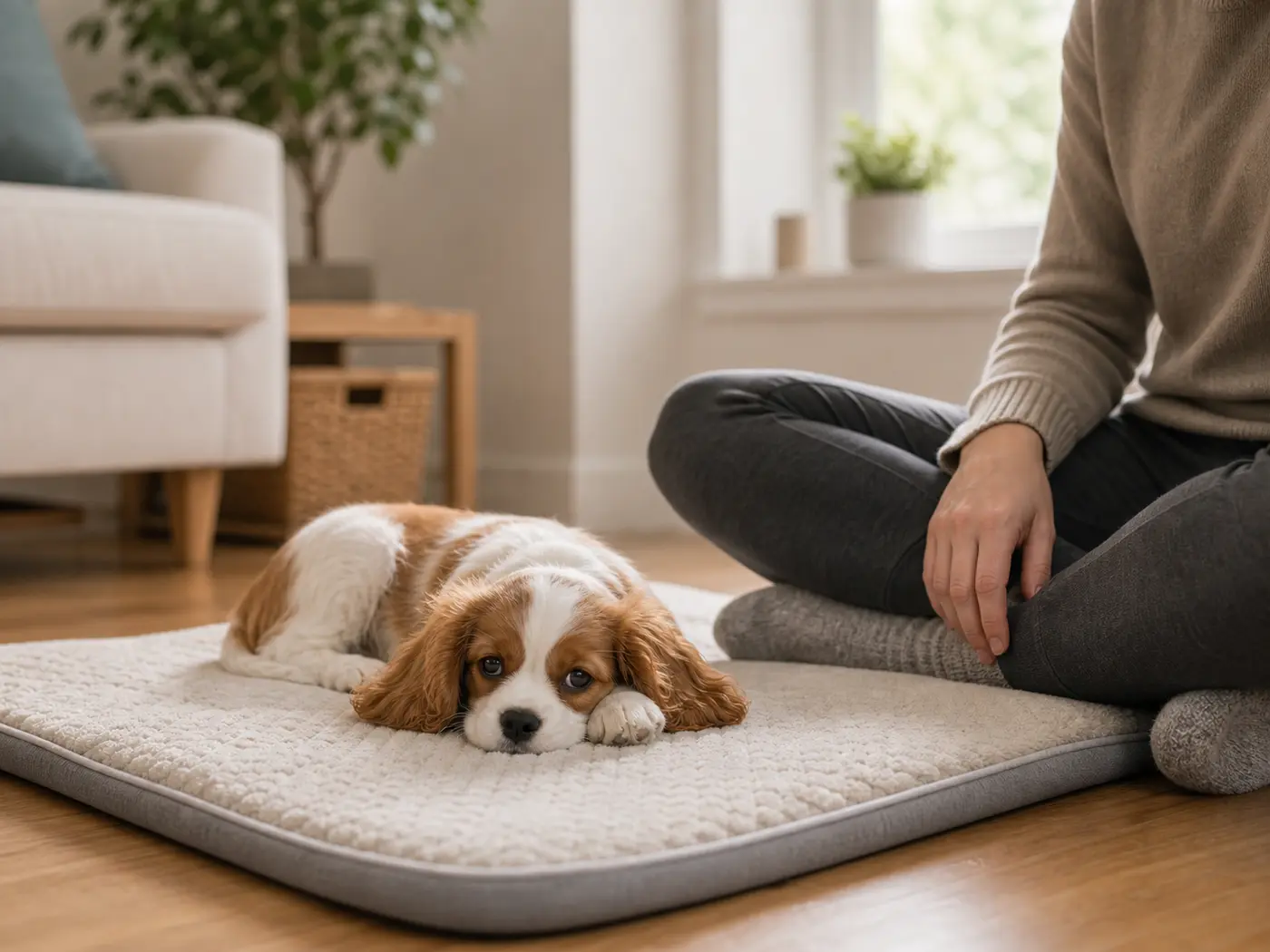
Puppies are not born knowing how to do nothing. Settle gives them a script for quiet moments: find the mat, soften the body, breathe, and stay close without needing constant action.
This is not about forcing stillness. It is about noticing little calm choices and making those choices feel safe, rewarding, and repeatable.
Great for
- Bitey evenings, guest arrivals, family meals, work calls, and couch time.
- Puppies who need help moving from play to nap.
- Building a calm mat routine before cafes, travel, grooming, or vet visits.
Wait a bit if
- A puppy who urgently needs potty, food, water, comfort, or sleep.
- Using the cue as a consequence after wild behavior.
- Expecting a young puppy to hold still through long adult events.
Reward the pause
Pick a soft landing spot
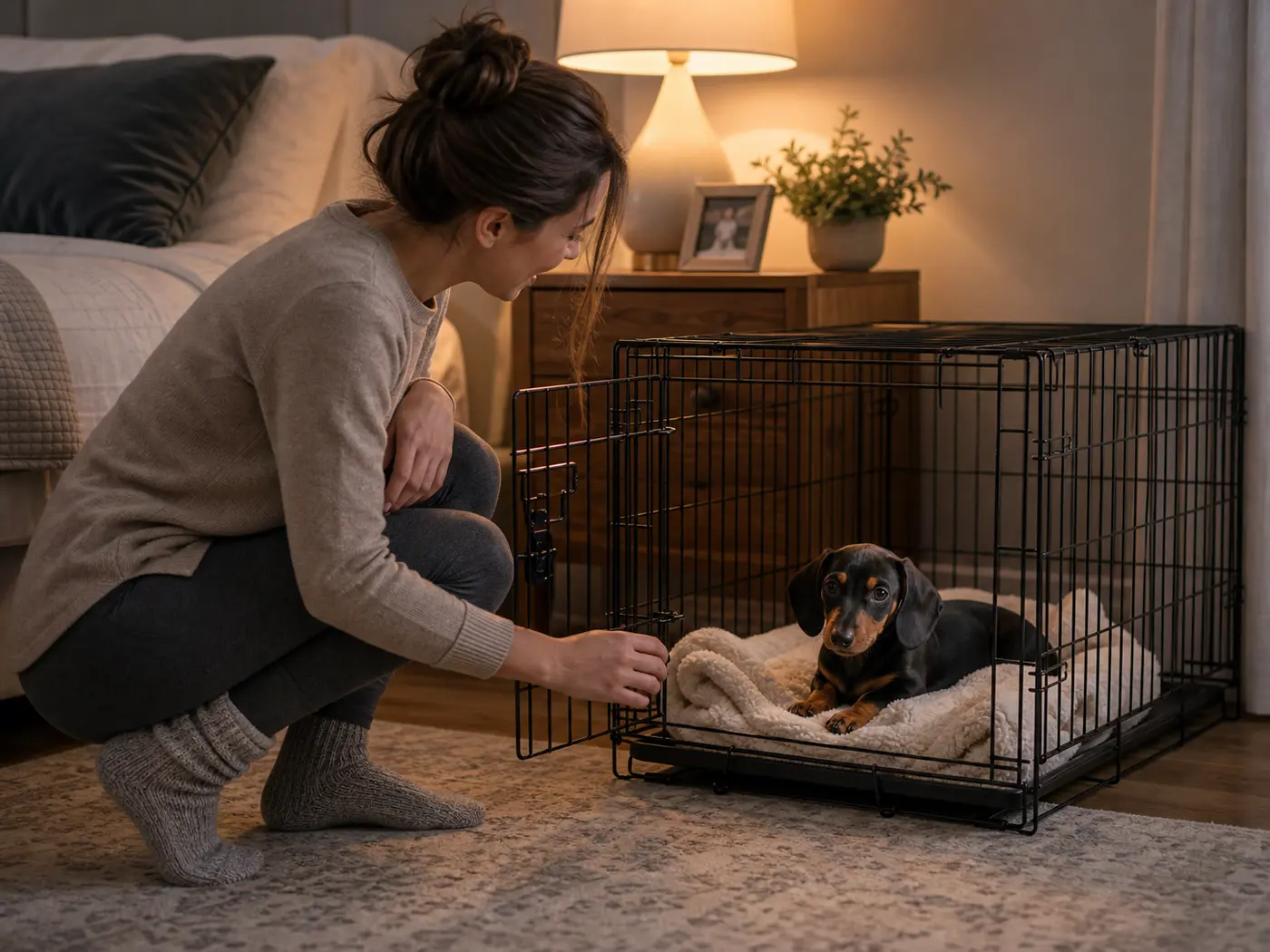
Use a washable mat, bed, towel, or blanket. Put it where your puppy can be near you without being in the busiest path of the room.
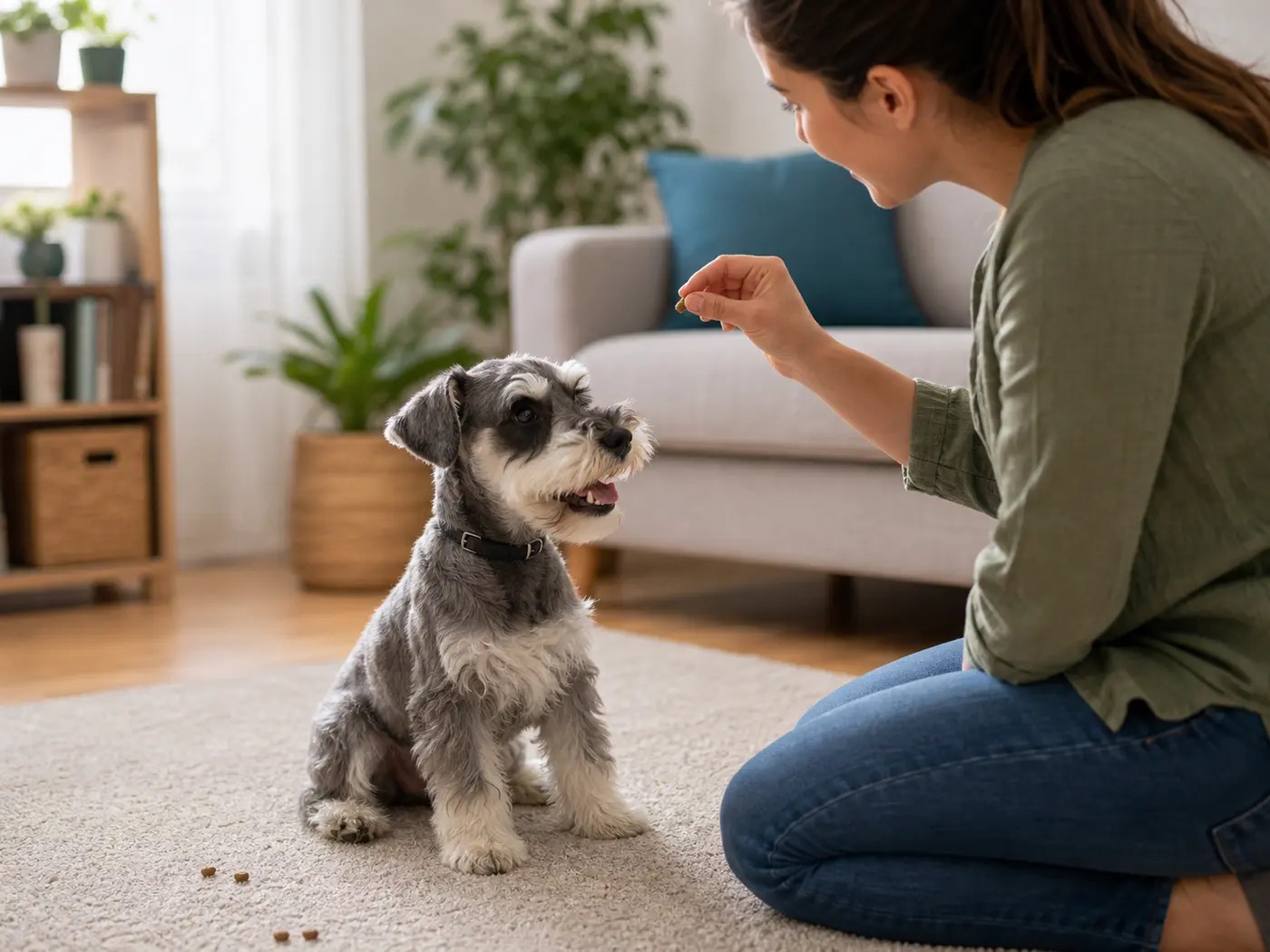
Reward any calm contact
At first, a paw on the mat, a sniff, a sit, or a soft look can earn a treat. You are making the mat feel valuable before asking for duration.
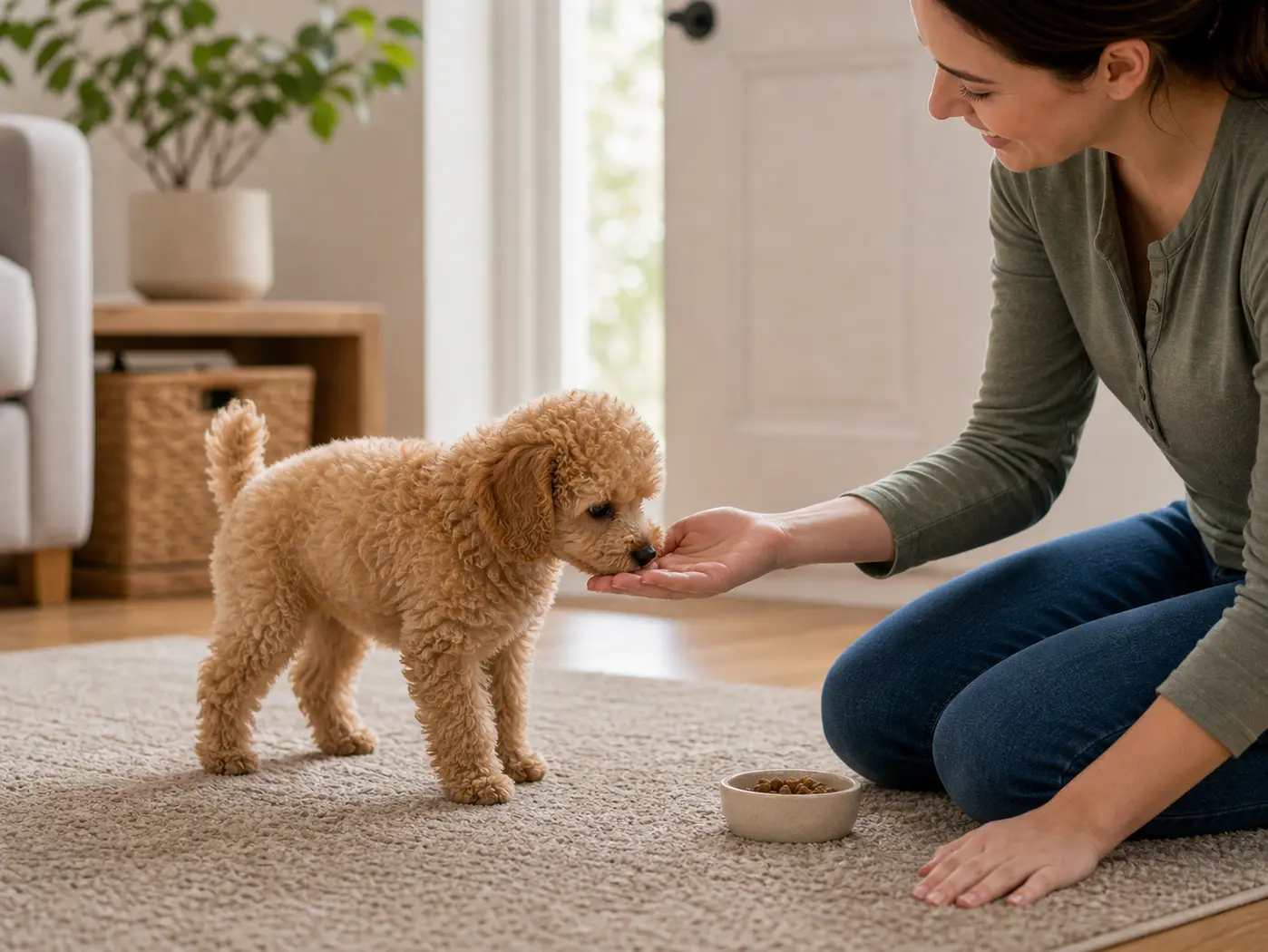
Pay low and slow
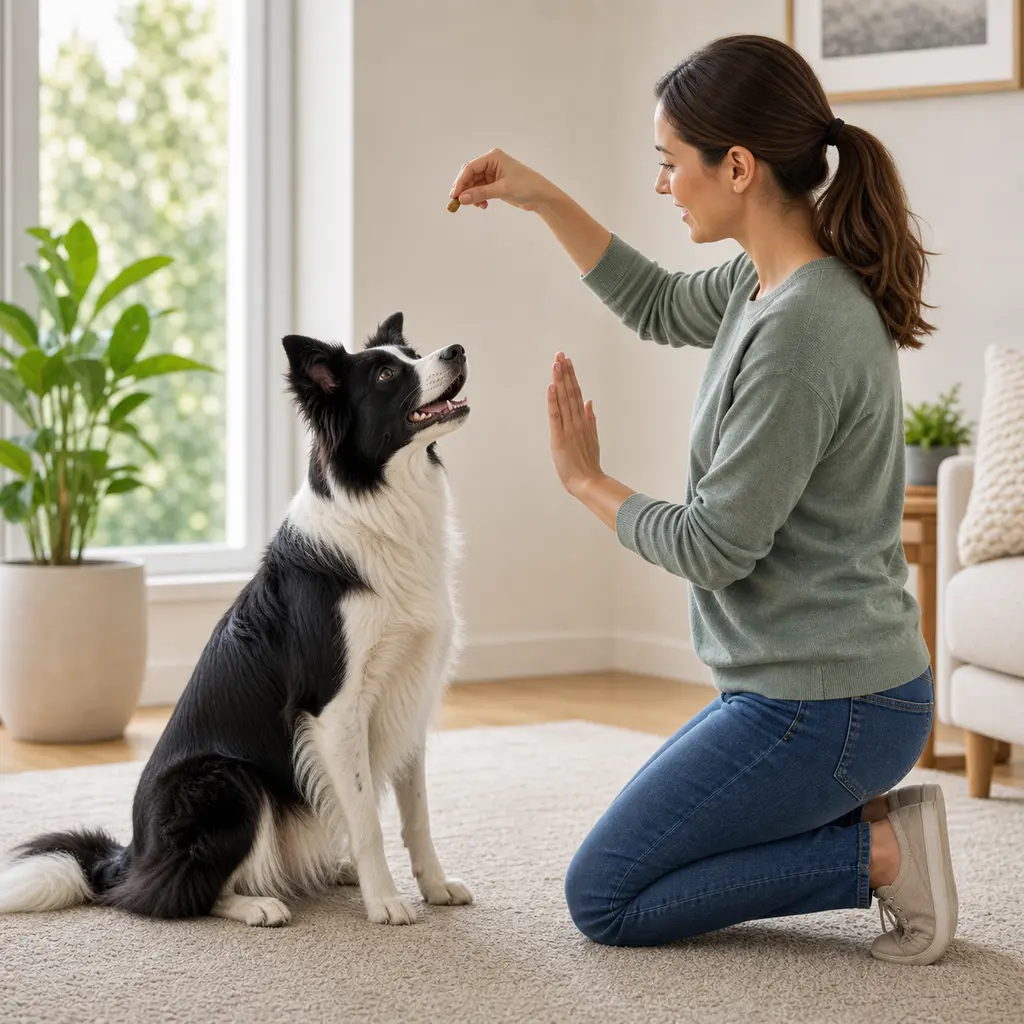
Place treats on the mat between your puppy's paws instead of feeding high from your hand. Low rewards encourage the body to fold down and stay soft.
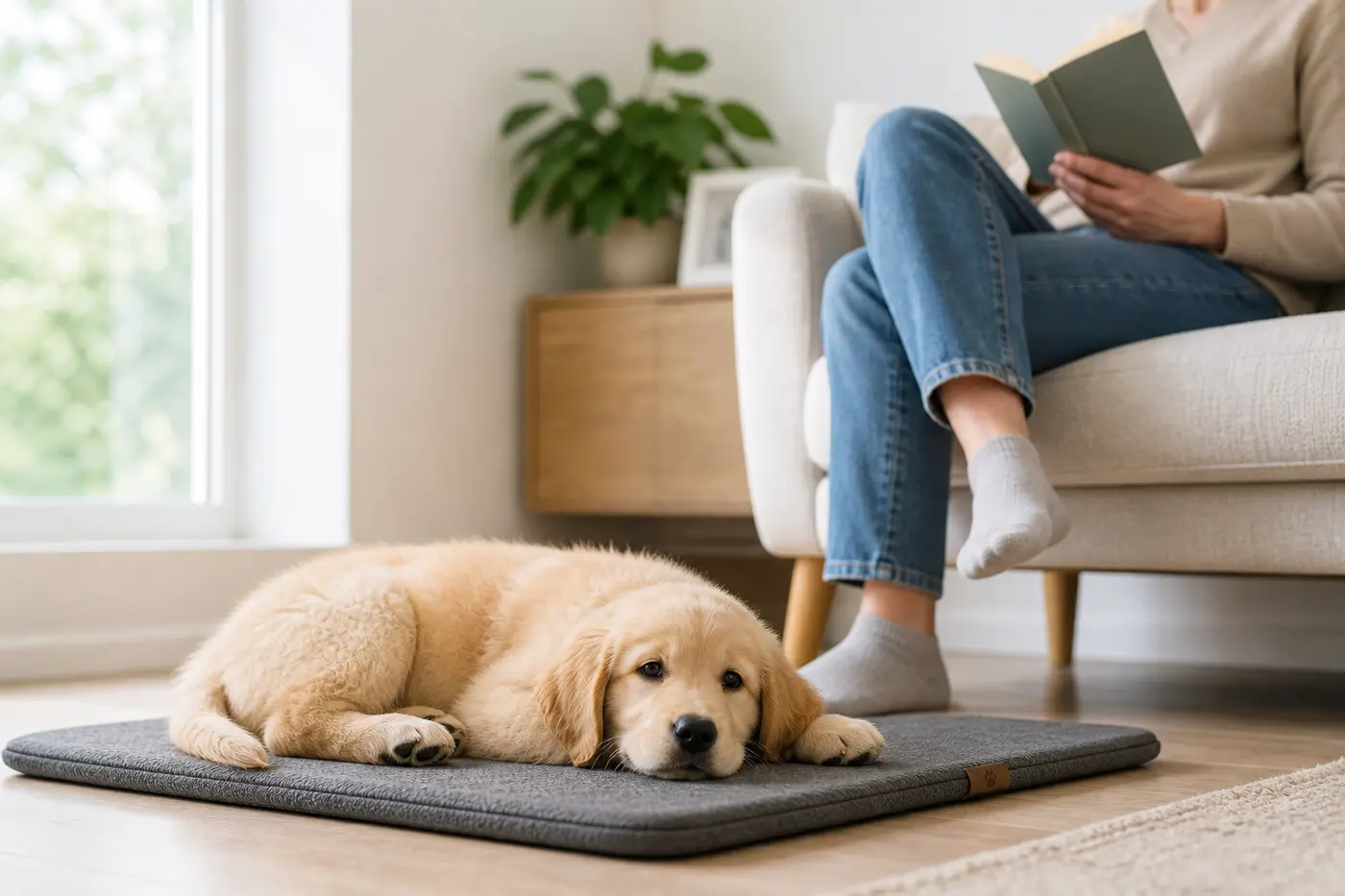
Add one quiet breath
When your puppy lies down, wait one calm breath before the next reward. Build time one breath at a time, not by hoping your puppy can hold still forever.
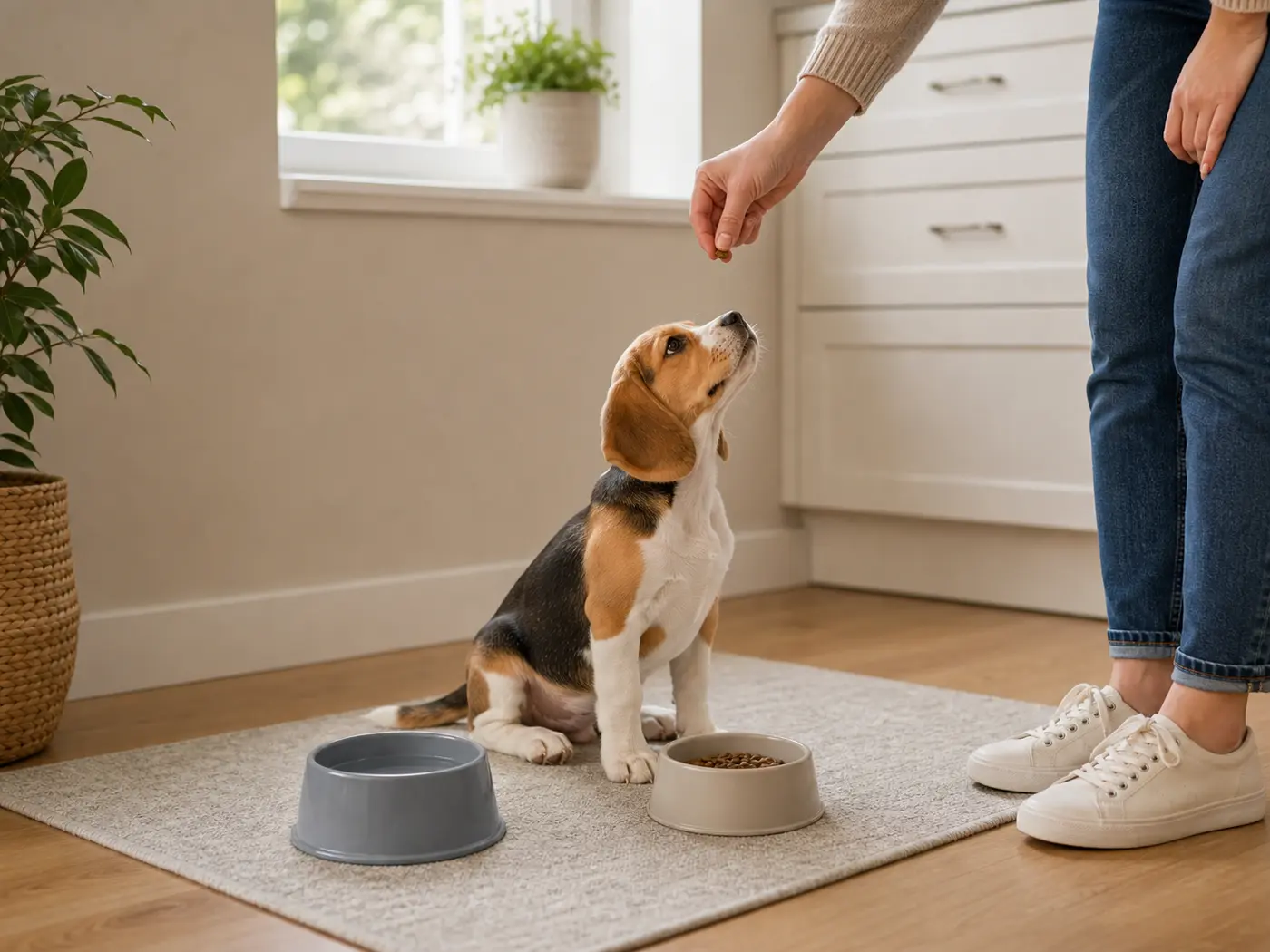
Use it after the busy loop
Settle works best after needs are met: potty, water, a little play, a tiny training win, then mat. A puppy who is bursting with unmet needs cannot relax on command.
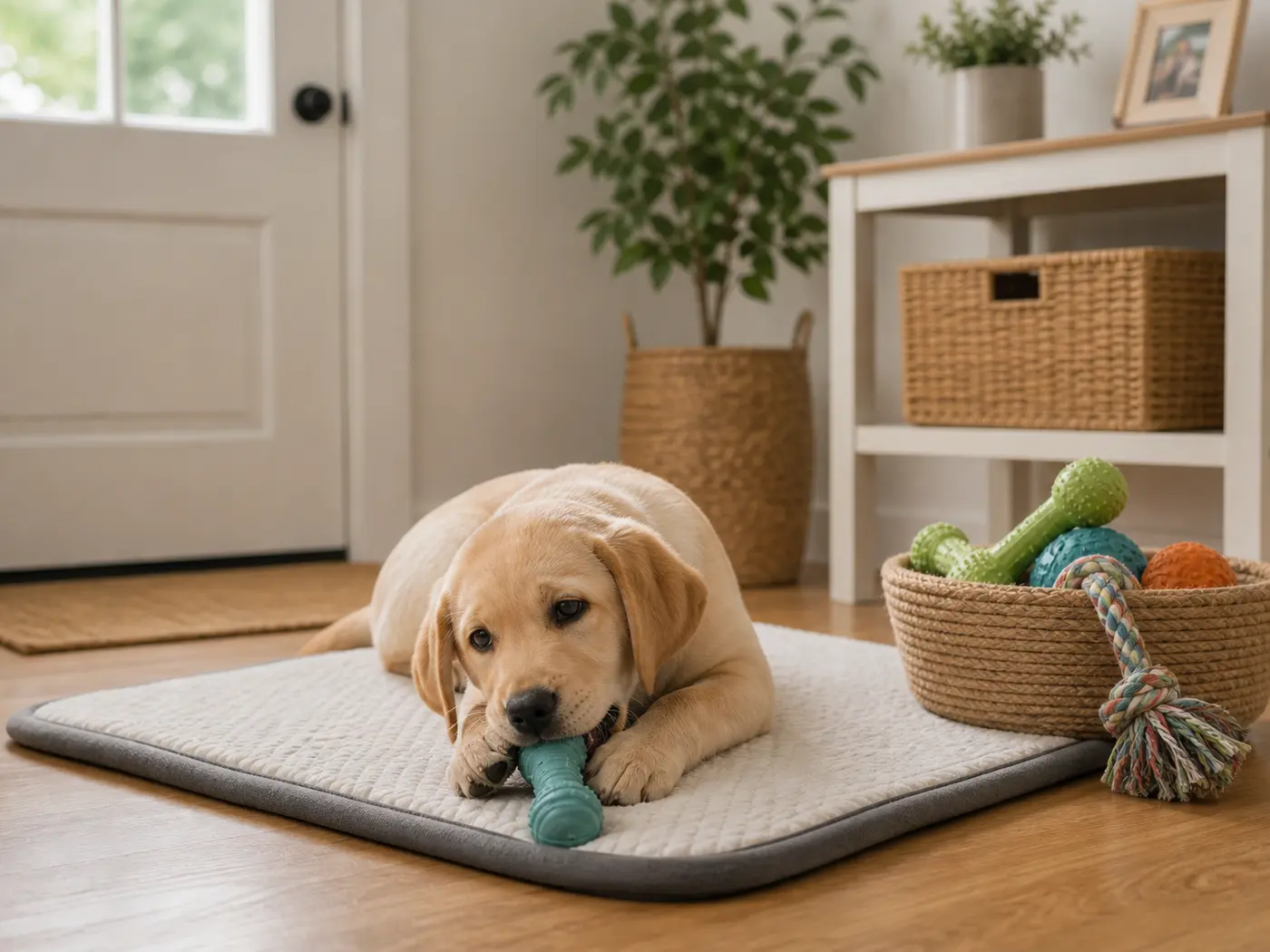
Release clearly
Say all done or okay before your puppy leaves the mat. A clear release helps the mat feel like a predictable job, not a trap.
Little things that help
If your puppy pops up
You waited too long or chose a moment that was too hard. Reward sooner, reduce distractions, or try after a potty trip and calmer play.
If your puppy chews the mat
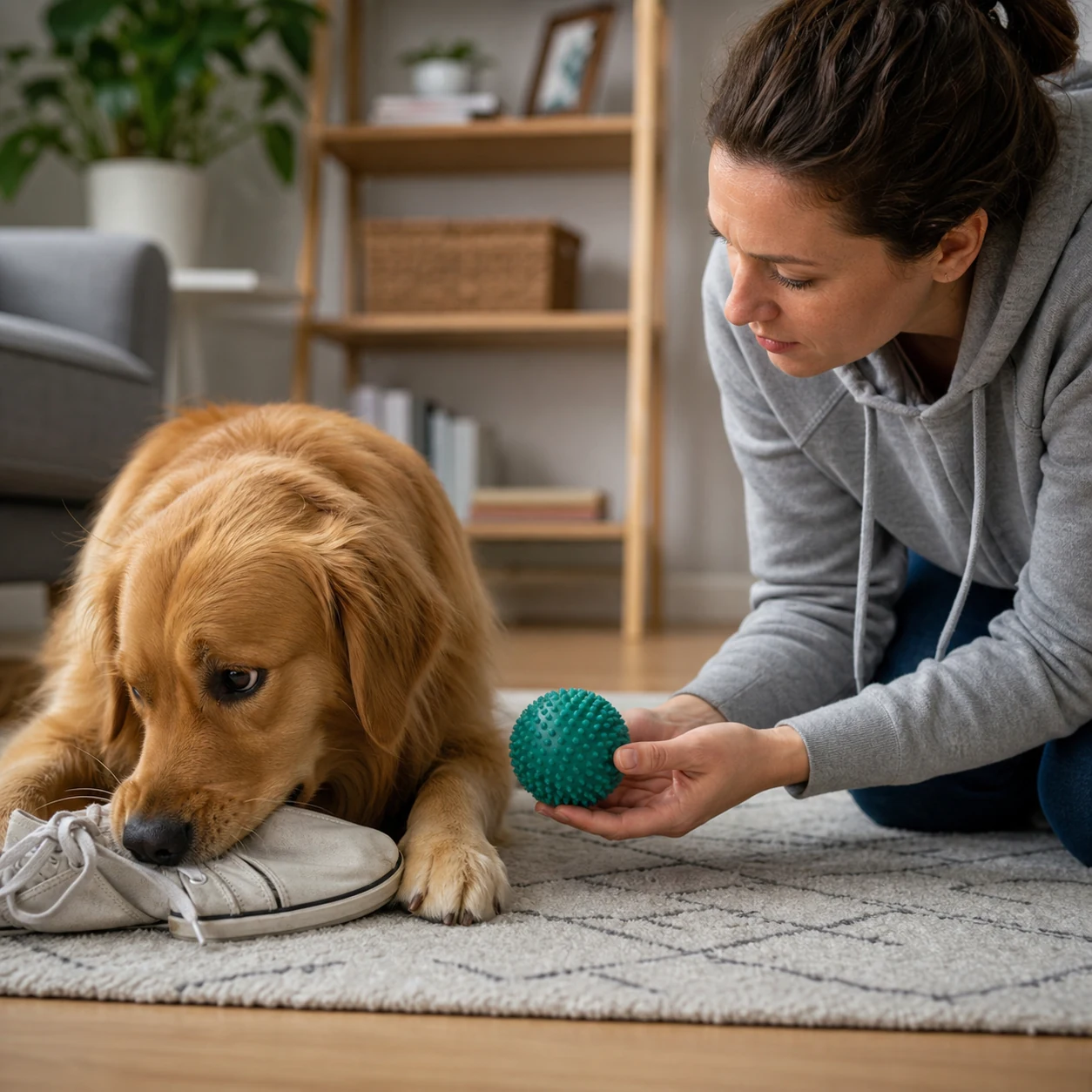
Use a sturdier mat, supervise closely, or switch to a chew station first. Some puppies need a mouth job before they can settle.
If guests are coming
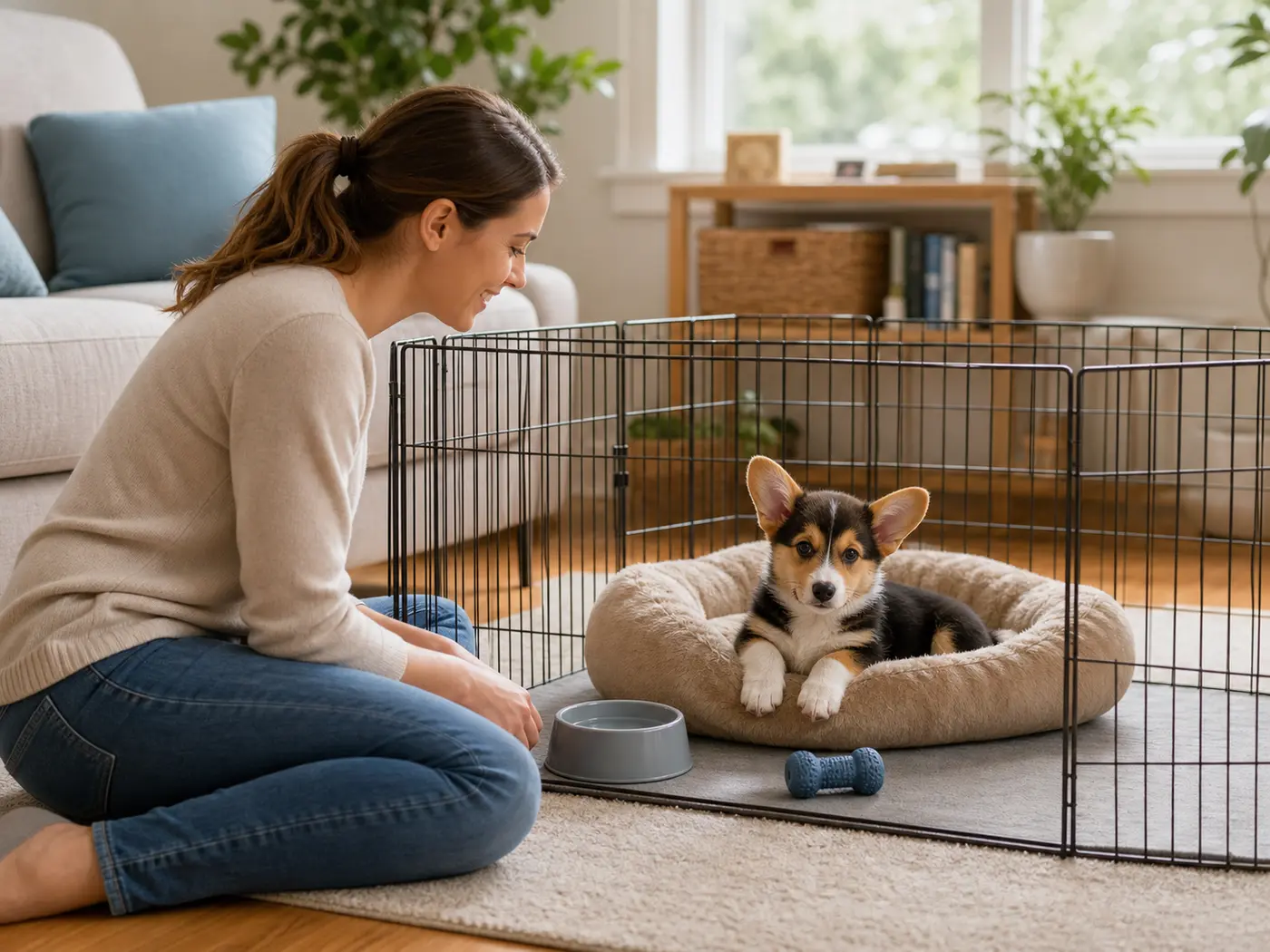
Practice without guests first. During real arrivals, use gates, leashes, chews, and distance so the settle cue does not carry the whole job.
Helpful little extras
Affiliate links: Furball Cove may earn from qualifying purchases at no extra cost to you.

Washable dog mat
A clear, comfortable landing spot makes settle easier to repeat in different rooms.
Soft training treats
Tiny soft rewards let you pay calm moments without making the session loud or exciting.
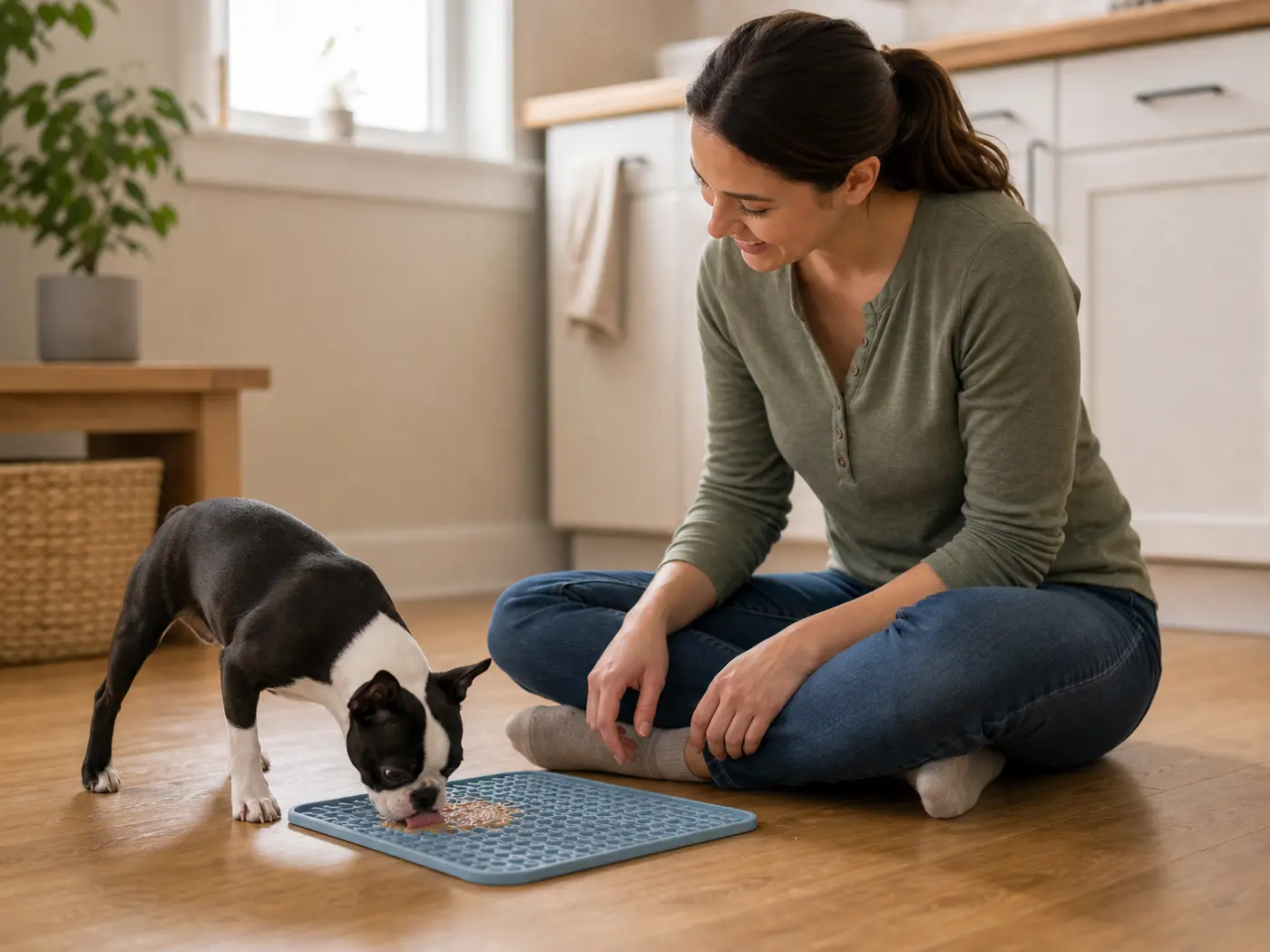
Lick mat
A quiet support tool for puppies who need a softer bridge from busy to settled.
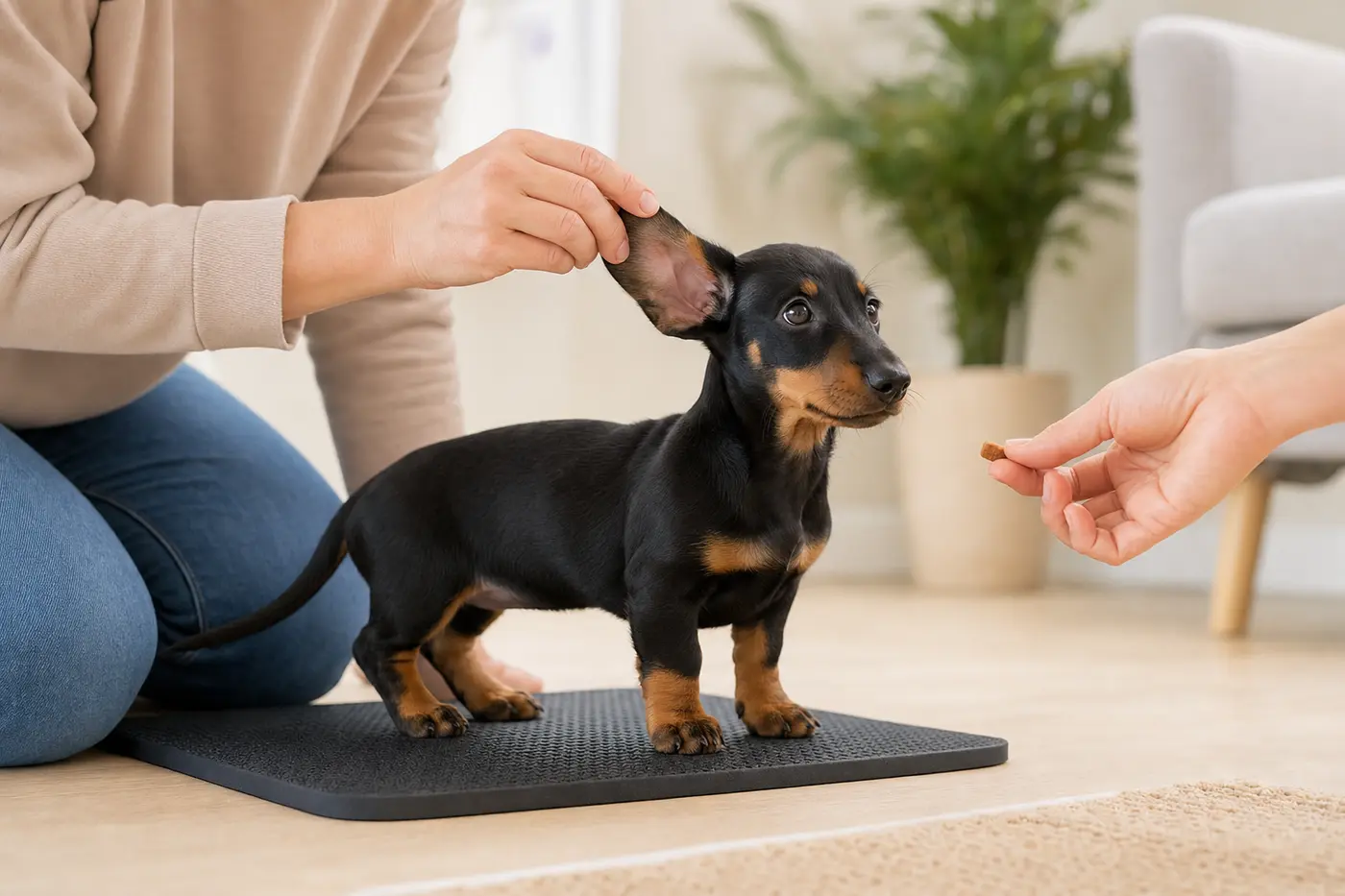
Pet gate
Helps keep the settle area calm when guests, kids, or household motion are too tempting.
Questions people ask
Is settle the same as stay?
No. Stay is usually a position cue. Settle is a relaxation routine: find the spot, soften, and rest near normal life.
Why will my puppy not settle at night?
Evening trouble often means overtired, needing potty, too much stimulation, or not enough structure. Meet the need first, then use the mat.
How long should a puppy settle?
Start with seconds. Young puppies need short, successful reps and lots of real sleep. Build duration slowly as the routine becomes familiar.