Before arrival
Home Base
The starter area should feel boring, roomy, and repeatable.
0/0Updated
Rabbit question
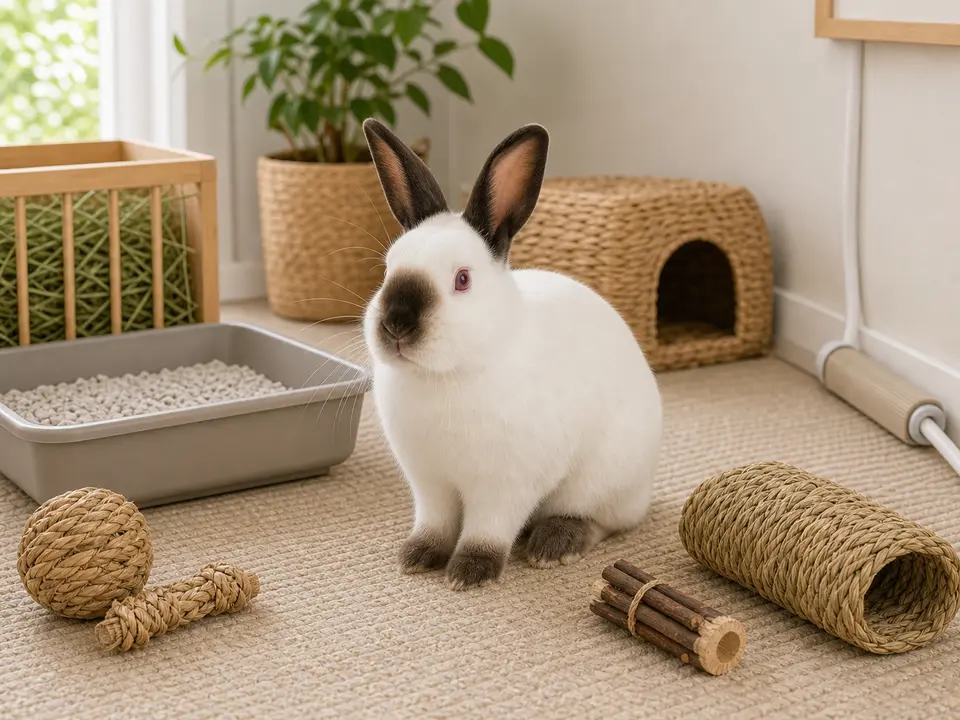
A new rabbit needs supplies that support the daily routine first: a roomy home base, unlimited hay, a heavy water bowl, a large litter box, rabbit-safe litter, grippy flooring, a hideout, safe chew options, cord protection, a hard-sided carrier, and simple cleaning tools.
The best first shopping list is not the cutest one. It is the list that makes the first week calm: your rabbit can eat, drink, use the box, hide, move without slipping, chew safe things, and visit the vet without a last-minute scramble.
Setup planner
Choose the room you are preparing, then check off the supplies and setup jobs that make the first week calm instead of cluttered.
Start with the essentials.
The starter area should feel boring, roomy, and repeatable.
0/0Hay and water are the setup center, not accessories.
0/0A real litter station makes cleanup and training less mysterious.
0/0Rabbit-proofing has to be physical before it is behavioral.
0/0The best first week gives the rabbit choices and protects trust.
0/0Do the calm prep before the day gets urgent.
0/0Finish the home base, hay, water, litter, traction, cord protection, hideout, carrier, and vet contact before the rabbit enters the room.
Keep the room quiet. Refresh hay and water, check that the rabbit can find the box, and avoid rearranging the setup unless safety requires it.
Watch where the rabbit rests, eats, chews, and leaves droppings. Adjust one thing at a time so the room still feels familiar.
Add supervised space only if hay, water, litter, traction, and chewing safety are working in the starter area.
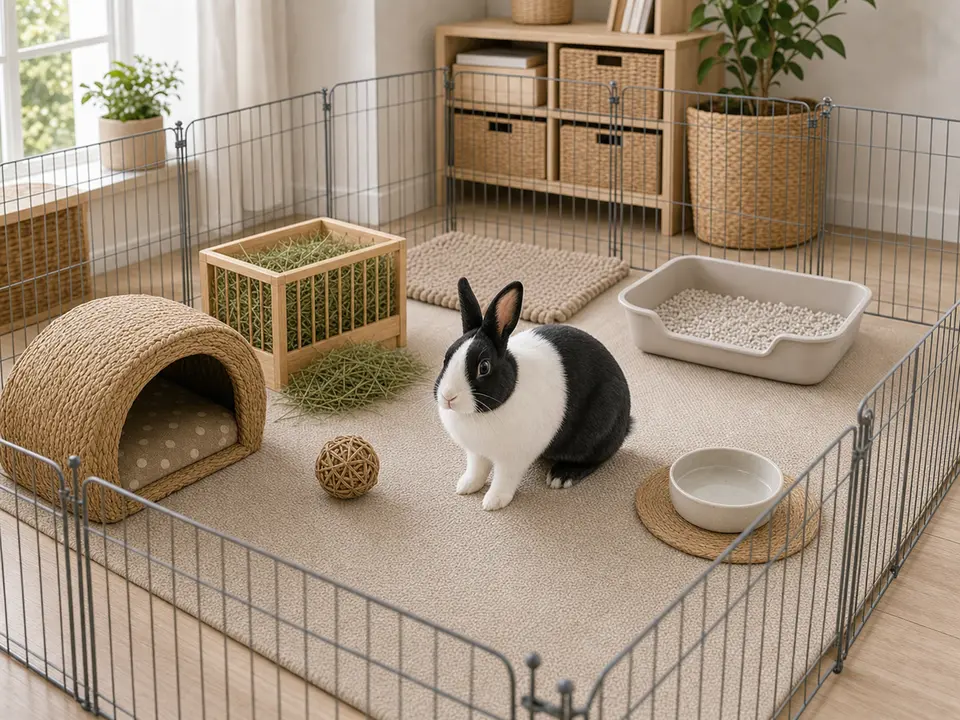
Start with an exercise pen or safe room area that gives your rabbit space to hop, stretch, eat, and rest. A tiny cage makes every other supply work harder. Treat these as the supplies you need before the rabbit arrives: space first, then the rest of the routine. The home base should be easy to clean, easy to supervise, and calm enough for your rabbit to learn the room.
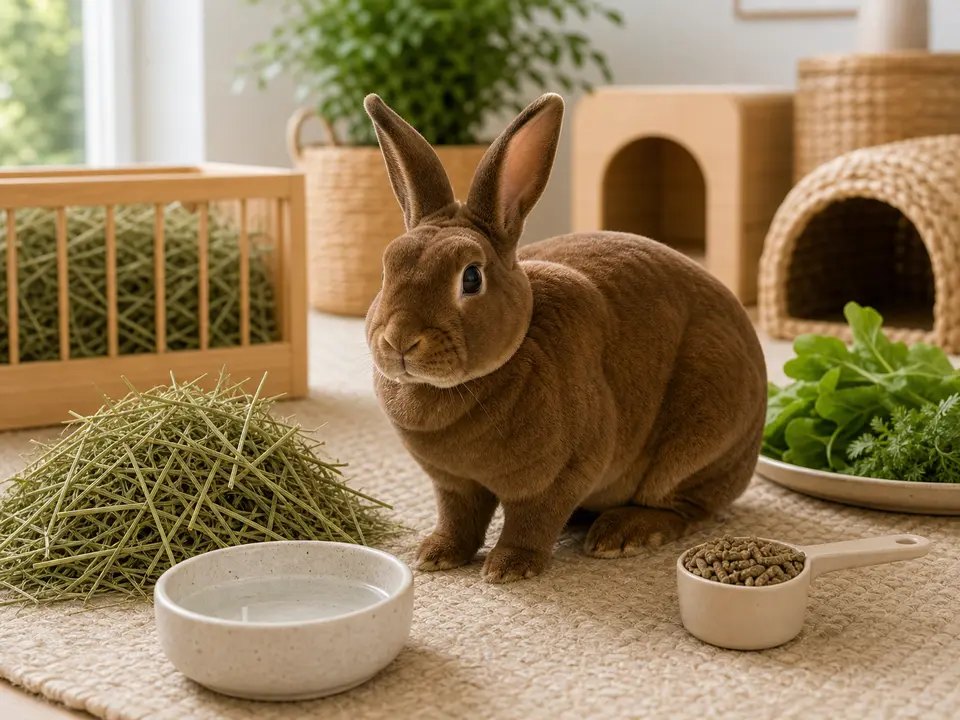
Hay should be available all day, and water should be easy to reach from the main resting and litter area. The feeding supplies you need are simple at first: good grass hay, a stable bowl, and a way to keep hay near the litter habit. A heavy ceramic bowl is a strong first choice because it is visible, washable, and harder to tip. Add a hay rack only if your rabbit can reach it comfortably.
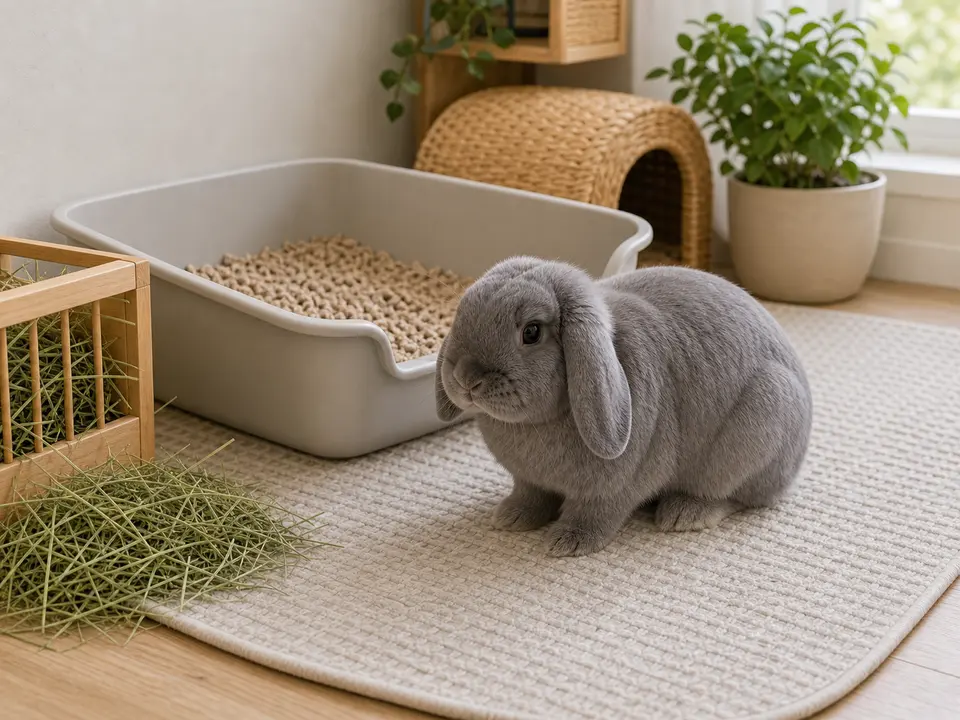
Buy a roomy litter box, paper-based litter, and a small broom before the rabbit arrives. Many rabbits eat hay while using the box, so plan the litter area as a station, not a hidden corner. A washable mat underneath makes the first week easier to reset.
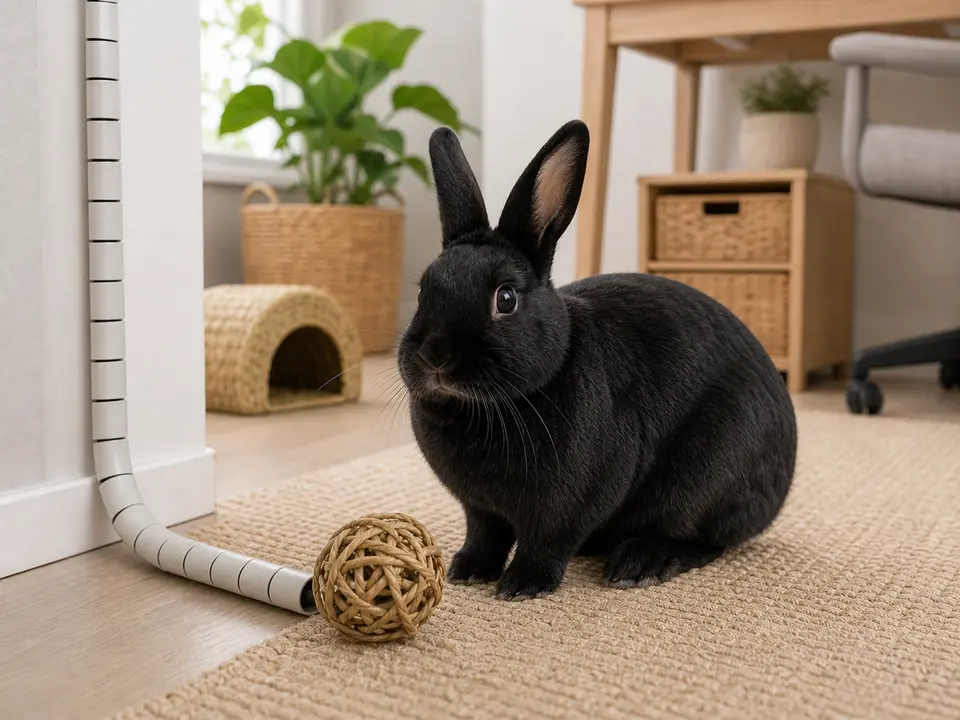
Grippy flooring and protected cords belong on the first list, not the someday list. Slick floors can make a rabbit hesitate, and reachable cords are too tempting. Use washable mats, cord covers, blocked gaps, and simple barriers before free-roam time grows.
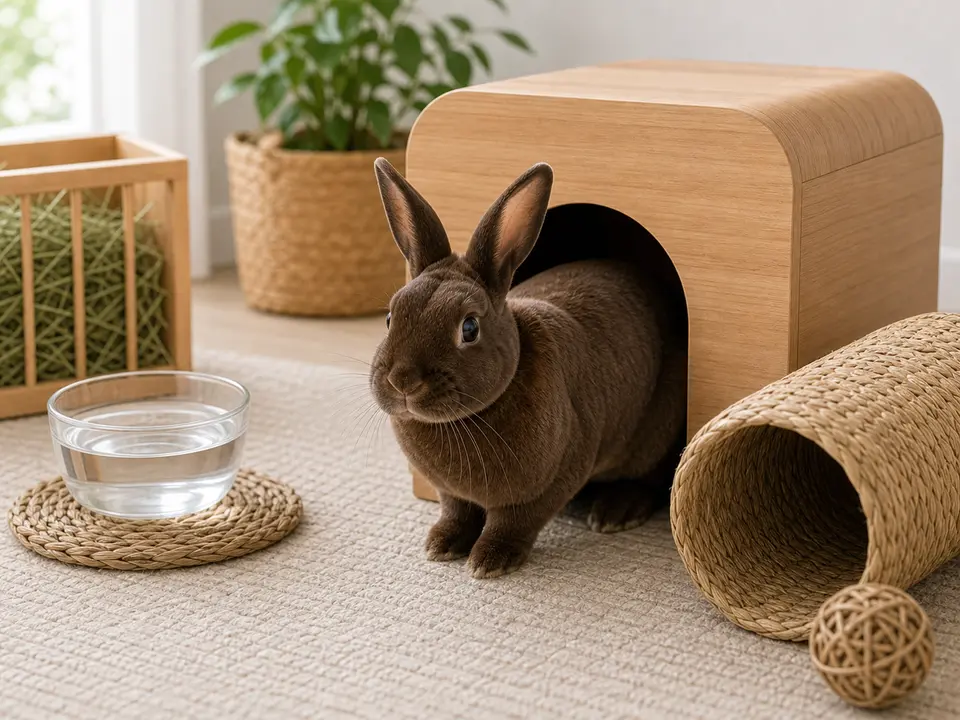
A hideout lets a new rabbit settle without feeling watched from every direction. Choose one large enough to turn around in, with an exit your rabbit can use easily. Respect the hideout as private space, especially during the first few days.
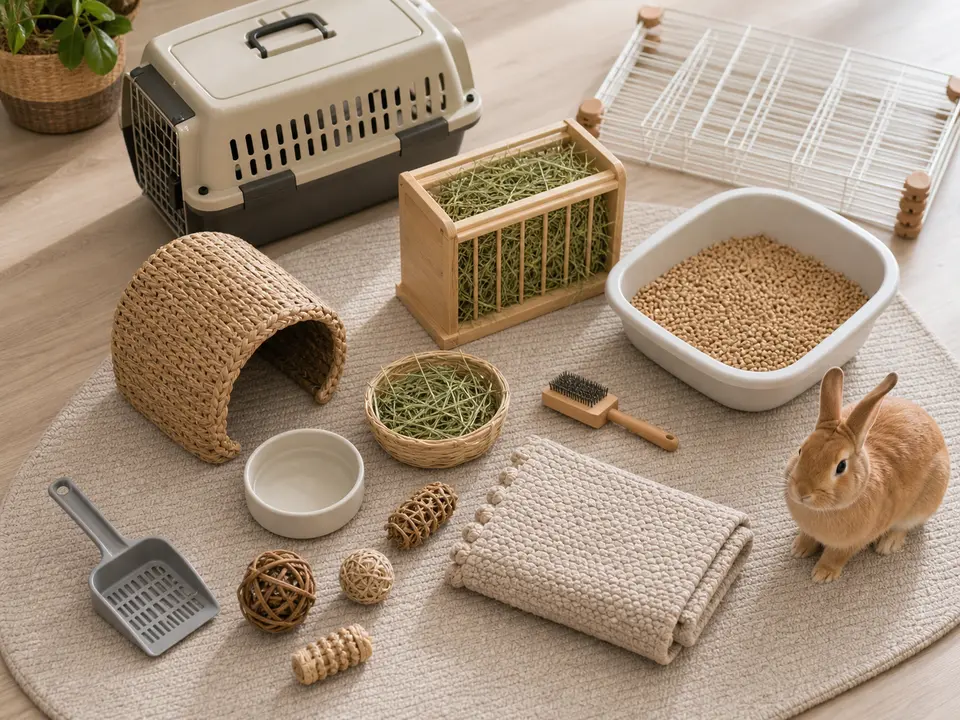
Toys, tunnels, and decorative pieces are easier to choose once you see how your rabbit actually lives. First, make sure hay, water, litter, traction, chewing protection, carrier practice, and cleaning are working. Then add enrichment that matches your rabbit's real habits.
These are the pieces that make the first week easier before you add cute extras.
Affiliate links: Furball Cove may earn from qualifying purchases at no extra cost to you.
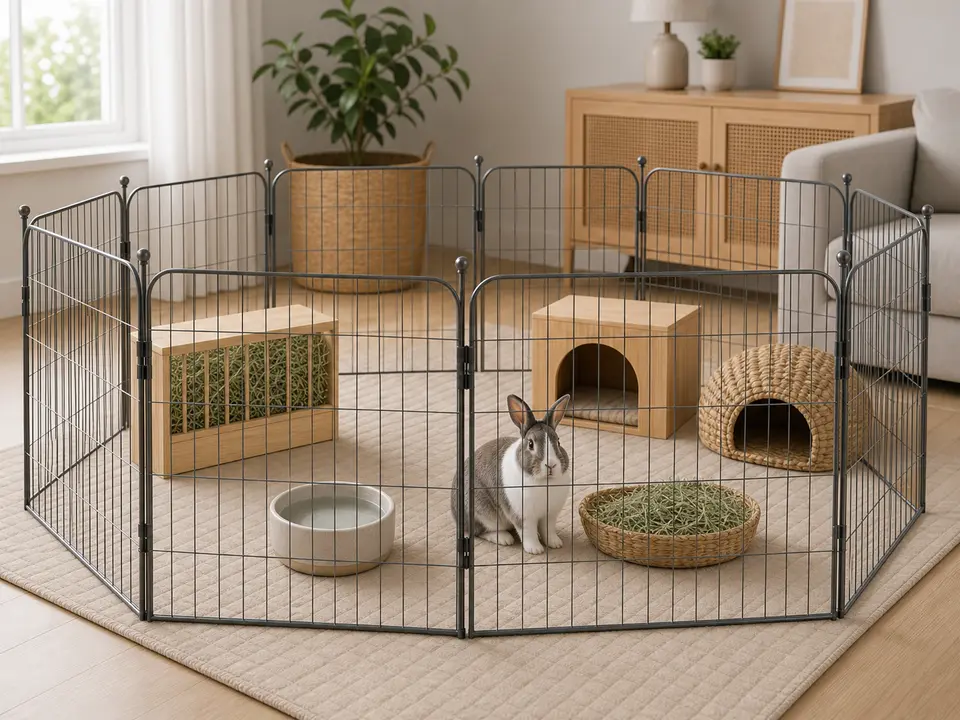
Creates a roomy starter home base that can expand as your rabbit earns more space.
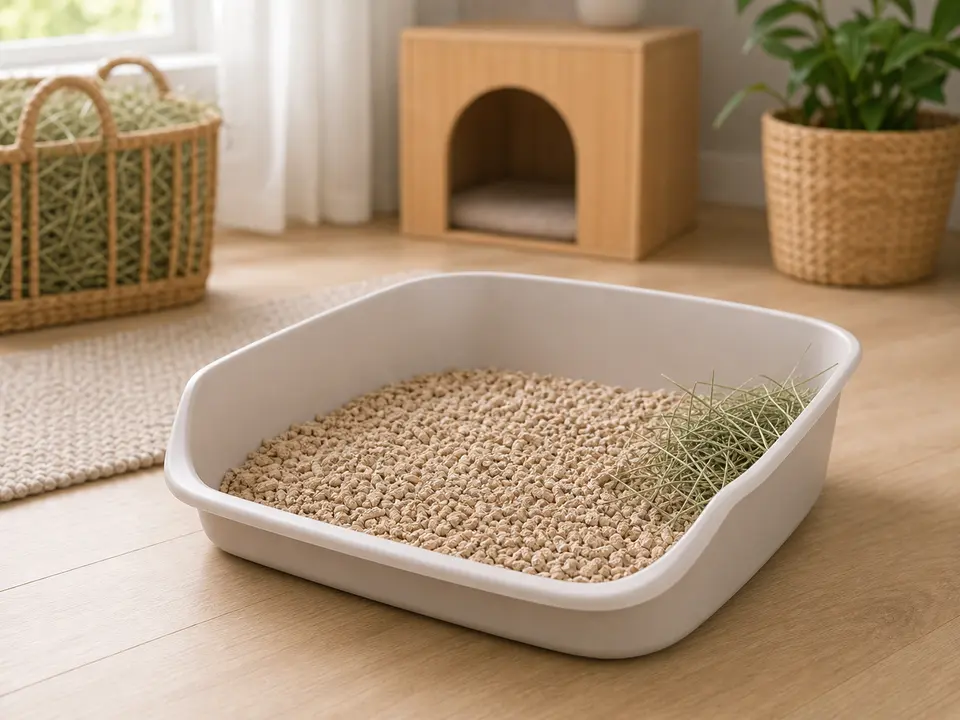
Gives your rabbit space to turn, eat hay, and build a clean bathroom habit.
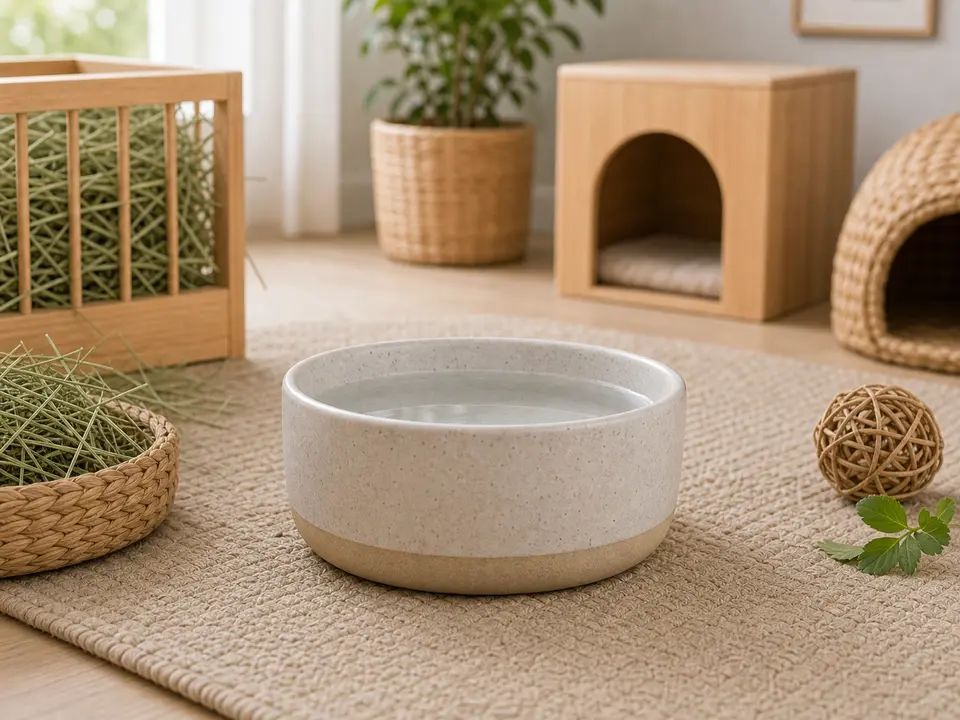
Keeps water visible, stable, and easy to refresh every day.
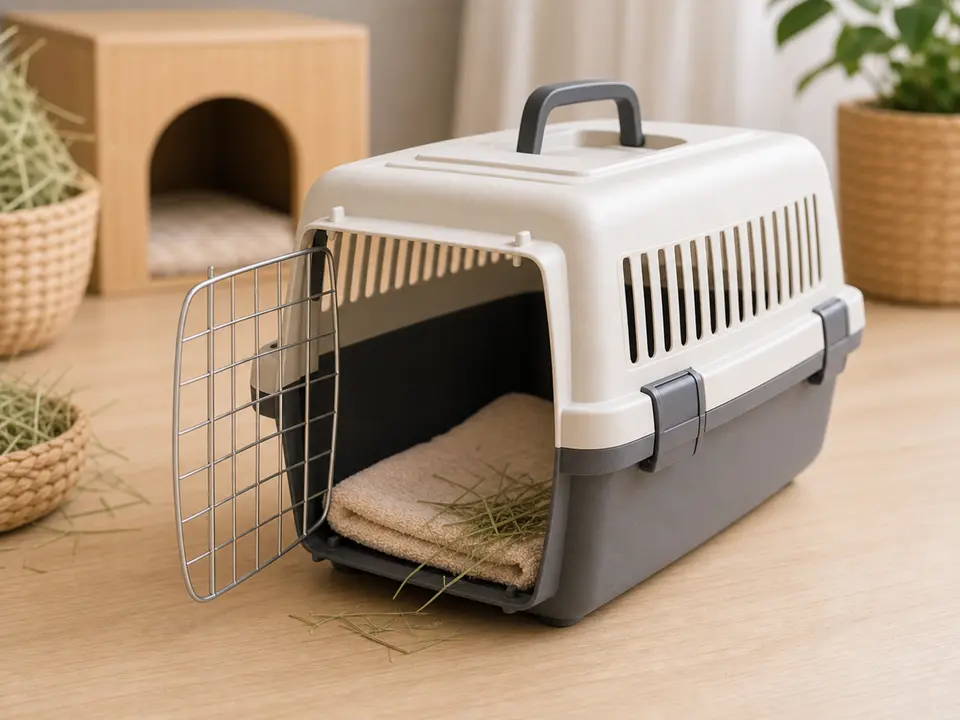
Makes pickup day, vet visits, and travel safer than improvising with a soft bag.
Start with an exercise pen or safe area, hay, water bowl, roomy litter box, paper litter, grippy mats, hideout, safe chews, cord protection, carrier, and cleaning tools.
A roomy pen or rabbit-proofed home base is usually better than a tiny cage because rabbits need space to move and stretch.
Extra toys, decorative beds, and specialty accessories can wait until you know your rabbit's habits.