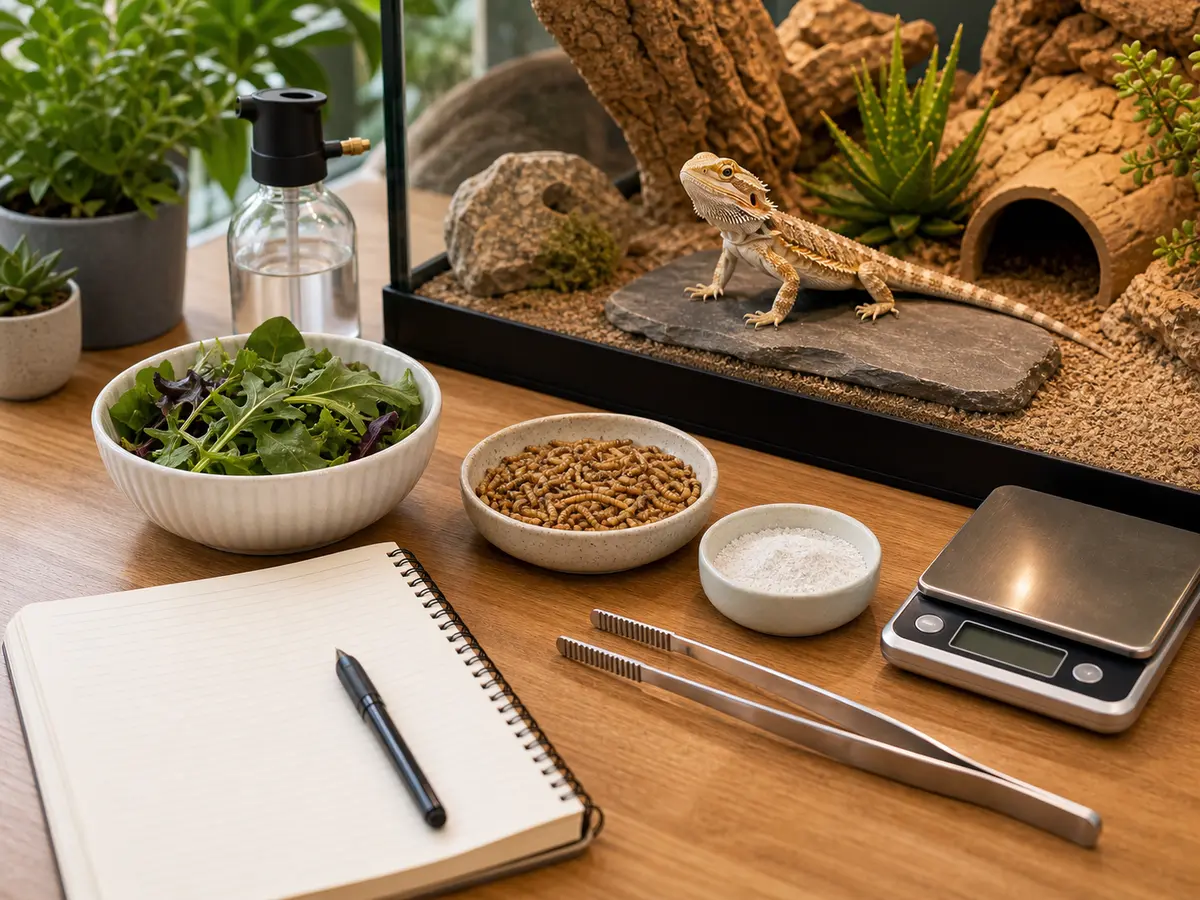

Keep reptile food separate
Store and prepare reptile food away from human food.
Reptile guides
Prepare, store, serve, and clean up reptile food with dedicated tools.
Good food handling protects the reptile and everyone at home.
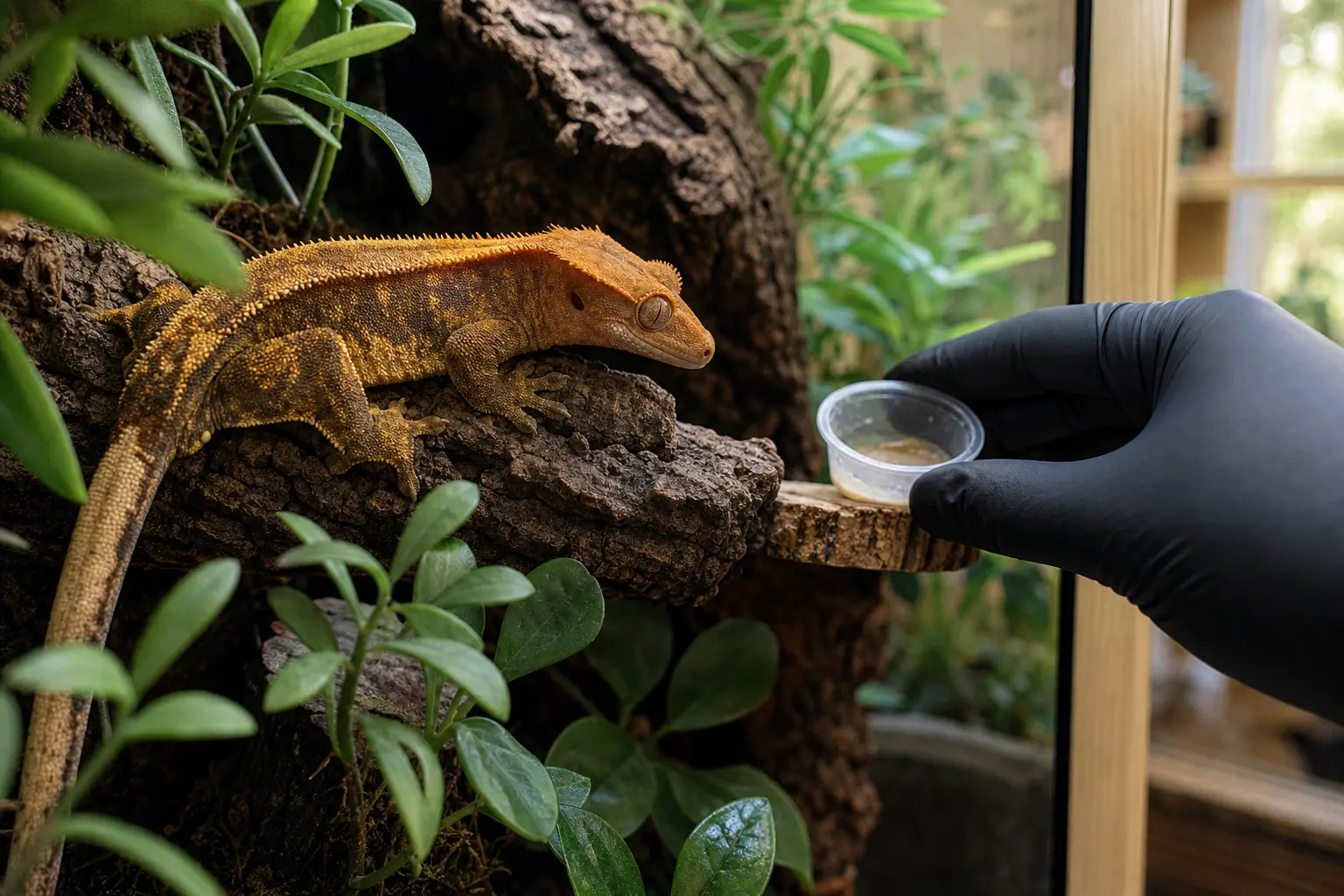
Store and prepare reptile food away from human food.
Remove old produce, prepared diets, uneaten prey, and loose feeder insects promptly.
Contact a veterinarian who treats reptiles after a prey injury, suspected toxic exposure, regurgitation, swelling, breathing trouble, severe weakness, or a marked change from normal.
Optional supplies for the task described above. Species and life stage still decide the diet; buying equipment does not make a food suitable.
Affiliate links: Furball Cove may earn from qualifying purchases at no extra cost to you.
Keep reptile produce prep on a separate, washable board away from human-food prep.
Species-matched · Optional feeding supportAmazon search: compare specifications and sellers; results are not individually vetted.Compare options on AmazonReserve clearly marked brushes for reptile dishes, cups, and food containers.
Species-matched · Optional feeding supportAmazon search: compare specifications and sellers; results are not individually vetted.Compare options on Amazon