

Updated
Whole-prey check
Can Reptiles Eat Frozen-Thawed Mice?
Normal prey for selected species
Frozen-thawed mice are appropriate whole prey for ball pythons and some other carnivorous reptiles when the prey is commercially sourced, correctly sized, fully thawed, and handled hygienically. They are not a food for every reptile, and normal ingestion is not the same event as poisoning or a live-prey injury.
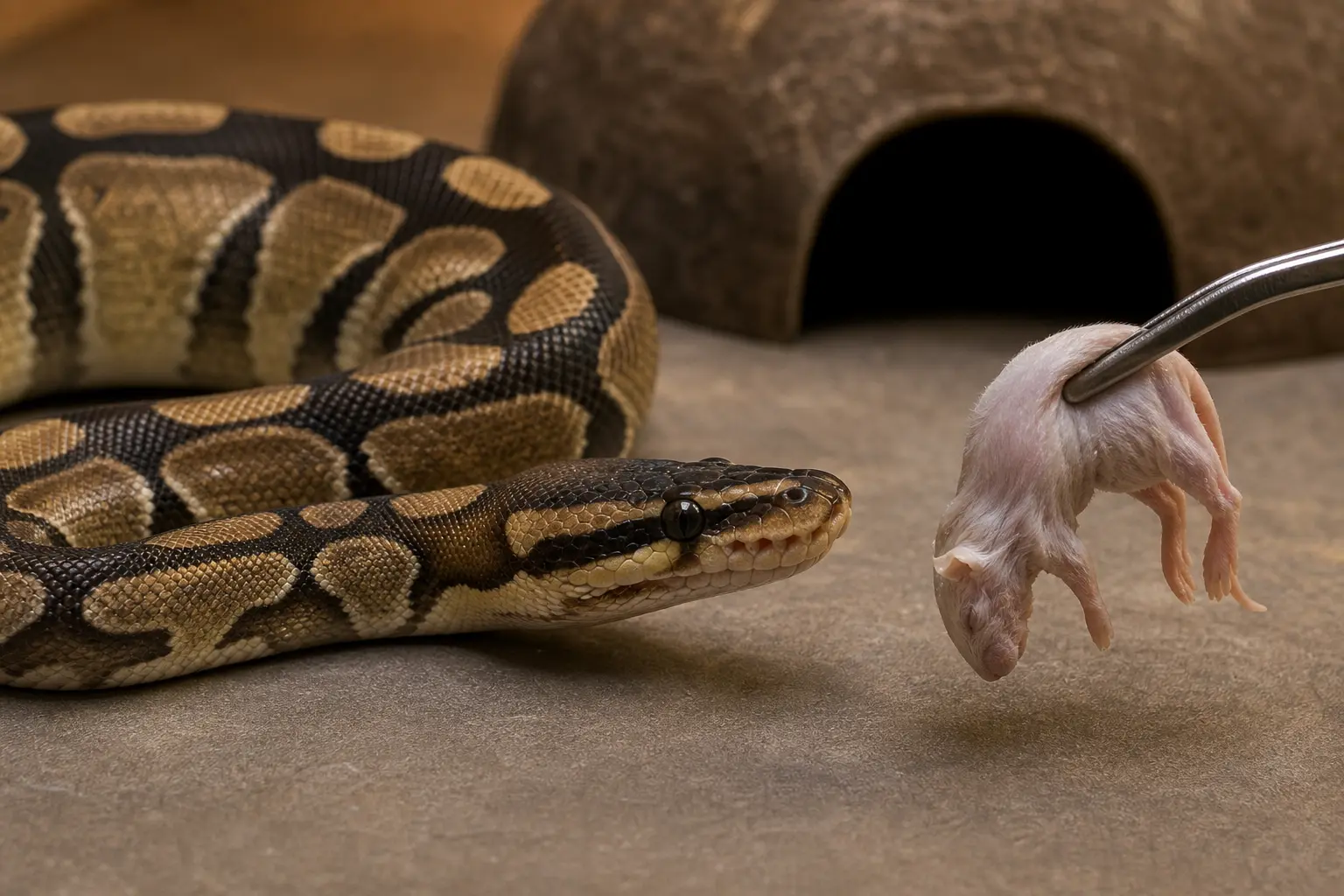 Frozen-thawed mice
Ball pythons
Reviewed whole prey
RSPCA guidance uses frozen-thawed rodents, with prey slightly wider than the snake's widest point and offered with tongs. The interval changes with age and body condition.
Other whole-prey eaters
Check prey type and size
A mouse may be the wrong prey or size for another species. Use its exact care source.
Plant- and insect-eating reptiles
Not part of the diet
Do not add rodent prey to a species plan that does not use it.
Normal meal, no abnormal signs
An appropriately sized, fully thawed commercial mouse eaten normally is an expected feeding event for a species whose diet includes it. Continue the ordinary post-feeding routine.
Source, thawing, or size was uncertain
Record what was offered and call a reptile veterinarian for advice if the prey was wild, poisoned, medicated, spoiled, incompletely thawed, or clearly oversized.
Abnormal signs after feeding
Bleeding, swelling, repeated regurgitation, breathing change, marked weakness, collapse, or unusual behaviour needs prompt reptile-veterinary advice.
Frozen reduces injury; it does not sterilize prey
CDC and FDA guidance warns that frozen and live feeder rodents can carry germs, and freezing does not kill all of them. Keep feeder rodents and their utensils away from human-food areas.
Thaw one meal safely
Follow the supplier's safe thawing instructions, keep prey separate from human food, use dedicated utensils, and discard leftovers rather than refreezing them.
Before feeding
- Use commercially raised prey from a controlled source.
- Select the exact species-appropriate size and thaw it completely.
- Use dedicated tongs and wash hands and feeding equipment afterward.
Do not use
- Wild, poisoned, medicated, spoiled, or unknown-source rodents.
- Prey that is still frozen or too large.
- Kitchen counters, dishes, microwaves, or utensils used for human food.
Watch
- Regurgitation, bleeding, swelling, breathing change, marked weakness, collapse, or unusual behaviour.
Feeding interval
Use the exact species, age, body condition, and prey-size plan. A ball python schedule must not be copied to every whole-prey eater.