Everyday feeding health
Appetite, Weight & Digestion
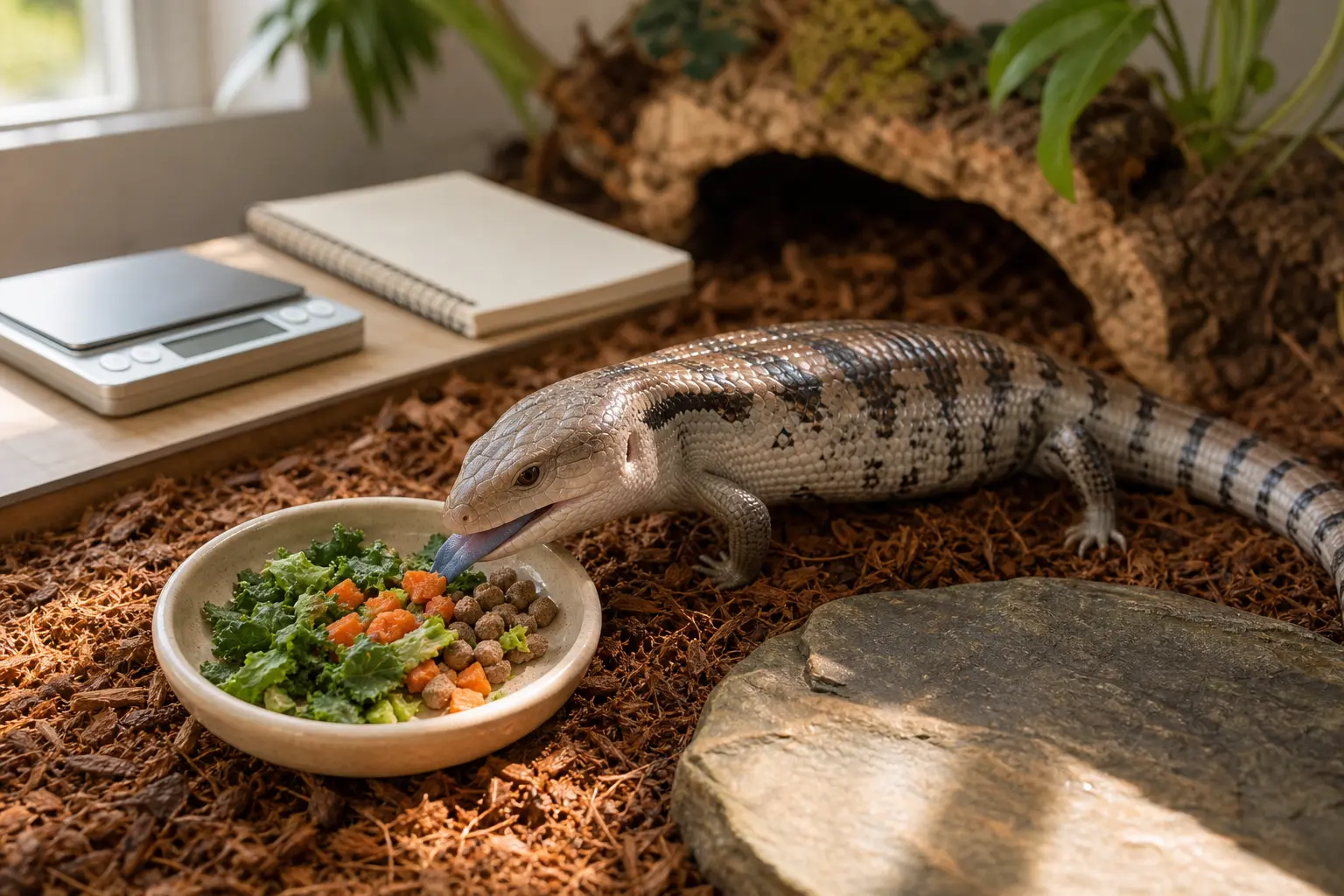
Feeding rhythms vary widely among reptiles, so the useful comparison is with your reptile's own normal pattern.
Follow appetite, weight, waste, and energy together instead of judging one missed meal alone.
Learn the rhythm before judging the meal
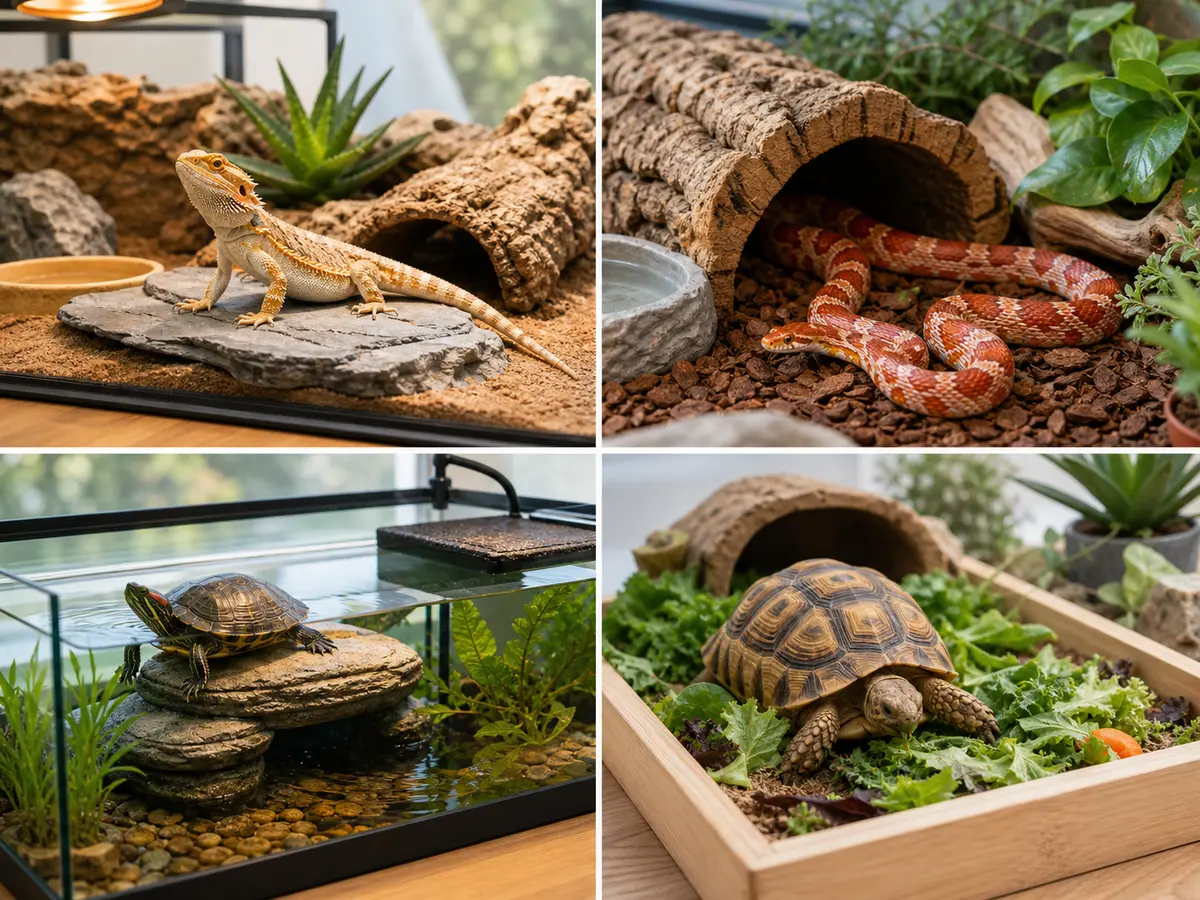
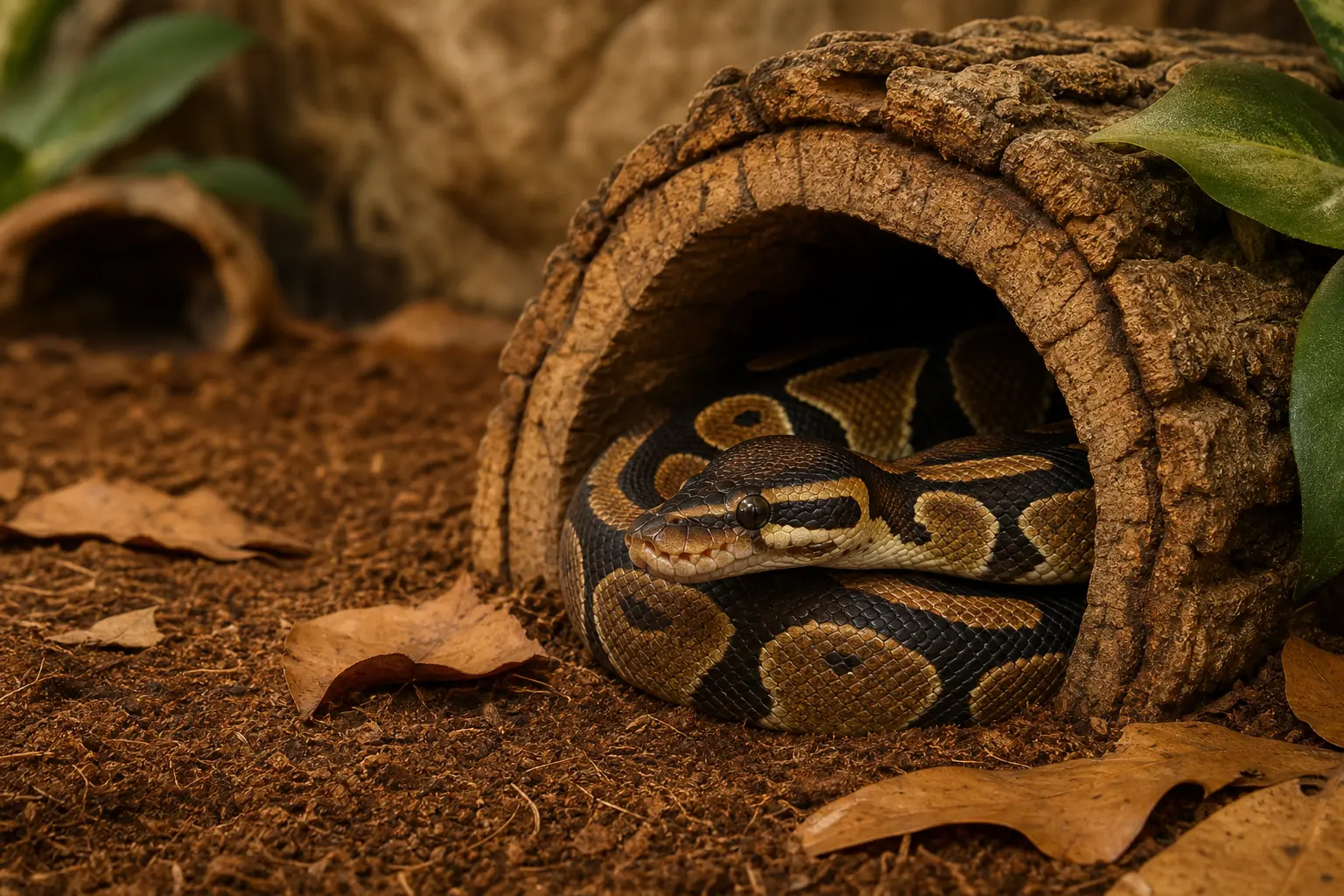
A ball python and a young bearded dragon should not be expected to eat on the same schedule.
Meals follow the species, age, and season
Some reptiles eat daily, while others naturally leave long spaces between meals. Shedding, breeding season, age, and temperature can also change the rhythm.
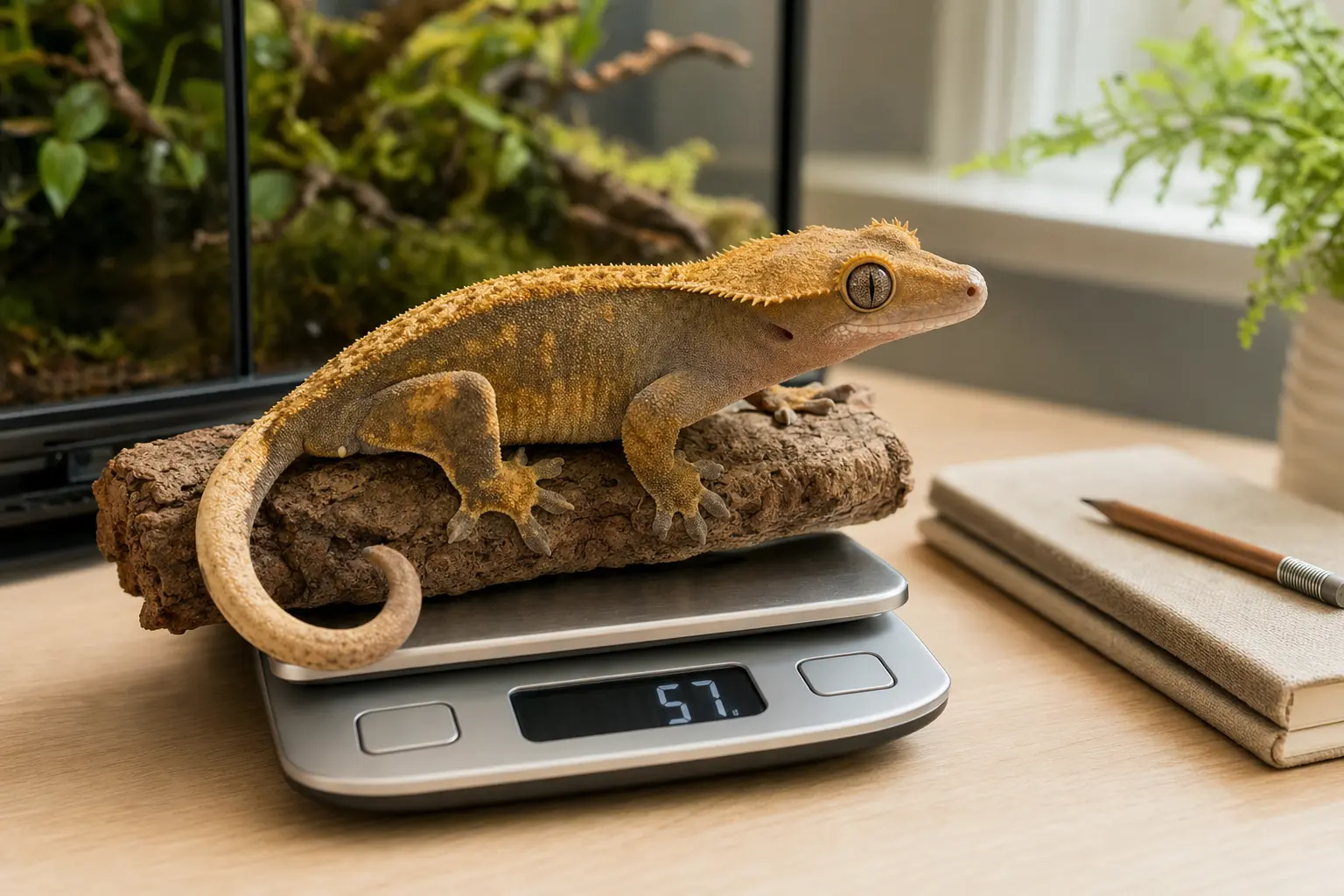
Weight gives appetite useful context
Use one familiar container and the same scale so each measurement is comparable. A steady trend is more useful than repeatedly weighing a stressed reptile or reacting to one number.
Waste completes the picture
Notice the usual frequency and appearance of stool and urates for your reptile. Keep the habitat clean, but take a photo first when something looks unusual.
Changes worth discussing with a veterinarian
Look for a pattern rather than trying to explain one sign by itself.
Eating less than usual
Review the species' normal rhythm and real habitat readings. Call the veterinarian when the change persists, comes with weight loss, or feels wrong for this reptile.
Food comes back up
Regurgitation is not the same as choosing not to eat. Repeated episodes, weakness, or a declining reptile needs prompt veterinary advice.
Waste, urates, swelling, or straining changes
Blood, persistent diarrhea, marked swelling, repeated straining, tissue outside the vent, or weakness deserves a veterinary call.
Keep feeding changes gentle
A reptile veterinarian should guide assisted feeding, medication, or major diet changes when illness is possible.
- Do not force-feedAssisted feeding can cause harm when the cause of poor appetite or the reptile's hydration is not understood.
- Bring real habitat readingsDigestion depends on species-appropriate warmth, so measured temperatures belong in the veterinary conversation.
- Keep a short timelineDates for meals, weight, waste, shed, and the first change are usually enough.