Use repeatable measurements
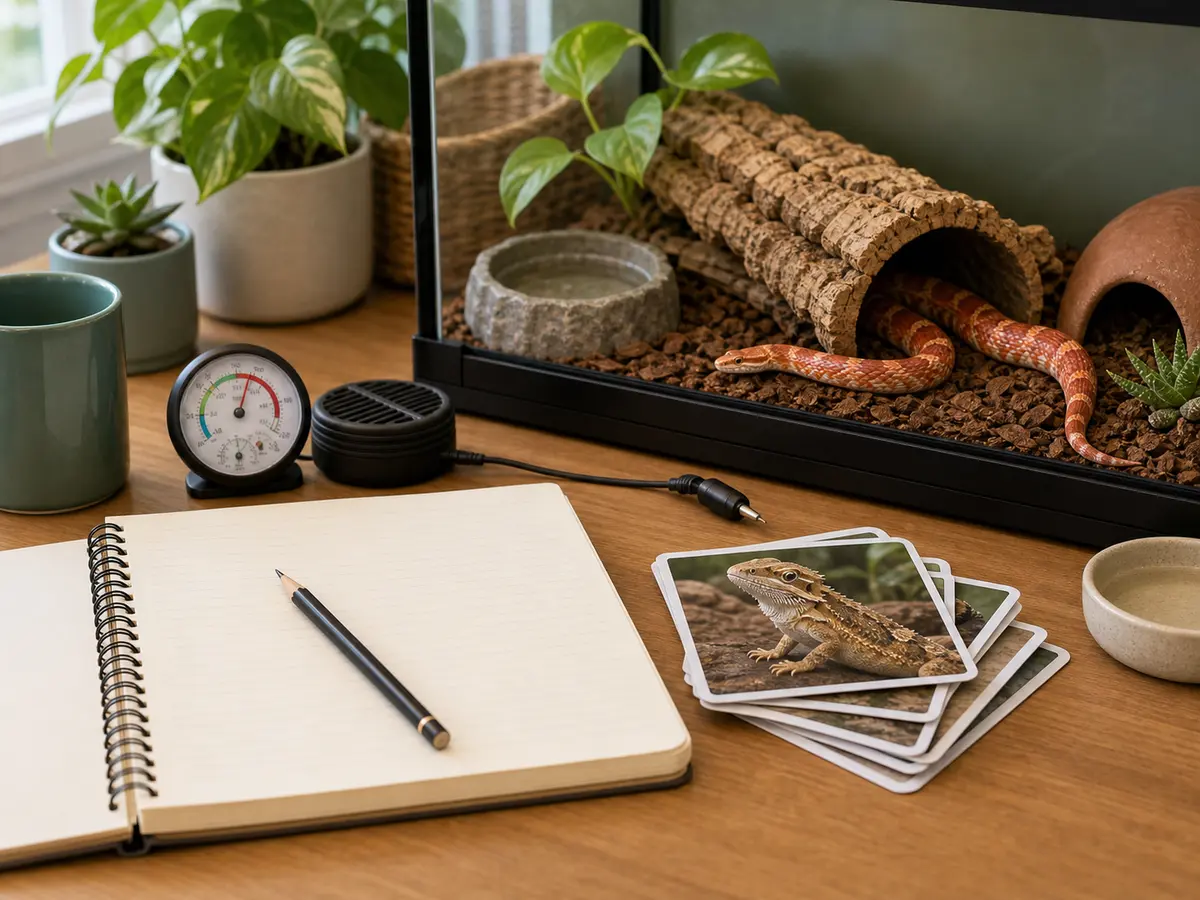
Weigh with the same safe container and scale at a sensible interval for the species. Label temperatures as surface or air readings and record where each probe or meter was placed.
The first 30 days
A few repeatable measurements make gradual changes easier to see and veterinary conversations more useful.
Record only what you can repeat safely: weight.
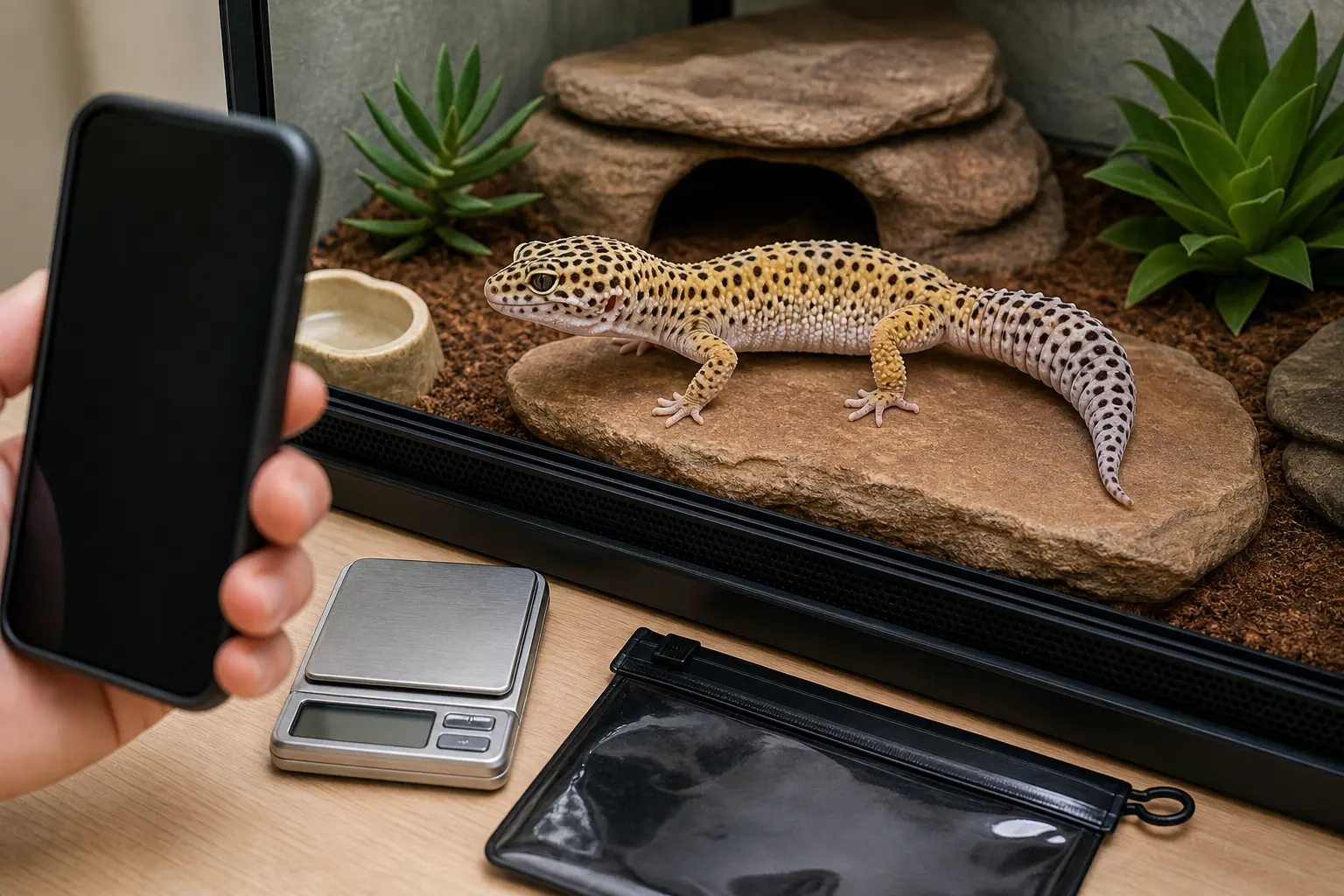
Weigh with the same safe container and scale at a sensible interval for the species. Label temperatures as surface or air readings and record where each probe or meter was placed.
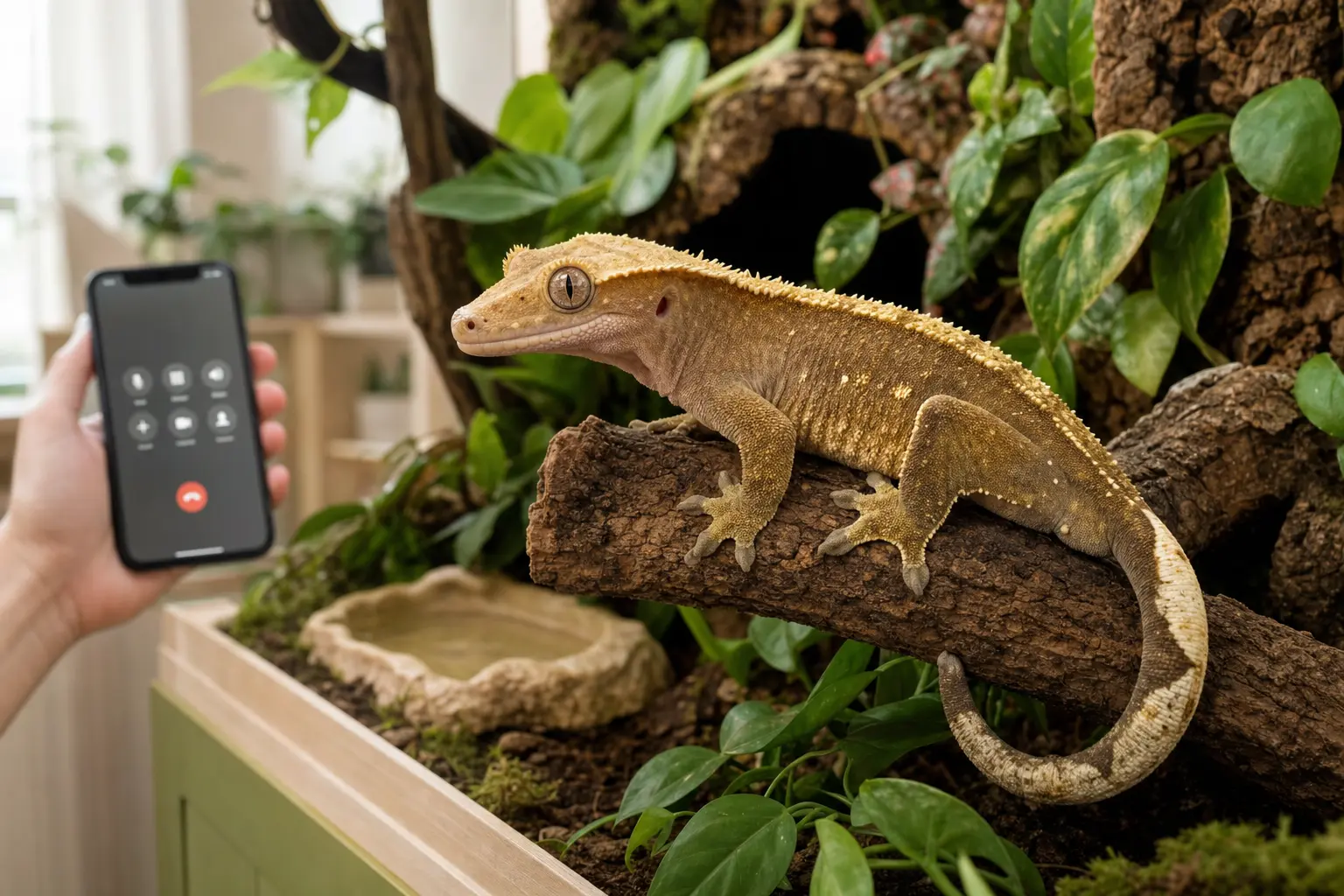
Write what you observed: where the reptile rested, whether food was taken, what waste looked like, and how movement or breathing differed. Photos can document visible change when taken without stressful handling.
Include the species, age if known, acquisition date, diet, supplements, lighting products, replacement dates, recent habitat readings, and timeline of concern. A concise record is more useful than a long list of guesses.
Choose the next focused guide for create a reptile health baseline.
Three optional picks matched to this page. Check adult size, species-specific care targets, and product compatibility before buying.
Affiliate links: Furball Cove may earn from qualifying purchases at no extra cost to you.
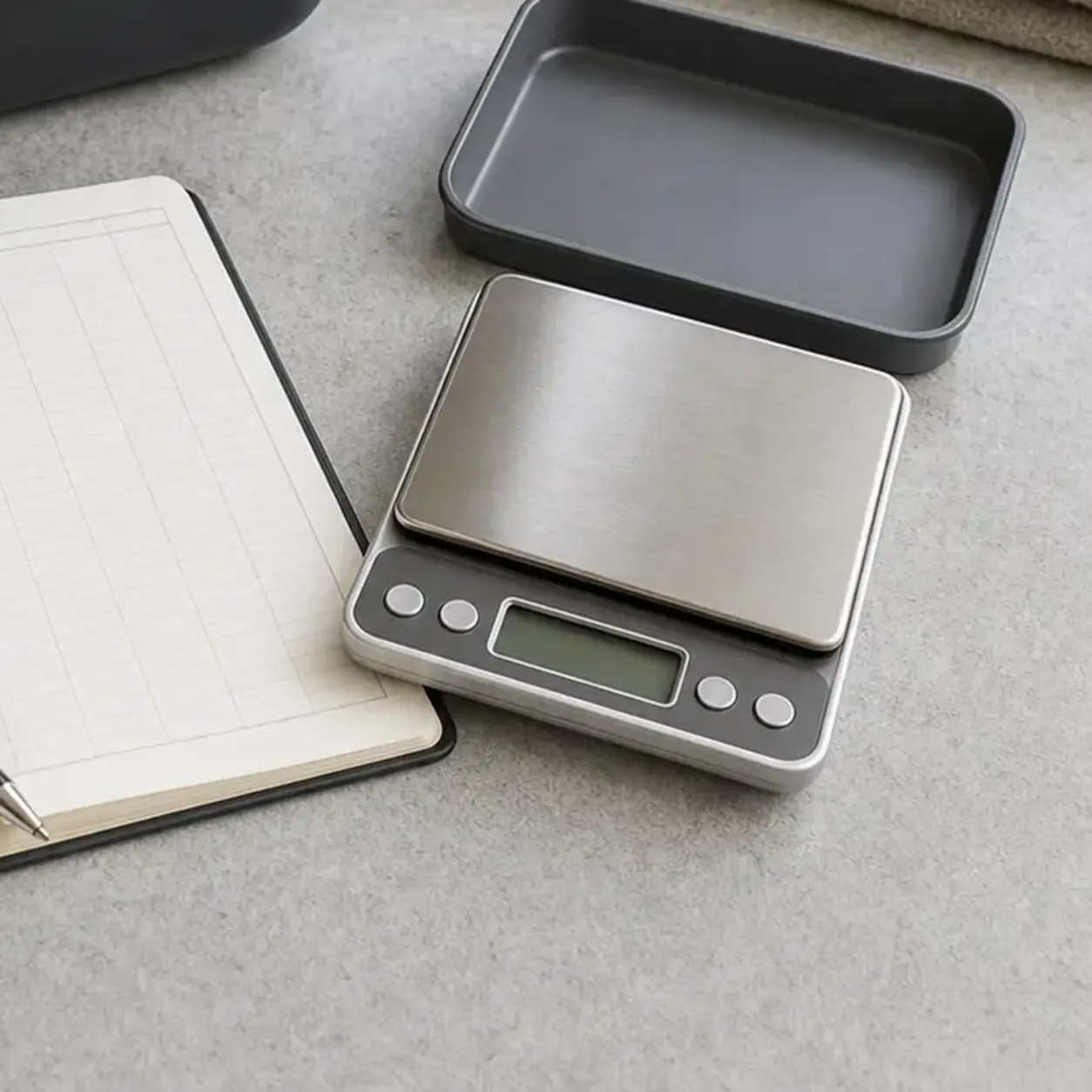
Makes consistent weight checks possible between veterinary visits; use the same safe container and schedule each time.
Trend tool only · Use a safe containerCompare Digital gram scale options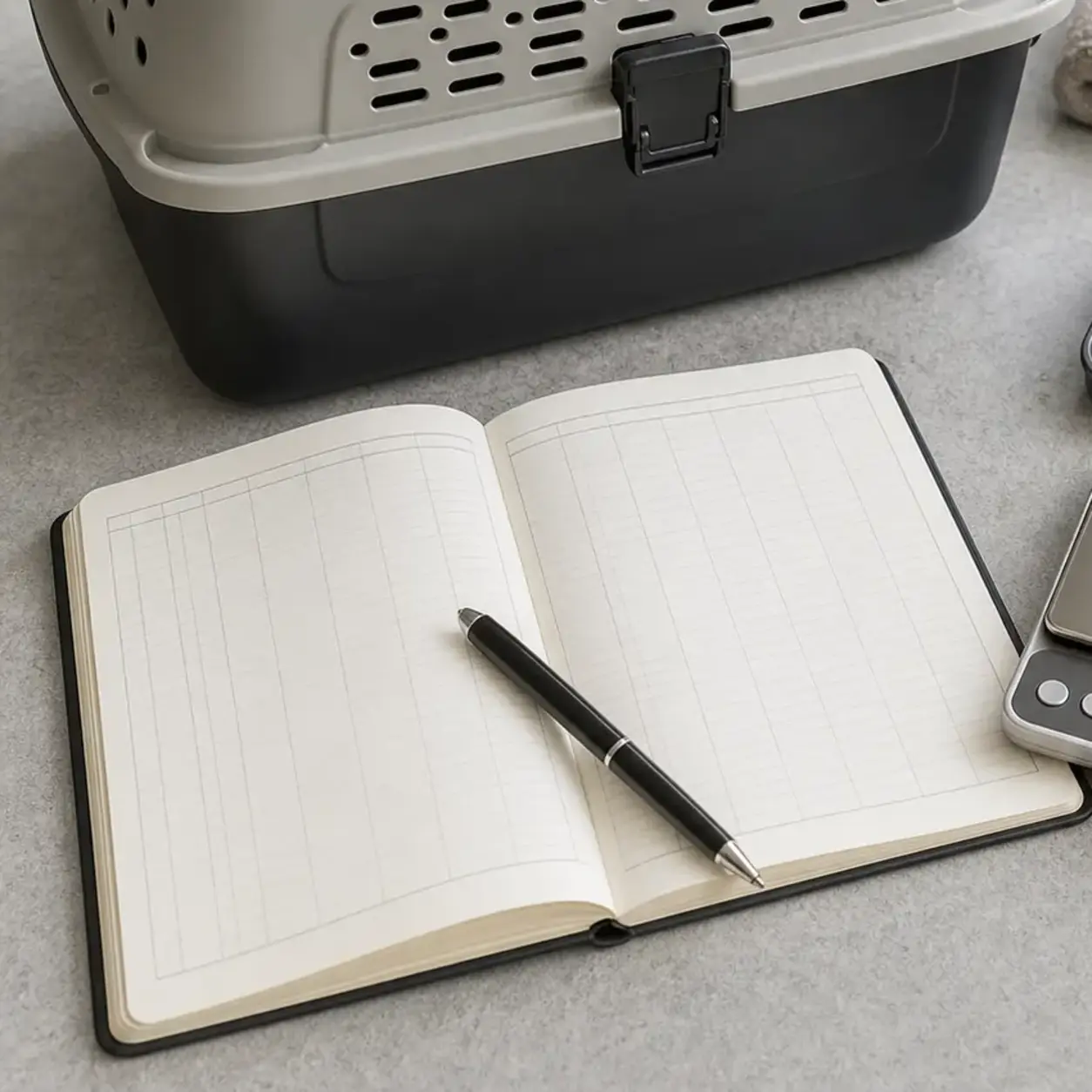
Keeps dates, readings, weight, appetite, shedding, waste, and questions together for clearer veterinary conversations.
Observation record · Not a diagnosisCompare Reptile care log options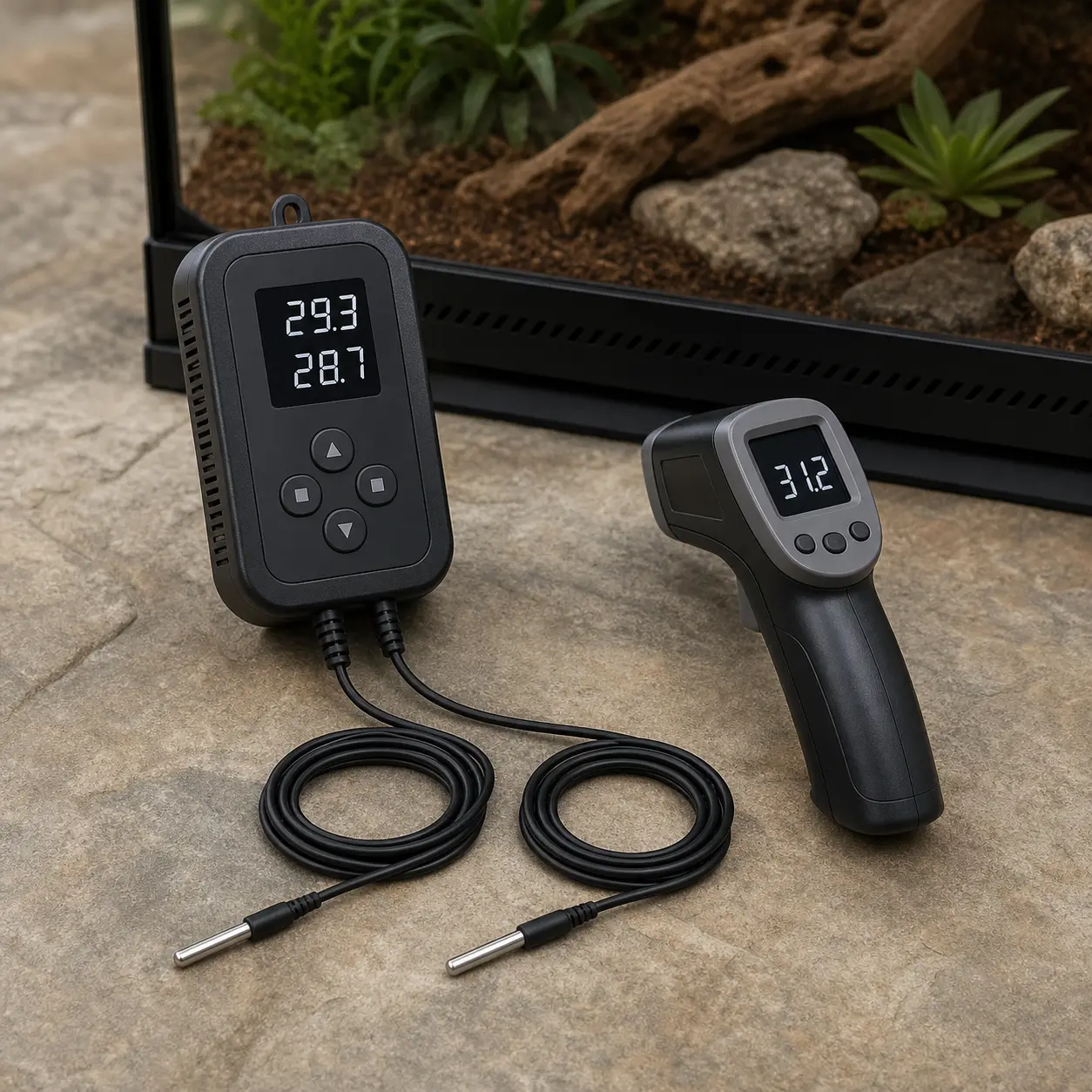
Tracks the warm and cool ends at the same time so the enclosure gradient is easier to verify.
Two-zone readings · Measure before adjustingCompare Dual-probe thermometer options