Choosing a ball python

Is a ball python a good beginner reptile?

They can be—for a prepared keeper who accepts frozen-thawed rodents, careful humidity control, and a snake that may hide or skip meals.

Test the adult routine before adoption. Plan for security, humidity, and feeding records and often 20–30 years or longer.

Check the honest fit
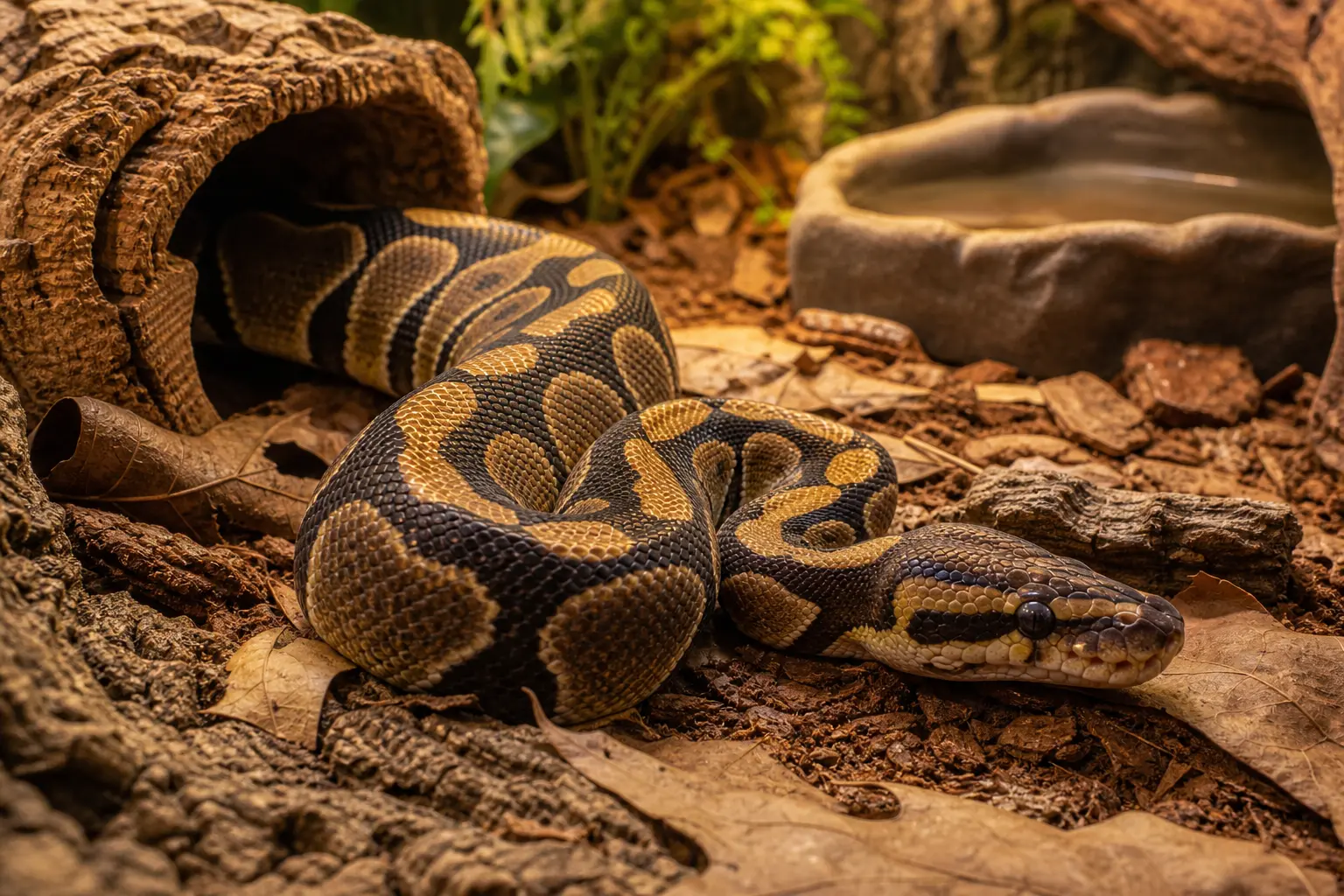
Alert adult ball python exploring a secure naturalistic enclosure with its stout dark-brown and golden patterned body, broad head, and clear eye in view.

The short answer

Possible first snake for a patient, record-minded keeper

A ball python may fit only when the adult home is built and tested before adoption. The keeper must maintain warm basking zone 30–32°c (86–90°f), cool end 24–26°c (75–79°f), about 50–60% with brief boosts toward 80%, then a drop between misting; preserve ventilation, the exact diet, safe handling, and reptile-veterinary access for often 20–30 years or longer.

Adult home
RVC absolute minimum 120 × 60 × 60 cm (48 × 24 × 24 in) for an adult, with room to stretch and dense cover
Commitment
Often 20–30 years or longer
Daily rhythm
Mostly active around dusk and night; often hidden by day
Food
Appropriately sized frozen-then-fully-thawed rodents; occasional reviewed prey variety may be used
Handling
scoop with one hand nearer the head and one nearer the tail, support the whole body, stop at an S-shaped posture, and wait 48 hours after feeding
Before adoption
Build the adult home and locate a reptile veterinarian

The honest fit

Would the adult routine work in your home?

This may suit you if…

  • You enjoy a quiet evening snake and can leave a resting or digesting animal alone.
  • The adult enclosure fits permanently: RVC absolute minimum 120 × 60 × 60 cm (48 × 24 × 24 in) for an adult, with room to stretch and dense cover.
  • You can maintain about 50–60% with brief boosts toward 80%, then a drop between misting; preserve ventilation and verify it with instruments.
  • You will keep weight, food, shed, waste, and climate records and use a reptile veterinarian.
Pause if…

  • Frozen-thawed whole prey, long fasts, and a tightly controlled warm humid habitat feel unworkable.
  • You would buy the animal before the full adult habitat has run successfully for a week.
  • You want frequent handling more than species-appropriate observation and choice.
  • Veterinary care, holiday cover, replacement equipment, or the full lifespan is not yet planned.
01

Why this reptile appeals

You enjoy a quiet evening snake and can leave a resting or digesting animal alone.

The rewarding part is the normal routine: mostly active around dusk and night; often hidden by day. A calm ball python is not permission to skip habitat, records, hygiene, or veterinary planning.

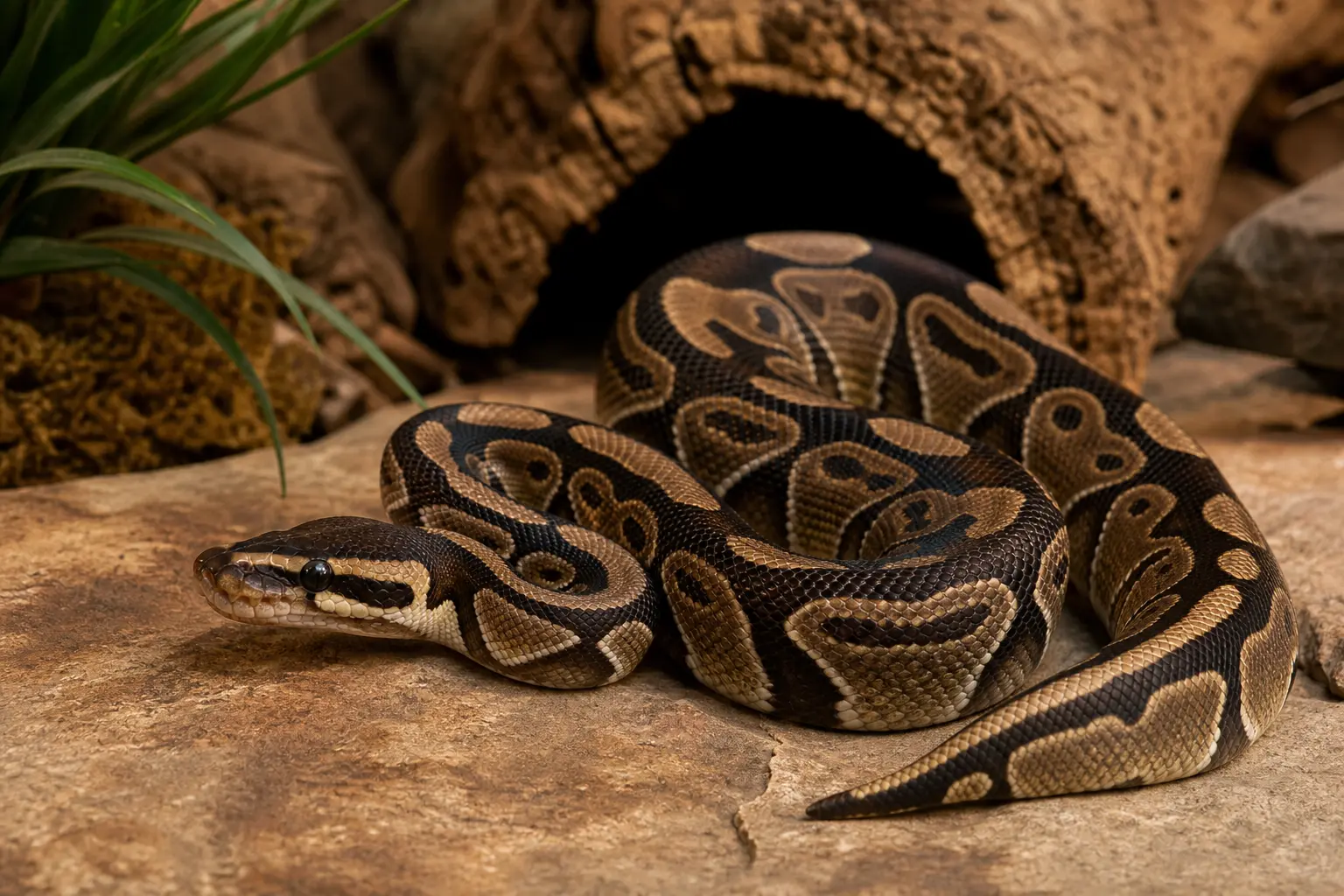
Adult ball python resting alertly on warm stone beside a cork hide, with its patterned body and clear dark eye in view.
02

The honest adult-care test

Start with the permanent footprint: RVC absolute minimum 120 × 60 × 60 cm (48 × 24 × 24 in) for an adult, with room to stretch and dense cover. Before a ball python comes home, add secure cover, water, measured warmth, UVB, humidity, and easy cleaning access.

The food plan is appropriately sized frozen-then-fully-thawed rodents; occasional reviewed prey variety may be used. For a ball python, decide whether sourcing, storage, preparation, leftovers, and separate hygiene tools remain realistic every week.

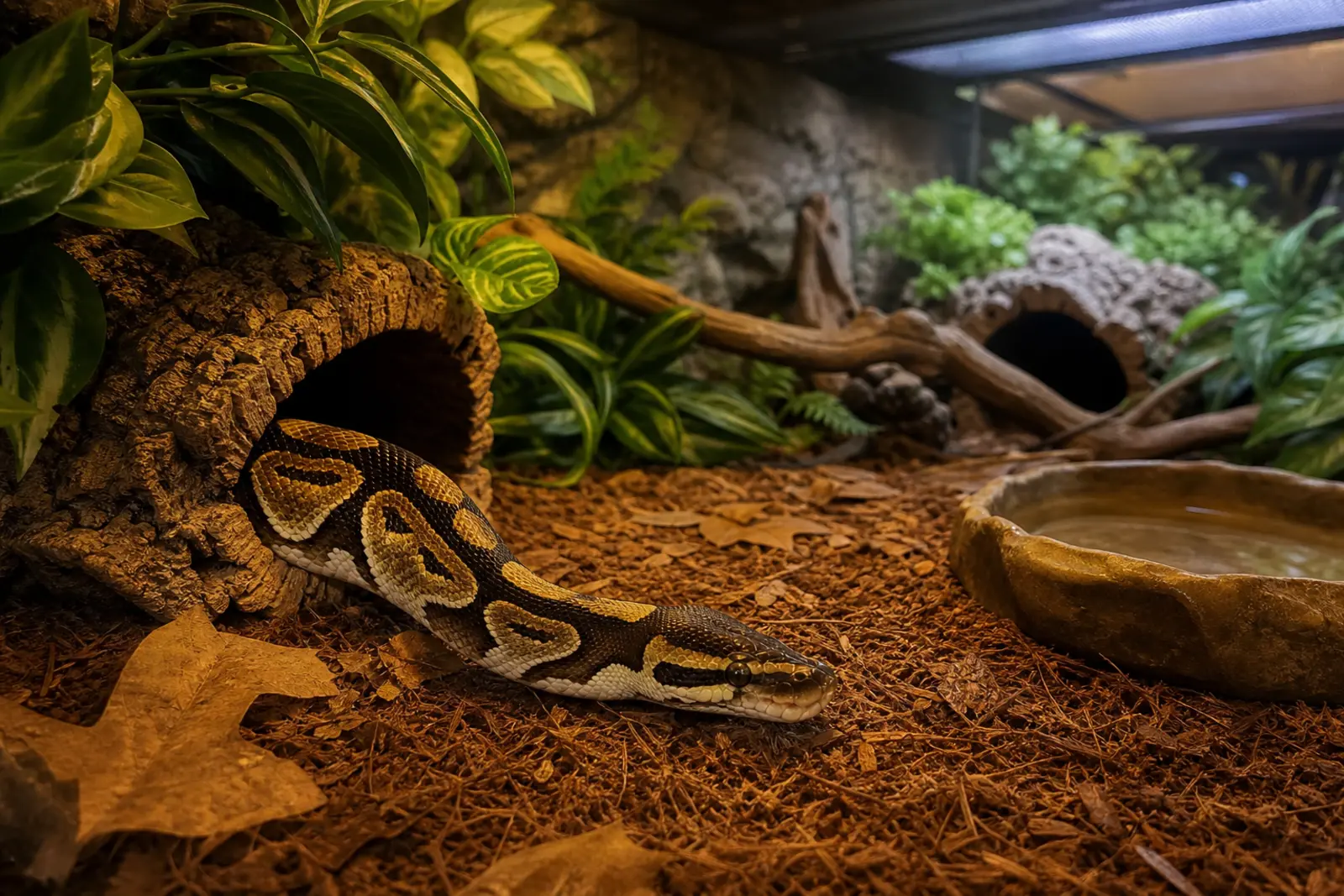
Adult ball python emerging from a snug hide in a secure spacious enclosure with dense cover, a second hide, a low branch, and fresh water.
03

Picture an ordinary care week

During a ball python care week, read the climate instruments, refresh water, inspect equipment and security, remove waste, and observe movement, breathing, eyes, skin or shell, and appetite.

Record the ball python's weight, food, shed, and waste. Call a reptile veterinarian when the ball python has breathing changes, burns, injury, abnormal waste, weight loss, collapse, or another urgent change. Do not experiment with home treatment.

Keep deciding

See the complete care picture

Sources and further reading