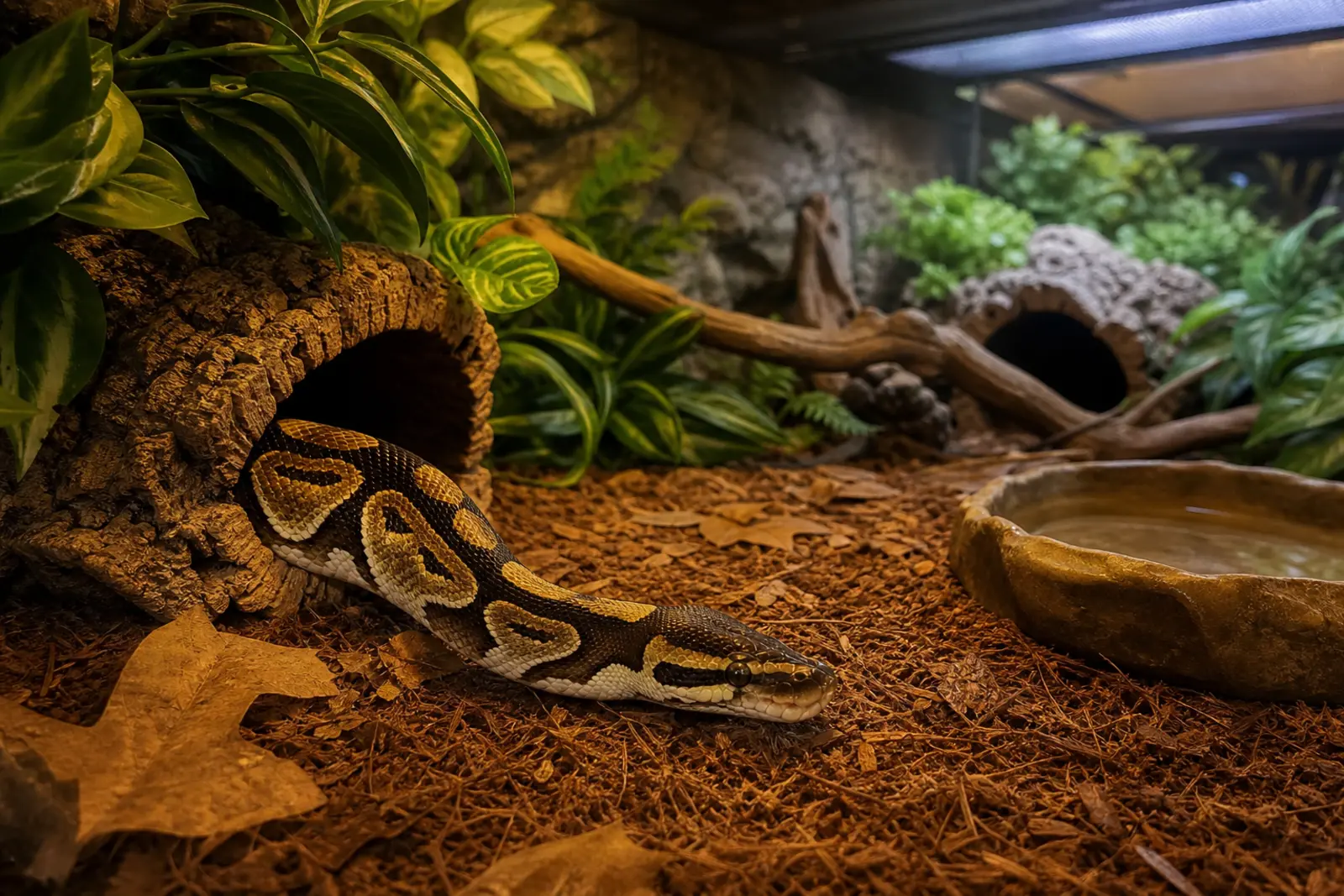
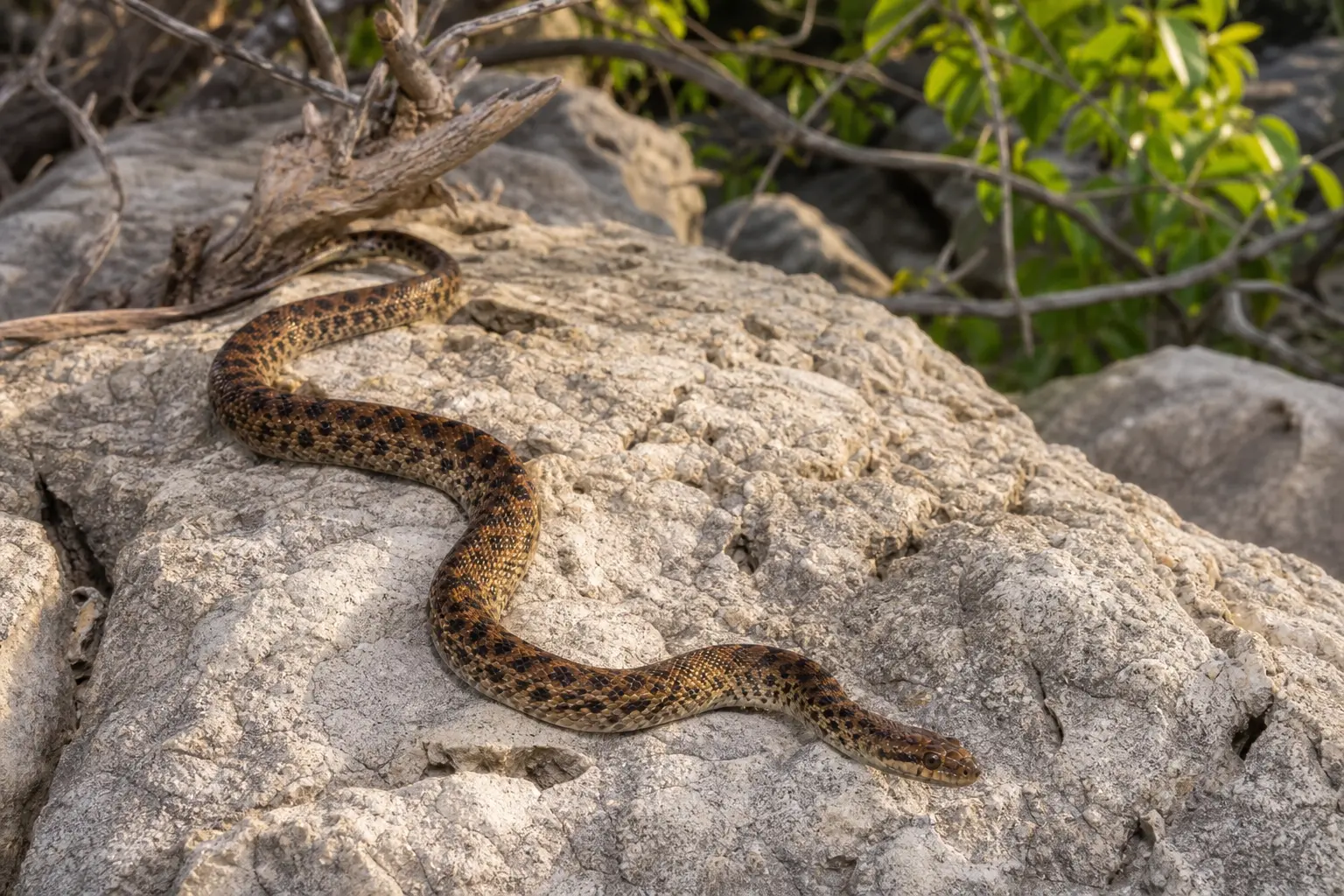
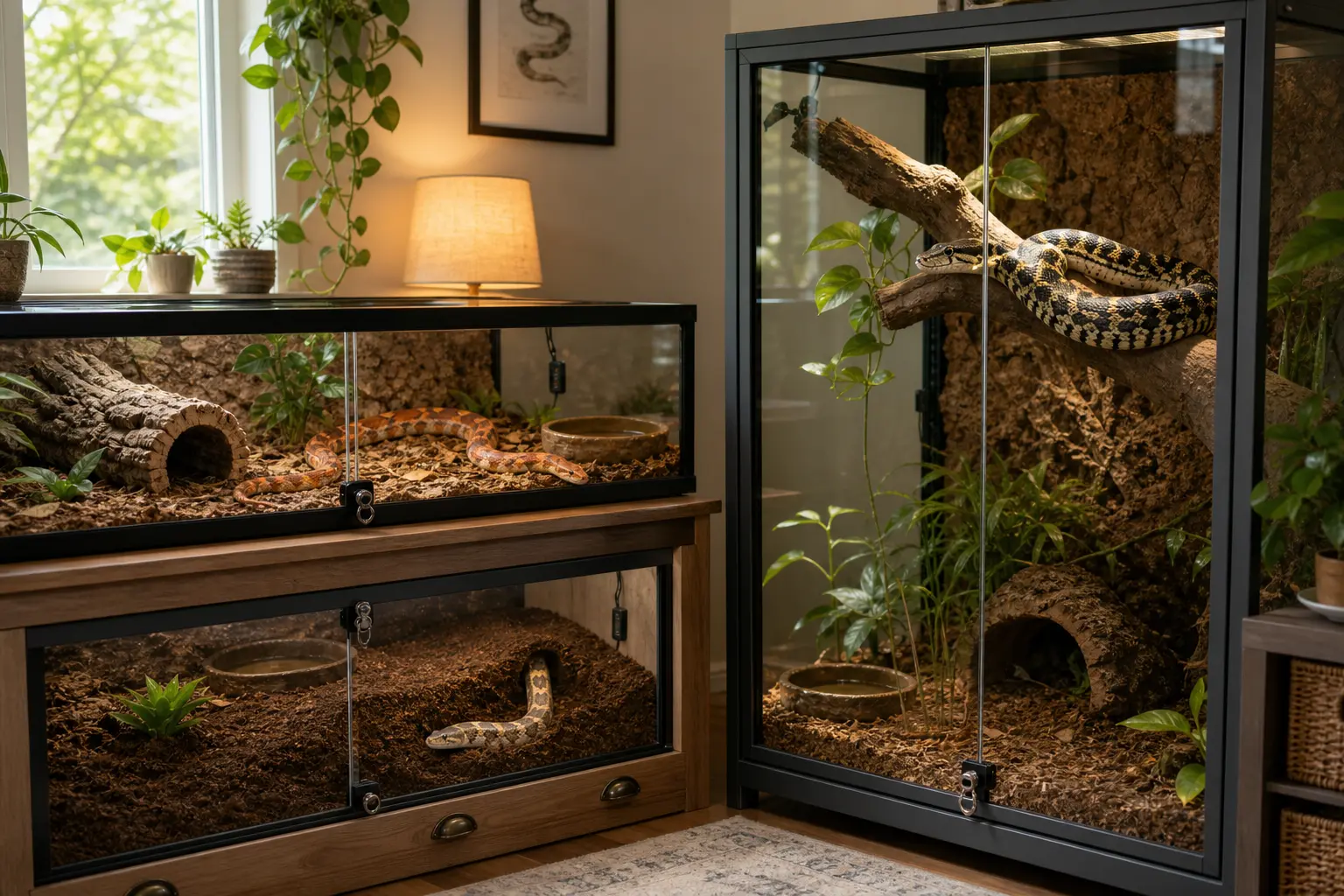
A lovely fit for someone who enjoys a quiet evening check-in
Ball python · Python regius
Inside the quiet world of a ball python.
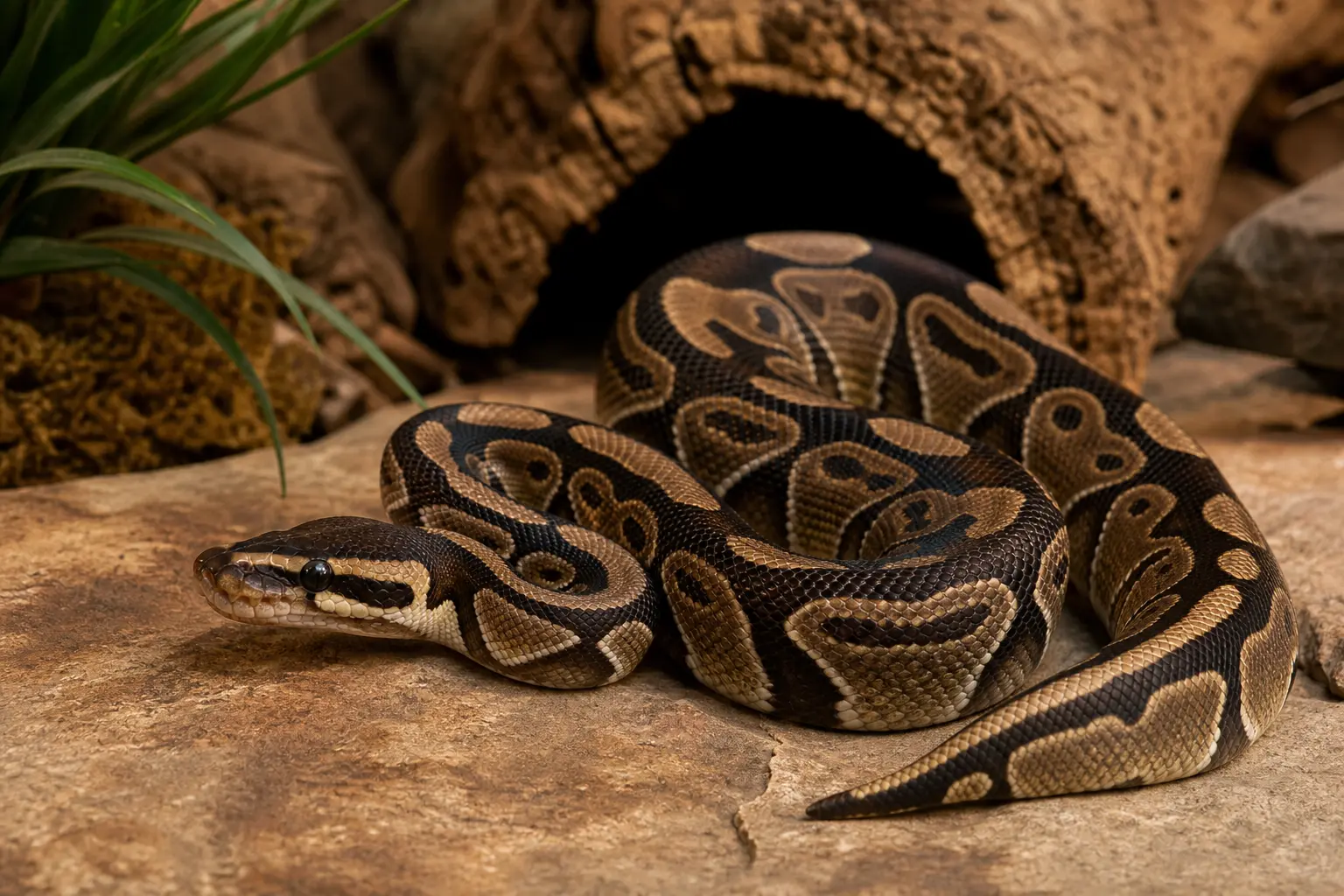
A quiet, watchful snake who spends much of the day in cover, then comes out to explore as the light softens.
A warm, secure home should offer room to stretch and climb, with snug retreats for quiet time.
Get to know them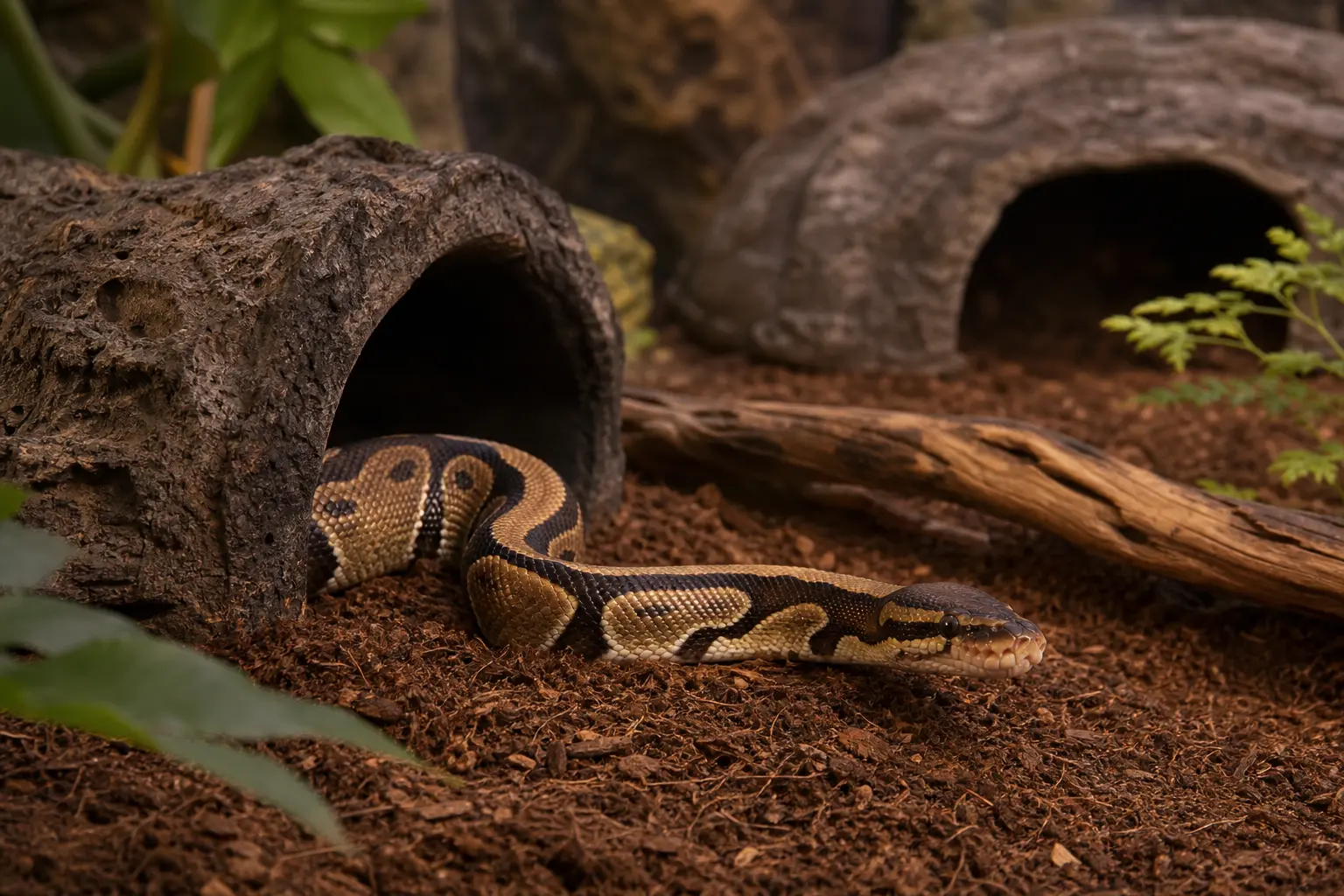
Life with a ball python
Quiet company, on their own terms.
A ball python does not need to be held to be interesting. At dusk, you might see a tongue-flick at the hide door, a slow climb over a branch, a drink, then a return to cover. Those little evening choices show you how the home feels.
It is a protective response, not a cue to pass the snake around
They should never have to choose between feeling hidden and getting warm or cool
Trust is earned slowly; observation is always enough
Before you decide
Could a ball python feel at home with you?
The day-to-day rhythm can be calm. But it asks for a permanent adult home, frozen-thawed rodents, measured heat and humidity, safe hygiene, and years of steady attention.
The honest fit
Would you enjoy life together?
The right match gives the snake a peaceful, secure life and leaves you feeling ready for the ordinary care that keeps it that way.
You may be a lovely match if…
- A permanent, furnished adult enclosure fits comfortably in your home
- Frozen-thawed rodents feel manageable to store and prepare safely
- You are happy to check heat and humidity with the right meters
- You have realistic access to a reptile veterinarian
Think twice if…
- You are hoping for a daytime or frequently handled pet
- The enclosure would need to stay small, bare, temporary, or move often
- Preparing frozen rodents would be difficult in your home
- Safe reptile and feeder-rodent hygiene would be hard around someone at higher risk
A comfortable home
A secure little world with room to choose.
A ball python should never have to trade feeling safe for finding the temperature, humidity, light, or cover they need.
Use guarded, thermostat-controlled heat and measure where your snake actually rests
A cool hide should be genuinely cooler, not just farther from the heater
A temporary rise can support shedding; damp, stale air is not the goal
A calm daytime gradient works better than bright light around the clock
Feeding them well
Dinner is part of the decision.
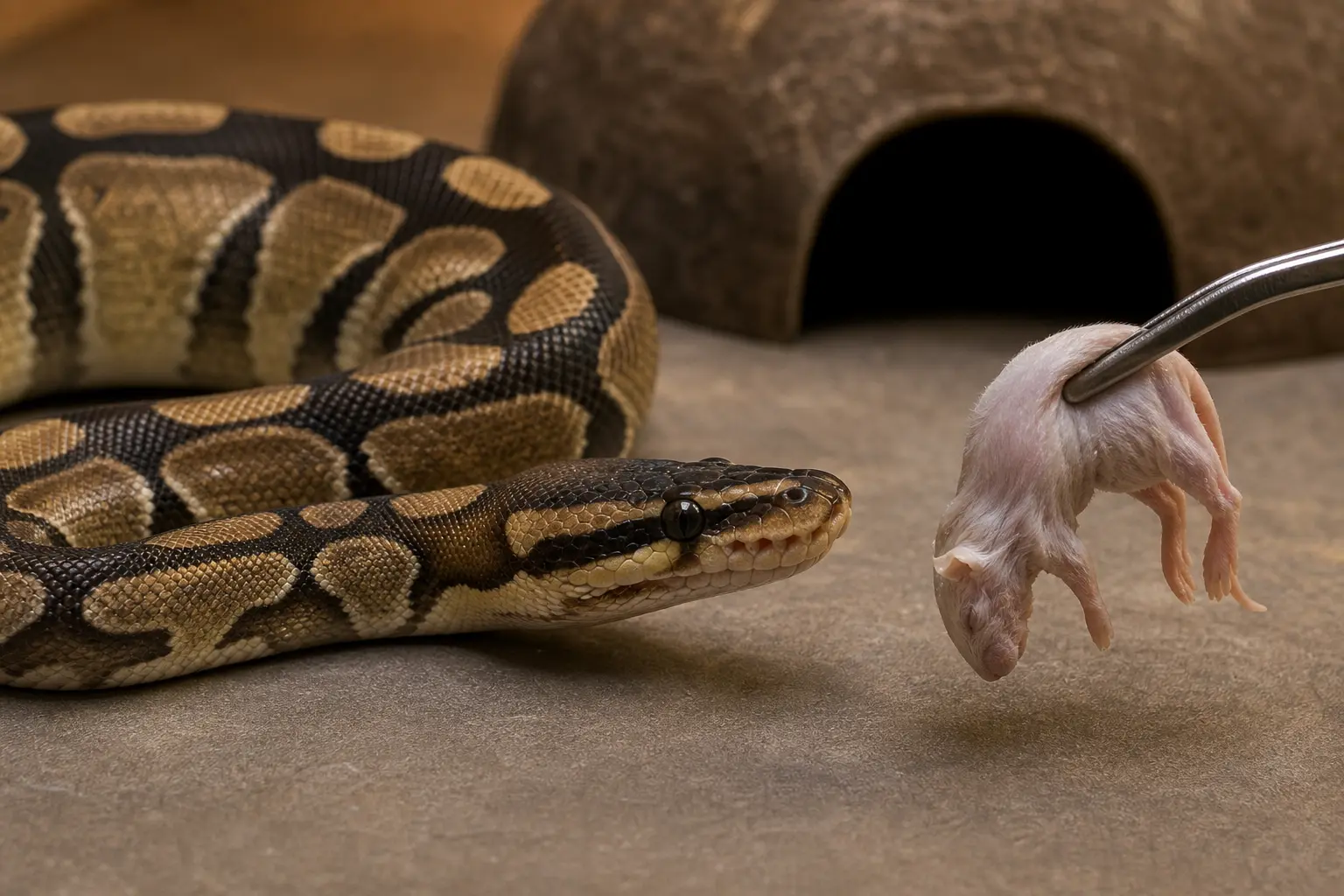
Frozen-thawed whole prey is part of life with a ball python. A good routine follows the snake’s body condition and feeding history—not a rigid calendar or a guess.
Frozen-thawed prey is the normal, safer choice; live feeding is not
Store, thaw, offer, and clean up away from household food areas
A missed meal has many possible causes. A sudden change with weight loss means checking the setup and calling a reptile vet
The rhythm
Check the home. Watch the snake.
A quiet systems check
Check the warm and cool readings, water, humidity, lock, and whether anything needs spot-cleaning.
Notice the world wake up
Watch how your snake moves, uses its hides, drinks, breathes, and explores. Offer food only when it is due for that individual.
Let the enclosure go dark
Tidy up, make a note of anything unusual, and give your snake a peaceful, dark night.
Care with tenderness
Pay attention to what they tell you.
Let them set the pace
Give a new snake time to settle. Support the body, keep handling slow and low, and skip it after food, during shed, or whenever the snake asks for space.
Keep a small record
A dated note of weight, meals, sheds, droppings, humidity, temperatures, and behaviour makes gradual changes easier to see.
Wash up after care
Wash your hands after the snake, frozen prey, waste, water, or enclosure equipment. Keep all snake and prey supplies out of the kitchen.
Good to know
Common questions, answered.
Open any question for a short, practical answer.
Life together
Are ball pythons good first snakes?
They can suit a prepared first-time snake keeper. You still need to be comfortable keeping frozen rodents, checking the enclosure every day, and caring for the adult snake for decades.
How big do ball pythons get?
Adults are commonly about 90–150 cm (3–5 ft). Plan the home for the larger end of that range, not for the hatchling you first meet.
How long do ball pythons live?
This is a 20-plus-year promise. Make plans for care through moves, changing work, and the ordinary life changes that happen over decades.
When are ball pythons most active?
They are crepuscular, so you will often see the most activity around dusk and in quiet evening hours. A comfortable snake may still come out at other times.
Do ball pythons like being held?
Many accept brief, slow, fully supported handling once they are settled. Let it stay optional, and give your snake space when it curls tightly, retreats, or becomes defensive.
What does it mean when a ball python curls into a ball?
It is a protective response: give the snake space, reduce stimulation, and make sure secure cover is available. It is not a sign the snake wants to be passed around.
Can two ball pythons live together?
Plan one enclosure per ball python. Sharing space can lead to stress, feeding competition, injury, and health problems that are easy to miss at first.
What should I have ready before bringing one home?
Set up and test the full adult enclosure, find a reptile veterinarian, choose a reputable breeder, reptile shop, or rescue, and make sure frozen rodents and safe hygiene fit your household.
What should I know about Spider morph ball pythons?
Research links the Spider morph’s variable balance disorder—often called “wobble”—to inner-ear malformations. We would not create demand for or breed this morph. If you already care for one, a new or changing coordination problem is a reason to call a reptile veterinarian.
Home, food, and health
How large should an adult ball python enclosure be?
Plan around the adult, not the hatchling. For a snake near 150 cm, a generous home is about 150 × 60 × 60 cm (5 × 2 × 2 ft) or larger. That leaves room for a full stretch, a warm hide, a cool hide, cover, and a few low climbing routes.
Does a ball python need hides and things to climb on?
Yes. Use snug hides at warm and cool temperatures, plus visual cover, stable low branches, texture, and room to stretch. A generously furnished home can feel far safer than a bare small one.
How do I warm a ball python enclosure safely?
Begin with a measured warm zone around 30–32°C and a cool retreat around 24–26°C. Guard every heat source, use a thermostat and probes, and check where the snake actually rests.
Does a ball python need UVB?
RSPCA recommends a UVB tube over the warm end, with shade at the other end. MSD lists no special lighting requirement but says broad-spectrum light may help. If you use UVB, follow its fixture guide, keep a shaded hide available, and turn all visible lights off at night.
What humidity does a ball python need?
Keep the cool end around 50–60% in normal conditions. Humidity can rise temporarily during shed, then should fall again in a clean, well-ventilated enclosure—not stay wet and stale.
What substrate is safe?
Choose a clean, reptile-safe substrate that supports burrowing and can be spot-cleaned easily. It needs to work with your humidity plan and make droppings, sheds, and spills easy to notice.
What should I feed a ball python?
Offer appropriately sized frozen-thawed whole rodents. Store and thaw them away from human food, use clean feeding tools, and do not make live rodents part of the routine.
How often should I feed one—and what if they skip a meal?
Young snakes usually eat more often than adults. Feed the individual in front of you, using body condition and feeding history—not a fixed weekly rule. A sudden refusal with weight loss or lethargy means checking the setup and calling a reptile vet.
Do ball pythons need a water bowl?
Yes. Keep a heavy bowl of clean water available, large enough for the snake to drink and soak if it chooses. Refresh it daily and clean it whenever it is soiled.
What should I do when my ball python sheds?
Let the shed release on its own—never peel it. Check the tail tip and eye caps, review measured humidity, and call a reptile veterinarian for repeated incomplete sheds or retained eye caps.
When should I call a reptile veterinarian?
Call for a sudden feeding stop, weight loss, diarrhoea, persistent constipation, retained eye caps, visible mites, prolonged soaking, wheeze or whistle, difficult breathing, burns, wounds, or abnormal coordination. These are reasons to call, not a diagnosis.
Can a healthy ball python carry Salmonella?
Yes. Wash your hands after the snake, frozen prey, waste, water, or enclosure equipment, and keep snake and prey supplies away from kitchens and food-preparation areas.
Build their calm, secure home before they arrive.
Test the warm retreat, cool hide, humidity, locks, and water bowl before you bring a ball python home. A peaceful first night begins with a habitat that is already working.
Plan their heat and lightSources and care boundaries
Exact targets depend on the measured location, equipment, animal, and veterinary context. This profile keeps source disagreements visible instead of blending them into one number.
- The Reptile Database: Python regius
- Royal Society for the Prevention of Cruelty to Animals: Royal Python Care Sheet
- MSD Veterinary Manual: Management and Husbandry of Reptiles
- MSD Veterinary Manual: Bacterial Diseases of Reptiles
- VCA Animal Hospitals: Constrictor Snakes
- VCA Animal Hospitals: Common Problems in Snakes
- U.S. Centers for Disease Control and Prevention: Reptiles and Amphibians
- PLOS ONE: Animal-appropriate housing of ball pythons (Python regius)—Behavior-based evaluation of two types of housing systems
- PLOS ONE: Malformations of the sacculus and the semicircular canals in spider morph pythons