Choosing a bearded dragon

Is a bearded dragon a good beginner reptile?

Yes—for a prepared first-time keeper. Their visible daytime routine is approachable, but the habitat, lighting, and food work take real care.

Choose one only if a large permanent enclosure, live insects, measured UVB, and reptile-veterinary care feel realistic for the next decade.

Check the honest fit
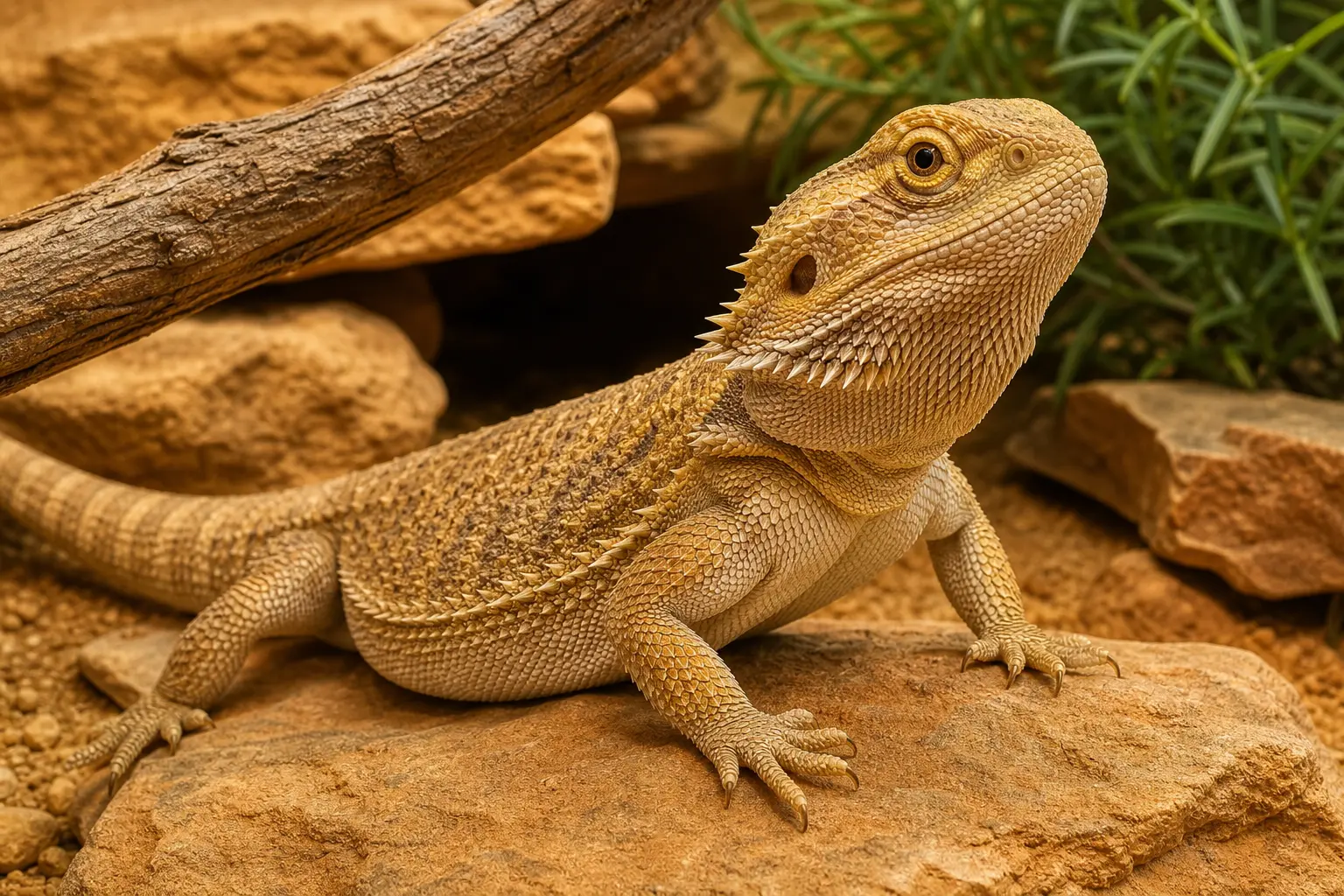
Alert adult bearded dragon resting on a broad warm rock beside cork, shade, and low cover.

The short answer

Good first reptile for a prepared keeper

A bearded dragon can be a rewarding first reptile when the adult home is built and tested before adoption. The calm-looking animal is only the easy part; heat, UVB, fresh greens, live feeders, cleaning, and veterinary planning have to stay dependable.

Adult home
At least 120 × 60 × 60 cm (48 × 24 × 24 in)
Commitment
Plan for 10–12 years; some live longer
Daily rhythm
Awake and visible by day
Food
Fresh greens plus gut-loaded live invertebrates
Handling
Brief, fully supported, and optional
Housing
One dragon per enclosure

The honest fit

Would the adult routine work in your home?

This may suit you if…

  • You want a daytime reptile whose basking, climbing, eating, and resting are easy to observe.
  • A furniture-sized adult enclosure can stay in one safe, ventilated place.
  • You are comfortable keeping live feeder insects and preparing fresh greens.
  • You will measure the habitat and can reach a reptile veterinarian.
Pause if…

  • You need a small starter tank or expect the enclosure to move often.
  • Live insects, bright lighting, or daily fresh-food care do not work in your home.
  • You mainly want a pet that seeks long cuddles or constant handling.
  • The setup budget leaves no room for replacement lamps, measuring tools, or veterinary care.
01

Why they often work for first-time keepers

Bearded dragons are awake by day and spend much of it in view. You can watch a dragon warm up, cross the enclosure, choose shade, eat, and settle without pulling them from a hide to know what the day looks like.

Many tolerate short, fully supported handling. That does not make handling automatic: backing away, struggling, or threatening to bite means the session can wait.

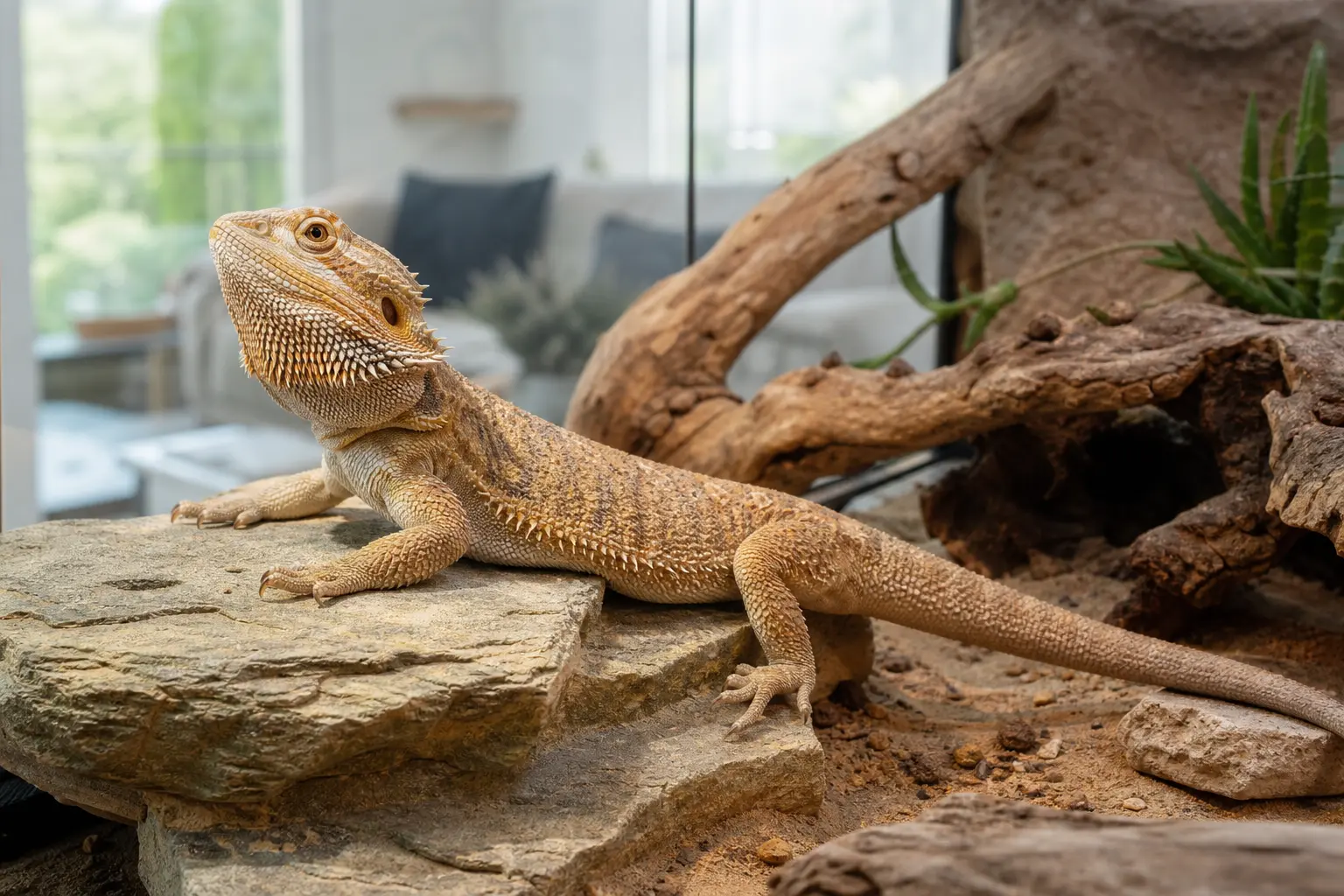
Adult bearded dragon moving between an open basking ledge, cork branches, and a shaded retreat.
02

The habitat is the real beginner test

An adult needs at least a 120 × 60 × 60 cm home, with a bright basking end, a shaded cool end, secure cover, and room to walk and climb. Build it at adult size from the start if you can.

Heat and UVB are life support. A thermostat, probe thermometers, an infrared surface thermometer, and species-appropriate UVB placement turn guesses into readings you can act on.

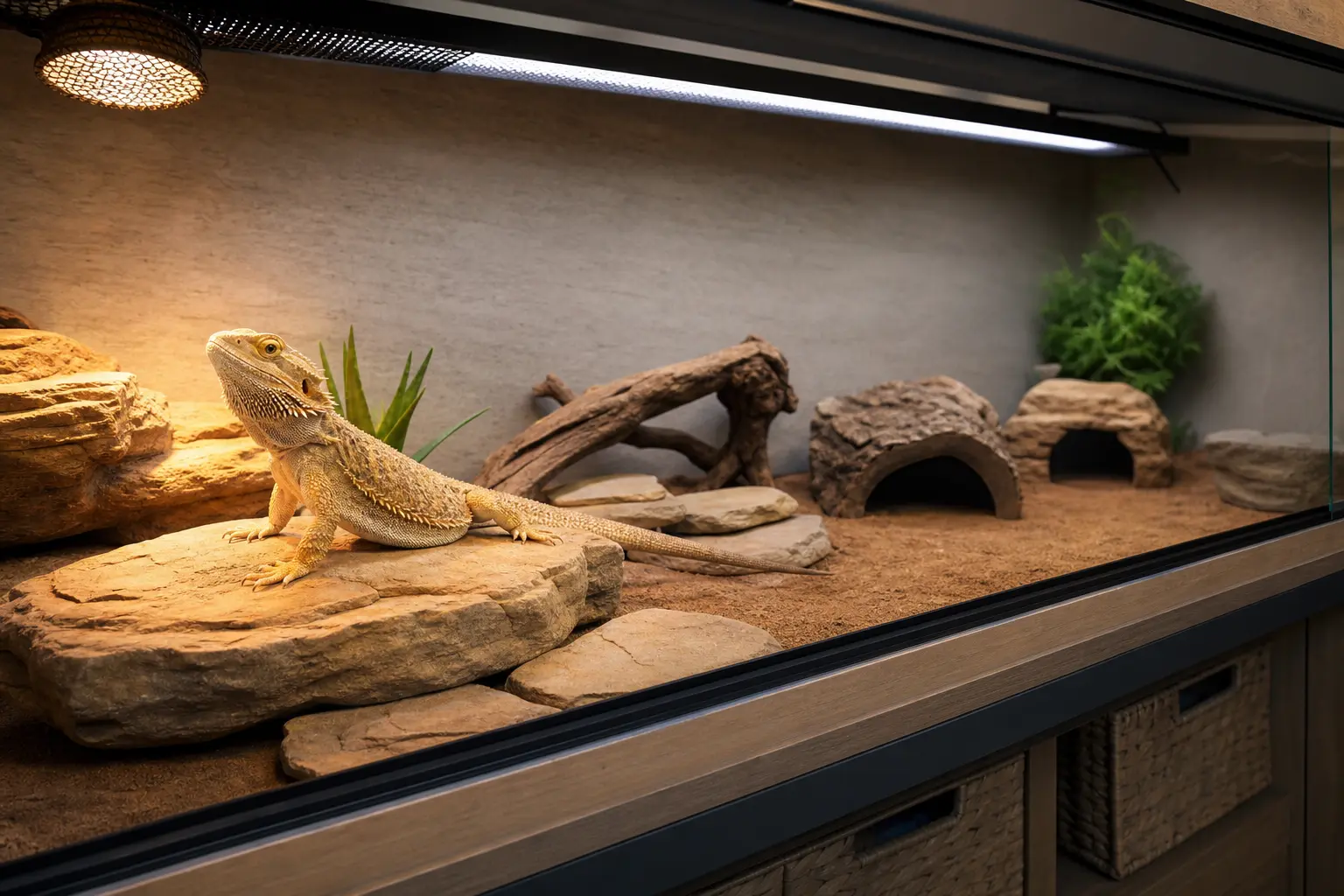
Adult bearded dragon in a wide habitat with a bright basking end, linear lighting, hides, branches, and open floor space.
03

Picture an ordinary Tuesday

The lights come on, the dragon warms up, and you check the basking and cool zones. Food may mean washing greens, caring for feeder insects, lightly dusting live food to an appropriate plan, refreshing water, and removing waste or leftovers.

You also notice appetite, movement, droppings, breathing, skin, and shed quality. A simple weight and habitat log makes gradual changes easier to catch and gives a reptile veterinarian useful context.

Keep deciding

See the complete care picture

Sources and further reading