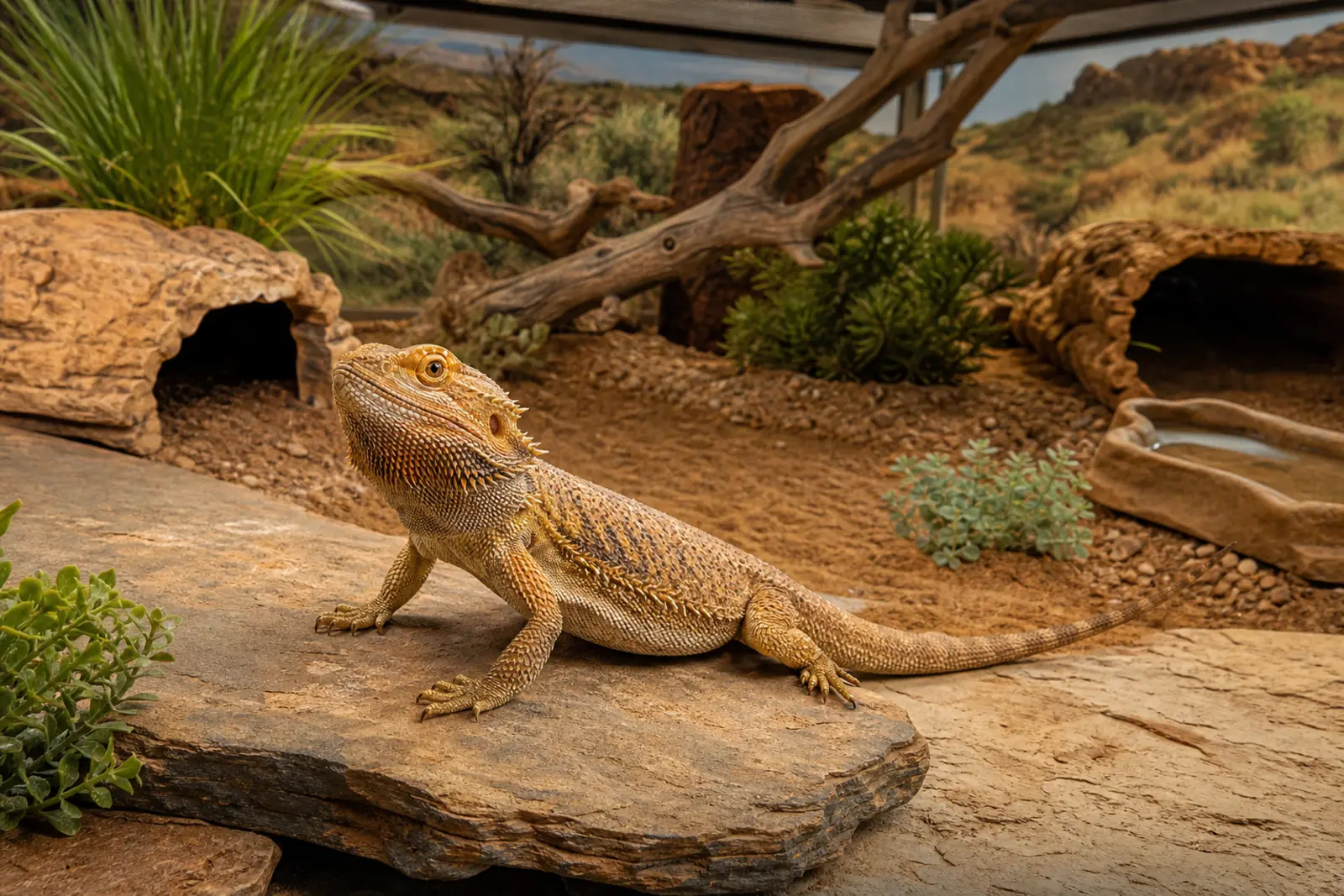
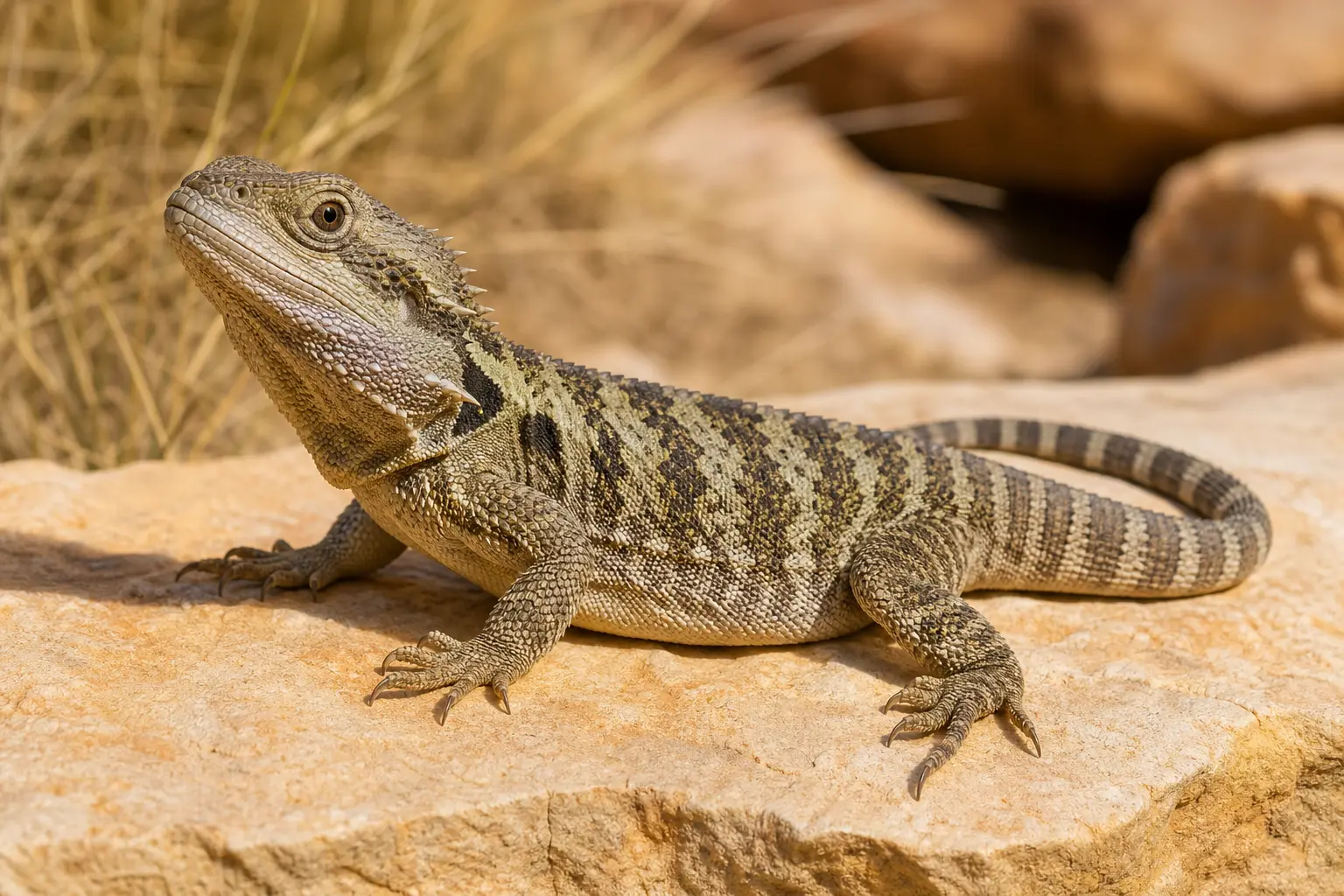
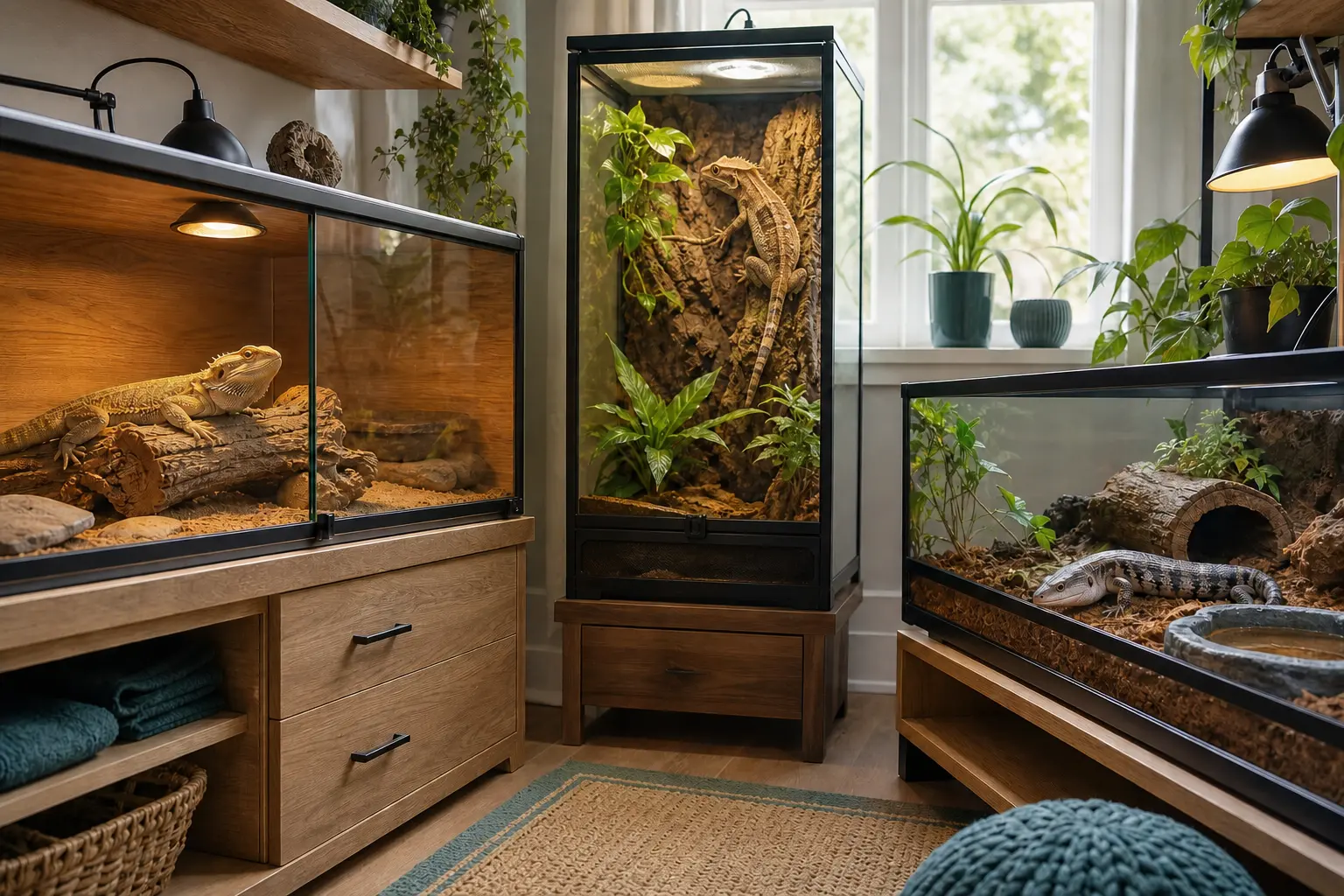
Once warm, they may climb, explore, eat, or simply watch the room
Bearded dragon · Pogona vitticeps
The bearded dragon, up close.
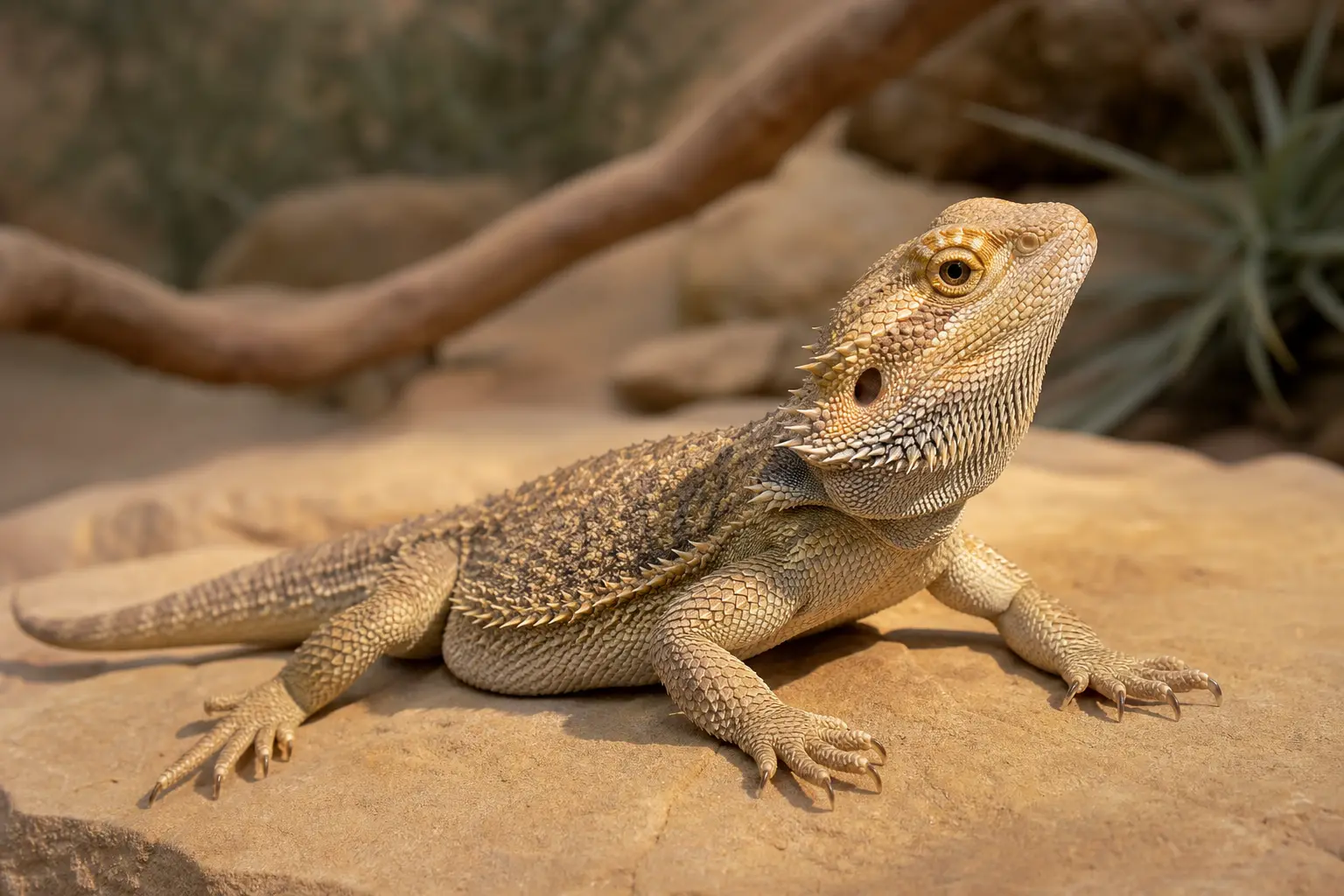
Once they are warm, bearded dragons climb, explore, and pause to watch whatever is happening nearby.
They are wonderfully visible companions, though being watched is not the same as wanting to be held.
Get to know them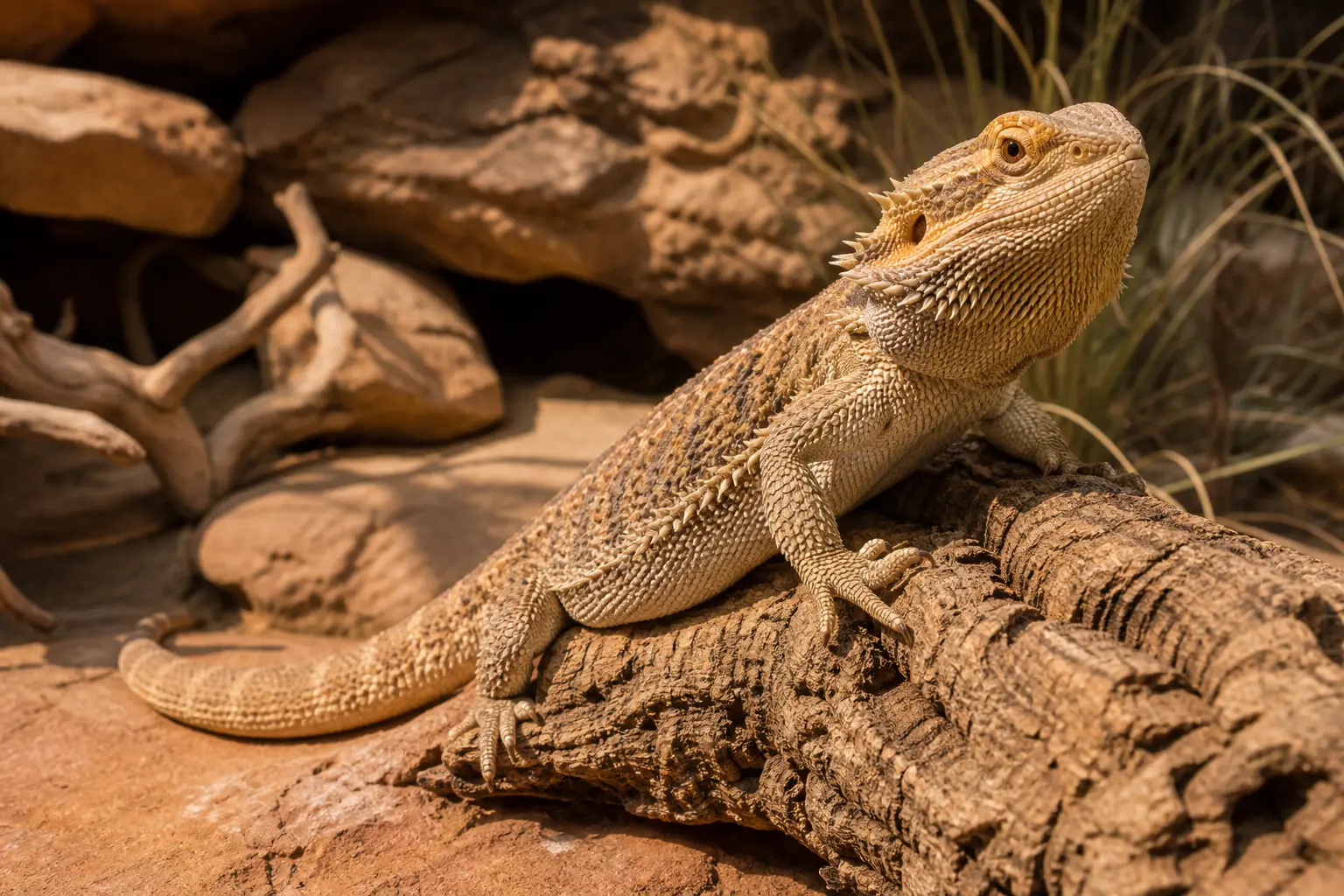
Life with a bearded dragon
They notice more than you might expect.
A comfortable dragon warms up, surveys the room, investigates a branch or meal, and eventually settles somewhere quiet. Their day has an easy rhythm, but it is rarely dull.
Posture, movement, color, and their beard all offer clues to how they feel
One may investigate quickly while another needs more time and space
Support the whole body and stop when they pull away
Before you decide
Could a bearded dragon thrive in your home?
Make sure their space, food, and everyday care fit comfortably into your life—for all the years you’ll share.
The honest fit
Would you enjoy life together?
Picture a busy Tuesday. Would the live food, habitat checks, and quiet time together still feel manageable?
Life together may suit you if…
- You’d enjoy an alert daytime reptile you can watch and gently interact with
- A permanent full-size vivarium fits comfortably in your home
- Keeping live feeder insects and preparing fresh greens feels manageable
- You’re happy to check temperature, humidity, and UVB with the right meters
Pause if…
- The vivarium would need to be temporary or moved often
- Keeping live insects would be difficult in your home
- You don’t have realistic access to a reptile veterinarian
- Safe reptile hygiene would be hard to maintain around someone at higher risk
A comfortable home
Their home should feel like a small piece of daylight.
A dragon needs a bright place to warm up, useful UVB, a genuinely cooler retreat, and darkness when the day is over.
Surface and air are different readings; record which one you measure
Shade should always be available
A digital probe lets you know their retreat is truly cooler
If the room falls below about 20°C, use heat that gives off no light
Feeding them well
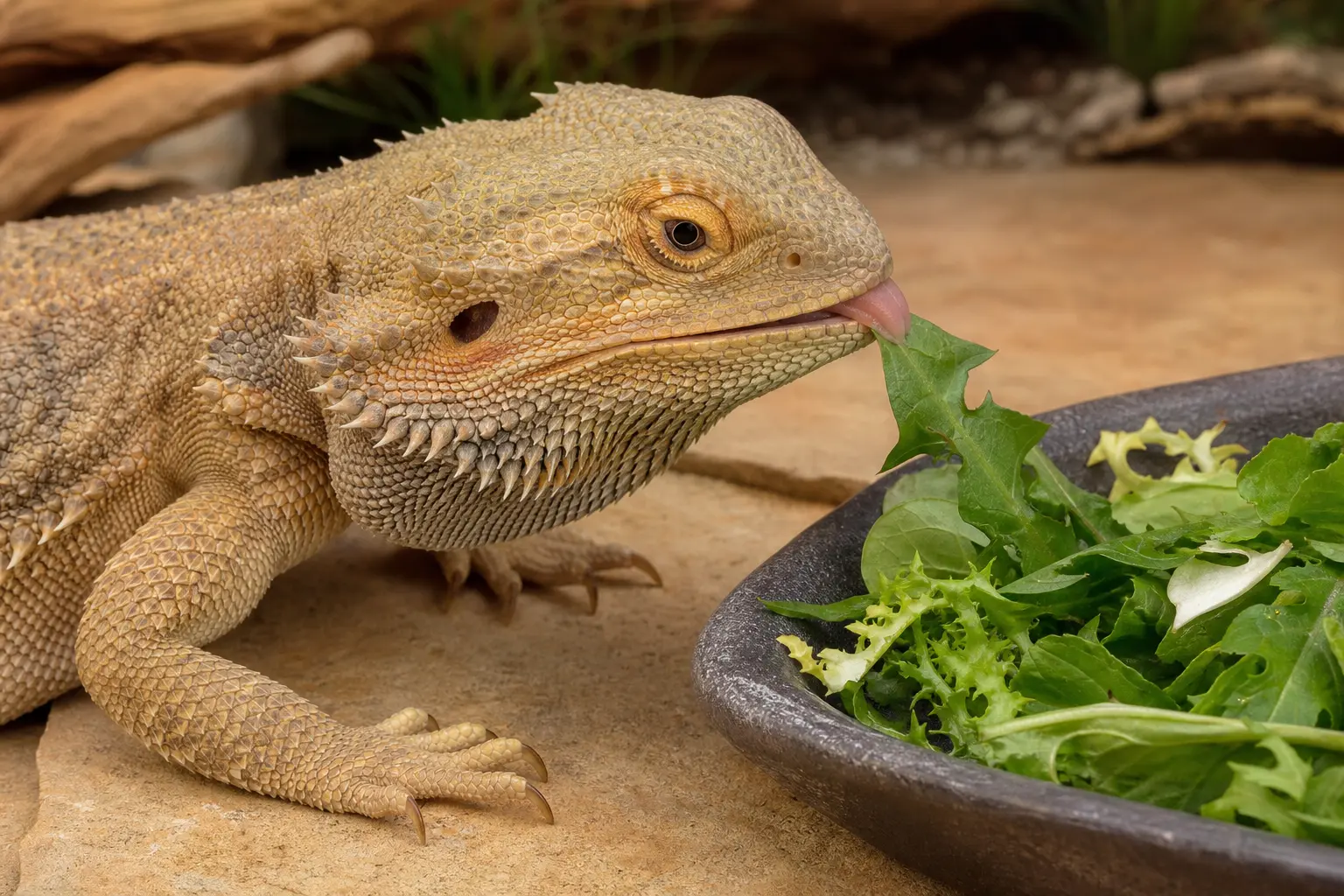
Their menu changes as they grow.
Young dragons need more live insects. Adults eat a greater share of leafy greens and vegetables, with insects still offered regularly.
Replace wilted food and rotate safe leaves and vegetables
Choose gut-loaded feeders and remove any left in the enclosure
Age, diet, health, product, and UVB all change what is appropriate
The rhythm
A simple rhythm of care.
Lights on, then a quick check
Check the warm area, cool end, humidity, water, and how your dragon is moving.
Feed, watch, and enjoy
Offer the right meal, clear leftovers, and notice appetite, basking, droppings, posture, and breathing.
Tidy up, then lights out
Spot-clean, make a note of anything unusual, and let the enclosure grow dark on schedule.
Care with tenderness
Learn what’s normal for your dragon.
Let trust grow slowly
Approach from below, lift with two hands, and support every leg. If your dragon pulls away, give them more time.
Notice what changes
A simple dated log of weight, appetite, movement, droppings, shedding, basking, and breathing can help you spot trouble early.
Know who you’ll call
Call a reptile veterinarian promptly for weight loss, abnormal droppings with weight loss, repeated shed trouble, reduced movement, swollen limbs, twitching, or changes in breathing or coordination.
Wash up after care
Wash your hands after touching the dragon, food, waste, or habitat equipment. Keep reptile items out of the kitchen.
Good to know
Common questions, answered.
Open any question for a short, practical answer.
Life together
Are bearded dragons good first reptiles?
They can be, if you learn the habitat before bringing one home. A first-time keeper still needs room for the adult vivarium, comfort with live insects, reliable heat and UVB, and access to a reptile veterinarian.
How big do bearded dragons get?
Most adults are about 45–50 cm (18–20 in) from nose to tail.
How long do bearded dragons live?
Plan on a decade or more. Veterinary guidance reaches about 12 years, and a captive dragon has been documented beyond 19 years.
When are they awake?
Bearded dragons are awake during the day. Once they warm up, you may see them bask, climb, explore, eat, and settle into a favorite resting place.
Do bearded dragons like being held?
Many accept brief, fully supported handling, but it should always be optional. If your dragon backs away, struggles, or shows obvious distress, let them settle and try another day.
Can two bearded dragons live together?
Plan one enclosure per dragon. Living together can lead to stress, fighting, and serious injuries, even when the animals seem calm at first.
What do bearded dragons eat?
They eat varied safe greens and appropriately sized live insects. Young dragons need more live food; adults move toward a more plant-forward balance.
What should I arrange before bringing one home?
Set up and test the full habitat, find a reptile veterinarian, check local and rental rules, and choose a healthy captive-bred dragon or a reputable rescue.
Home and health
How large should the adult enclosure be?
One adult needs at least 120 × 60 × 60 cm (48 × 24 × 24 in). More room makes it easier to create useful warm, cool, bright, shaded, climbing, and digging areas.
What equipment will I need?
Use guarded, thermostat-controlled heat and a UVB lamp. Probe and infrared thermometers, a hygrometer, and a UV Index meter check what reaches your dragon at basking height.
What temperatures do bearded dragons need?
Reviewed guidance places the basking area around 35–42°C and the cool end around 22–26°C. Measure surface and air separately, and keep all lights off at night.
Do bearded dragons need UVB?
Yes. Build a measured gradient from UVI 3.0–5.0 where they bask to zero in shade. Lamp strength alone cannot tell you how much UVB reaches the dragon.
What humidity do they need?
Aim for about 30–40% at the cool end, with good ventilation. Use a digital hygrometer rather than estimating from the room.
What substrate is safe?
For a healthy adult in a well-run habitat, clean reptile-safe sand or a sand-and-soil mix can support digging. Rough slate with a dig box is another option; avoid calcium sand, wood chips, crushed walnut, and corn-cob bedding.
Do they need a water bowl?
Yes. Keep a large shallow dish of clean water at the cool end, replace the water at least daily, and wash the dish whenever it is soiled.
What should I do when my dragon sheds?
Let attached skin release on its own—never pull it. Check the toes and tail tip, support good hydration, and ask a reptile veterinarian about patches that stay stuck.
Is winter slowdown always brumation?
No. Adult dragons may slow down in cooler seasons, but weight loss or completely stopping food should not be dismissed as brumation without veterinary advice.
When should I call a reptile veterinarian?
Call promptly for weight loss, abnormal droppings with weight loss, repeated shed trouble, reduced movement, swollen limbs, twitching, or changes in breathing or coordination.
Can a healthy bearded dragon carry Salmonella?
Yes. Wash your hands after touching the dragon, food, waste, water, or habitat equipment, and keep the animal and all supplies away from kitchens and food-preparation areas.
Build the daylight before you bring your dragon home.
Run the complete enclosure for at least a week. That gives you time to adjust the warm end, shade, UVB, and overnight temperature while no animal is depending on them.
Plan their heat and lightSources and care boundaries
Exact targets depend on the measured location, equipment, animal, and veterinary context. This profile keeps source disagreements visible instead of blending them into one number.