Choosing a corn snake

Is a corn snake a good beginner reptile?

Yes—for a prepared first-time snake keeper. Corn snakes are often manageable, but secure adult housing and frozen prey are essential.

Make sure an escape-proof adult home, quiet post-meal care, and reptile-veterinary access fit your life for the next 10–15 years.

Check the honest fit
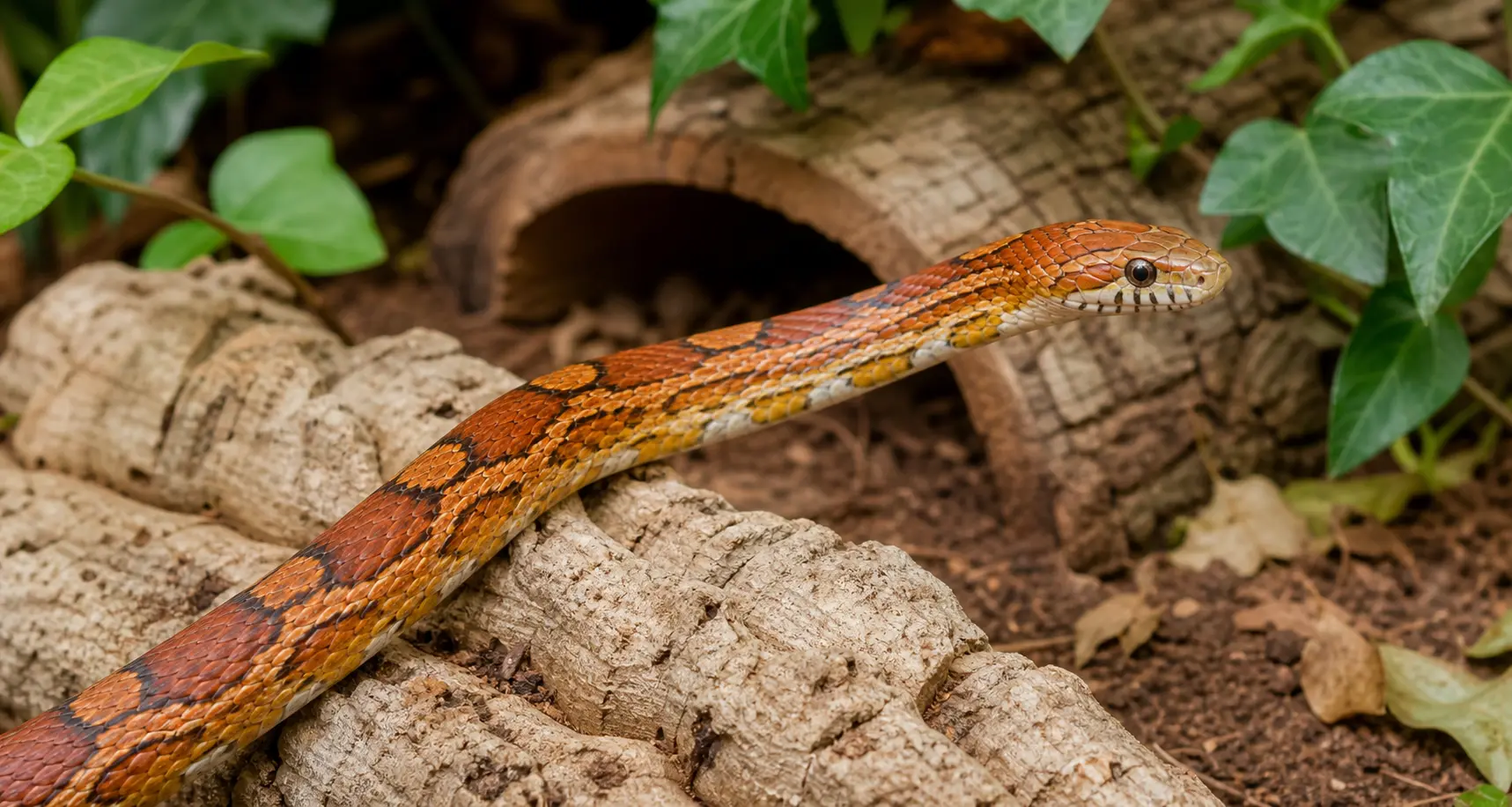
Alert adult corn snake exploring pale cork in a secure naturalistic enclosure with its orange-red saddle pattern and clear eye in close view.

The short answer

Good first snake for a prepared keeper

A corn snake can be a rewarding first reptile when its full adult home is built and tested before adoption. The everyday routine is quiet, but security, temperatures, humidity, frozen prey, shedding checks, hygiene, and veterinary planning must stay dependable.

Adult home
Long enough to stretch fully; 150 × 50 × 50 cm for a 150 cm adult
Commitment
Usually 10–15 years
Daily rhythm
Most active around dawn and dusk
Food
Appropriately sized dead mice offered with tongs
Handling
Brief, whole-body support; pause 48 hours after meals
Housing
One snake per secure enclosure

The honest fit

Would the adult routine work in your home?

This may suit you if…

  • You would enjoy a quiet snake whose most interesting activity often happens around dawn and dusk.
  • An escape-proof adult enclosure long enough for the snake to stretch fully fits permanently in your home.
  • Storing and safely thawing feeder mice feels manageable in your household.
  • You will measure the habitat, keep records, and can reach a reptile veterinarian.
Pause if…

  • Feeding whole dead mice would be upsetting or impractical in your household.
  • The adult enclosure would need to remain smaller than the snake or rely on temporary locks.
  • You mainly want a daytime pet that seeks frequent touch or attention.
  • Your setup budget leaves no room for controls, replacement equipment, or veterinary care.
01

Why they can work for a first-time keeper

Corn snakes offer a quiet, observable routine: check the climate and water, watch evening exploration, feed only when due, and keep the enclosure securely locked. Many individuals become accustomed to short, gentle handling after settling.

Easygoing does not mean hands-off care. Defensive S-shaped posture, active escape attempts, shedding, a recent meal, or an unusual health sign should change the interaction plan.

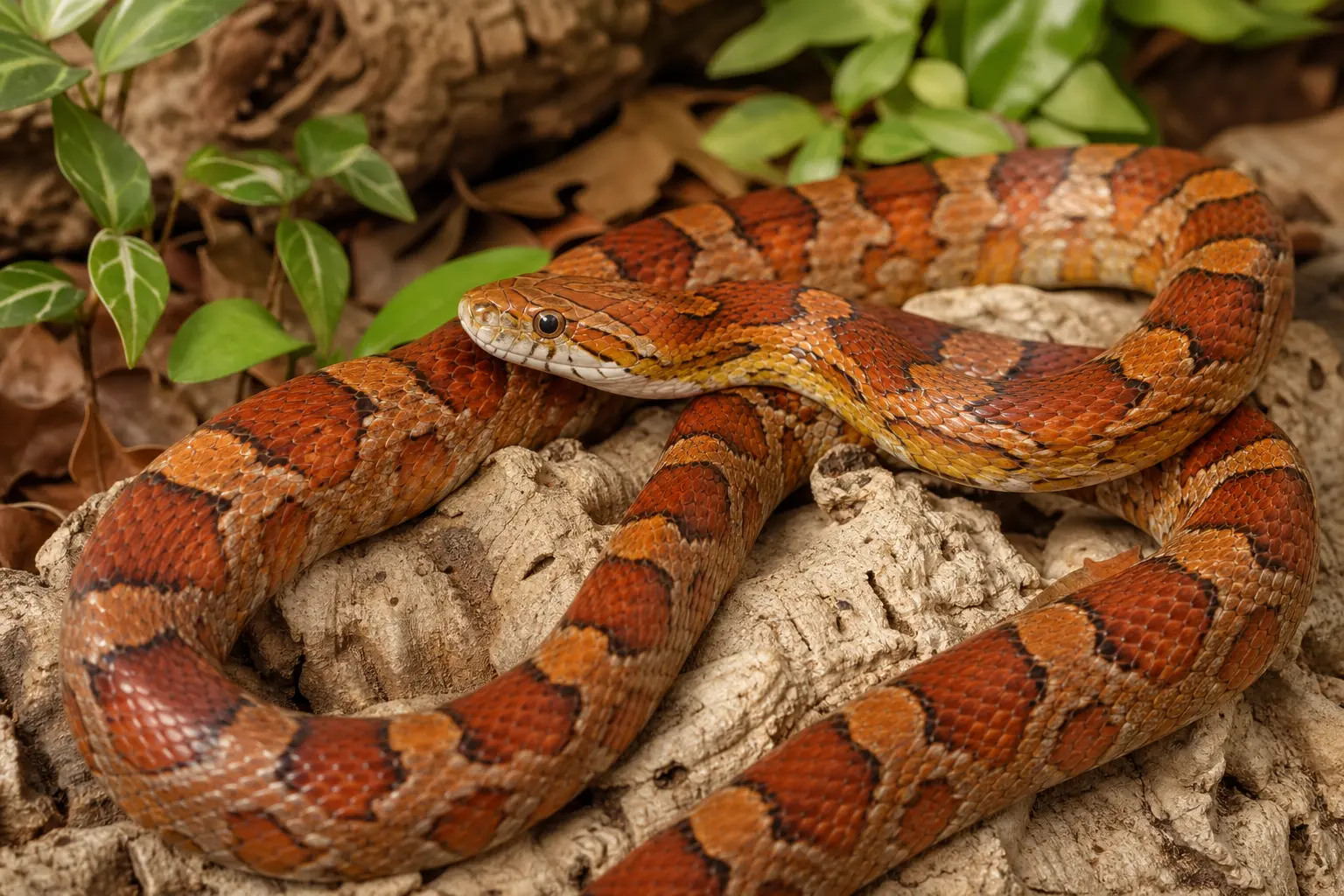
Adult corn snake resting calmly over pale cork with its clear eye, slender head, and orange-red saddle pattern in close view.
02

The enclosure and prey are the real tests

The adult snake must be able to stretch fully, with snug hides at both ends, secure branches, burrowing opportunity, a humid retreat, water, shade, ventilation, and locks that cannot be nudged open.

Food means safely stored and thawed dead mice offered with long tongs. The snake then needs at least 48 quiet hours without handling, while rejected prey and contaminated tools are managed away from human food areas.

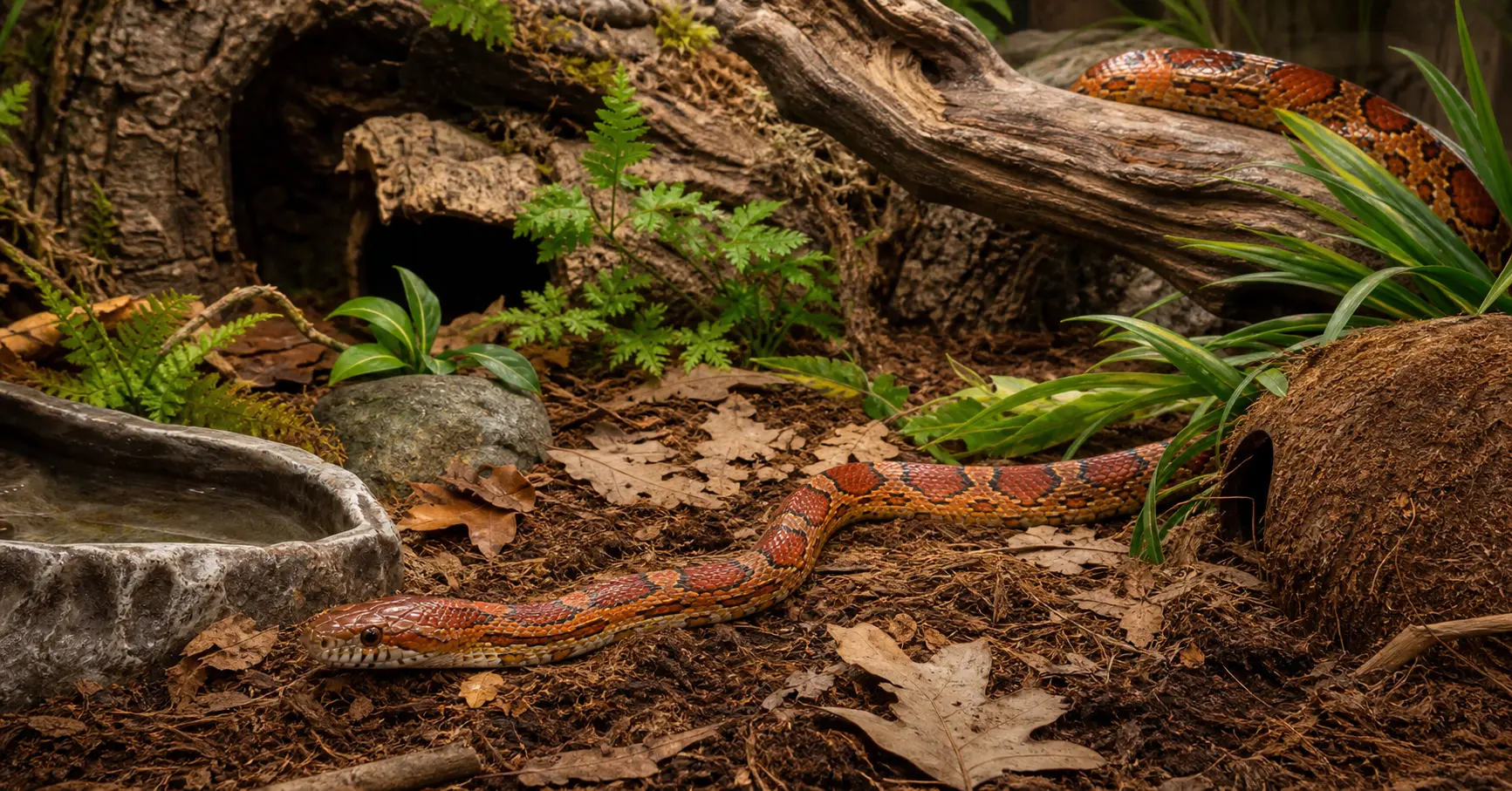
Adult corn snake exploring a secure adult-length enclosure with snug warm and cool hides, branches, burrowing substrate, a humid retreat, and fresh water.
03

Picture an ordinary feeding week

You read the basking and cool probes, refresh water, check locks, and notice breathing, posture, skin, waste, and use of hides. On feeding day, you thaw one correctly sized prey item, monitor the swallow, and record the meal.

A simple log of weight, prey size, meals, sheds, droppings, temperatures, humidity, and changes makes gradual problems easier to see and gives a reptile veterinarian useful context.

Keep deciding

See the complete care picture

Sources and further reading