Choosing a crested gecko

Is a crested gecko a good beginner reptile?

Often, yes—when a first-time keeper enjoys a quiet evening climber. Their food can be straightforward, but the habitat still needs careful control.

Choose one only if a tall furnished home, measured humidity, and a 15–20 year commitment fit your life.

Check the honest fit
Adult crested gecko perched alertly on cork among broad leaves in soft evening light.

The short answer

Good first reptile for a careful evening keeper

A crested gecko can be a rewarding first reptile when the tall adult home is built and tested before adoption. A complete formulated food can simplify part of the routine, but temperature, humidity, ventilation, UVB, climbing cover, hygiene, and reptile-veterinary planning still have to be dependable.

Adult home
At least 45 × 45 × 60 cm (18 × 18 × 24 in); larger is better
Commitment
Plan for 15–20 years
Daily rhythm
Most active around dusk and overnight
Food
Complete formulated diet, with reviewed insect care
Handling
Brief, low, optional, and ready for a jump
Housing
One gecko per enclosure

The honest fit

Would the adult routine work in your home?

This may suit you if…

  • You would enjoy watching a quiet climber become active as the house settles down.
  • A permanent tall enclosure can hold sturdy routes, cork retreats, and dense leafy cover.
  • You are happy to mix fresh formulated food and follow a reviewed plan for feeder insects.
  • You will measure heat, humidity, and lighting and can reach a reptile veterinarian.
Pause if…

  • You mainly want a daytime lap pet or expect frequent, predictable handling.
  • Your home overheats and you cannot keep a safe measured temperature gradient.
  • You expect misting alone to replace ventilation, drainage, and a proper dry-out rhythm.
  • The setup budget leaves no room for meters, replacement lamps, food care, or veterinary help.
01

Why they can work for first-time keepers

Crested geckos spend much of the day tucked into cover, then climb, drink, and forage as evening arrives. Their quiet routine suits someone who finds observation more rewarding than constant interaction.

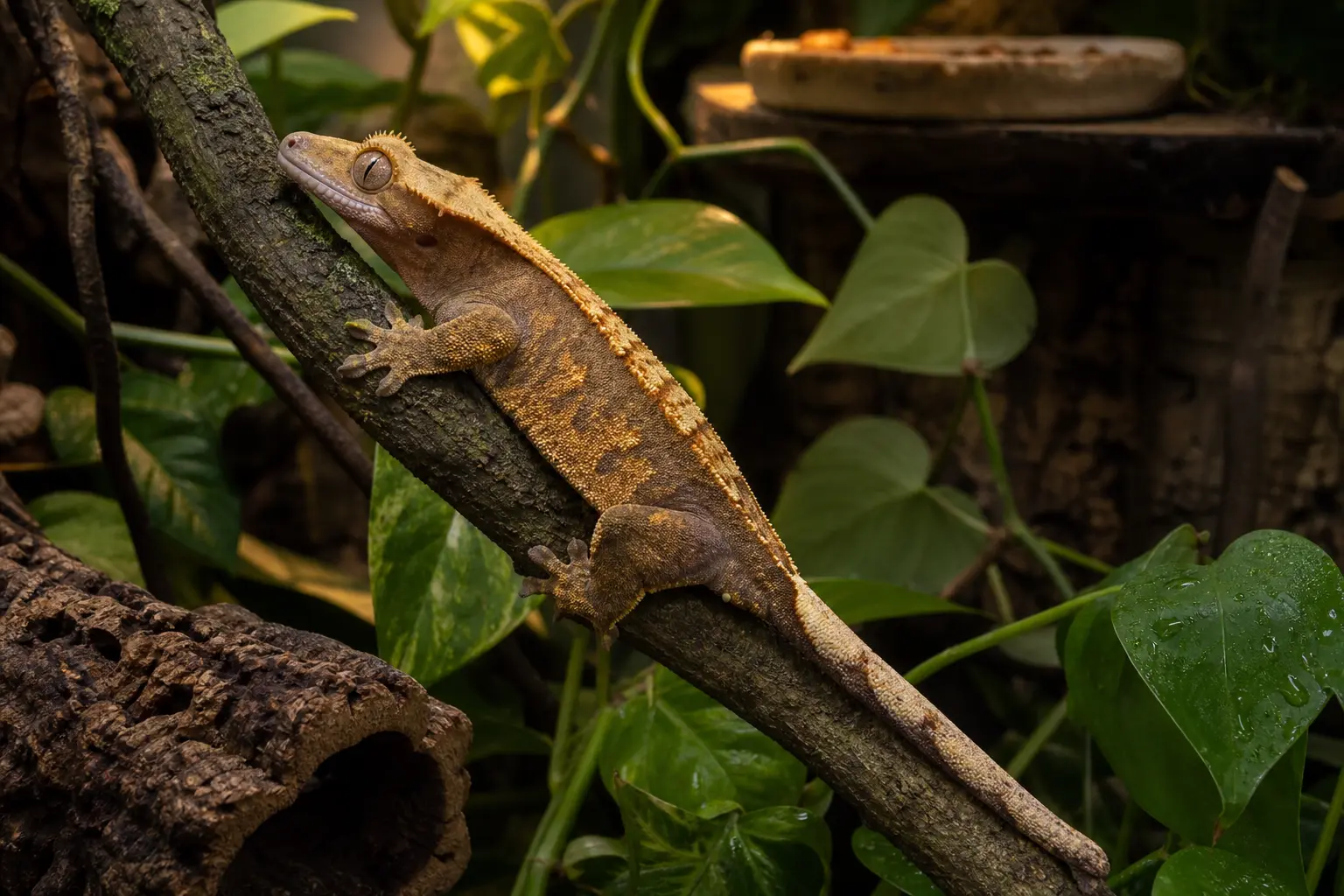
Many settle into brief, gentle handling, but they can jump suddenly. Let the gecko step onto you over a safe surface, keep the session short, and never grasp the tail—it does not grow back if dropped.

Adult crested gecko climbing a sturdy diagonal branch through leafy cover at dusk.
02

The tall habitat is the real test

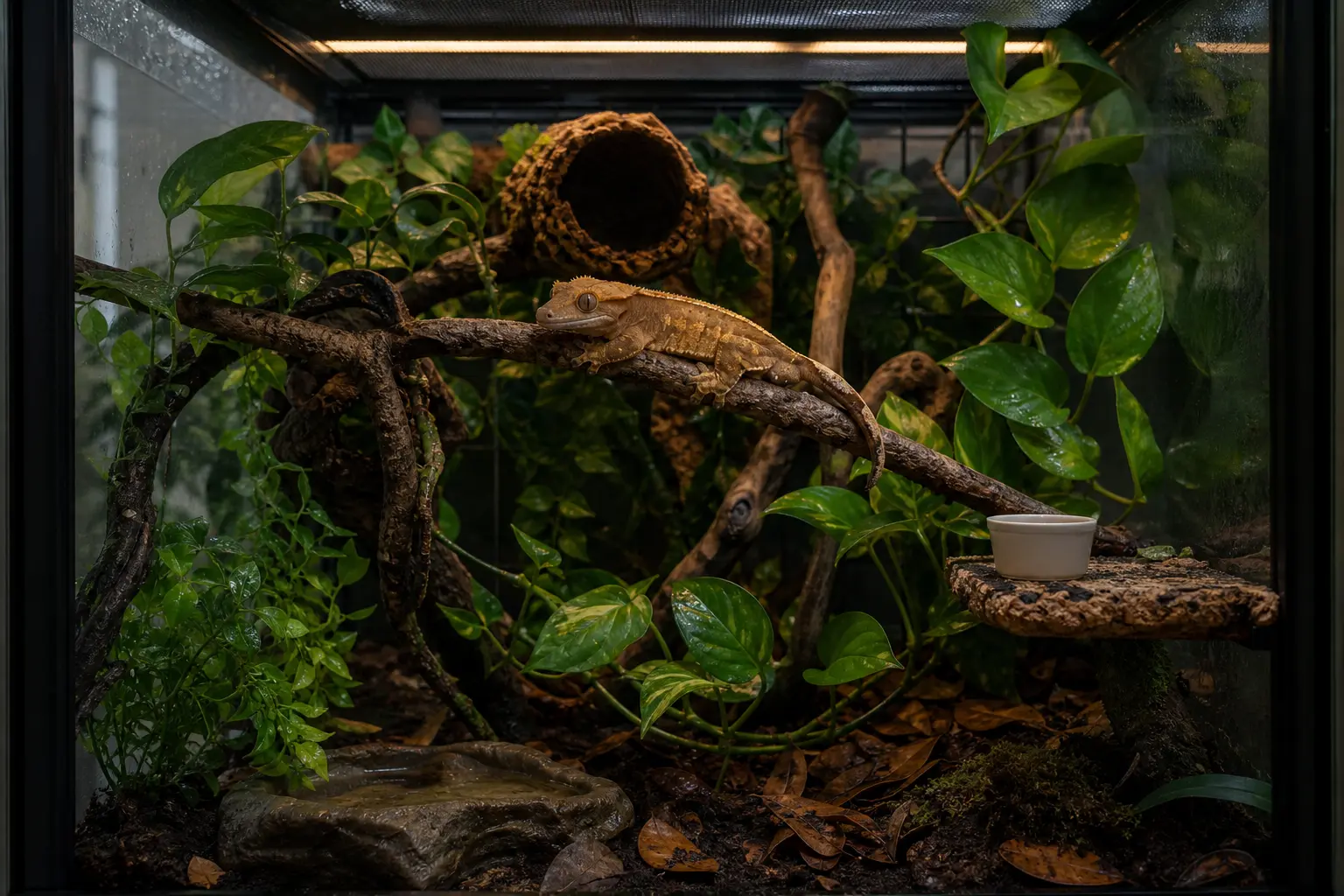
One adult needs at least a 45 × 45 × 60 cm home, with secure doors, sturdy routes at several heights, cork or leafy resting cover, and open space to climb and jump. More furnished height is welcome.

Use thermostatically controlled heat, measured humidity, good ventilation, and low-level species-appropriate UVB with shade. Misting should create a useful rise, then the enclosure needs air movement and time to dry rather than staying waterlogged.

Adult crested gecko in a tall planted habitat with sturdy climbing routes, cork cover, a feeding ledge, and fresh water.
03

Picture an ordinary evening

A quick check covers the warm and cool readings, humidity, water, locks, food ledge, and waste. On feeding days, mix a fresh portion of complete crested gecko food and follow the gecko's reviewed plan for any insects and supplements.

You also notice weight, appetite, droppings, climbing, toe-pad grip, skin, and shed quality. Remove old food promptly, wash your hands after care, and keep reptile supplies away from food-preparation areas.

Keep deciding

See the complete care picture

Sources and further reading