The best moments often happen once the house settles down
Crested gecko · Correlophus ciliatus
The crested gecko comes alive after dark.
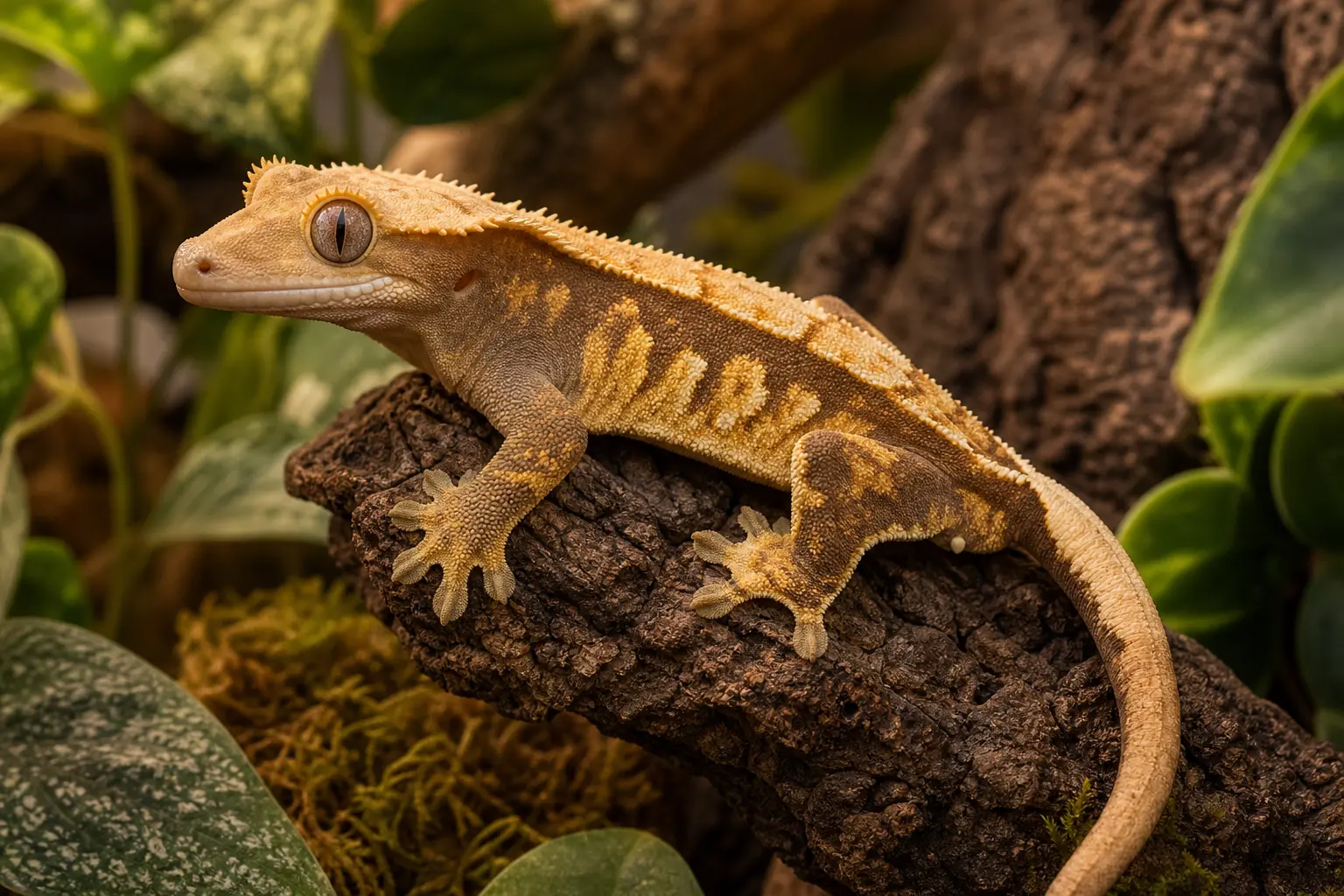
A watchful little climber who spends the day tucked into cover, then comes alive when the house gets quiet.
A leafy home rewards quiet watching: a slow climb, a sheltered pause, and the occasional leap between branches.
Get to know them
Life with a crested gecko
Built for branches, not for being still.
A crested gecko may wait quietly beneath a leaf, then take a completely different route through the branches. Watching those choices, rather than trying to hold it still, is where its personality shows.
A floor plan alone cannot tell the story of an arboreal home
A dropped tail does not grow back
Plan for quick feet and let the gecko decide when enough is enough
Before you decide
Could a crested gecko fit your evenings?
Small does not mean simple. The decision includes a tall adult home, measured heat and humidity, a repeatable food routine, and a calm response when a gecko decides to leap.
The honest fit
Would you enjoy life together?
The right match gives the gecko a rich, secure home and leaves you ready for the gentle everyday care that keeps it that way.
You may be a lovely match if…
- A permanent, tall, furnished adult enclosure fits comfortably in your home
- You enjoy an animal whose most interesting moments happen in quiet evening hours
- You are happy to mix food, refresh water, and think through insect care when offered
- You can measure the habitat and have realistic access to a reptile veterinarian
Think twice if…
- You are hoping for a daytime lap pet or frequent handling
- The enclosure would need to stay small, bare, temporary, or move often
- A tall escape-resistant home, food ledge, and climbing routes would be difficult to provide
- A reptile veterinarian is not realistically within reach
A comfortable home
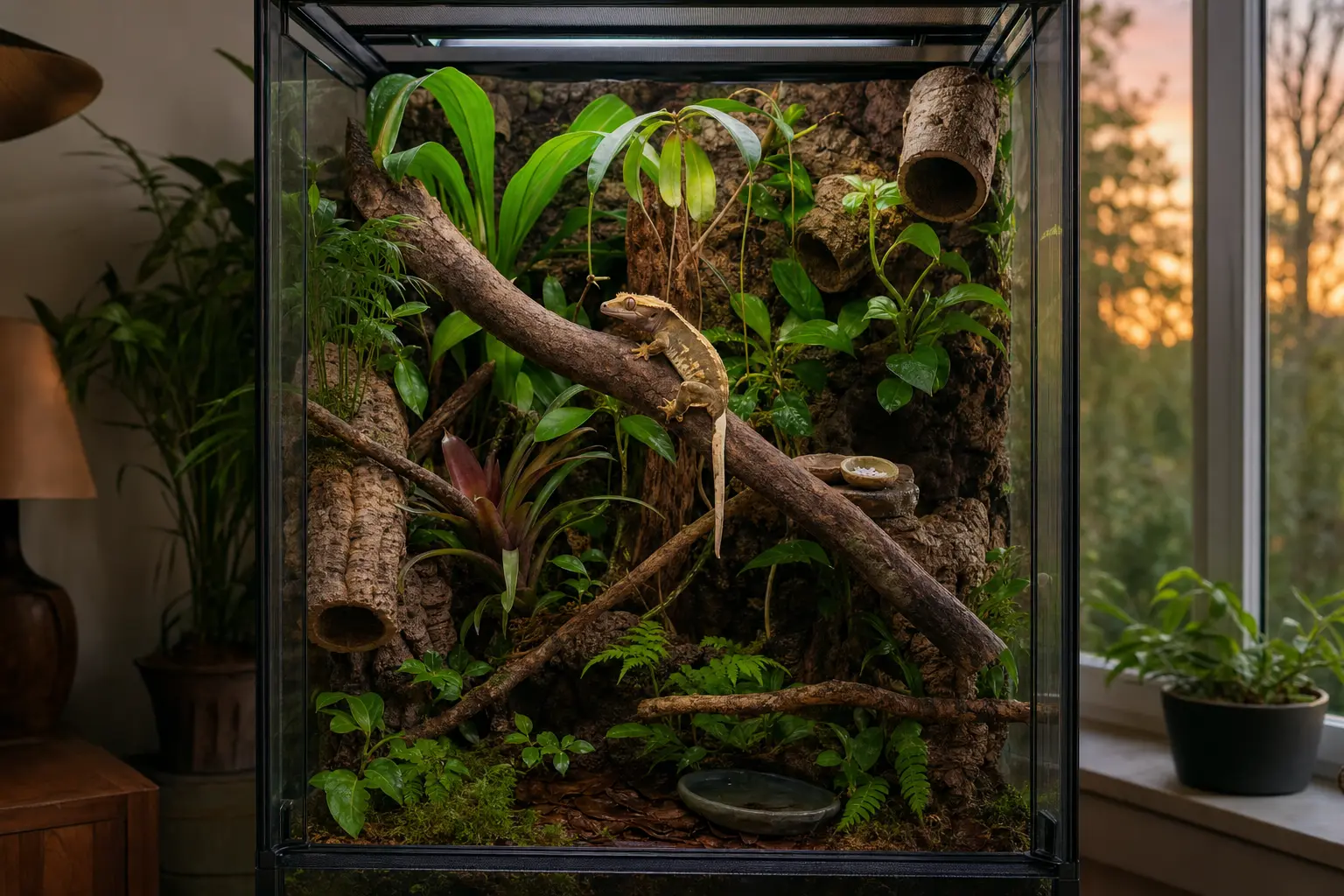
A taller home, with room to disappear.
The goal is not a display box. It is a stable little canopy with routes to climb, cover to rest in, and measured conditions from top to bottom.
Start with the cited minimum, then give the gecko a cork tube, a leafy hide, and sturdy routes to climb
RSPCA and RVC differ slightly on exact targets; a thermostat and probes matter more than guessing from room temperature
Use a hygrometer, a sensible mist-and-dry rhythm, and ventilation—not wet glass all day
A thoughtful day-to-shade setup works better than a bright lamp the gecko cannot leave
Feeding them well
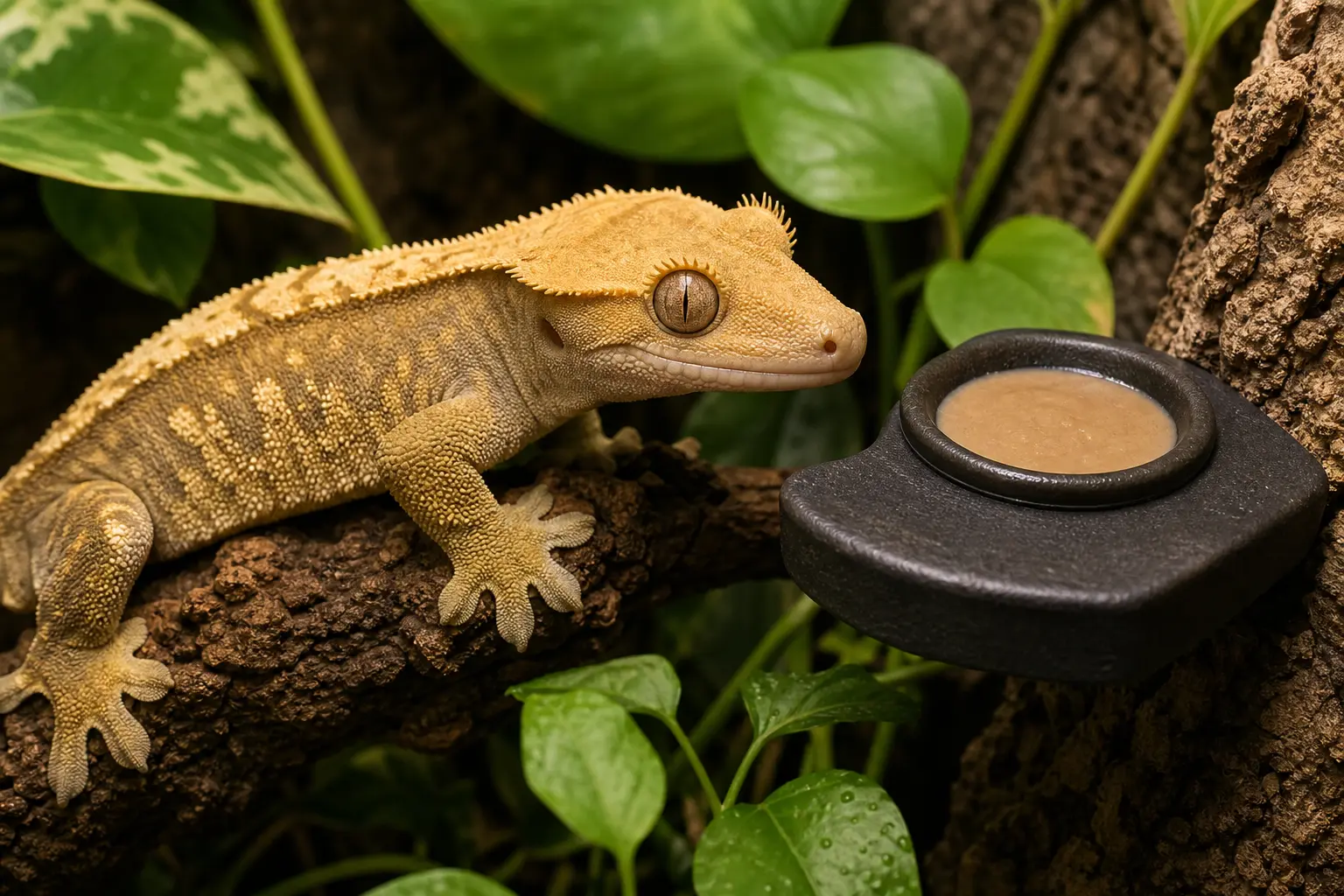
Food needs a real place in your week.
A complete formulated crested-gecko diet is a practical foundation. If you add insects, their welfare, preparation, and clean-up become part of the promise too.
Mix it fresh, keep water nearby, and remove food before it spoils
Gut-load and supplement to the gecko's complete-diet and veterinary plan, then remove what is left
A small, repeatable routine is kinder than an elaborate plan you cannot keep
The rhythm
Check the home. Watch the gecko.
Check the tall home
Check the warm and cool readings, humidity, water, food ledge, locks, and whether anything needs spot-cleaning.
See what they choose
Notice how your gecko climbs, uses cover, drinks, eats, and moves through the branches. Those little choices are useful information.
Leave the branches quiet
Tidy up, make a note of anything unusual, and preserve a peaceful, dark night.
Care with tenderness
Let them choose the pace.
Keep handling low and unhurried
Let the gecko step onto you, stay close to a safe surface, and stop before it needs to leap away.
Protect the tail
Never grab it. Tail loss is a defensive response, and crested geckos do not grow the tail back.
Give each gecko its own home
One gecko in one richly furnished enclosure is the calm default. Breeding and group housing belong to a separate, expert-level decision.
Wash up after care
Wash your hands after the gecko, food, waste, water, or enclosure equipment. Keep all supplies out of the kitchen.
Good to know
Common questions, answered.
Open any question for a short, practical answer.
Life together
Are crested geckos good first reptiles?
They can suit a prepared first-time keeper. You still need to build a tall adult home, measure its conditions, keep a food routine, and be comfortable with a gecko who may prefer watching to being held.
How big do crested geckos get?
They can reach about 20 cm (8 in), including the tail. Plan their home for the adult climber, not the hatchling you first meet.
How long do crested geckos live?
Plan for 15–20 years. Think through moves, changing work, vet care, and the adult enclosure before bringing one home.
When are crested geckos most active?
They are most visible around dusk, at night, and in quiet evening hours. Daytime is often for hiding and resting in cover.
Do crested geckos like being held?
Some settle into brief, gecko-led handling. Let that stay optional: a calm animal may still choose to climb, pause, or jump instead of being held.
Why do crested geckos jump—and can they drop their tail?
They are built to climb and make quick choices. Never grab the tail: it can be dropped as a defense, and crested geckos do not regrow it.
Can two crested geckos live together?
Plan one home per gecko. RSPCA allows limited, closely watched female groups, while RVC favors solitary housing; for a pet home, separate furnished enclosures are the calm default.
What should I have ready before bringing one home?
Run the adult enclosure for a week, test the heat, cool retreat, humidity, lighting, branches, water, food ledge, and locks, then find a reptile veterinarian before adoption.
Home, food, and health
What enclosure does an adult crested gecko need?
Start with an adult home at least 45 × 45 × 60 cm (18 × 18 × 24 in; W × D × H). Then make it useful: a high cork tube, two secure branches, a leafy hide, and a cooler retreat.
How do I heat a crested gecko enclosure safely?
Use guarded thermostat-controlled heat and a probe where your gecko rests. RSPCA uses 26–28°C warm and 20–24°C cool. RVC uses about 28°C warm and 25°C cool. Test the warm branch and the cool hide before your gecko arrives.
Does a crested gecko need UVB?
RSPCA and RVC recommend low-output UVB with real shade; MSD says broad-spectrum light may help even where special lighting is not a strict requirement. Use a product-specific low-level light-to-shade plan, not one copied bulb.
How should humidity work?
Source guides differ: RSPCA uses a 40–50% baseline with brief misting boosts, while RVC uses 50–70%. Use a hygrometer, ventilation, and a mist-and-dry rhythm; the enclosure should not stay soggy or stale.
What substrate and plants are safe?
Choose clean, moisture-managing substrate, tall broad plants, cork, and stable branches that support cover and climbing. Do not offer food directly on loose substrate when it could be swallowed, and do not let bedding stay waterlogged.
What do crested geckos eat?
A complete formulated crested-gecko diet is the practical baseline in RVC's current guidance. Insects can add variety and hunting opportunities, but they need their own preparation and clean-up routine.
Do I need to keep insects?
A complete formulated diet is the practical baseline, so insects are a choice you should make thoughtfully. If you offer them, plan to gut-load, supplement, and remove anything uneaten.
How often should I feed one?
Do not copy a universal calendar. Age, body condition, appetite, the exact complete diet, and any insect routine all matter; a dated weight and feeding log helps your reptile veterinarian advise the individual gecko.
Do crested geckos need water and a feeding ledge?
Yes. Keep fresh water available even if your gecko drinks droplets. A clean, accessible feeding ledge makes the complete diet easier to offer, replace, and monitor.
What should I do when my crested gecko sheds?
Crested geckos may eat their shed, which is normal. Do not pull stuck skin; review hydration, humidity, and the home, then call a reptile veterinarian for repeat trouble or toe concerns.
When should I call a reptile veterinarian?
Call for weight loss, abnormal droppings, repeated shed trouble, loss of toe-pad grip, blisters, swelling, or a misshapen jaw, limb, or spine. These are reasons to call, not a diagnosis.
Can a healthy crested gecko carry Salmonella?
Yes. Wash your hands after the gecko, food, waste, water, or enclosure equipment, and keep all supplies out of kitchens and food-preparation areas.
Build the climb before they arrive.
Test the enclosure's height, secure routes, measured conditions, food ledge, water, and locks before your crested gecko comes home.
Plan their heat and lightSources and care boundaries
Exact targets depend on the measured location, equipment, animal, and veterinary context. This profile keeps source disagreements visible instead of blending them into one number.
- The Reptile Database: Correlophus ciliatus
- Royal Society for the Prevention of Cruelty to Animals: Caring for your Crested Gecko
- Royal Veterinary College, RVC Exotics Service: Crested Gecko Care
- MSD Veterinary Manual: Management and Husbandry of Reptiles
- U.S. Centers for Disease Control and Prevention: Reptiles and Amphibians