Choosing a leopard gecko

Is a leopard gecko a good beginner reptile?

Yes—for a prepared beginner who wants a quiet evening reptile. Their small body does not make the care casual.

Choose one only if live feeder care and a permanent measured habitat feel realistic for up to 20 years.

Check the honest fit
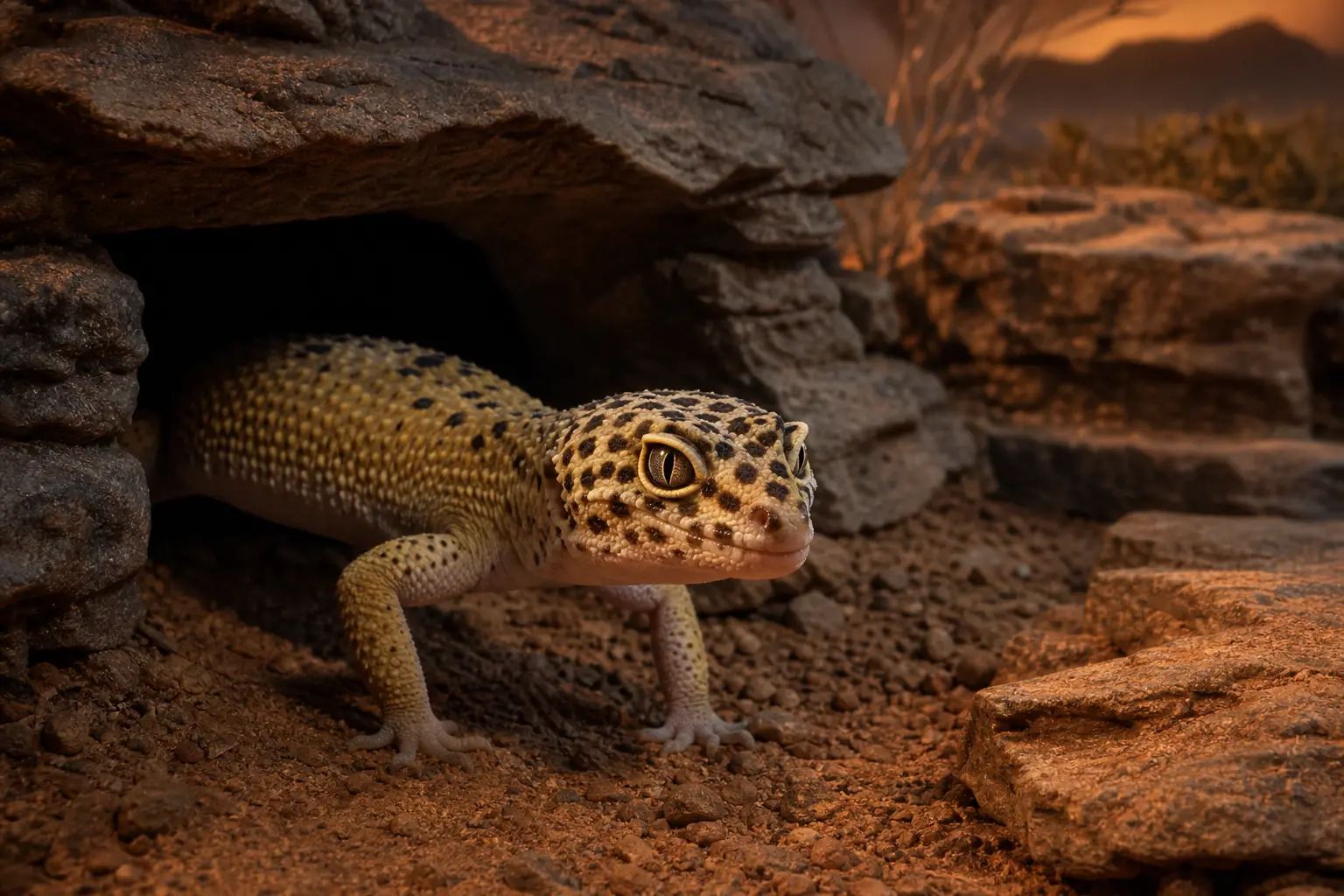
Adult leopard gecko stepping quietly from a rocky hide in warm evening light.

The short answer

Good first reptile for the right evening routine

A leopard gecko can be a rewarding first reptile when the adult enclosure is built and tested before adoption. The manageable body size helps, but live insects, measured heat and UVB, several purposeful hides, hygiene, and reptile-veterinary planning still need to be dependable.

Adult home
About 91 × 46 × 46 cm (36 × 18 × 18 in) or larger
Commitment
Plan for 10–20 years
Daily rhythm
Most visible around dusk and dawn
Food
Varied, gut-loaded live invertebrates
Handling
Brief, fully supported, and optional
Housing
One gecko per enclosure

The honest fit

Would the adult routine work in your home?

This may suit you if…

  • You would enjoy a quiet reptile whose day often begins as your evening settles down.
  • A permanent wide enclosure can hold warm, cool, and humid retreats without crowding.
  • You are comfortable keeping, gut-loading, and offering varied live feeder insects.
  • You will measure the habitat and can reach a reptile veterinarian.
Pause if…

  • You need a tiny starter tank or expect the enclosure to move often.
  • Live insects or a long 10–20 year commitment do not work in your home.
  • You mainly want a pet that stays active through the middle of the day.
  • The setup budget leaves no room for meters, replacement lamps, feeder care, or veterinary help.
01

Why they can work for first-time keepers

Leopard geckos are quiet, terrestrial, and usually most active around dusk and dawn. Their familiar evening circuit—leaving a hide, exploring, drinking, and hunting—can be easy to enjoy without demanding constant interaction.

Many accept brief, fully supported handling after they settle. Handling stays optional: backing away or trying to bite means the gecko can remain home, and the tail should never be grabbed.

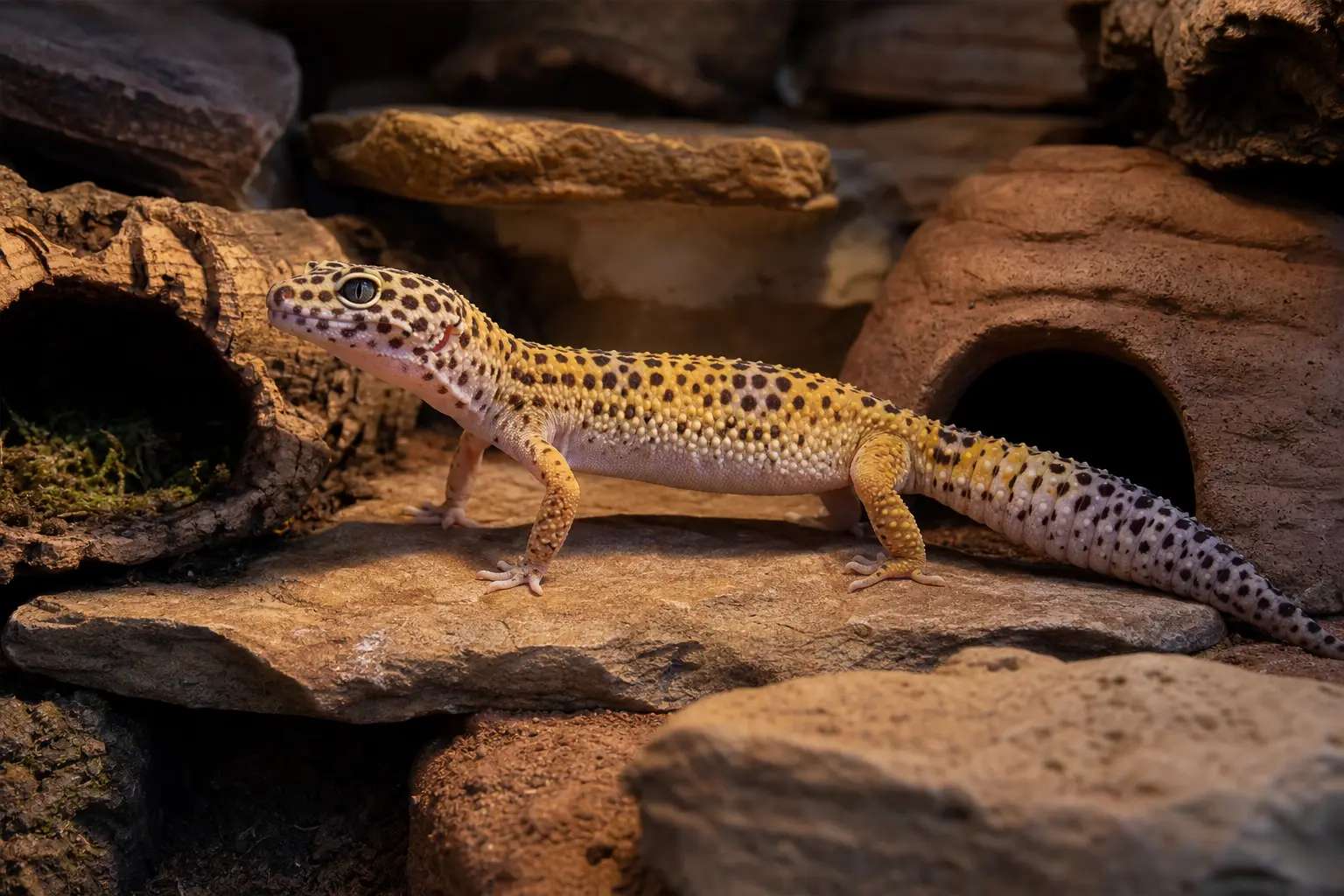
Adult leopard gecko walking across a low stone ledge between several secure hides at dusk.
02

Small animal, carefully engineered home

Plan about 91 × 46 × 46 cm or larger for one adult. The floor space must hold a usable warm retreat, a genuinely cooler retreat, secure cover across the gradient, and one clean humid hide for shedding.

Heat needs a thermostat and real readings. Add gentle species-appropriate UVB with shade, keep the enclosure dry overall, provide fresh water, and let every light go off at night.

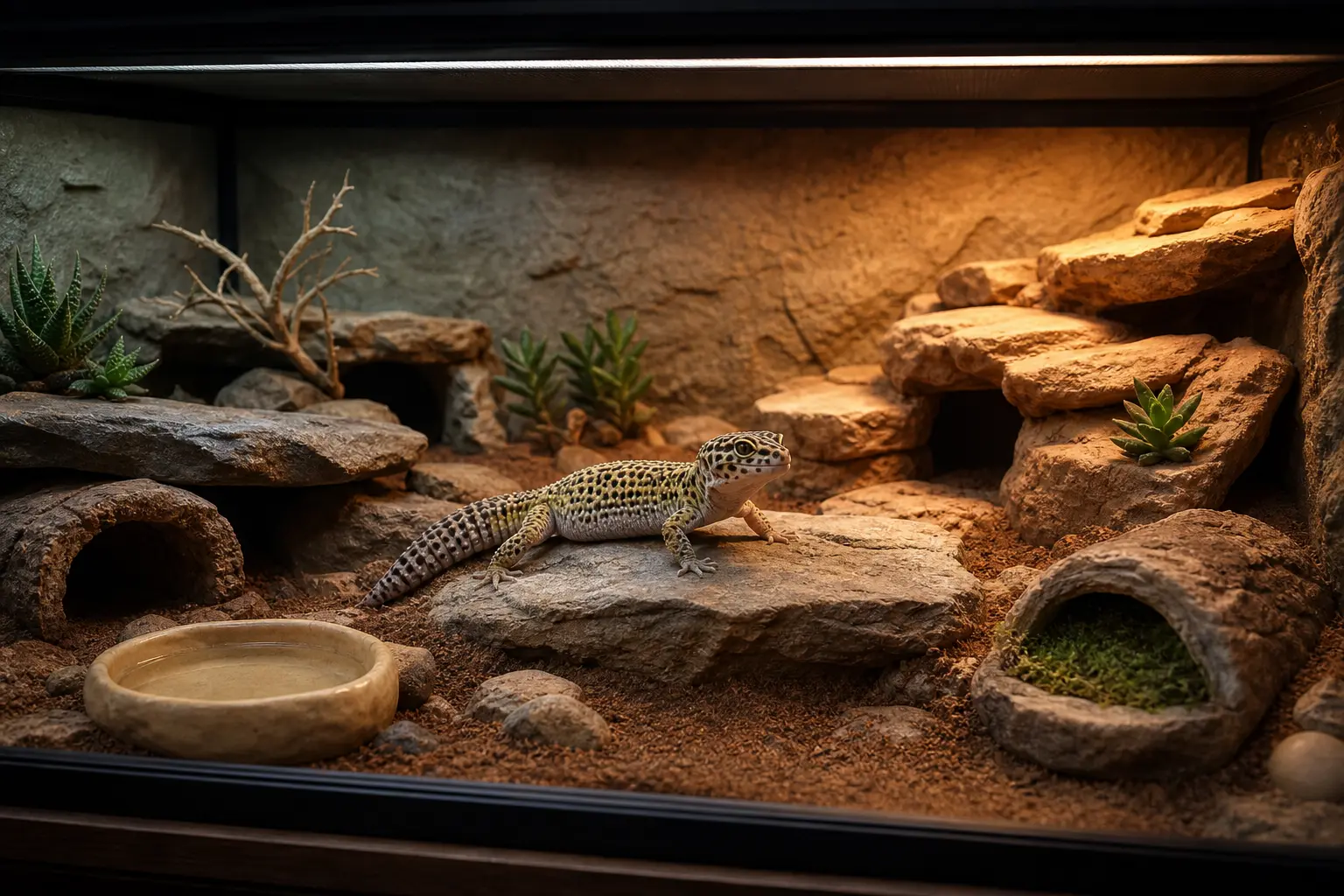
Adult leopard gecko in a wide naturalistic habitat with warm and cool cover, a humid hide, low ledges, and fresh water.
03

Picture an ordinary evening

A quick systems check covers the warm and cool readings, water, humid hide, and waste. On feeding days, you care for the feeder insects, dust them to the gecko's reviewed plan, offer an appropriate size, and remove leftovers.

You also notice appetite, droppings, evening activity, tail condition, weight, and shed around the toes and eyes. Wash your hands after the gecko, insects, waste, or habitat equipment, and keep those supplies out of the kitchen.

Keep deciding

See the complete care picture

Sources and further reading