Dusk and dawn are often the best times to see them moving
Leopard gecko · Eublepharis macularius
Life with a leopard gecko.
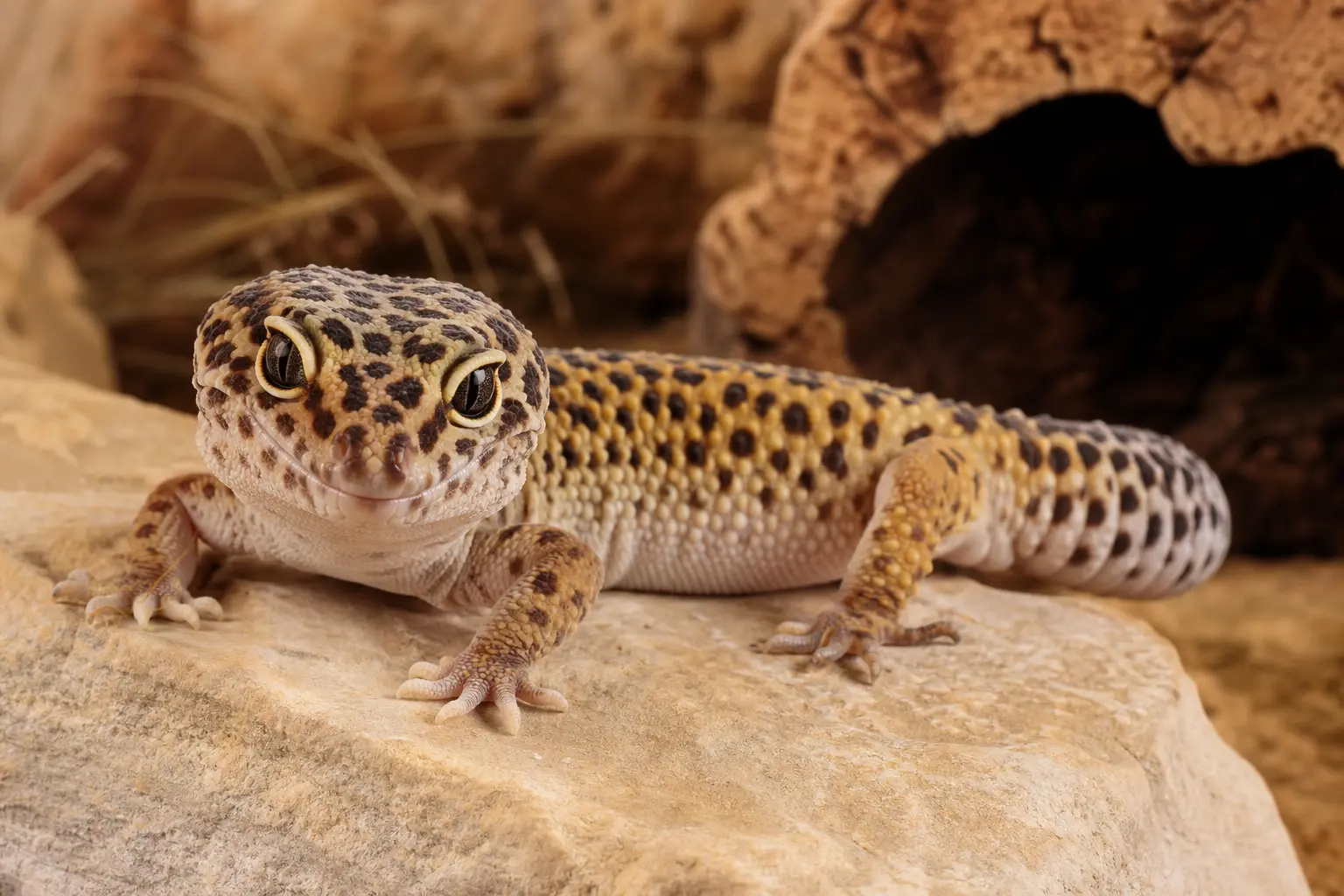
Leopard geckos spend much of the day tucked away.
That quiet evening routine is where most of their personality appears.
Get to know them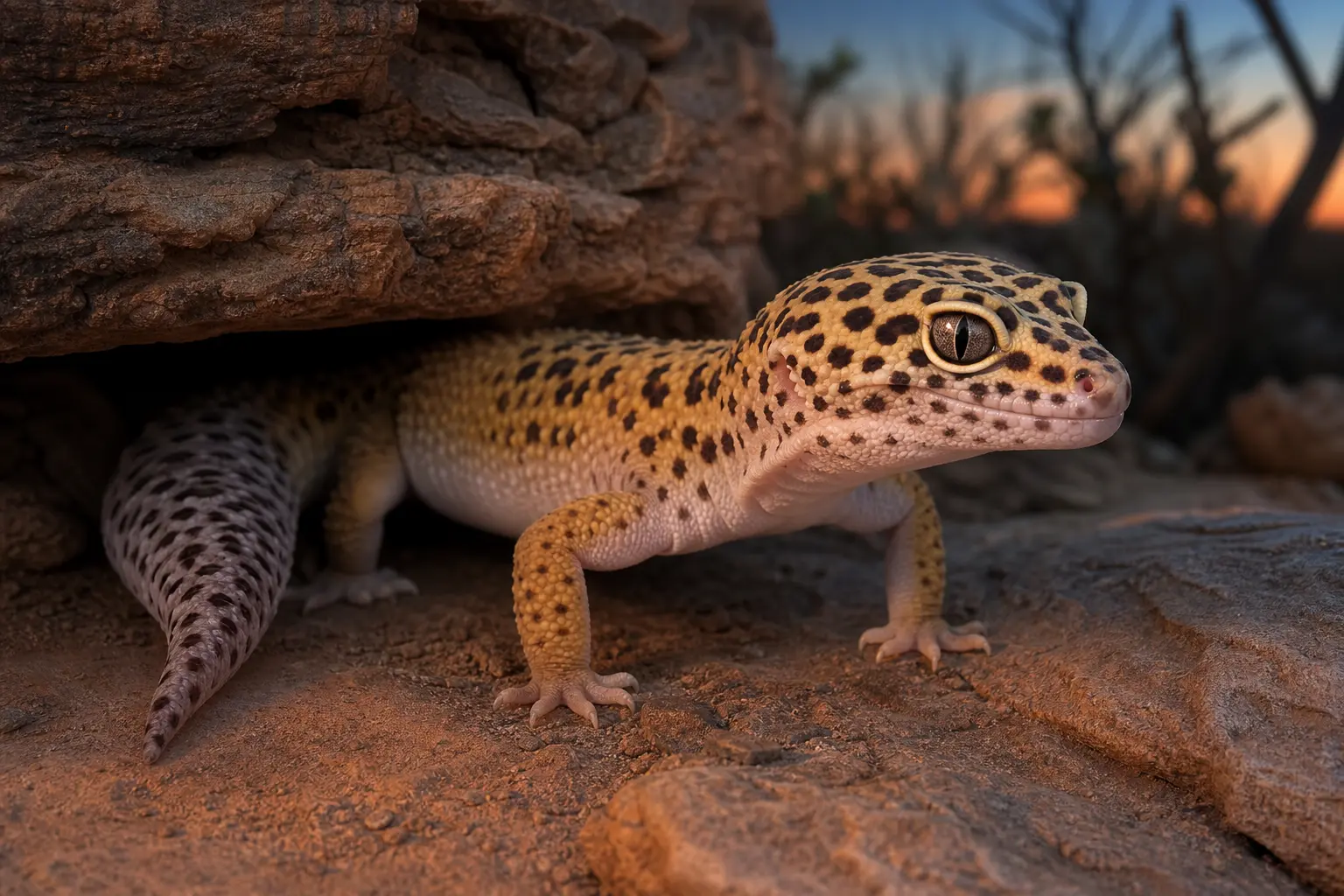
Life with a leopard gecko
They begin their day as yours winds down.
A nose appears at the hide entrance. Soon the gecko is moving between familiar shelters, drinking, hunting, and checking the same corners in their own unhurried way.
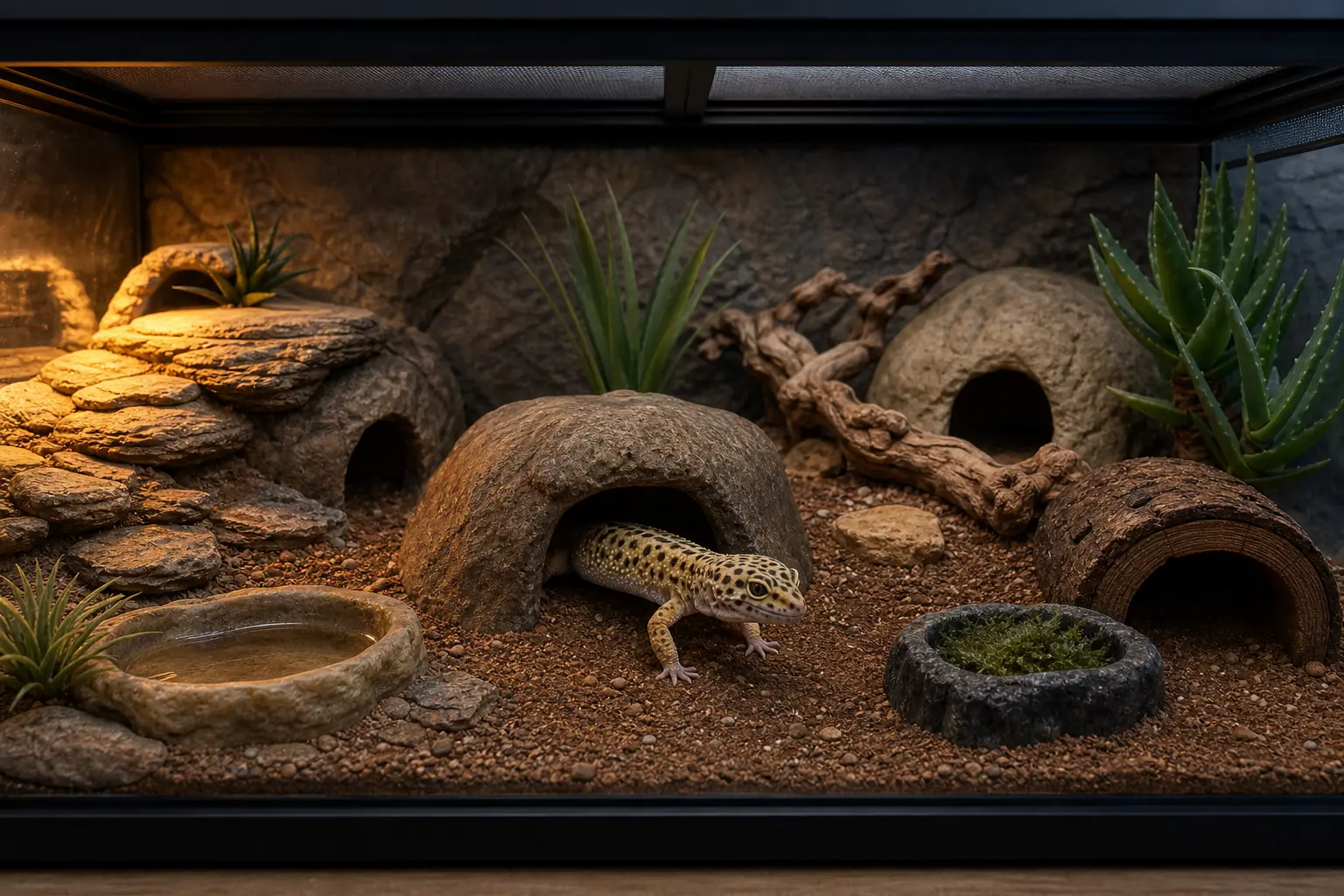
They should find a secure hide at every useful temperature
One gecko may investigate quickly while another takes more time
Keep it brief, support the whole body, and never touch or grab the tail
Before you decide
Could a leopard gecko settle happily into your home?
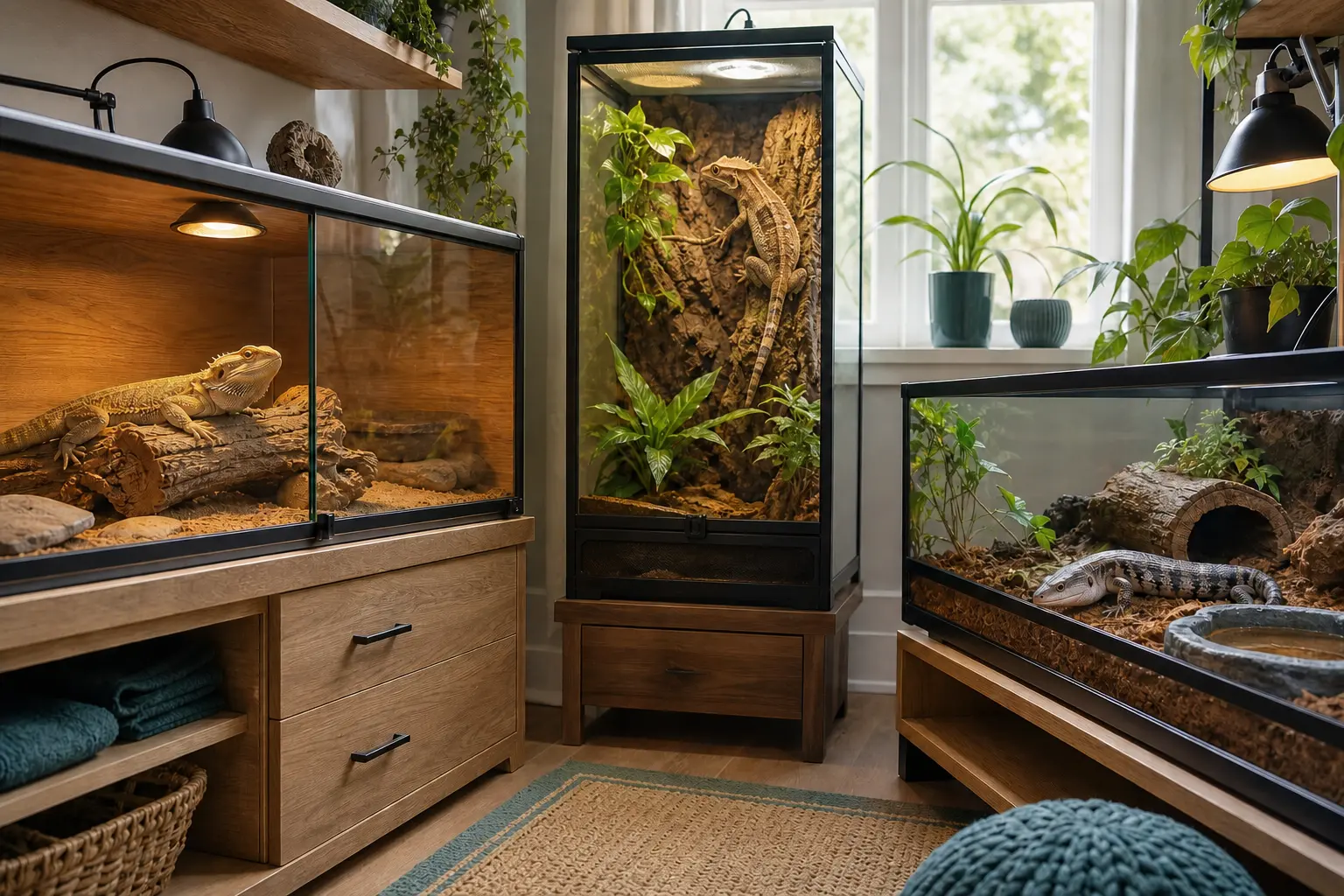
Their enclosure may fit on a sturdy cabinet, but their life can span 20 years. Make sure live insects and daily habitat checks still make sense that far ahead.
The honest fit
Would their evening routine suit you?
Picture a busy week. Would keeping live insects and checking three different retreats still feel manageable?
Life together may suit you if…
- You’d enjoy a quiet evening reptile you can observe without needing constant interaction
- A permanent, wide adult enclosure fits comfortably in your home
- Keeping and preparing live feeder insects feels manageable
- You’re happy to check heat, humidity, and lighting with the right meters
Pause if…
- Live insects would be difficult in your home
- The enclosure would need to stay small, temporary, or move often
- You’re hoping for a pet that is active in the middle of the day
- You don’t have realistic access to a reptile veterinarian or safe reptile hygiene
A comfortable home
Every hide has a purpose.
Your gecko should be able to rest somewhere warm, move to a genuinely cooler shelter, or use one clean humid hide while shedding. Nighttime stays dark.
Measure where your gecko actually rests; a thermostat and probes matter
A cool hide should be genuinely cooler, not just farther from the heater
Keep the enclosure dry overall; the humid hide supports shedding without making everything wet
A calm daylight gradient and a dark night are kinder than bright light around the clock
Feeding them well
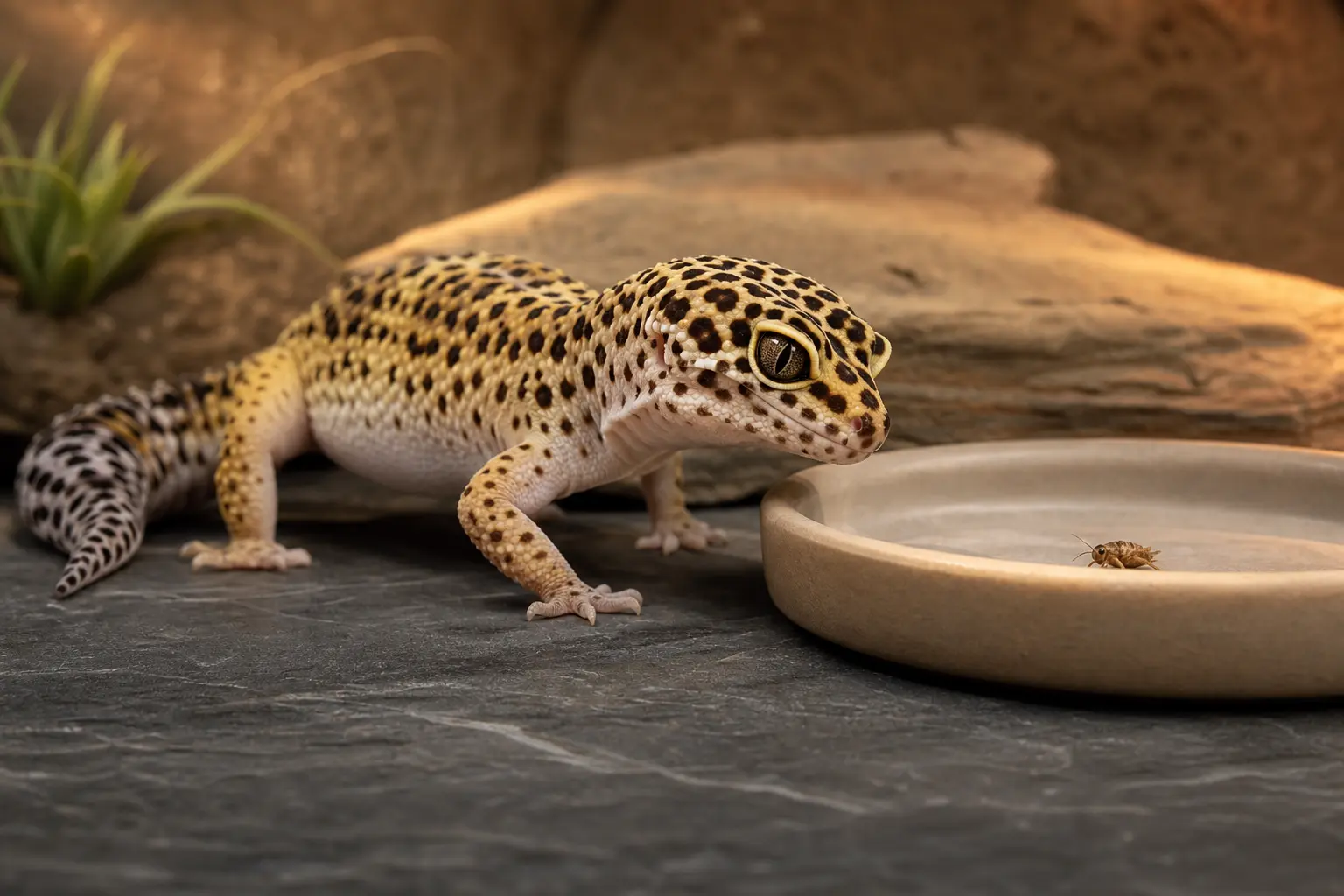
Live insects are part of the deal.
Feeding begins before an insect reaches the enclosure. Safe sourcing, good feeder care, gut-loading, and a sensible supplement plan all shape what your gecko receives.
Rotate safe feeder insects instead of leaning on just one type
Gut-load for 24–48 hours, then offer a size your gecko can handle safely
Age, health, diet, product, and UVB all affect what your gecko needs
The rhythm
Most days are quiet and predictable.
A quiet systems check
Check the warm and cool readings, water, humid hide, and whether anything needs spot-cleaning.
Watch the world wake up
Offer food when due, remove leftovers later, and notice appetite, movement, droppings, tail condition, and how your gecko uses its hides.
Let the enclosure go dark
Tidy up, make a note of anything unusual, and give your gecko a peaceful, dark night.
Care with tenderness
Small changes are worth noticing.
Let them set the pace
Give a new gecko time to settle. When handling is welcome, scoop and support the whole body; never grab the tail.
Notice small changes
A dated note of weight, appetite, tail condition, droppings, sheds, evening activity, and behaviour can help you see change before it feels sudden.
Know who you’ll call
Call a reptile veterinarian for weight or tail loss, appetite loss with lethargy, abnormal droppings, repeated retained shed, swelling, twitching, weak or misshapen limbs, or suspected egg binding.
Wash up after care
Wash your hands after the gecko, insects, waste, water, or enclosure equipment. Keep all reptile items out of the kitchen.
Good to know
Common questions, answered.
Open any question for a short, practical answer.
Life together
Are leopard geckos good first reptiles?
They can be a good first reptile if you are comfortable caring for live insects and checking a measured habitat every day. Their small size does not make the care casual.
How big do leopard geckos get?
Most adults are about 17–25 cm (7–10 in) from nose to tail. Individual size varies with sex, line, body condition, and tail length.
How long do leopard geckos live?
RSPCA gives a 10–20 year range, and RVC says they can live up to 20 years. If you choose one, plan your home and care around the longer end.
When are leopard geckos awake?
They are crepuscular, so you will often see the most activity around dusk and dawn. A comfortable gecko may still come out at other quiet moments.
Do leopard geckos like being held?
Many accept brief, gentle, fully supported handling once they are settled. Let handling stay optional, keep it low to the ground, and never grab the tail.
Can two leopard geckos live together?
Plan one enclosure per leopard gecko. Sharing space can lead to stress, food competition, injury, and health problems that are easy to miss at first.
What do leopard geckos eat?
They are insectivores. Offer varied, appropriately sized live insects, prepare the feeders well, and follow a calcium and vitamin plan suited to your gecko.
What should I arrange before bringing one home?
Set up and test the full adult enclosure, find a reptile veterinarian, choose a healthy captive-bred gecko or reputable rescue, and make sure live insects and safe hygiene fit your household.
Home and health
How large should the adult enclosure be?
For one adult, plan about 91 × 46 × 46 cm (36 × 18 × 18 in) or larger. That footprint leaves room for a warm hide, a cool hide, and a humid hide. It is planning guidance, not a universal legal minimum.
What equipment will I need?
Use guarded, thermostat-controlled heat; digital probes; an infrared surface thermometer; a hygrometer; secure hides; a humid hide; fresh water; and a gentle UVB/daylight setup with shade.
What temperatures do leopard geckos need?
Begin with about 28–32°C at the usable warm retreat and 24–26°C at the cool end. Check whether each reading is air or surface temperature, and measure where your gecko actually rests.
Do leopard geckos need UVB?
Use a gentle UVB/daylight gradient with real shade rather than assuming a crepuscular gecko needs no UVB. Lamp distance, mesh, and light sensitivity all matter.
What humidity do they need?
Keep the enclosure dry overall—about 30–40% at the cool end—then give your gecko one properly maintained humid hide for shedding.
Why do leopard geckos need a humid hide?
The humid hide gives them a small place to support normal shedding without turning the whole enclosure damp. Check it regularly and keep it clean.
What substrate is safe?
For a juvenile, a gecko in quarantine, or a setup you are still learning, use a simple surface you can inspect easily. A healthy established adult can use a well-run organic soil and play-sand mix; avoid calcium sand, walnut shell, corncob, and wood chips.
Do they need a water bowl?
Yes. Keep a shallow bowl of fresh water available and refresh it daily, washing it whenever it is soiled.
What should I do when my gecko sheds?
Let skin release on its own—never pull it. Check toes, tail tip, and eyes, maintain the humid hide, and call a reptile veterinarian for persistent retained shed or swelling.
When should I call a reptile veterinarian?
Call for weight or tail loss, appetite loss with lethargy, abnormal droppings, repeated retained shed, swelling, twitching, weak or misshapen limbs, or suspected egg binding. These are reasons to call, not a diagnosis.
Can a healthy leopard gecko carry Salmonella?
Yes. Wash your hands after the gecko, insects, waste, water, or enclosure equipment, and keep reptile supplies away from kitchens and food-preparation areas.
Set up every hide before your gecko arrives.
Run the enclosure for at least a week. Check the warm hide, cool retreat, humid hide, daylight, and overnight temperature while no animal is depending on them.
Plan their heat and lightSources and care boundaries
Exact targets depend on the measured location, equipment, animal, and veterinary context. This profile keeps source disagreements visible instead of blending them into one number.
- The Reptile Database: Eublepharis macularius
- Royal Society for the Prevention of Cruelty to Animals: Leopard Gecko Care Sheet
- Royal Veterinary College Exotics Service: Caring for your leopard gecko
- MSD Veterinary Manual: Management and Husbandry of Reptiles
- ReptiFiles: Leopard Gecko Terrarium Size
- U.S. Centers for Disease Control and Prevention: Reptiles and Amphibians