Choosing a Russian tortoise

Is a Russian tortoise a good beginner reptile?

Maybe—but not as a low-maintenance starter pet. Russian tortoises need substantial indoor and outdoor space, strong UVB, a varied plant diet, and care that can span generations.

Decide whether daily plant care, escape-proof digging space, specialist veterinary access, and a potential 50–100-year commitment fit your household.

Check the honest fit
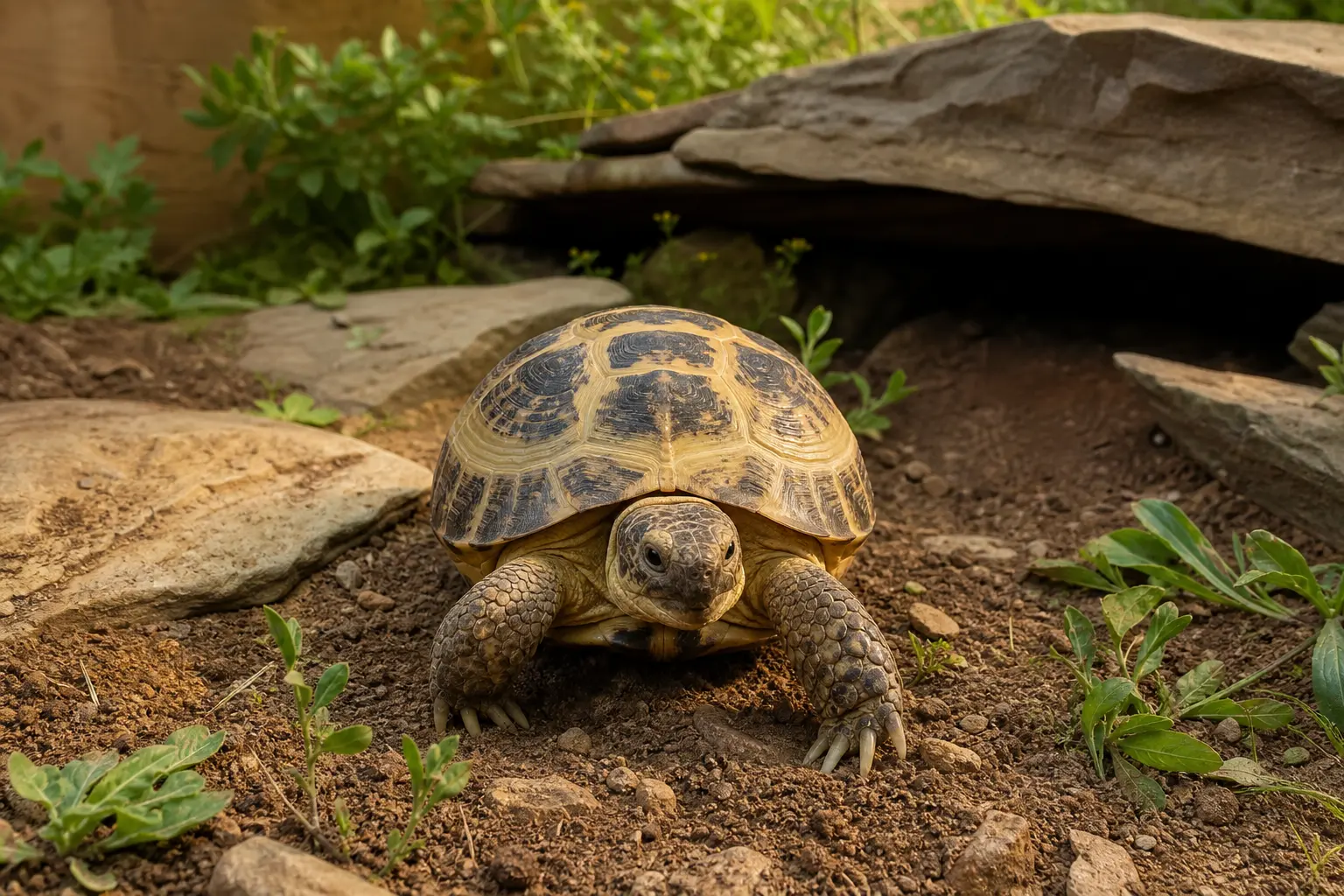
Alert adult Russian tortoise walking through a spacious dry planted habitat with its rounded tan-and-dark shell, sturdy digging legs, and clear eyes in view.

The short answer

Possible first tortoise for a deeply prepared keeper

A Russian tortoise can suit a prepared first-time tortoise keeper who builds the adult habitat before adoption, provides measured heat and UVB, learns safe plant identification, plans seasonal care with a reptile veterinarian, and accepts that the tortoise may need care for 50–100 years.

Indoor home
At least 180 × 120 cm (71 × 47 in) for one adult
Commitment
Potentially 50–100 years
Daily rhythm
Day-active; digs, basks, grazes, and shelters
Food
Varied safe weeds, leaves, and flowers
Handling
Only when useful, with shell and plastron supported
Housing
Usually best alone in a secure indoor/outdoor plan

The honest fit

Would the adult routine work in your home?

This may suit you if…

  • You would enjoy watching a day-active tortoise dig, bask, graze, and explore rather than carrying it frequently.
  • A permanent large indoor habitat and a secure seasonal outdoor area fit your home and climate plan.
  • You are ready to identify and source a varied rotation of safe pesticide-free plants.
  • You can plan specialist veterinary care, holiday cover, and ownership that may outlast you.
Pause if…

  • You expect a small tabletop enclosure because the tortoise itself is compact.
  • You want a pet for frequent handling, floor roaming, or unsupervised garden time.
  • Strong UVB, basking heat, deep soil, plant sourcing, and daily checks do not suit your routine.
  • You would improvise hibernation or seasonal cooling without a health assessment and experienced guidance.
01

Why they can appeal to a first-time keeper

Russian tortoises are awake by day and make ordinary behavior visible: warming under the basking lamp, choosing shade, digging, walking routes, grazing, drinking, and returning to cover.

They are not a petting animal. Many tolerate necessary handling, but a good relationship is built through predictable care and observation rather than repeated lifting.

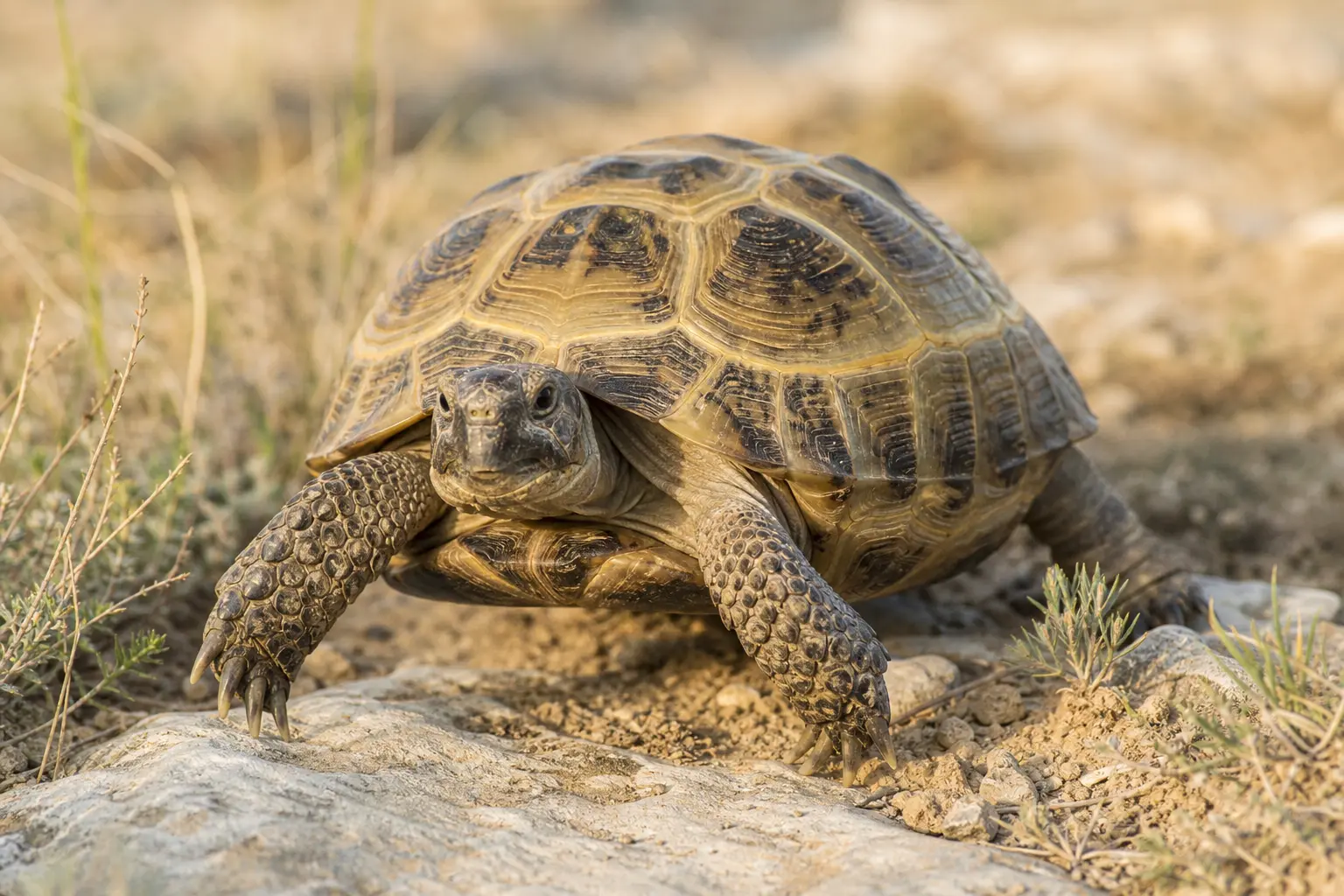
Adult Russian tortoise walking across dry steppe soil with its rounded patterned shell, sturdy forelegs, and bright face in clear view.
02

Space and lifespan are the honest tests

RSPCA guidance describes at least 180 × 120 cm indoors plus a much larger secure outdoor area where conditions permit. Deep soil, buried barriers, shade, a waterproof refuge, safe plants, shallow water, and protected heat and UVB all need room.

The same guidance notes a potential 50–100-year lifespan. Before adoption, decide who provides care during travel, illness, housing changes, and the decades beyond an ordinary pet commitment.

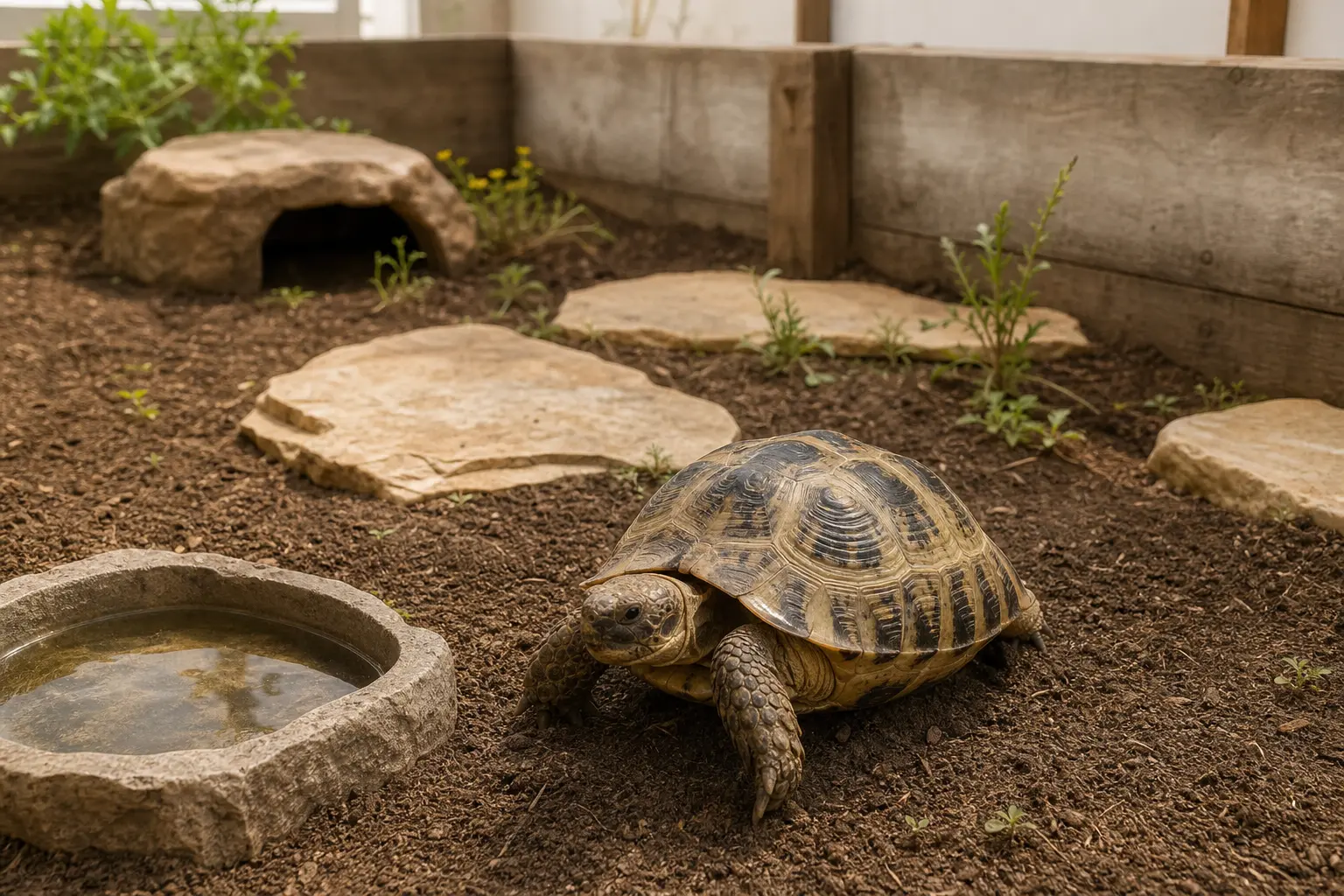
Adult Russian tortoise in a spacious secure indoor habitat with deep diggable soil, dry footing, shade, a hide, safe plants, basking stones, and shallow water.
03

Picture an ordinary plant-care day

The lights come on, you check basking and cool temperatures, refresh shallow water, inspect the substrate, remove waste, and offer a varied mix of correctly identified pesticide-free weeds, leaves, and flowers.

You notice gait, eyes, breathing, appetite, shell condition, feces, and urates; record weight consistently; and call a reptile veterinarian about persistent refusal, discharge, swelling, weakness, shell softness, or abnormal waste.

Keep deciding

See the complete care picture

Sources and further reading