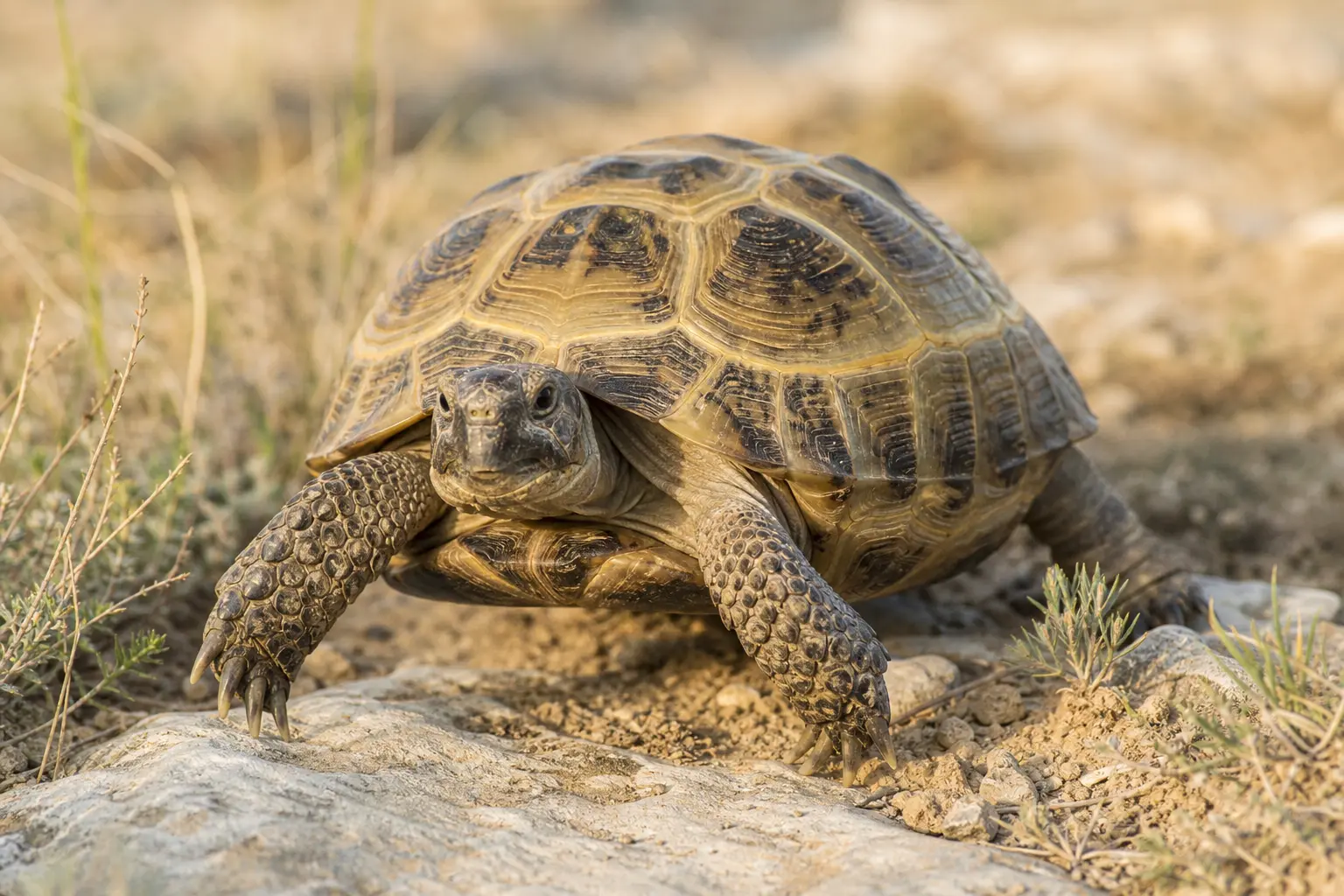
Russian tortoise · Testudo horsfieldii
The Russian tortoise, on their own terms.
Before you decide
Could a Russian tortoise thrive in your home?
Picture the full-grown animal, the permanent enclosure, and the ordinary care you would still be happy to give years from now.
The honest fit
Would their everyday rhythm suit you?
Think about an ordinary week, including the days when you are tired, busy, or away from home.
Life together may suit you if…
- You would enjoy watching a determined daytime grazer walk, dig, bask, and forage
- A broad indoor table and secure outdoor pen can become permanent parts of the home
- Growing or sourcing safe fibrous weeds and greens feels rewarding
- A commitment that may span much of a human lifetime has a real succession plan
Pause if…
- A glass tank or compact starter kit is the only space available
- You want a pet that enjoys being carried around
- Strong UVB, digging depth, safe seasonal care, outdoor security, and fresh plant variety feel difficult
- There is no long-term plan for veterinary care, moving, inheritance, or changing family circumstances
A comfortable home
Build the home around their choices.
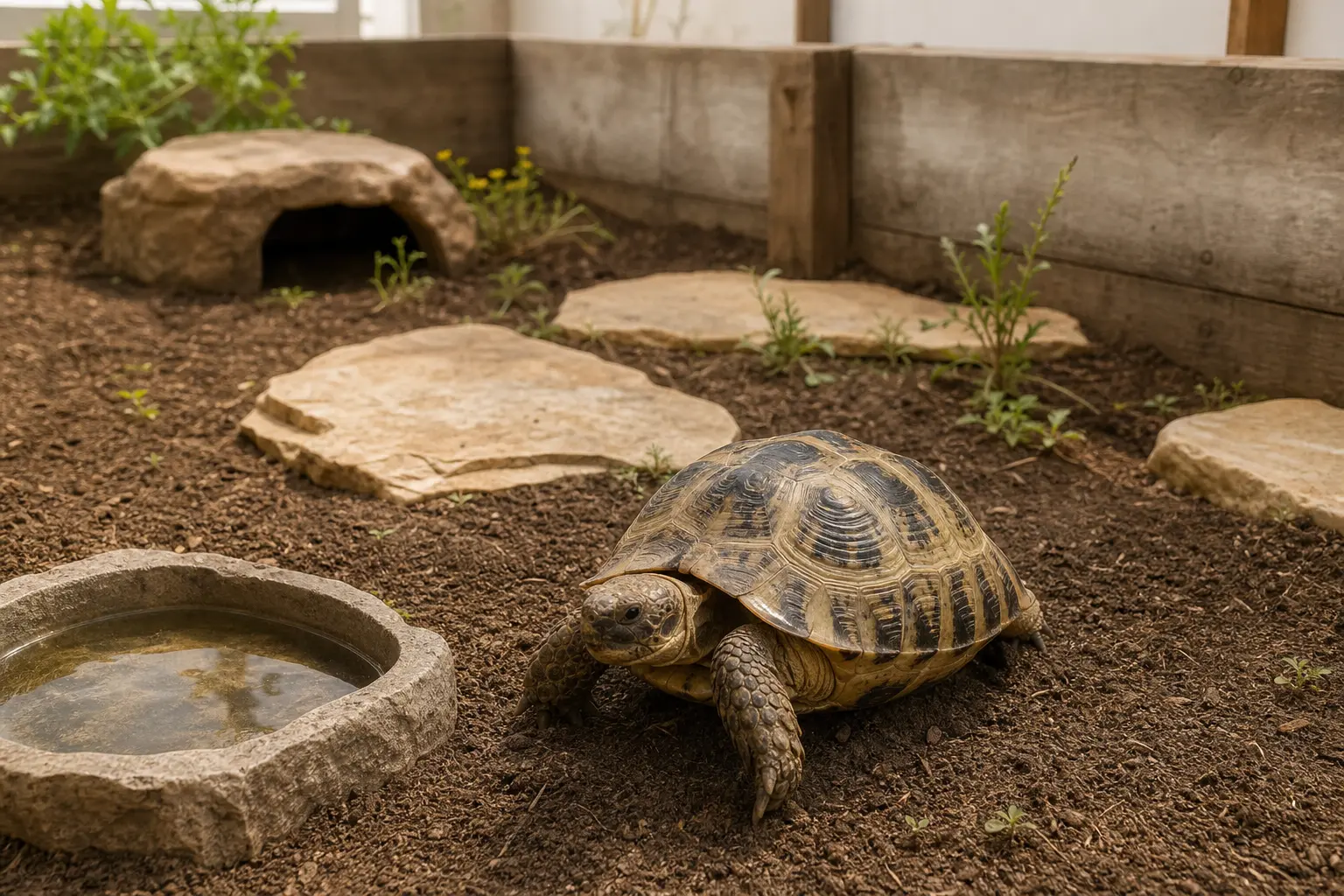
Think open floor, not aquarium. Build deep digging opportunity, opaque secure walls, sun and shade choices, multiple retreats, safe edible plants, shallow water, strong UVB, and predator-proof outdoor access when the climate is suitable.
Measure where the animal actually rests
A real retreat from the warm side
Use a digital hygrometer and watch ventilation
Build light and shade as a gradient
The rhythm
What an ordinary week asks of you.
Open a bright day
Check the warm and cool zones, water, hides, walls, weather, and the tortoise's first movements before offering fresh forage.
Let them walk and browse
Watch for active feeding, digging, basking, shade use, clear eyes, steady movement, and a shell that stays clean and intact.
Clear the table
Remove wilted food and droppings, refresh anything soiled, secure the outdoor pen or indoor home, and record changes.
Care with tenderness
Learn what is normal for your Russian tortoise.
Why our space guidance uses the larger footprint
Published Testudo guides give different minimums. We use the RSPCA's 180 × 120 cm indoor baseline consistently for an adult Russian tortoise, rather than the smaller 4 × 2 ft group minimum in the Tree of Life guide. The RSPCA also describes a secure 10 m² outdoor area for one tortoise. Outdoor access depends on climate, shade, shelter, and protection from escape and predators; it does not make a cramped indoor home suitable.
Do not improvise hibernation
Seasonal slowdown and brumation require a healthy animal, correct identity, preparation, monitoring, and reptile-veterinarian guidance.
Protect the digger
Russian tortoises climb, burrow, and test boundaries. Outdoor walls need buried security, shade, shelter, and protection from predators and toxic plants.
Watch appetite, weight, and shell
Call a reptile veterinarian for nasal discharge, breathing changes, swollen eyes, weakness, shell damage, egg-laying trouble, persistent appetite loss, or meaningful weight change.
Wash hands after care
Keep tortoise water, waste, dishes, and habitat tools away from kitchens, and wash hands after every care session.
Good to know
Common questions, answered.
Open any question for a short, practical answer.
Life together
Could a Russian tortoise suit a first-time keeper?
This may suit you if you would enjoy watching a determined daytime grazer walk, dig, bask, and forage. Pause if a glass tank or compact starter kit is the only space available. Build and test the habitat before deciding.
How large do Russian tortoises get?
About 12–20 cm (5–8 in) straight shell length in LafeberVet's Russian tortoise comparison; individuals vary
How long do Russian tortoises live?
Plan for many decades; the RSPCA gives a potential 50–100-year commitment for this group of tortoises. Individual lifespan varies, so plan around the longer end.
When are Russian tortoises active?
A daytime walker, digger, browser, and basker
Do Russian tortoises enjoy handling?
Mostly observation; lift only when needed and support the entire shell. Watch the animal's posture and movement, support the whole body, and stop when it tries to leave.
Can two Russian tortoises live together?
Plan a spacious individual home unless an expert approves a carefully managed group
What do Russian tortoises eat?
High-fibre weeds, edible forbs, dark leafy greens, and other species-safe plants
How large should a Russian tortoise's enclosure be?
Start with at least 180 × 120 cm (71 × 47 in) indoors for one adult, plus a secure seasonal outdoor area where climate permits. More usable room is valuable when it creates better gradients, cover, and movement choices.
Home and health
What temperatures does a Russian tortoise need?
Provide broad basking zone about 35°C (95°F), with daytime ambient gradient about 20–25°C (68–77°F). Measure both where the animal actually spends time and control every heater appropriately.
Does a Russian tortoise need UVB?
The reviewed plan calls for strong reptile UVB over the active area, set by fixture output and measured distance. Fixture, reflector, mesh, distance, lamp age, and shade all change what reaches the animal.
What humidity does a Russian tortoise need?
A generally dry, well-ventilated home with drinking water and a patch of damp shelter. Check it with a digital hygrometer. Keep fresh air moving through the enclosure, and let the animal choose between damp shelter and dry ground.
What should be inside the enclosure?
Think open floor, not aquarium. Build deep digging opportunity, opaque secure walls, sun and shade choices, multiple retreats, safe edible plants, shallow water, strong UVB, and predator-proof outdoor access when the climate is suitable.
What substrate works for a Russian tortoise?
A deep, diggable species-safe soil system indoors and safe topsoil with grass outdoors; avoid sharp gravel and loose materials that create injury or ingestion risk
What does ordinary cleaning involve?
Remove droppings daily, clean food and water dishes regularly, and deep-clean with a reptile-safe method while preserving healthy outdoor soil areas.
What should I arrange before bringing a Russian tortoise home?
Build and test the complete adult habitat, verify the readings over several days, identify a reptile veterinarian, check local and rental rules, and choose a responsible captive source or rescue.
Can a healthy-looking Russian tortoise carry Salmonella?
Yes. Reptiles can carry Salmonella without looking ill, so handwashing and keeping habitat water, food, and cleaning equipment away from kitchens are part of ordinary care.
Still thinking about Russian tortoises?
Put this animal beside the others on your shortlist. Then build and test the complete adult habitat before anyone comes home.
Compare reptilesSources and care boundaries
Exact targets depend on the measured location, equipment, animal, and veterinary context. This profile keeps source disagreements visible instead of blending them into one number.
- RSPCA: Spur-thighed, Hermann's, marginated and Horsfield's tortoises — indoor/outdoor space and active-season care
- Tree of Life Exotic Pet Medical Center: Testudo tortoise care
- LafeberVet: Mediterranean tortoises
- LafeberVet: Selected reptile temperature table
- The Reptile Database: Testudo horsfieldii
- CDC: Reptiles and amphibians