Kingsnake · Emergency preparedness

What should be in a kingsnake emergency kit?

A kingsnake emergency kit should center on safe transport, measured temperature support, current care records, and the reptile veterinarian's contact details. It is not a home-treatment kit.

Build the carrier and information plan before a stressful day. Ask the clinic what to do for the specific problem while you travel.

Use the practical checks
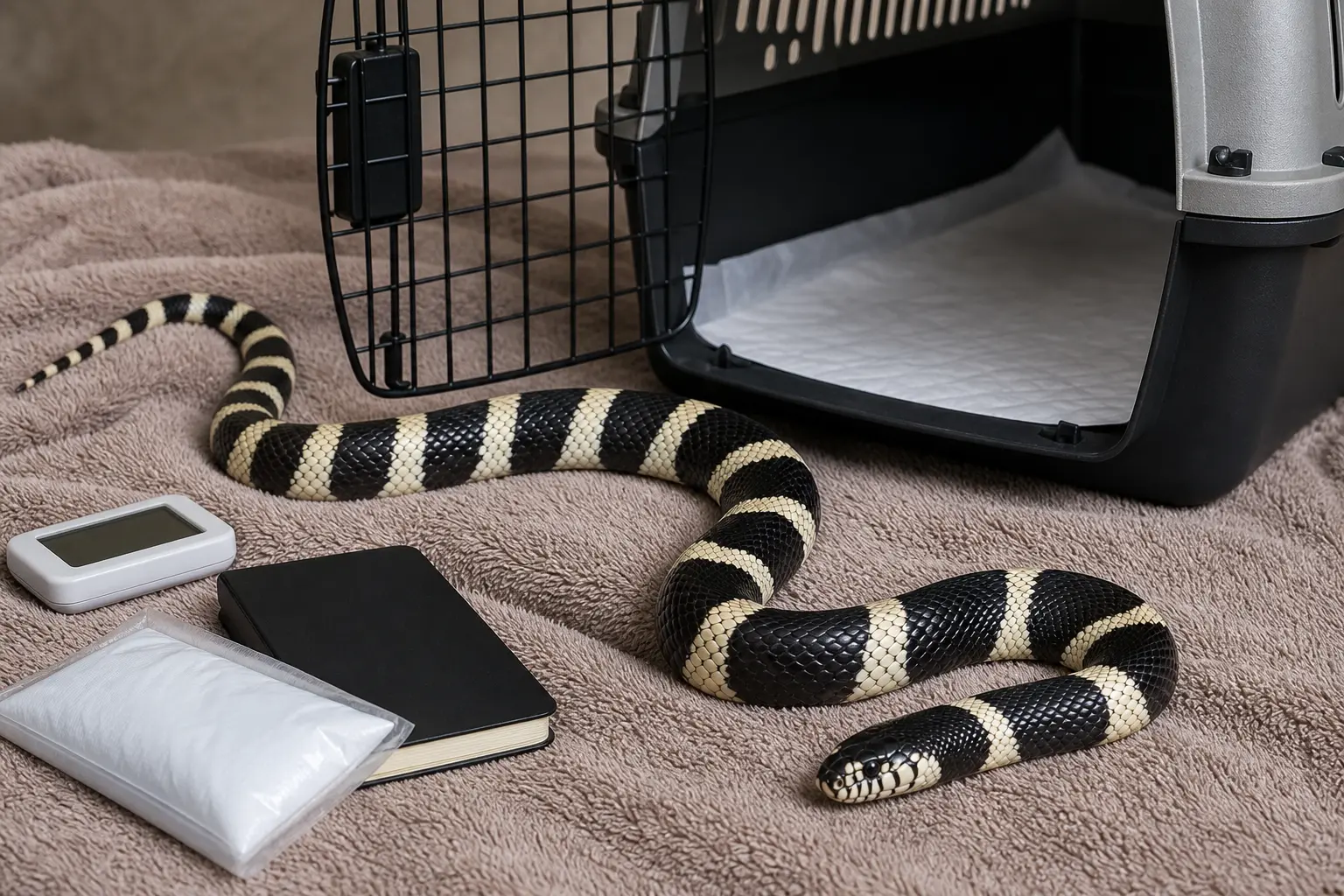
Adult California kingsnake with glossy black-and-cream bands and a clear eye beside a secure ventilated carrier, clean liner, digital thermometer, blank care notebook, and safely buffered temperature pack.

The short answer

Prepare transport and evidence, not a home pharmacy for kingsnakes

A kingsnake emergency kit should center on safe transport, measured temperature support, current care records, and the reptile veterinarian's contact details. It is not a home-treatment kit.

Adult home
For the California kingsnake reference, at least 120 × 60 × 60 cm (48 × 24 × 24 in), securely locked
Warm zone
Basking surface around 30–32°C (86–90°F)
Cool and night
Cool covered end around 22–25°C (72–77°F); All visible lights off; use controlled non-light heat only if the room falls below the reviewed safe range
Humidity
About 40–60%, with fresh water, ventilation, dry footing, and a clean humid retreat during shed
UVB
Low-output linear UVB measured around UVI 1.0 at basking level, grading to zero in shade
Food
Appropriately sized fully thawed whole rodents offered with long tongs; house kingsnakes separately

The honest fit

Would the adult routine work in your home?

Do this

  • Keep a secure ventilated carrier and current clinic contacts ready.
  • Bring measured habitat readings, recent weights, and a clear timeline.
  • Keep fresh water and monitor kingsnake behavior every day.
  • Record changes so a reptile veterinarian receives useful evidence.

Avoid this

  • Do not place hot or cold packs in direct contact with the reptile.
  • Keep human medicine, assisted feeding, and invasive treatment out of the plan unless the clinic directs them.
  • Do not copy another reptile species' setup.
  • Do not treat a persistent health change as a shopping problem.
01

Pack the transport essentials

Use a secure, escape-resistant, ventilated carrier sized for the kingsnake. Line it with clean absorbent paper or a smooth towel, and add a stable hide only when it cannot roll, trap, or crush the animal.

Keep the carrier ready beside spare liner, disposable gloves, waste bags, and a separate towel for visual cover. Nothing loose, sharp, adhesive, strongly scented, or easy to swallow belongs inside.

Adult California kingsnake moving across chaparral rock with its complete black-and-cream banded body and small glossy head in clear view.
02

Control temperature without direct contact

Keep a digital thermometer with the carrier and make a species-appropriate transport plan for hot and cold weather. Warm or cool packs stay outside the carrier, wrapped and buffered so the reptile cannot touch them and can move away from the affected side.

Never guess with direct heat, hot water, a heat rock, or an unregulated pad. Preventing a burn or dangerous chill matters more than recreating the full enclosure during a short trip.

Alert adult California kingsnake exploring a secure naturalistic enclosure with its glossy black-and-cream banded body and small clear-eyed head in view.
03

Bring the evidence the clinic needs

Store the reptile clinic and after-hours hospital numbers, the kingsnake's recent weights, feeding and shedding log, medications prescribed for this animal, and clear notes on when the change began.

Call ahead and bring habitat photos plus actual warm, cool, humidity, UVB, food, supplement, and stool details. Until the clinic gives case-specific direction, human medicine, assisted feeding, wound adhesive, prolapse manipulation, and leftover treatment stay out of the plan.


Keep deciding

See the complete care picture

Sources and further reading