Blue-tongued skink · Feeding rhythm

How often should I feed a blue-tongued skink?

Feed a blue-tongued skink on an age-appropriate schedule, using smaller and more frequent meals for growing youngsters. Adjust adult timing from monthly weight and body condition rather than appetite alone.

A repeatable meal plan and honest condition checks protect this omnivore from quiet weight gain.

Use the practical checks
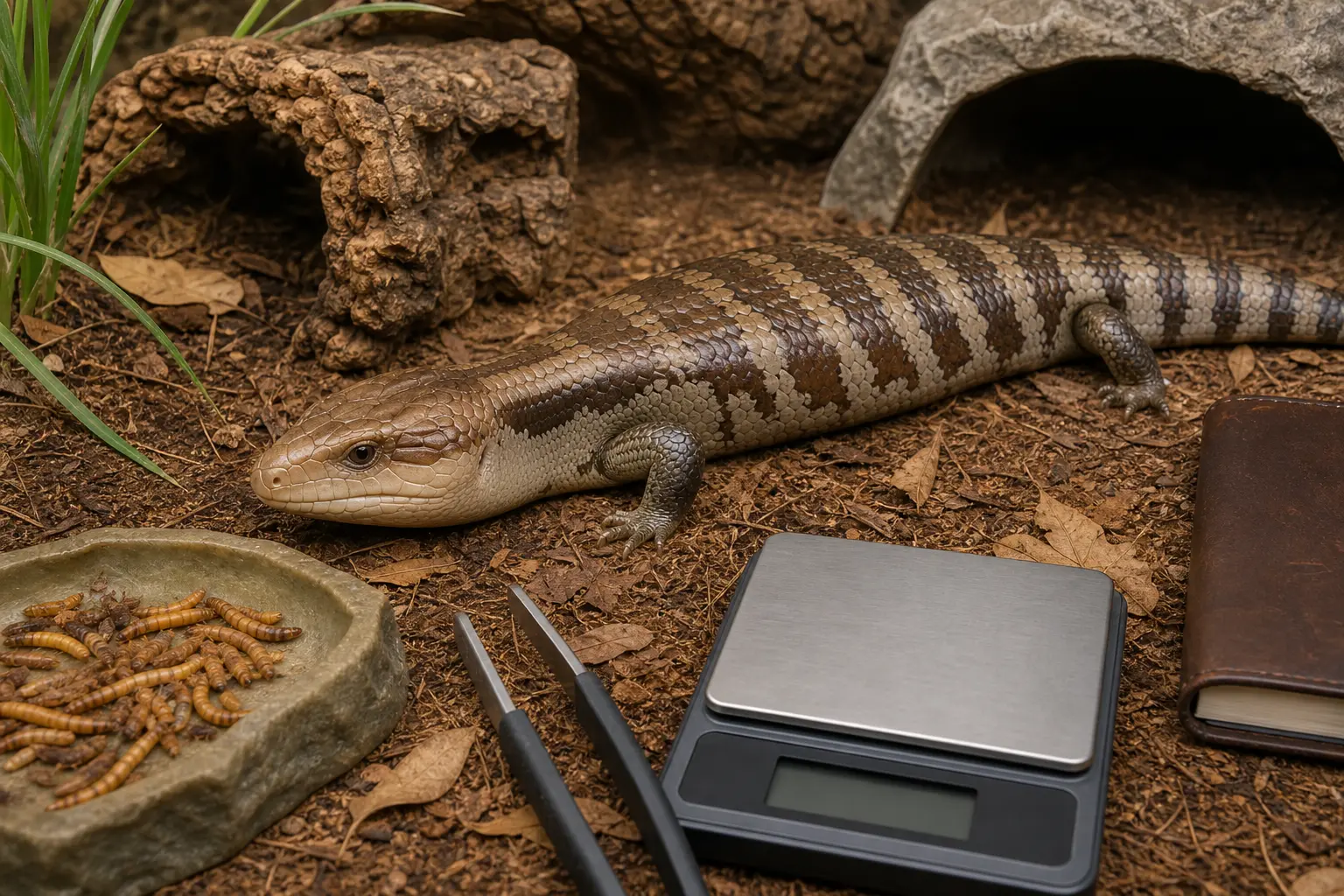
Adult eastern blue-tongued skink beside a measured daytime meal, feeding tools, a gram scale, and a closed care notebook.

The short answer

Match life stage and verify the monthly trend for blue-tongued skinks

Feed a blue-tongued skink on an age-appropriate schedule, using smaller and more frequent meals for growing youngsters. Adjust adult timing from monthly weight and body condition rather than appetite alone.

Adult home
At least 120 × 75 × 75 cm (48 × 30 × 30 in) for one adult, with broad usable floor space
Warm zone
Adult basking zone about 30–32°C (86–90°F)
Cool and night
Cool end about 22–25°C (72–77°F); All visible lights off; any needed non-light heat remains thermostat controlled
Humidity
Match the confirmed species and locality; use a cool-end hygrometer and provide a clean measured moist hide
UVB
A measured UVI gradient of 3.0–5.0 at the basking zone down to zero in shade
Food
A varied omnivorous diet with both safe plant foods and appropriately prepared animal matter

The honest fit

Would the adult routine work in your home?

Do this

  • Match the schedule to age and body condition.
  • Track weight and actual intake instead of guessing from appetite.
  • Keep fresh water and monitor blue-tongued skink behavior every day.
  • Record changes so a reptile veterinarian receives useful evidence.
Avoid this

  • Do not force-feed a skink because it skipped one meal.
  • Do not ignore weight loss while repeatedly changing foods.
  • Do not copy another reptile species' setup.
  • Do not treat a persistent health change as a shopping problem.
01

Start with age and the whole menu

The practical starting point is: young skinks benefit from smaller, more frequent meals; adjust every schedule from age, monthly weight, body condition, activity, and reptile-veterinary advice. Write down meal composition as well as timing so protein-heavy treats, fruit, and feeder insects do not quietly displace the balanced menu.

Offer fresh food during the active daytime period, remove spoilable leftovers promptly, and keep fresh water available every day.

Adult eastern blue-tongued skink exploring pale stone with its broad banded body, clear eye, small sturdy limbs, and blue tongue in close view.
02

Weigh and look at shape

Weigh the skink monthly on the same gram scale and watch its spine, jaw, limbs, movement, and body contour. Fast juvenile growth and adult maintenance are different jobs.

Captive skinks can gain excess weight from high-protein food and limited exercise. Ask a reptile veterinarian to assess condition before aggressive restriction or major diet changes.

Alert adult eastern blue-tongued skink exploring a broad naturalistic habitat with its sturdy banded body, clear eye, and vivid blue tongue in view.
03

Treat appetite changes as evidence

Review basking heat, UVB, humidity, seasonal slowdown, stress, food freshness, and recent changes before assuming refusal is preference.

A gradual seasonal slowdown in a healthy animal differs from sudden refusal or significant weight loss. Bring the feeding record and habitat readings to a reptile veterinarian when the pattern is unclear.

Keep deciding

See the complete care picture

Sources and further reading