Blue-tongued skink · Daily diet

What should I feed a blue-tongued skink?

Feed a blue-tongued skink a varied omnivorous diet with both safe plant foods and appropriately prepared animal matter. Portion it carefully because captive skinks can gain excess weight.

Variety, safe ingredients, supplement restraint, and monthly body-condition records matter more than one favorite protein or fruit.

Use the practical checks
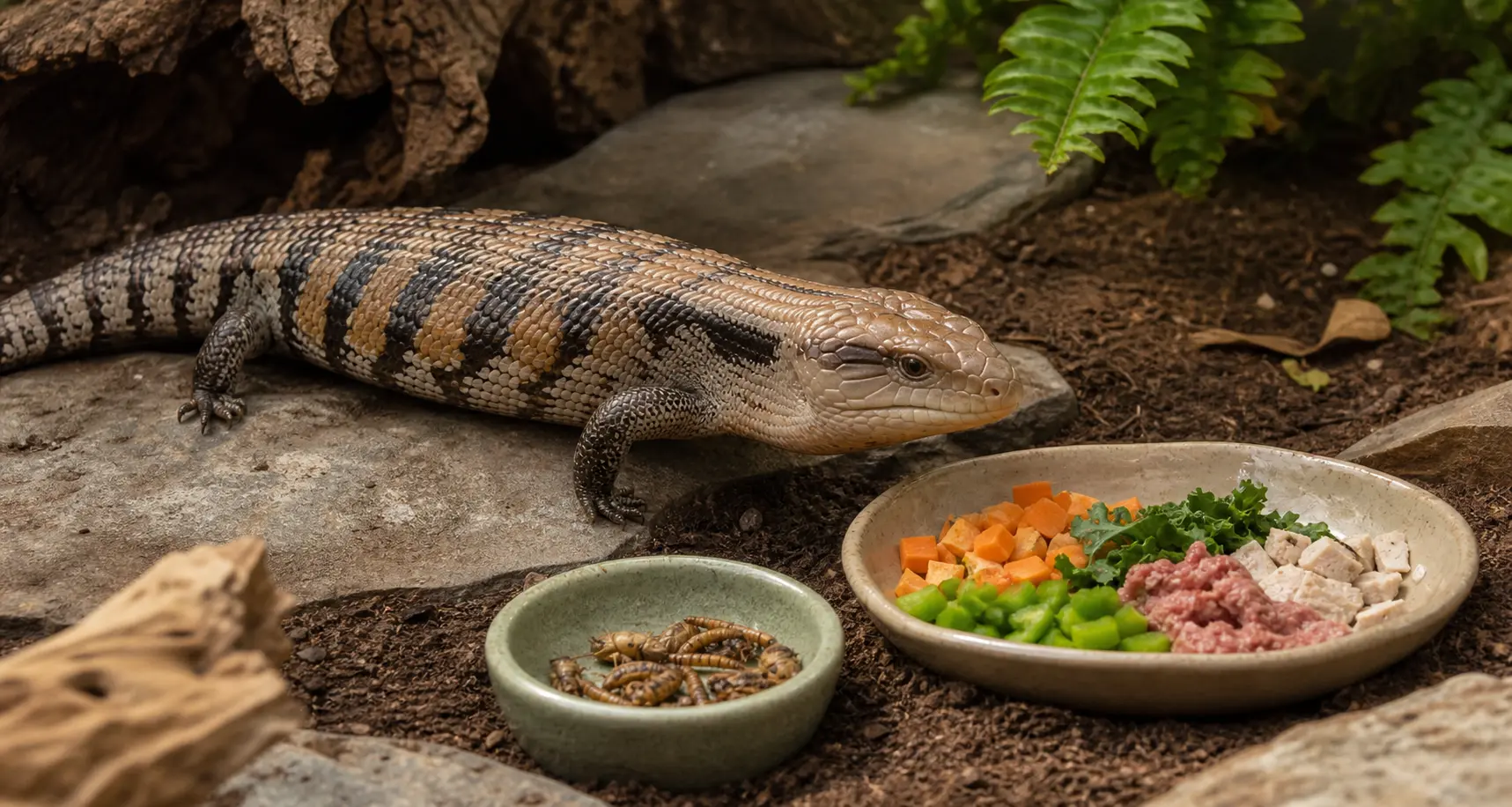
Adult eastern blue-tongued skink approaching a varied measured meal of safe vegetables and appropriately prepared animal foods with live feeders kept separate.

The short answer

Build a varied omnivorous menu and watch condition for blue-tongued skinks

Feed a blue-tongued skink a varied omnivorous diet with both safe plant foods and appropriately prepared animal matter. Portion it carefully because captive skinks can gain excess weight.

Adult home
At least 120 × 75 × 75 cm (48 × 30 × 30 in) for one adult, with broad usable floor space
Warm zone
Adult basking zone about 30–32°C (86–90°F)
Cool and night
Cool end about 22–25°C (72–77°F); All visible lights off; any needed non-light heat remains thermostat controlled
Humidity
Match the confirmed species and locality; use a cool-end hygrometer and provide a clean measured moist hide
UVB
A measured UVI gradient of 3.0–5.0 at the basking zone down to zero in shade
Food
A varied omnivorous diet with both safe plant foods and appropriately prepared animal matter

The honest fit

Would the adult routine work in your home?

Do this

  • Use the exact species diet and a reviewed supplement plan.
  • Remove spoilable food and uneaten insects promptly.
  • Keep fresh water and monitor blue-tongued skink behavior every day.
  • Record changes so a reptile veterinarian receives useful evidence.
Avoid this

  • Do not make one treat or feeder the entire diet.
  • Do not combine supplements without checking the instructions.
  • Do not copy another reptile species' setup.
  • Do not treat a persistent health change as a shopping problem.
01

Balance plants and animal foods

For a blue-tongued skink, build meals around a varied, measured omnivorous menu of safe vegetables and appropriately prepared animal foods, with gut-loaded live feeders and supplements used to a reviewed plan. RSPCA adult guidance describes roughly 50–60% animal matter and 40–50% vegetables, with fruit no more than 10% of the diet.

Use a current exact-species care sheet for the vegetable list and ask a reptile veterinarian to review prepared animal foods. Choose only captive-bred feeders and commercially sourced snails; wild invertebrates can carry pesticides or parasites.

Adult eastern blue-tongued skink exploring pale stone with its broad banded body, clear eye, small sturdy limbs, and blue tongue in close view.
02

Prepare feeders and supplements

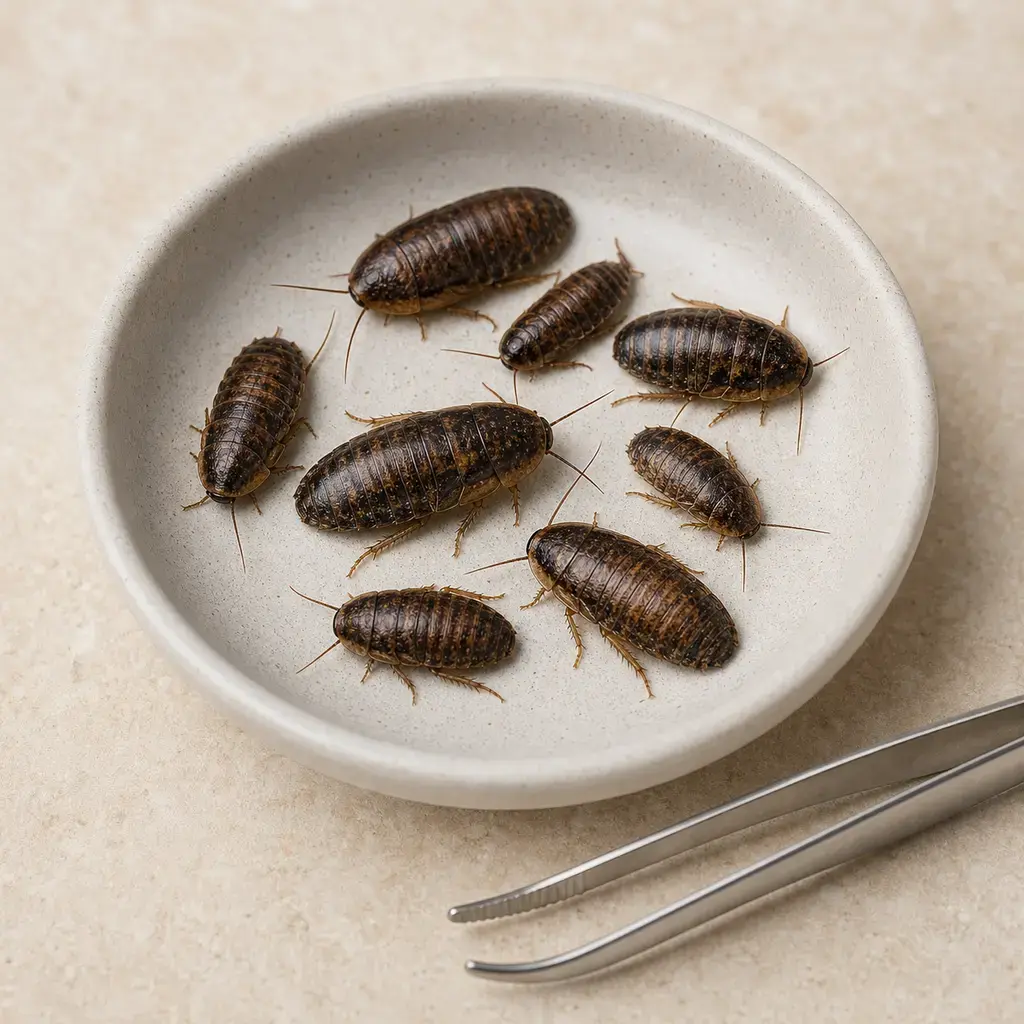
Gut-load live feeders for 24–48 hours, then dust only to the reviewed product and veterinary plan. Remove uneaten crickets or locusts promptly because they can bite a resting skink.

Vitamins and minerals can be overdosed. A measured UVB system and the complete diet must be considered together before adding dietary vitamin D or stacking supplement powders.

Alert adult eastern blue-tongued skink exploring a broad naturalistic habitat with its sturdy banded body, clear eye, and vivid blue tongue in view.
03

Use appetite with body condition

Serve food in a clean dish, replace water daily, remove green leftovers each day, and keep reptile tools away from human food-preparation areas.

Track monthly weight, body condition, droppings, appetite, and activity. Sudden refusal with weight loss, weakness, swelling, abnormal stool, or breathing changes deserves reptile-veterinary advice.

Keep deciding

See the complete care picture

Sources and further reading