Do this
- Match the schedule to age and body condition.
- Track weight and actual intake instead of guessing from appetite.
- Keep fresh water and monitor crested gecko behavior every day.
- Record changes so a reptile veterinarian receives useful evidence.
Crested gecko · Feeding rhythm
Offer fresh complete food on its age- and product-appropriate schedule. Reviewed insect meals may be offered once or twice weekly.
Feed at the time this species is normally active, and keep track of what actually gets eaten.
Use the practical checks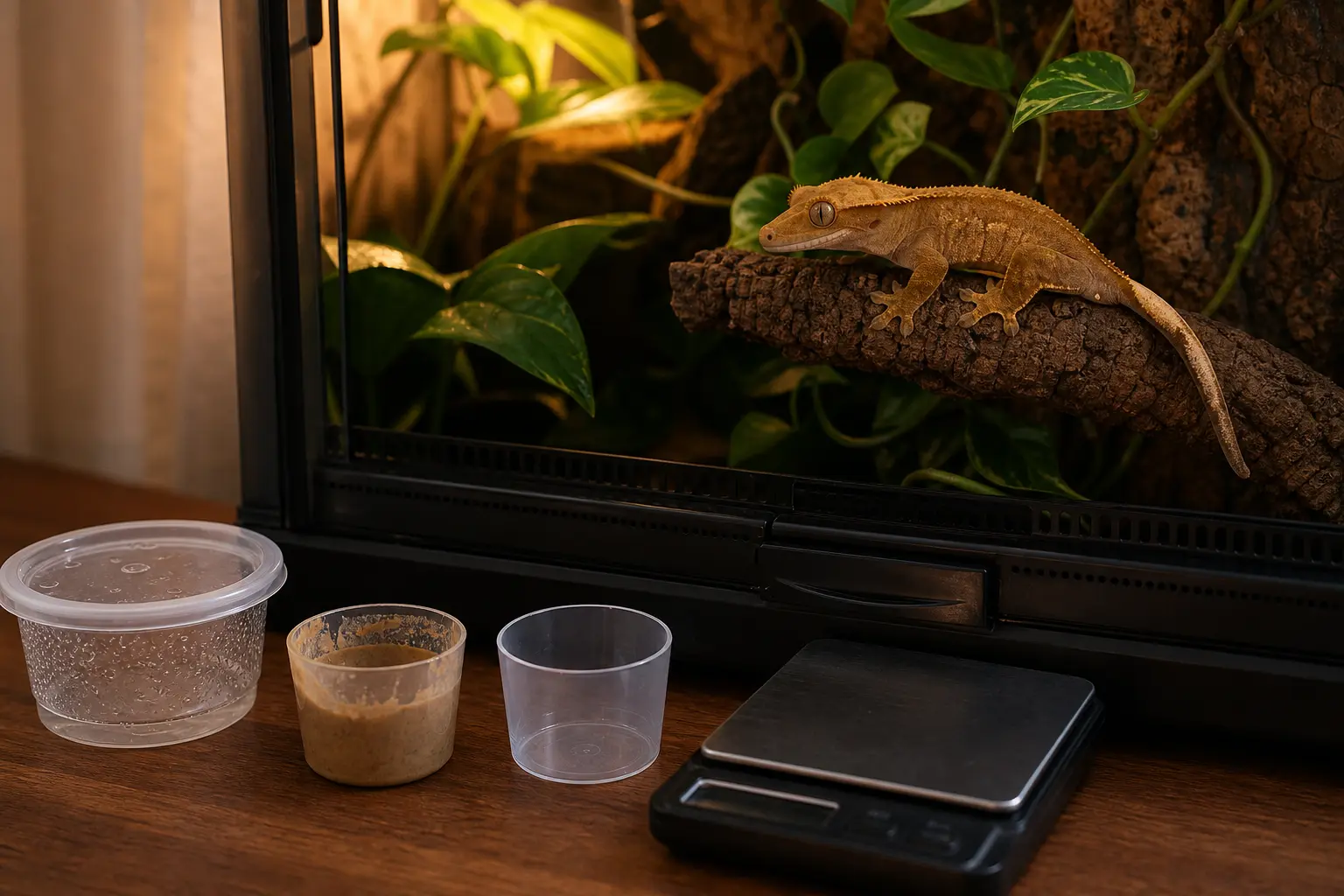
Put it into practice
Growing, breeding, recovering, underweight, or overweight geckos need an individualized plan rather than an adult maintenance schedule copied unchanged.
Offer food when the species is becoming active, note what was actually eaten, and remove spoilable food or uneaten insects promptly. Fresh water remains available every day, including days without a meal.
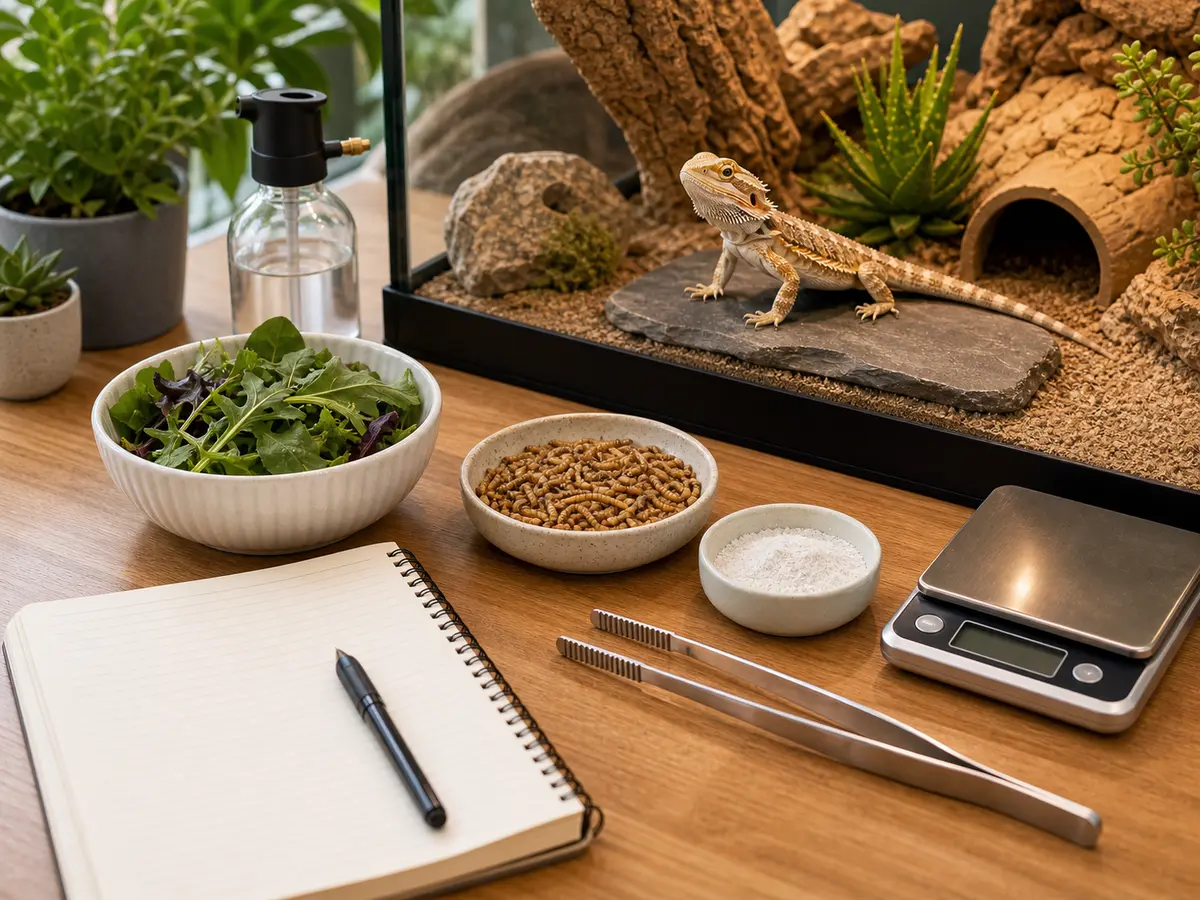
Weigh the gecko on the same gram scale at a consistent interval and watch body condition, tail or hip contours, stool, and activity. One enthusiastic meal does not prove that the long-term amount is right.
Treats and fatty feeders can distort appetite and condition. Keep them occasional, maintain variety where appropriate, and do not respond to weight gain by withholding balanced nutrition without veterinary input.
Review heat, UVB, humidity, stress, and food freshness before assuming a skipped meal is preference. Reptiles cannot process food normally when their environmental conditions are wrong.
Persistent refusal with weight loss, weakness, swelling, abnormal droppings, or a distended abdomen deserves a reptile-veterinary call. Do not force-feed unless a veterinarian directs the method and timing.
Optional tools for this feeding routine. Use suitable equipment you already own; confirm the species' diet before buying food or supplements.
Affiliate links: Furball Cove may earn from qualifying purchases at no extra cost to you.