Kenyan sand boa · Feeding rhythm

How often should I feed a Kenyan sand boa?

Growing Kenyan sand boas commonly eat every 7–10 days, while adults often eat every 14–28 days. Verify the interval with regular weight and body-condition records.

This slow, naturally stout burrower is easy to overfeed when appetite replaces a written plan.

Use the practical checks
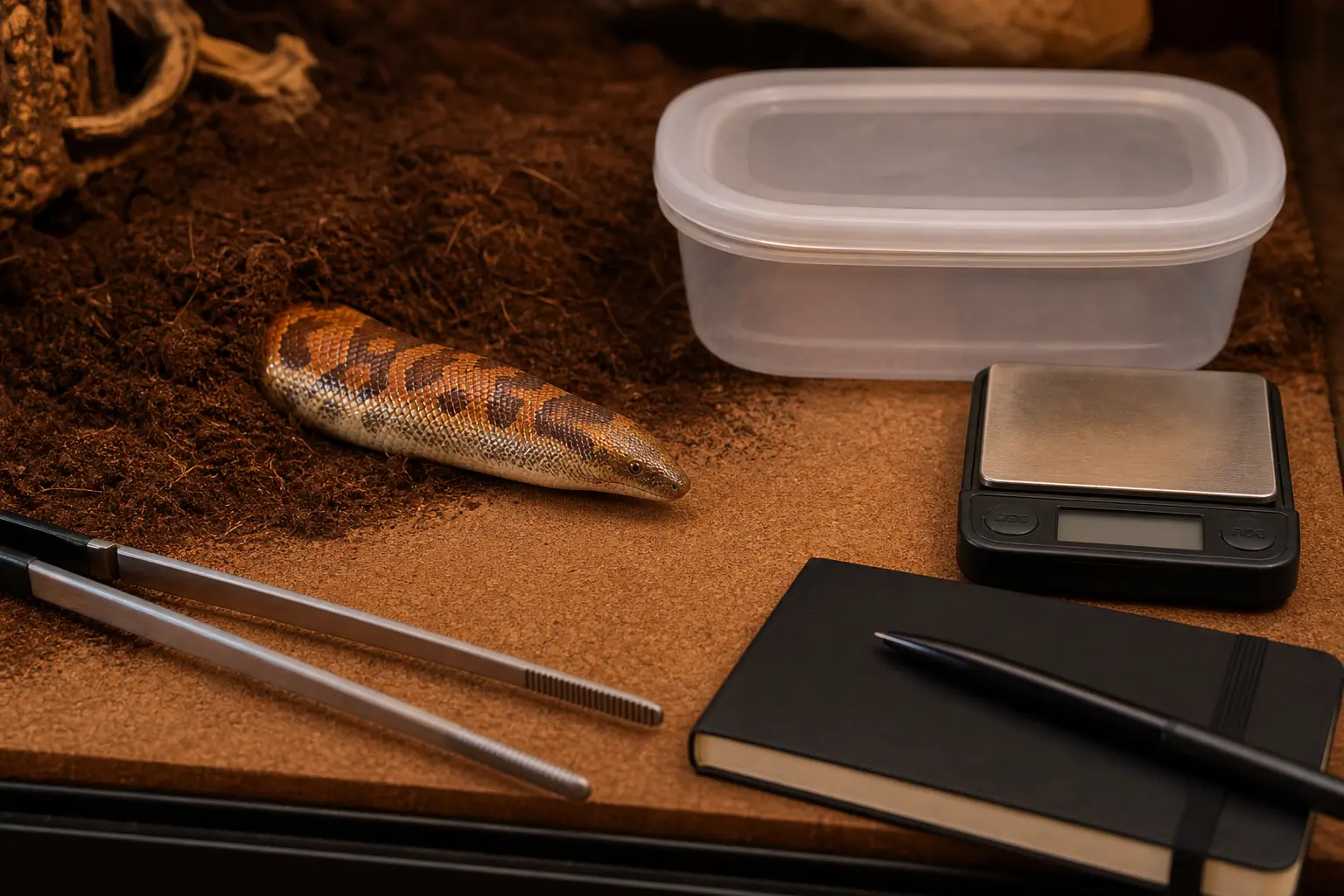
Adult female Kenyan sand boa watching from beneath low cover beside a sealed prey container, long feeding tongs, a gram scale, and a closed care notebook.

The short answer

Start with life stage and verify the body-condition trend for Kenyan sand boas

Growing Kenyan sand boas commonly eat every 7–10 days, while adults often eat every 14–28 days. Verify the interval with regular weight and body-condition records.

Adult home
Plan about 91 × 46 × 46 cm (36 × 18 × 18 in) for one adult, with at least 8–10 cm of safe tunnel-holding substrate and every heavy object anchored
Warm zone
Measured basking surface around 35°C (95°F)
Cool and night
Deep covered retreat around 24–27°C (75–80°F); All visible lights off; nighttime temperatures around 21–24°C (70–75°F)
Humidity
A mostly dry, ventilated enclosure with fresh water and a clean cool humid hide around 50–60% during shed
UVB
Low-intensity linear UVB over part of the warm side, with deep substrate and complete shaded escape
Food
Appropriately sized frozen-thawed whole prey offered with long tongs; never use live prey as the routine plan

The honest fit

Would the adult routine work in your home?

Do this

  • Match the schedule to age and body condition.
  • Track weight and actual intake instead of guessing from appetite.
  • Keep fresh water and monitor kenyan sand boa behavior every day.
  • Record changes so a reptile veterinarian receives useful evidence.
Avoid this

  • Do not force-feed a snake because it skipped one meal.
  • Do not ignore weight loss while repeatedly changing foods.
  • Do not copy another reptile species' setup.
  • Do not treat a persistent health change as a shopping problem.
01

Let age and sex set the starting rhythm

Start here: growing snakes commonly eat every 7–10 days and adults about every 14–28 days; adjust from sex, age, prey size, weight, body condition, season, and veterinary advice. Females can be much larger than males, so age alone cannot choose prey size or interval.

Offer one fully thawed meal when due, remove rejected prey promptly, and pause handling for at least 24–48 hours afterward. Fresh water remains available every day.

Adult female Kenyan sand boa partly emerging from sand with its short stout orange-and-brown body and tiny blunt head in clear view.
02

Weigh without chasing appetite

Use the same gram scale at a consistent interval and assess muscle tone and body contour with the trend. A thick cylindrical body still needs visible proportion and steady movement.

Frequent or oversized meals can promote obesity. Ask a reptile veterinarian to assess condition before aggressive restriction, major prey changes, or assisted feeding.

Alert adult female Kenyan sand boa emerging from deep sandy soil with her short stout orange-and-brown patterned body, tiny wedge-shaped head, and smooth scales in view.
03

Investigate a change

Review the warm surface, deep cool retreat, humidity choice, cover, security, shed stage, prey temperature, and recent handling before assuming a skipped meal is stubbornness.

Call a reptile veterinarian for refusal with a continuing downward weight trend, repeated regurgitation, diarrhea, swelling, breathing or mouth changes, or weakness.

Sources and further reading

Useful tools for this feeding routine

Three optional picks matched to this species' feeding style. Confirm foods and supplements in the exact care plan before buying.

Affiliate links: Furball Cove may earn from qualifying purchases at no extra cost to you.

Clear airtight dry-food containers with locking lids on a dedicated shelf.

Airtight dry-food container

Keep dry diets sealed, labeled, and separate from human food storage.

Check current options
Unbranded pet-safe cleaning spray beside a clean reusable cloth.

Reptile habitat disinfectant

Choose a reptile-labeled cleaner and follow its dilution, contact-time, and rinse directions.

Check current options
Small washable cutting board reserved for pet-food preparation.

Dedicated mini cutting board

Keep reptile produce prep on a separate, washable board away from human-food prep.

Check current options