Do this
- Use the exact species diet and a reviewed supplement plan.
- Remove spoilable food and rejected prey promptly.
- Keep fresh water and monitor Kenyan sand boa behavior every day.
- Record changes so a reptile veterinarian receives useful evidence.
Kenyan sand boa · Daily diet
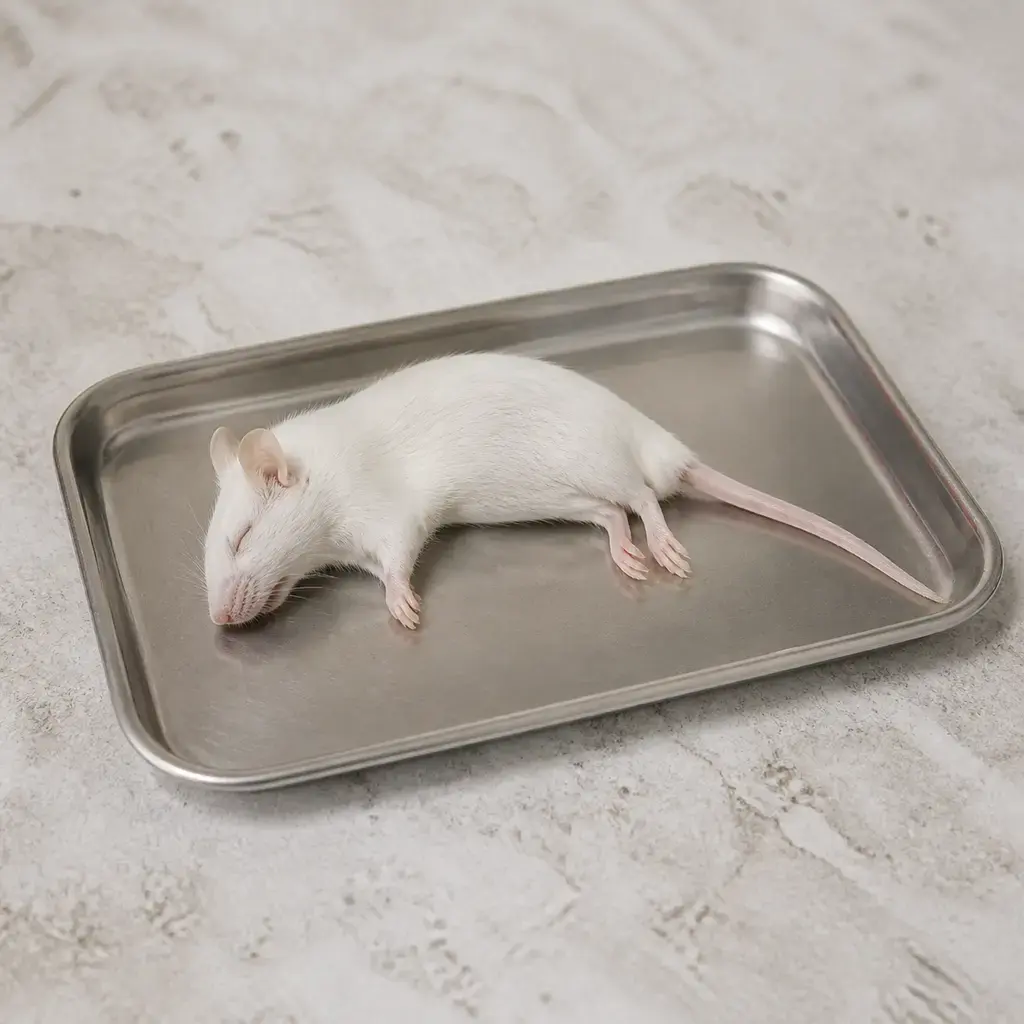
Appropriately sized frozen-thawed whole prey offered with long tongs. Never use live prey as the routine plan.
Safe thawing, modest prey size, clean tools, and body-condition records matter more than menu novelty.
Use the practical checks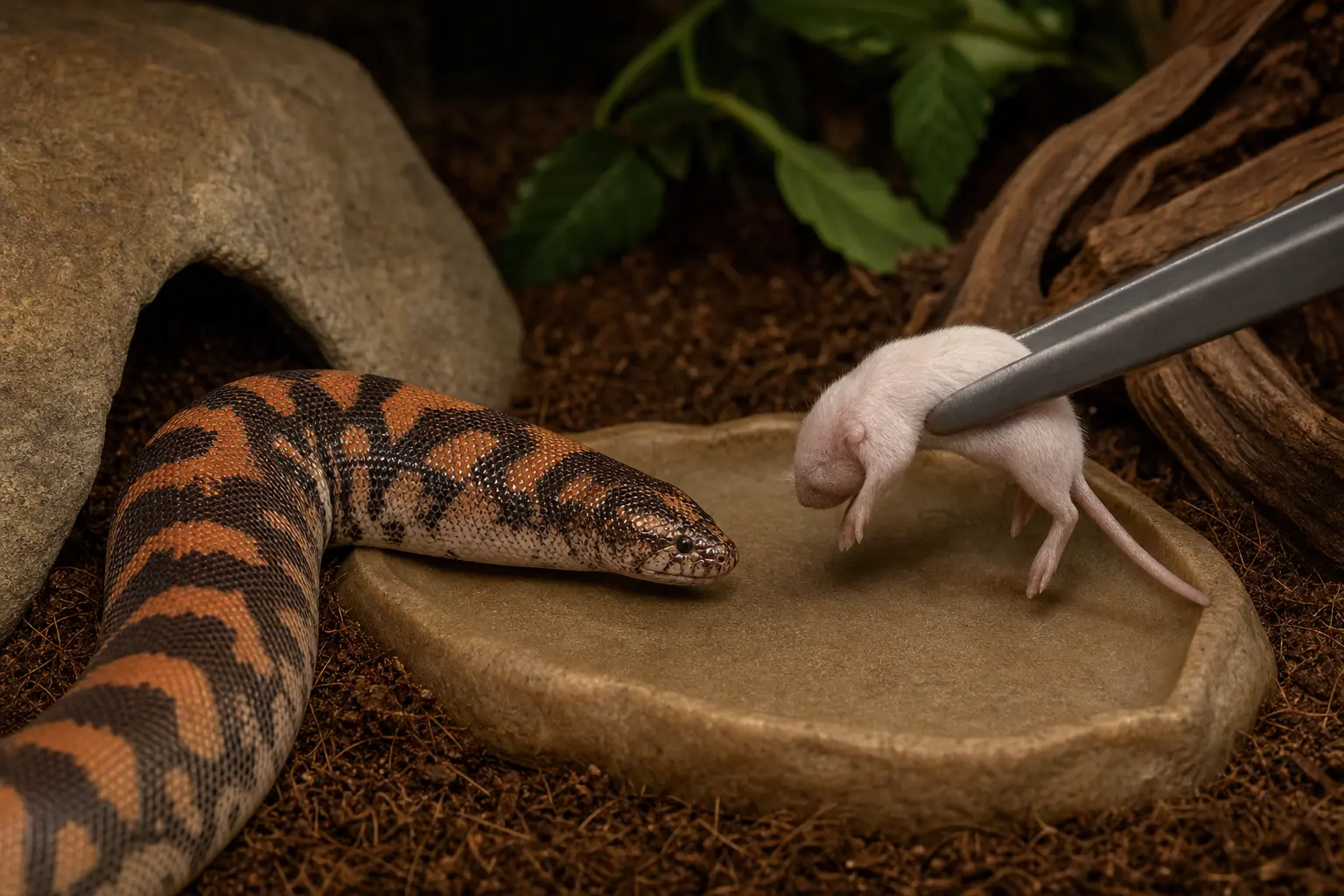
Put it into practice
For a Kenyan sand boa, build meals around an appropriately sized fully thawed whole prey item offered with long feeding tongs inside the secure enclosure. Choose one modest item around the snake's widest point rather than stretching the naturally stout body with oversized prey.
Buy from a reputable supplier, keep prey frozen until needed, thaw it fully in a designated container away from human food, and never microwave it. Live rodents can injure the snake.
Use long tongs inside the secure enclosure. Present over a clean dish or firm surface so deep substrate does not coat the wet prey, then remove any rejected item promptly.
Wash hands after touching prey and keep prey containers, tongs, disinfectant, and reptile dishes separate from human food-preparation equipment.
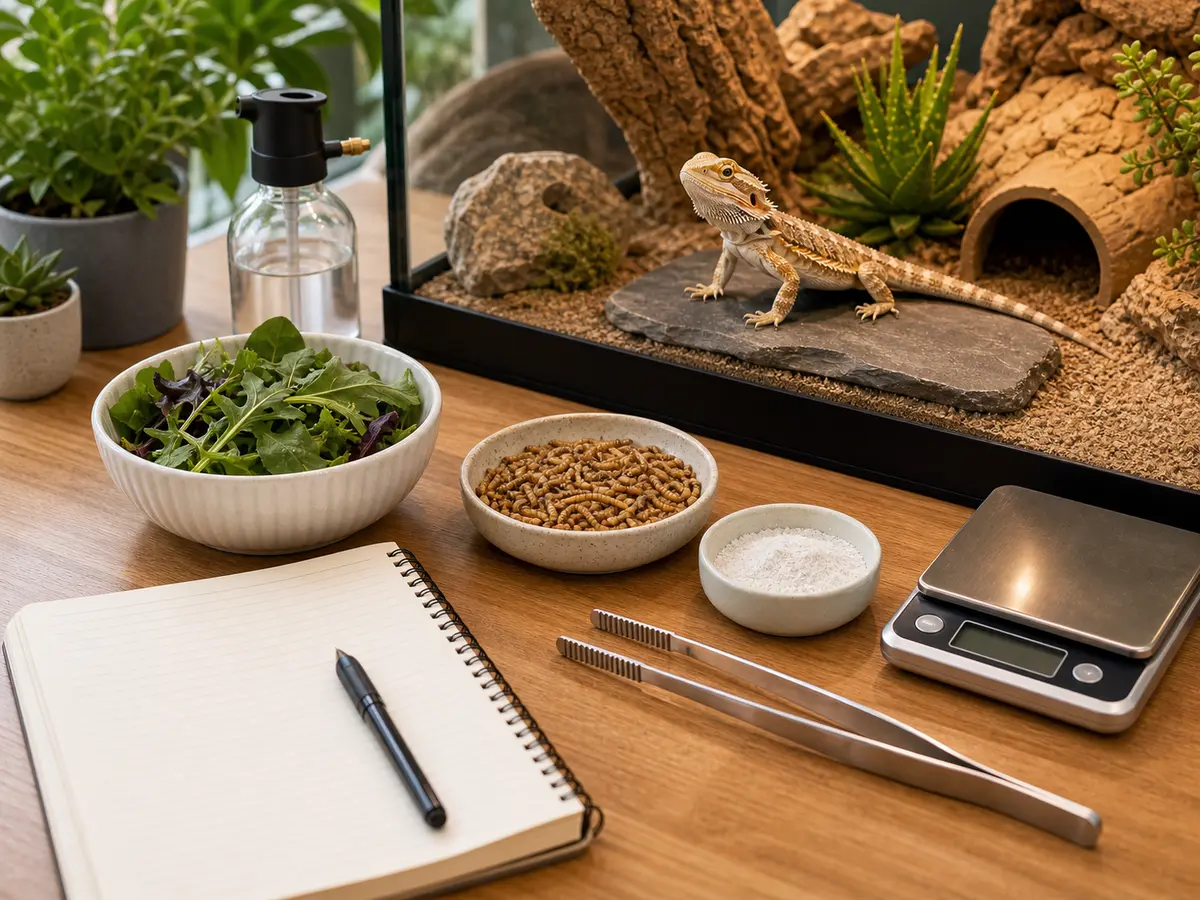
Track weight, body condition, droppings, feeding dates, prey size, sheds, and regurgitation. A sand boa's naturally thick shape does not prove it needs another meal.
Call a reptile veterinarian for refusal with weight loss, repeated regurgitation, swelling, abnormal droppings, breathing or mouth changes, or weakness. Do not force-feed without direction.
Optional tools for this feeding routine. Use suitable equipment you already own; confirm the species' diet before buying food or supplements.
Affiliate links: Furball Cove may earn from qualifying purchases at no extra cost to you.
Use a leakproof, clearly dedicated container to keep thawing away from human-food tools.
Species-matched · Optional feeding supportAmazon search: compare specifications and sellers; results are not individually vetted.Compare options on AmazonA gentler dedicated tong can help present food without sharp metal at the mouth.
Species-matched · Optional feeding supportAmazon search: compare specifications and sellers; results are not individually vetted.Compare options on Amazon