Red-eared slider · Feeding rhythm

How often should I feed a red-eared slider?

RSPCA guidance starts at feeding a red-eared slider every two days, offering only what it eats in about five minutes. Adjust for age, growth, body condition, and the complete menu.

Sliders are opportunistic feeders, so enthusiasm at the glass is not a reliable portion guide.

Use the practical checks
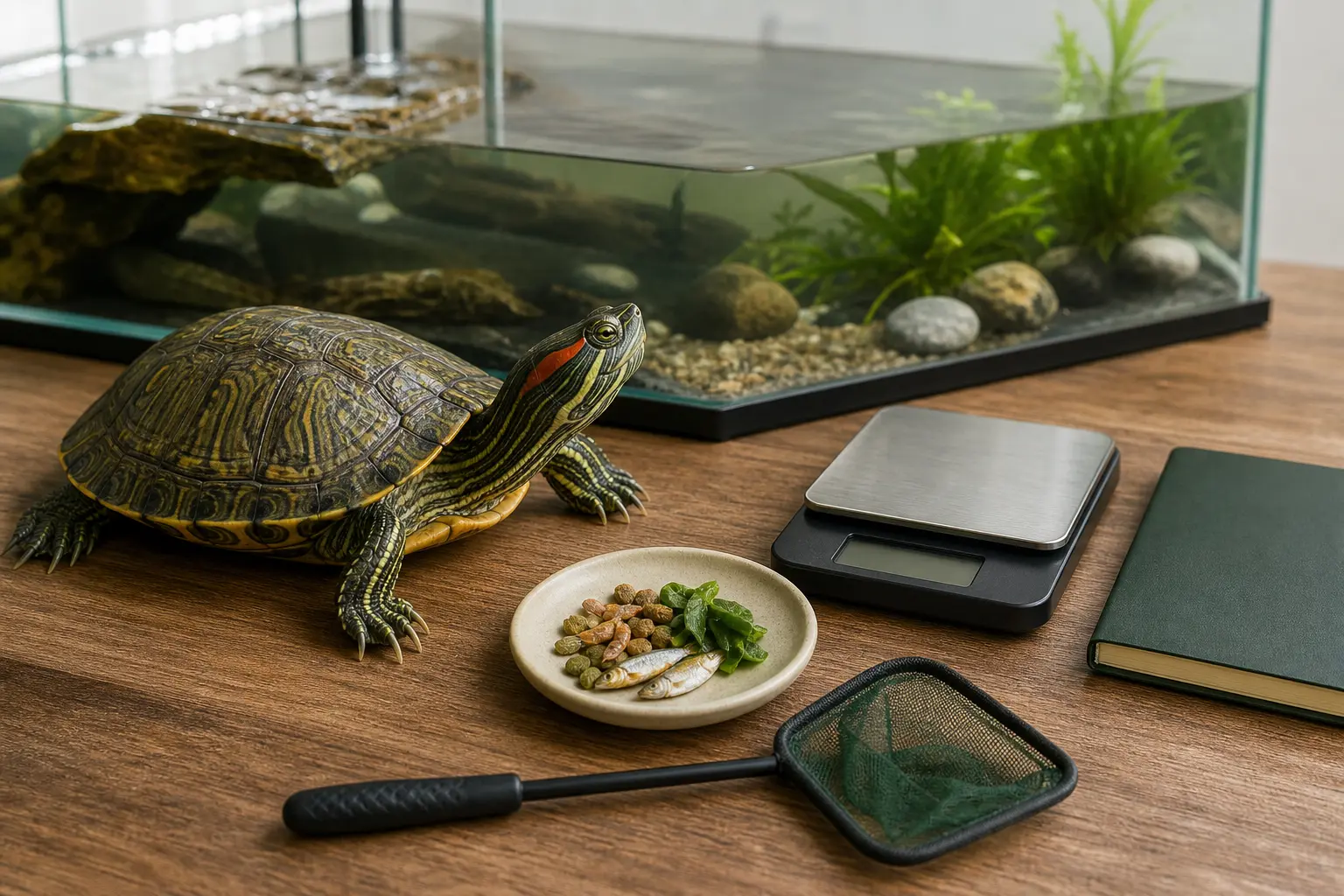
Adult red-eared slider beside a small measured feeding portion, a net, a gram scale, and a closed care notebook near its aquarium.

The short answer

Time the meal, remove leftovers, and verify growth for red-eared sliders

RSPCA guidance starts at feeding a red-eared slider every two days, offering only what it eats in about five minutes. Adjust for age, growth, body condition, and the complete menu.

Adult home
Enough open water to swim freely; RSPCA planning uses about 80 L per 5 cm of shell, or roughly 400 L for a 25 cm adult
Warm zone
Completely dry basking zone 30–35°C (86–95°F)
Cool and night
Water about 25°C (77°F) for hatchlings, decreasing toward 22°C (72°F) for adults; All visible lights off; maintain safe water temperature with a guarded thermostat-controlled aquarium heater when needed
Humidity
Do not chase an ambient percentage: prioritize clean dechlorinated water, low ammonia and nitrite, powerful filtration, ventilation, and a fully dry basking area
UVB
A measured UVI gradient of 3.0–5.0 across the basking zone down to zero in shade, with no glass or plastic blocking the lamp
Food
A varied omnivorous menu built around quality aquatic-turtle food, safe plants, and appropriate animal foods, with calcium guidance

The honest fit

Would the adult routine work in your home?

Do this

  • Match the schedule to age and body condition.
  • Track weight and actual intake instead of guessing from appetite.
  • Keep fresh water and monitor red-eared slider behavior every day.
  • Record changes so a reptile veterinarian receives useful evidence.
Avoid this

  • Do not force-feed a slider because it skipped one meal.
  • Do not ignore weight loss while repeatedly changing foods.
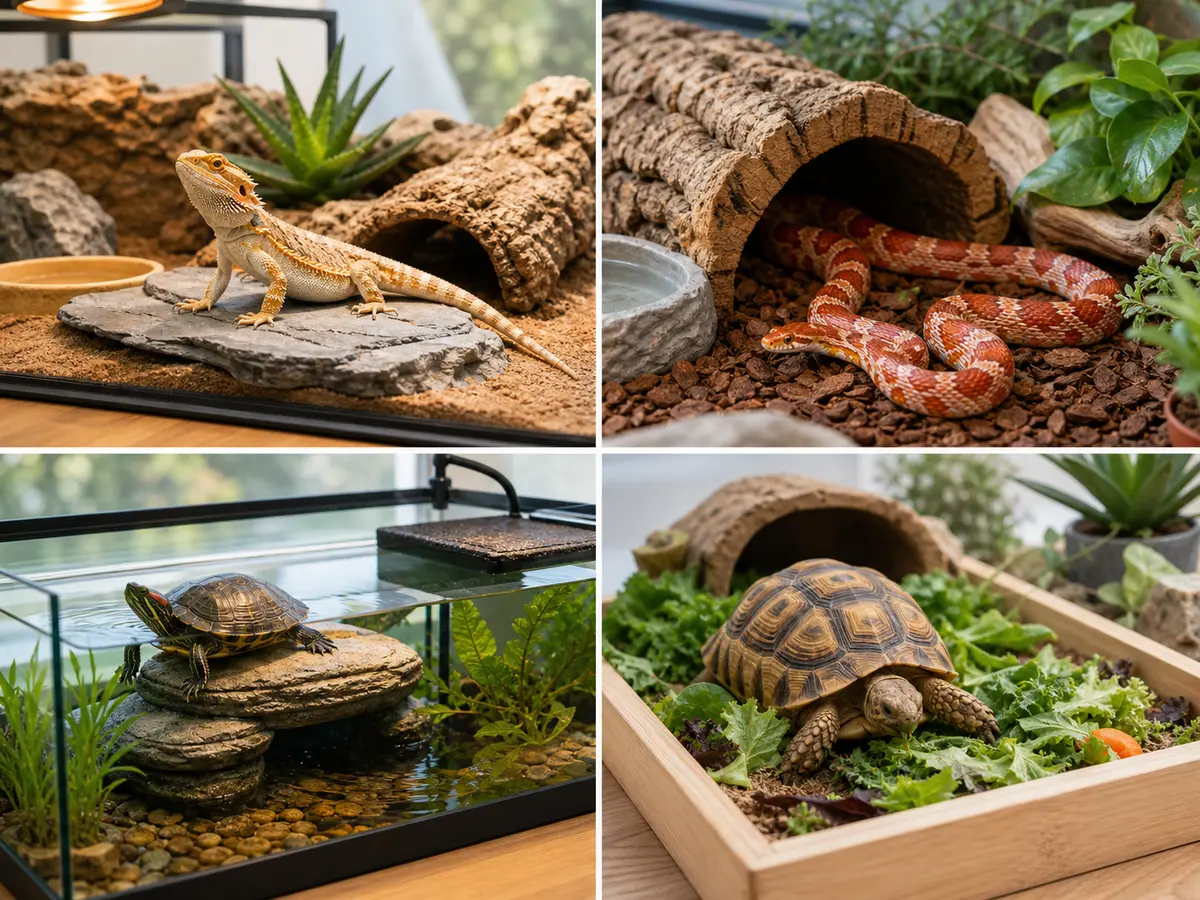
  • Do not copy another reptile species' setup.
  • Do not treat a persistent health change as a shopping problem.
01

Start with a bounded meal

RSPCA guidance starts at every two days and limits each meal to what the slider eats in about five minutes; remove leftovers and adjust from growth and body condition. Prepare the portion before opening the aquarium and stop the meal rather than repeatedly topping it up.

Remove leftovers with a net so they do not decay into ammonia. Keep safe edible plants available according to the reviewed diet plan and refresh them before they foul the water.

Adult red-eared slider basking completely out of the water with its oval patterned shell, striped face and limbs, and distinct red ear patch in clear view.
02

Let age change the balance

Young sliders typically need a greater animal-food share while adults shift toward more plant matter. Record meal composition, not only feeding dates.

Weigh the turtle on the same scale and watch shell growth and body condition. Overfeeding can promote obesity, rapid growth, and worsening water quality. Ask your veterinarian to assess body condition before making a major restriction.

Alert adult red-eared slider on a broad dry basking platform above clean deep water with its olive shell, striped face, and red ear patch in clear view.
03

Investigate appetite changes

Review water and basking temperatures, UVB, water quality, stress, seasonal changes, and food freshness before assuming refusal is preference.

Call a reptile veterinarian for continuing refusal with weight loss, swollen eyes, breathing changes, abnormal swimming, soft shell, mouth changes, diarrhea, or weakness. Do not force-feed without direction.

Keep deciding

See the complete care picture

Sources and further reading