Red-eared slider · Daily diet

What should I feed a red-eared slider?

Feed a red-eared slider a varied omnivorous menu of quality aquatic-turtle food, safe plants, and appropriate prepared animal foods. Remove leftovers before they spoil the water.

Variety changes with age, but clean preparation, calcium planning, and water-quality protection stay constant.

Use the practical checks
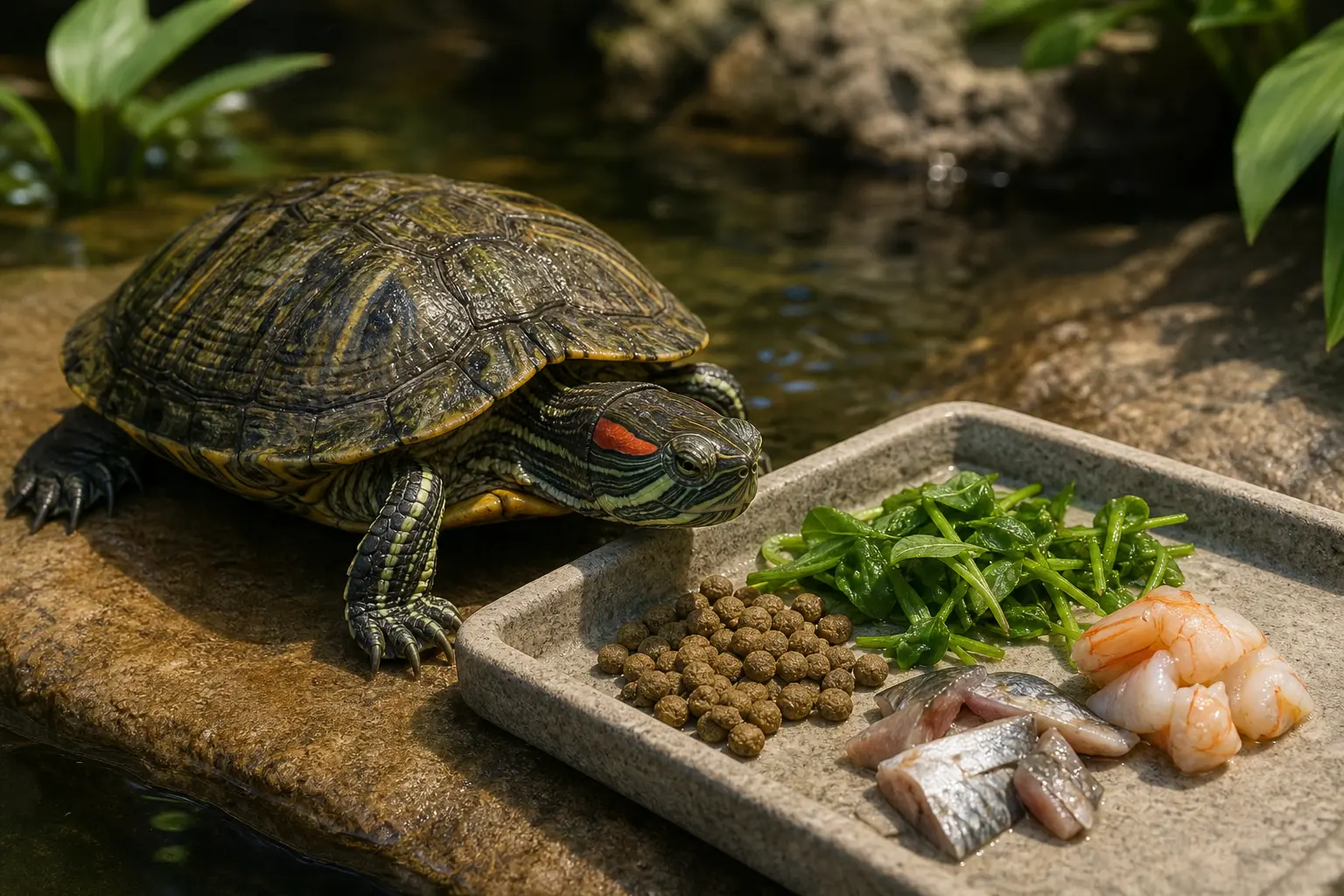
Adult red-eared slider approaching a varied measured aquatic meal of quality turtle pellets, safe leafy plants, and appropriate animal foods.

The short answer

Use a varied aquatic menu and remove every leftover for red-eared sliders

Feed a red-eared slider a varied omnivorous menu of quality aquatic-turtle food, safe plants, and appropriate prepared animal foods. Remove leftovers before they spoil the water.

Adult home
Enough open water to swim freely; RSPCA planning uses about 80 L per 5 cm of shell, or roughly 400 L for a 25 cm adult
Warm zone
Completely dry basking zone 30–35°C (86–95°F)
Cool and night
Water about 25°C (77°F) for hatchlings, decreasing toward 22°C (72°F) for adults; All visible lights off; maintain safe water temperature with a guarded thermostat-controlled aquarium heater when needed
Humidity
Do not chase an ambient percentage: prioritize clean dechlorinated water, low ammonia and nitrite, powerful filtration, ventilation, and a fully dry basking area
UVB
A measured UVI gradient of 3.0–5.0 across the basking zone down to zero in shade, with no glass or plastic blocking the lamp
Food
A varied omnivorous menu built around quality aquatic-turtle food, safe plants, and appropriate animal foods, with calcium guidance

The honest fit

Would the adult routine work in your home?

Do this

  • Use the exact species diet and a reviewed supplement plan.
  • Remove spoilable food and uneaten insects promptly.
  • Keep fresh water and monitor red-eared slider behavior every day.
  • Record changes so a reptile veterinarian receives useful evidence.
Avoid this

  • Do not make one treat or feeder the entire diet.
  • Do not combine supplements without checking the instructions.
  • Do not copy another reptile species' setup.
  • Do not treat a persistent health change as a shopping problem.
01

Build a varied base

For a red-eared slider, build meals around a varied omnivorous menu of quality aquatic-turtle food, safe aquatic plants, and appropriate prepared animal foods, with supplements used only to a reviewed plan. RSPCA guidance combines a quality terrapin food with safe plants and appropriately prepared freshwater fish and invertebrates.

Juveniles tend to take more animal matter while adults eat more plants. Use an exact-species plan and reptile-veterinary guidance rather than making dried shrimp or one favorite food the whole diet.

Adult red-eared slider basking completely out of the water with its oval patterned shell, striped face and limbs, and distinct red ear patch in clear view.
02

Prepare and present it safely

Thaw frozen animal foods completely and bring them to an appropriate temperature. Use safe captive or commercial sources rather than wild-caught prey that may carry contaminants or parasites. Ask your veterinarian if you are unsure whether a food is appropriate.

Remove uneaten food with a net after the meal. Keep turtle food, nets, bowls, and tank-water tools separate from human food areas, then wash hands with soap and running water.

Alert adult red-eared slider on a broad dry basking platform above clean deep water with its olive shell, striped face, and red ear patch in clear view.
03

Coordinate calcium, UVB, and growth

A reviewed calcium source and supplement plan must be considered with measured UVB. Do not stack vitamin products or assume extra dietary vitamin D repairs weak lighting.

Track weight, shell growth, appetite, stool, eyes, swimming, and basking. A soft or uneven shell, swollen eyes, weakness, abnormal floating, or continuing refusal needs reptile-veterinary advice.

Keep deciding

See the complete care picture

Sources and further reading