African fat-tailed gecko · Feeding rhythm

How often should I feed an African fat-tailed gecko?

Young African fat-tailed geckos usually eat smaller meals more often, while established adults commonly eat every few days. Adjust the rhythm using regular weight, tail, and body-condition records.

Age starts the schedule. The individual gecko's trend decides whether it is working.

Use the practical checks
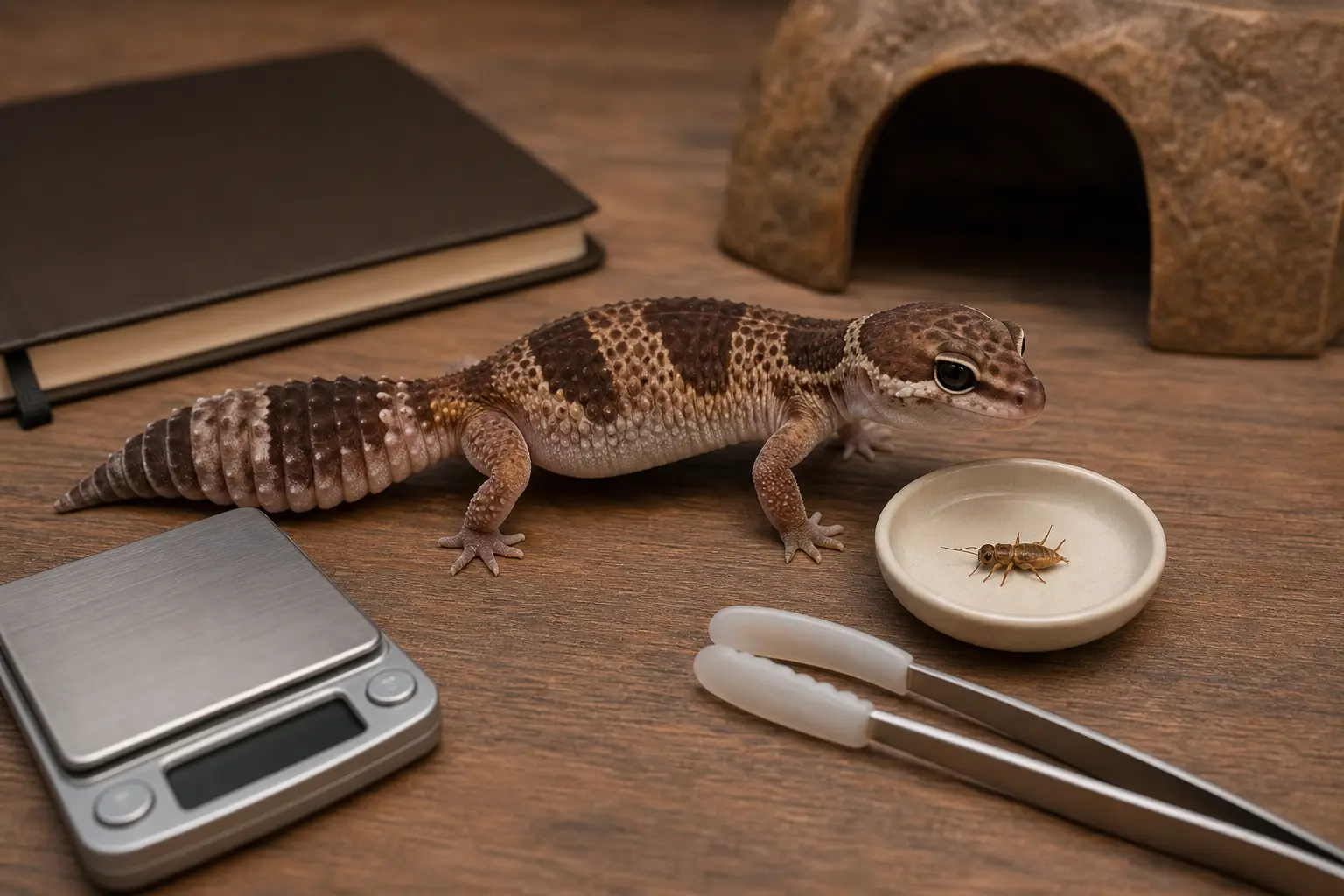
Adult African fat-tailed gecko beside a measured evening insect meal, soft feeding tongs, a gram scale, and a closed care notebook.

The short answer

Start with life stage and verify the condition trend for African fat-tailed geckos

Young African fat-tailed geckos usually eat smaller meals more often, while established adults commonly eat every few days. Adjust the rhythm using regular weight, tail, and body-condition records.

Adult home
Plan about 91 × 46 × 46 cm (36 × 18 × 18 in) or larger for one adult, with useful floor space for covered warm, cool, and humid choices
Warm zone
Daytime warm retreat about 28–30°C (82–86°F)
Cool and night
Covered cool retreat about 25°C (77°F); All visible lights off; measure a nighttime range around 20–25°C (68–77°F) and use guarded non-light heat only when needed
Humidity
About 60% ambient humidity, plus a clean humid hide, fresh water, and ventilation
UVB
Gentle product-specific linear UVB over part of the warm side with complete shade and secure dark retreats
Food
Varied appropriately sized live insects, safely sourced and prepared, with calcium and vitamins used to an individual reviewed plan

The honest fit

Would the adult routine work in your home?

Do this

  • Match the schedule to age and body condition.
  • Track weight and actual intake instead of guessing from appetite.
  • Keep fresh water and monitor african fat-tailed gecko behavior every day.
  • Record changes so a reptile veterinarian receives useful evidence.
Avoid this

  • Do not force-feed a gecko because it skipped one meal.
  • Do not ignore weight loss while repeatedly changing foods.
  • Do not copy another reptile species' setup.
  • Do not treat a persistent health change as a shopping problem.
01

Match the starting rhythm to age

The practical starting point is: offer juveniles smaller meals more often and adults measured meals every few days; adjust from age, tail and body condition, weight, appetite, and veterinary advice. Offer a measured variety during the evening activity window and record what is actually eaten.

Keep fresh water available every day and remove every rejected insect. Do not leave extra prey loose overnight as insurance against a missed meal.

Adult African fat-tailed gecko resting alertly on pale cork with its warm brown bands, movable eyelid, clawed toes, and full segmented tail in clear view.
02

Weigh the whole animal, not only the tail

Use the same gram scale at a consistent interval and assess the tail, hips, abdomen, limbs, movement, appetite, and droppings together.

Tail width is only one clue because the tail stores fat and can change after injury. Ask a reptile veterinarian to assess condition before aggressive restriction or supplement changes.

Alert adult African fat-tailed gecko exploring a broad sheltered habitat with warm brown bands, movable eyelids, clawed toes, and a complete plump segmented tail in view.
03

Investigate a changed appetite

Review warm and cool retreats, humidity, cover, lighting, shed stage, feeder preparation, stress, and recent handling before assuming the gecko is bored.

Persistent refusal with weight loss, vomiting, diarrhea, swelling, breathing changes, weakness, or a rapidly shrinking tail deserves reptile-veterinary advice. Do not force-feed without direction.

Sources and further reading

Useful tools for this feeding routine

Three optional picks matched to this species' feeding style. Confirm foods and supplements in the exact care plan before buying.

Affiliate links: Furball Cove may earn from qualifying purchases at no extra cost to you.

Ventilated cricket keeper with secure lid and four removable feeder tubes.

Ventilated cricket keeper

Temporarily house captive-bred feeders with ventilation and removable hiding tubes.

Check current options
Purpose-made feeder insect gut-load beside a ventilated insect container.

Feeder insect gut-load diet

Feed captive insects a purpose-made gut-load before offering them to an insect-eating reptile.

Check current options
Plain reptile calcium powder in a small open supplement container with scoop.

Reptile calcium without D3

Use only when the exact species, diet, UVB setup, and reviewed schedule call for it.

Check current options