African fat-tailed gecko · Daily diet

What should I feed an African fat-tailed gecko?

Feed this gecko varied, appropriately sized live insects from safe captive sources. Prepare feeders well, follow a reviewed supplement plan, and remove every uneaten insect.

Variety, feeder care, safe sizing, and measured body condition make this insect diet work.

Use the practical checks
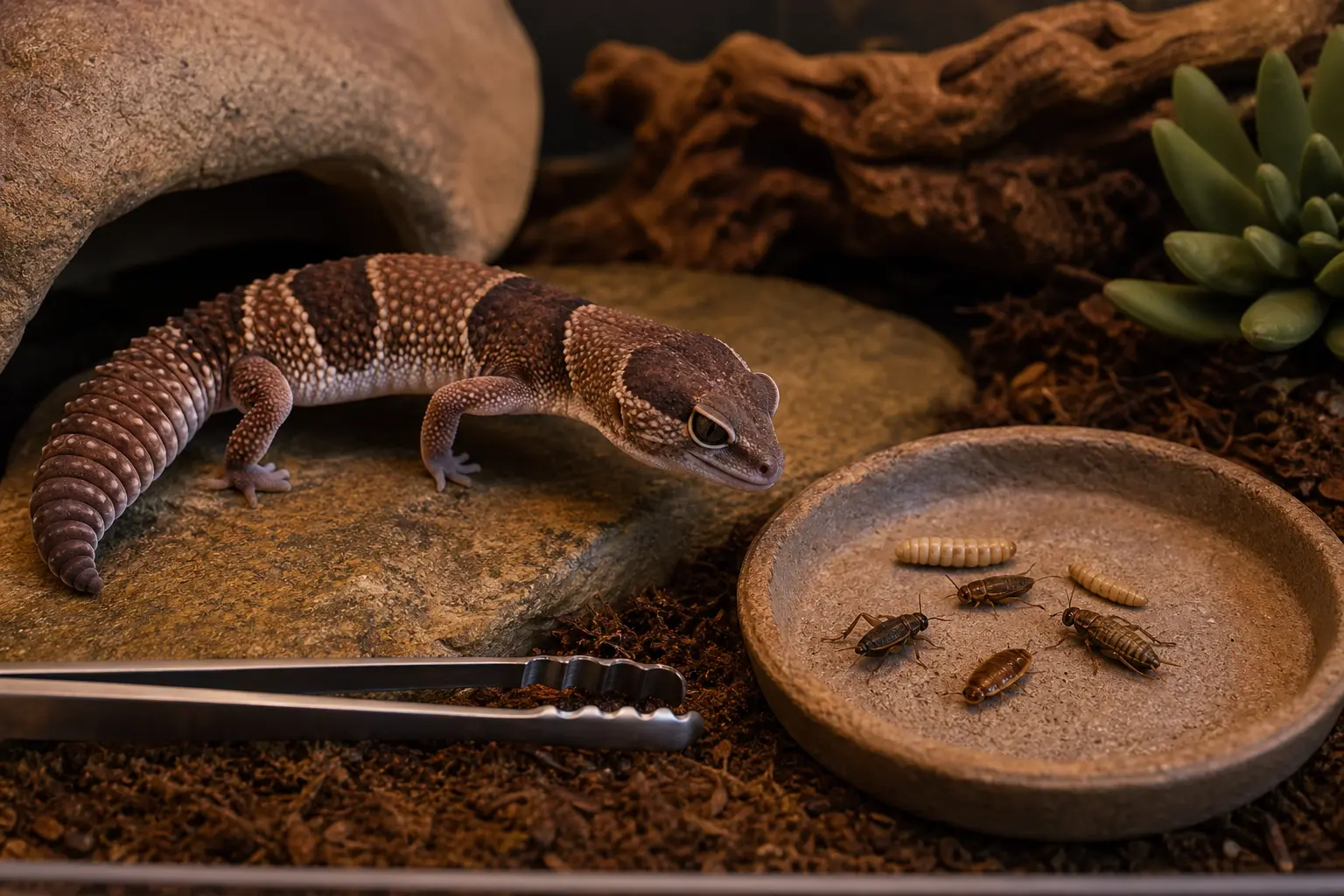
Adult African fat-tailed gecko approaching a varied modest meal of appropriately sized captive-bred feeder insects in a clean feeding area.

The short answer

Use varied live prey and prepare it carefully for African fat-tailed geckos

Feed this gecko varied, appropriately sized live insects from safe captive sources. Prepare feeders well, follow a reviewed supplement plan, and remove every uneaten insect.

Adult home
Plan about 91 × 46 × 46 cm (36 × 18 × 18 in) or larger for one adult, with useful floor space for covered warm, cool, and humid choices
Warm zone
Daytime warm retreat about 28–30°C (82–86°F)
Cool and night
Covered cool retreat about 25°C (77°F); All visible lights off; measure a nighttime range around 20–25°C (68–77°F) and use guarded non-light heat only when needed
Humidity
About 60% ambient humidity, plus a clean humid hide, fresh water, and ventilation
UVB
Gentle product-specific linear UVB over part of the warm side with complete shade and secure dark retreats
Food
Varied appropriately sized live insects, safely sourced and prepared, with calcium and vitamins used to an individual reviewed plan

The honest fit

Would the adult routine work in your home?

Do this

  • Use the exact species diet and a reviewed supplement plan.
  • Remove spoilable food and uneaten insects promptly.
  • Keep fresh water and monitor african fat-tailed gecko behavior every day.
  • Record changes so a reptile veterinarian receives useful evidence.
Avoid this

  • Do not make one treat or feeder the entire diet.
  • Do not combine supplements without checking the instructions.
  • Do not copy another reptile species' setup.
  • Do not treat a persistent health change as a shopping problem.
01

Build safe insect variety

Build meals around varied appropriately sized captive-bred live insects that are safely sourced, well fed, and supplemented to an individual reviewed plan. Crickets, suitable roaches, black soldier fly larvae, silkworms, and other reviewed feeders can rotate rather than one insect becoming the entire diet.

Buy from reputable captive suppliers. Skip wild-caught and bait-shop insects because their pesticide, parasite, and environmental exposures are unknown.

Adult African fat-tailed gecko resting alertly on pale cork with its warm brown bands, movable eyelid, clawed toes, and full segmented tail in clear view.
02

Prepare and present the meal

Keep feeders clean and well fed, choose prey no wider than the space between the gecko's eyes, and follow one coordinated calcium and vitamin plan matched to UVB, age, and veterinary guidance.

Offer food when the gecko normally becomes active, use a clean dish or soft tongs where helpful, and remove uneaten insects before they can bite or disturb the resting animal.

Alert adult African fat-tailed gecko exploring a broad sheltered habitat with warm brown bands, movable eyelids, clawed toes, and a complete plump segmented tail in view.
03

Let records adjust the menu

Track the date, insects offered and eaten, supplements, droppings, sheds, weight, and tail and body condition. A very large tail does not automatically mean excellent condition.

Persistent refusal, vomiting, abnormal droppings, rapid tail loss, swelling, tremors, weakness, or a continuing weight change needs a reptile veterinarian rather than repeated food substitutions.

Sources and further reading

Useful tools for this feeding routine

Three optional picks matched to this species' feeding style. Confirm foods and supplements in the exact care plan before buying.

Affiliate links: Furball Cove may earn from qualifying purchases at no extra cost to you.

Hydration gel offered in a shallow dish for captive feeder insects.

No-drown feeder insect waterer

Hydrate feeder insects without leaving an open water dish where they can drown.

Check current options
Reptile calcium powder with D3 represented by a supplement container and measured scoop.

Reptile calcium with D3

A D3 formula is not interchangeable with plain calcium; follow the species-specific plan.

Check current options
Long reptile feeding tongs staged beside a clean feeding dish.

Soft-tip feeding tongs

A gentler dedicated tong can help present food without sharp metal at the mouth.

Check current options