

Ball python · Daily diet

What should I feed a ball python?

Feed a ball python appropriately sized frozen-then-fully-thawed prey. Present it with long tongs, monitor the swallow, and leave the snake undisturbed for at least 48 hours.

Prey size, safe thawing, body condition, and quiet digestion matter more than making every snake accept the same menu.

Use the practical checks
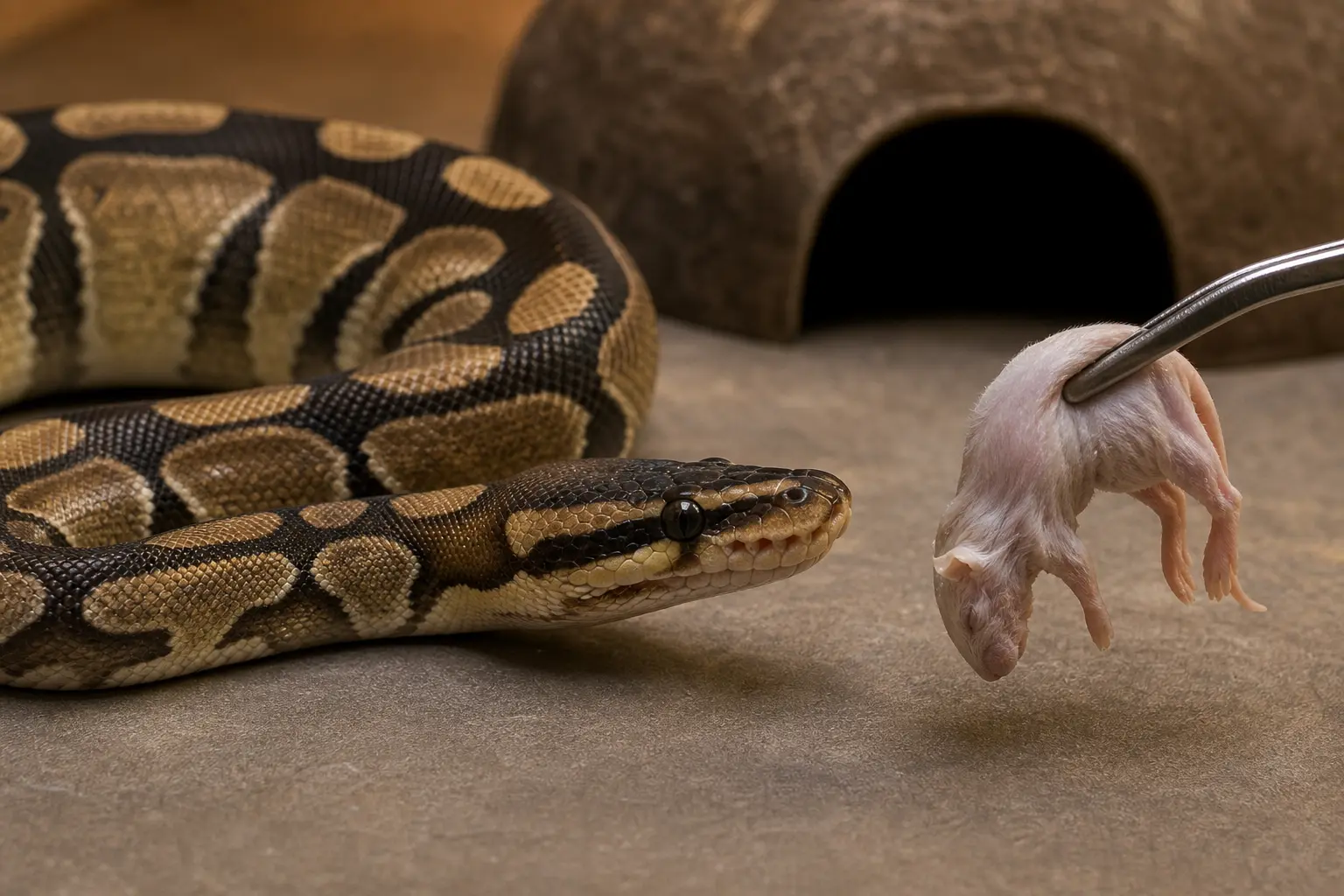
Adult ball python calmly watching an appropriately sized thawed feeder rodent presented with long feeding tongs.

The short answer

Use thawed prey, size it carefully, and protect digestion for ball pythons

Feed a ball python appropriately sized frozen-then-fully-thawed prey. Present it with long tongs, monitor the swallow, and leave the snake undisturbed for at least 48 hours.

Adult home
RVC absolute minimum 120 × 60 × 60 cm (48 × 24 × 24 in) for an adult, with room to stretch and dense cover
Warm zone
Warm basking zone 30–32°C (86–90°F)
Cool and night
Cool end 24–26°C (75–79°F); Visible lights off; thermostat-controlled non-light heat keeps the enclosure near or above 24°C (75°F)
Humidity
About 50–60% with brief boosts toward 80%, then a drop between misting; preserve ventilation
UVB
A reptile UVB tube over the warm end, chosen by the maker's distance guidance, with a light-to-zero-shade gradient and a 12-hour day
Food
Appropriately sized frozen-then-fully-thawed rodents; occasional reviewed prey variety may be used

The honest fit

Would the adult routine work in your home?

Do this

  • Use appropriately sized frozen-thawed prey and record each meal.
  • Remove rejected thawed prey promptly and clean the feeding tools.
  • Keep fresh water and monitor ball python behavior every day.
  • Record changes so a reptile veterinarian receives useful evidence.

Avoid this

  • Do not make one treat or feeder the entire diet.
  • Do not offer live prey or refreeze a thawed meal.
  • Do not copy another reptile species' setup.
  • Do not treat a persistent health change as a shopping problem.
01

Choose safe captive prey

For a ball python, build meals around appropriately sized frozen-then-fully-thawed rodents presented with long feeding tongs inside the secure enclosure. The RSPCA suggests prey slightly wider than the widest part of the snake and notes that occasional quail can add reviewed variety.

Buy prey from a reputable specialist supplier, keep it frozen until needed, thaw it completely and safely away from human food, and never microwave it. Do not offer live prey because it can injure the snake.

Adult ball python emerging calmly from a snug cork hide in a furnished ground-level enclosure with a second retreat behind it.
02

Present the meal safely

Use long tongs inside the secure enclosure and keep substrate away from the feeding surface. Watch until the prey is swallowed, then restore quiet cover without handling the snake.

Wash hands after handling prey and before touching enclosure locks or water equipment. Keep snake tools, prey storage, and disinfecting supplies separate from human food-preparation items.

Adult ball python calmly watching an appropriately sized thawed feeder rodent held safely at a distance with stainless feeding tongs.
03

Read appetite in context

Track weight, body condition, droppings, feeding dates, prey sizes, and any regurgitation. Ball pythons sometimes fast, but a setup problem, stress, illness, or an unsuitable meal can look like preference.

Call a reptile veterinarian for sudden refusal with weight loss, repeated regurgitation, swelling, abnormal droppings, breathing changes, mouth discharge, or weakness. Do not force-feed without veterinary direction.

Keep deciding

See the complete care picture

Sources and further reading