Do this
- Use the exact species diet and a reviewed supplement plan.
- Remove spoilable food and uneaten insects promptly.
- Keep fresh water and monitor leopard gecko behavior every day.
- Record changes so a reptile veterinarian receives useful evidence.
Leopard gecko · Daily diet
Varied appropriately sized live invertebrates, gut-loaded and supplemented to a reviewed plan.
The right menu must fit the gecko's age and body condition while delivering balanced nutrition safely.
Use the practical checks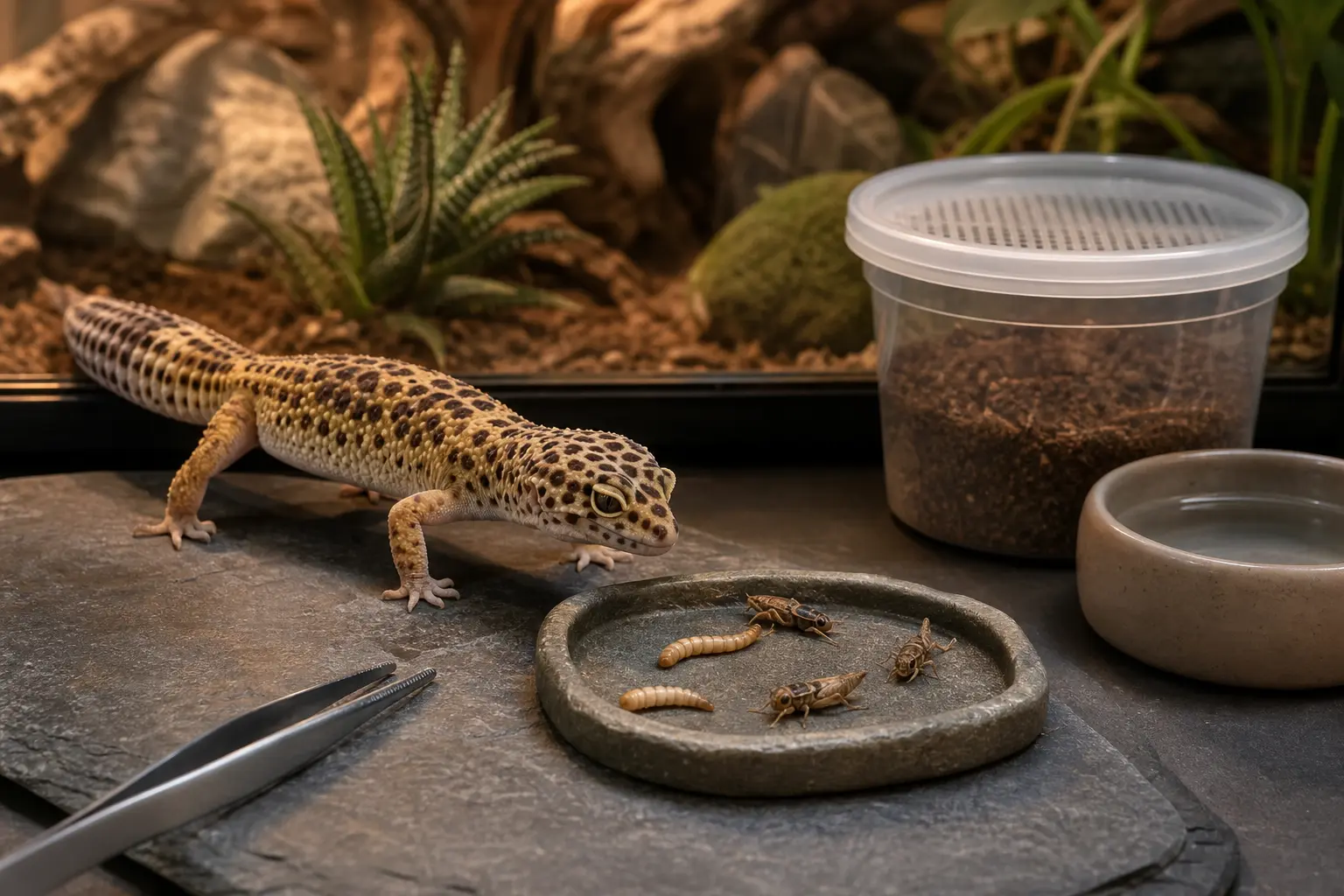
Put it into practice
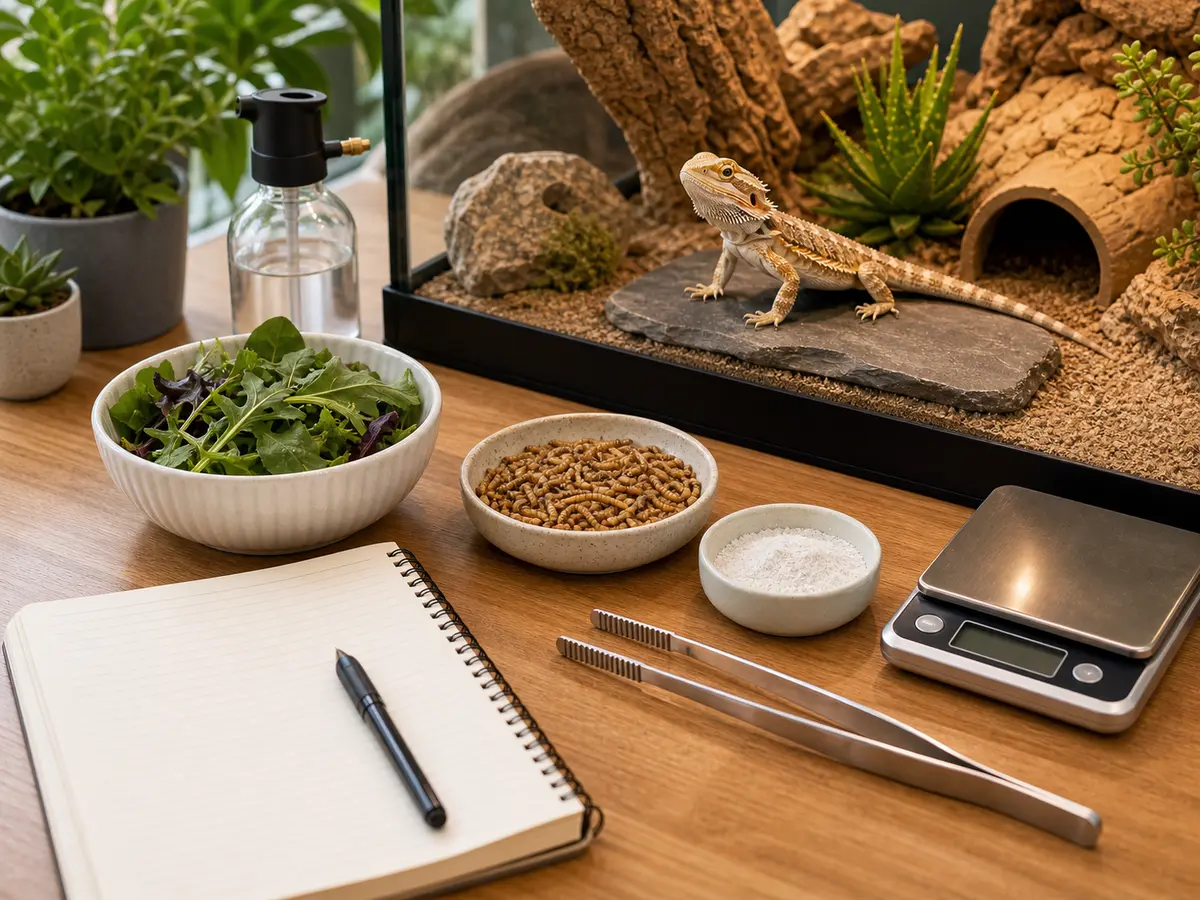
For a leopard gecko, build meals around varied appropriately sized live invertebrates that are gut-loaded and supplemented to a reviewed plan. Portion food for the gecko in front of you rather than treating treats or one favored feeder as the whole diet.
Follow the formulated-food or supplement instructions carefully. Vitamin and mineral products can be overdosed, so do not stack powders or add extra vitamin D without a reviewed plan.
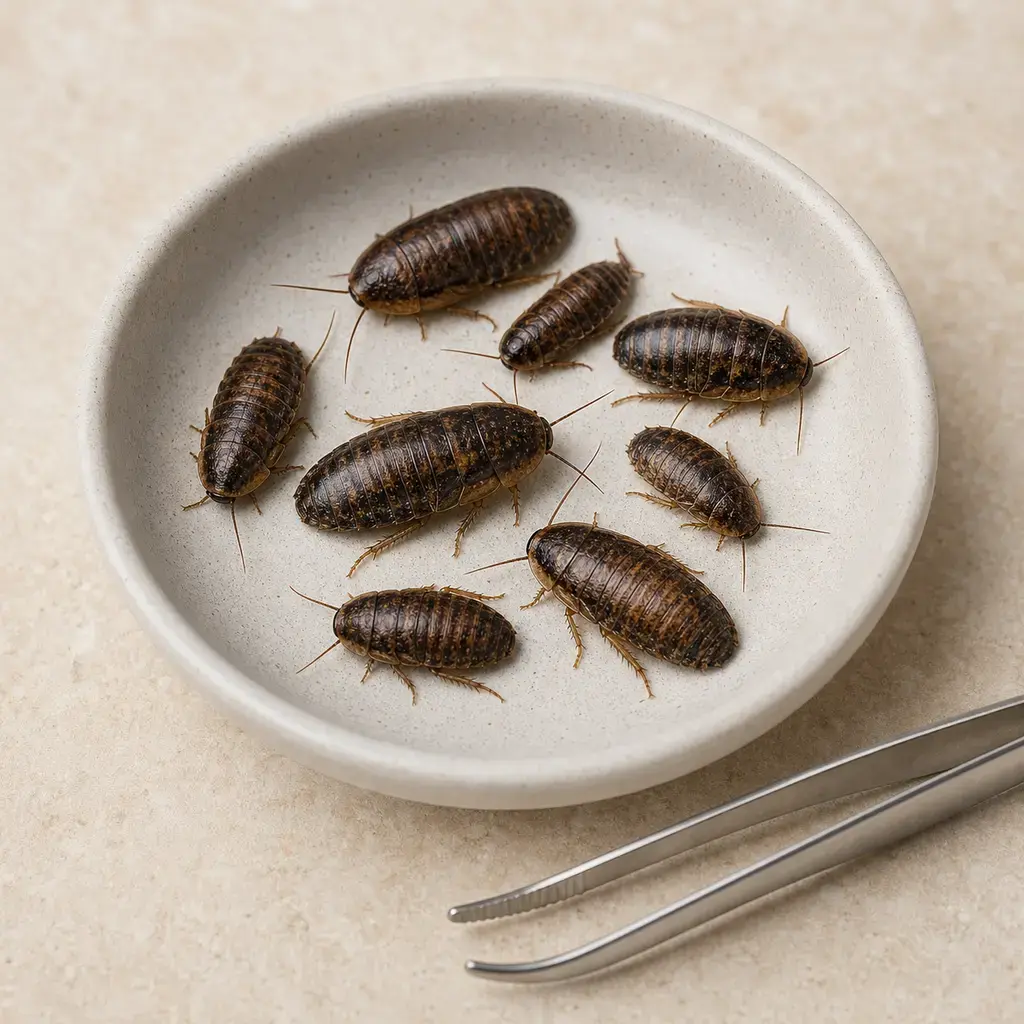
When feeding insects to a leopard gecko, buy captive-bred species, keep them well fed and hydrated, gut-load them before use, and offer prey the gecko can safely take.
Dust immediately before feeding according to the reviewed schedule. Remove uneaten live insects promptly because they can hide, stress, or bite a resting gecko.
Serve fresh food in a clean dish, replace water daily, and wash hands and tools afterward. Keep reptile equipment away from human food-preparation areas.
Track body weight, body condition, droppings, appetite, and activity together. A sudden appetite change with weight loss, weakness, abnormal stool, swelling, or poor temperatures needs more than a different flavor or feeder.
Optional tools for this feeding routine. Use suitable equipment you already own; confirm the species' diet before buying food or supplements.
Affiliate links: Furball Cove may earn from qualifying purchases at no extra cost to you.
A smooth-sided insert helps contain suitable feeder insects and simplifies removal.
Species-matched · Optional feeding supportAmazon search: compare specifications and sellers; results are not individually vetted.Compare options on AmazonA gentler dedicated tong can help present food without sharp metal at the mouth.
Species-matched · Optional feeding supportAmazon search: compare specifications and sellers; results are not individually vetted.Compare options on Amazon