Painted turtle · Daily diet

What should I feed a painted turtle?

Feed a painted turtle a varied omnivorous menu of quality aquatic-turtle food, safe plants, and appropriate prepared animal foods. Remove leftovers before they spoil the water.

Variety changes with age, but clean preparation, calcium planning, and water-quality protection stay constant.

Use the practical checks
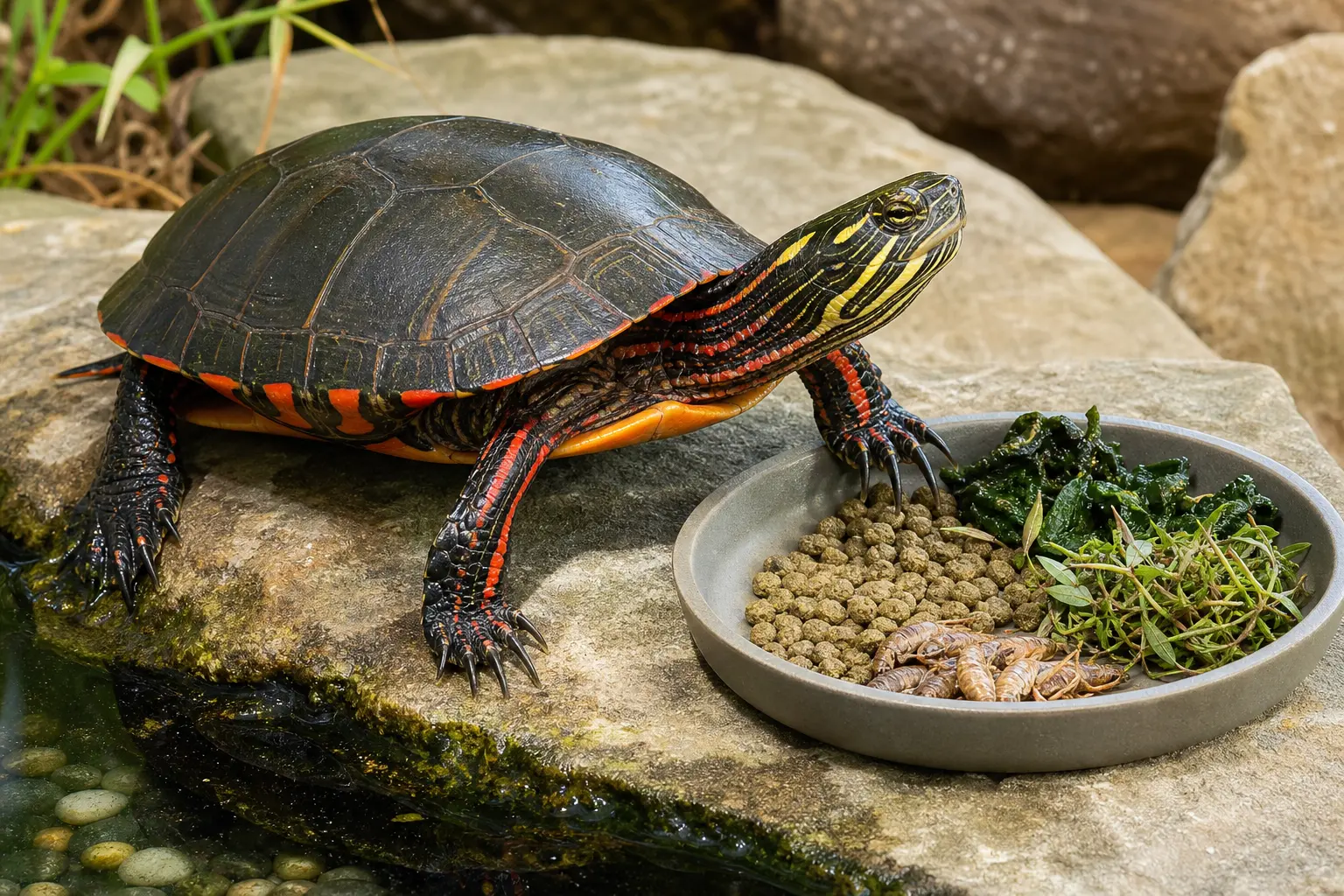
Adult painted turtle with a smooth dark shell, red-orange edges, and striped head approaching a varied species-appropriate measured meal prepared on a clean feeding surface.

The short answer

Use a varied aquatic menu and remove every leftover for painted turtles

Feed a painted turtle a varied omnivorous menu of quality aquatic-turtle food, safe plants, and appropriate prepared animal foods. Remove leftovers before they spoil the water.

Adult home
At least 300–450 L (80–120 US gal) for one adult, sized to the individual, with deep open water and a fully dry dock
Warm zone
Completely dry shell-sized basking platform around 32–35°C (90–95°F)
Cool and night
Clean filtered water around 23–26°C (73–79°F), adjusted for age and season; All visible lights off; maintain safe water temperature with guarded controlled equipment
Humidity
Clean tested water plus open ventilation above the tank so the shell dries completely while basking
UVB
Measured moderate UVB across the whole dry dock, with aquatic shade and product-specific distance guidance
Food
Quality aquatic-turtle pellets, safe aquatic and leafy plants, and varied appropriate invertebrate or whole animal foods

The honest fit

Would the adult routine work in your home?

Do this

  • Use the exact species diet and a reviewed supplement plan.
  • Remove spoilable food and wilted food and rejected prey promptly.
  • Keep fresh water and monitor painted turtle behavior every day.
  • Record changes so a reptile veterinarian receives useful evidence.
Avoid this

  • Do not make one fruit, vegetable, or protein item the entire diet.
  • Do not combine supplements without checking the instructions.
  • Do not copy another reptile species' setup.
  • Do not treat a persistent health change as a shopping problem.
01

Build a varied base

For a painted turtle, build meals around quality aquatic-turtle pellets, safe aquatic and leafy plants, and varied appropriate invertebrate or whole animal foods. RSPCA guidance combines a quality terrapin food with safe plants and appropriately prepared freshwater fish and invertebrates.

Juveniles tend to take more animal matter while adults eat more plants. Use an exact-species plan and reptile-veterinary guidance rather than making dried shrimp or one favorite food the whole diet.

Adult painted turtle basking above a pond with its complete smooth dark shell, vivid red-orange shell margins and legs, striped head, and long claws in view.
02

Prepare and present it safely

Thaw frozen animal foods completely and bring them to an appropriate temperature. Use safe captive or commercial sources rather than wild-caught prey that may carry contaminants or parasites. Ask your veterinarian if you are unsure whether a food is appropriate.

Remove uneaten food with a net after the meal. Keep turtle food, nets, bowls, and tank-water tools separate from human food areas, then wash hands with soap and running water.

Alert adult painted turtle basking fully dry above clean deep water with its smooth dark shell, red-orange margins and legs, and striped head in view.
03

Coordinate calcium, UVB, and growth

A reviewed calcium source and supplement plan must be considered with measured UVB. Do not stack vitamin products or assume extra dietary vitamin D repairs weak lighting.

Track weight, shell growth, appetite, stool, eyes, swimming, and basking. A soft or uneven shell, swollen eyes, weakness, abnormal floating, or continuing refusal needs reptile-veterinary advice.

Sources and further reading

Useful tools for this feeding routine

Three optional picks matched to this species' feeding style. Confirm foods and supplements in the exact care plan before buying.

Affiliate links: Furball Cove may earn from qualifying purchases at no extra cost to you.

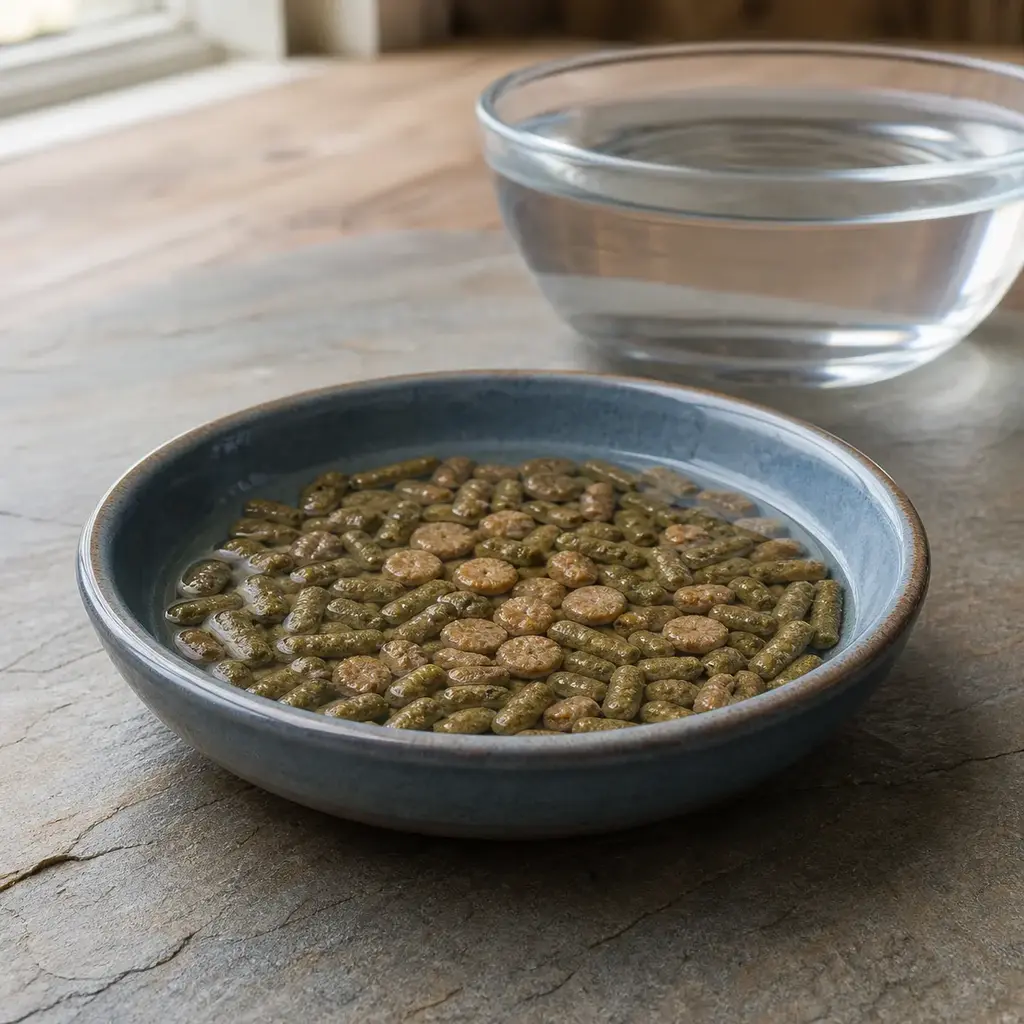
Aquatic turtle diet pellets in a measured feeding scoop beside a water-safe dish.

Aquatic turtle diet pellets

Start with a reputable pellet made for the exact aquatic turtle and life stage.

Check current options
Long stainless reptile feeding tongs beside an empty stone feeding dish.

Stainless reptile feeding tongs

Keep fingers clear and use a dedicated tool for insects, prey, or cleanup.

Check current options
Long reptile feeding tongs staged beside a clean feeding dish.

Soft-tip feeding tongs

A gentler dedicated tong can help present food without sharp metal at the mouth.

Check current options