

Do this
- Use adult dimensions before choosing furniture.
- Place secure cover across warm, cool, bright, and shaded zones.
- Keep fresh water and monitor crested gecko behavior every day.
- Record changes so a reptile veterinarian receives useful evidence.
Crested gecko · Adult enclosure
At least 45 × 45 × 60 cm (18 × 18 × 24 in) for one adult. Larger furnished height is welcome.
Routes, retreats, climate choices, and daily maintenance turn an enclosure into a dependable home for a crested gecko.
Use the practical checks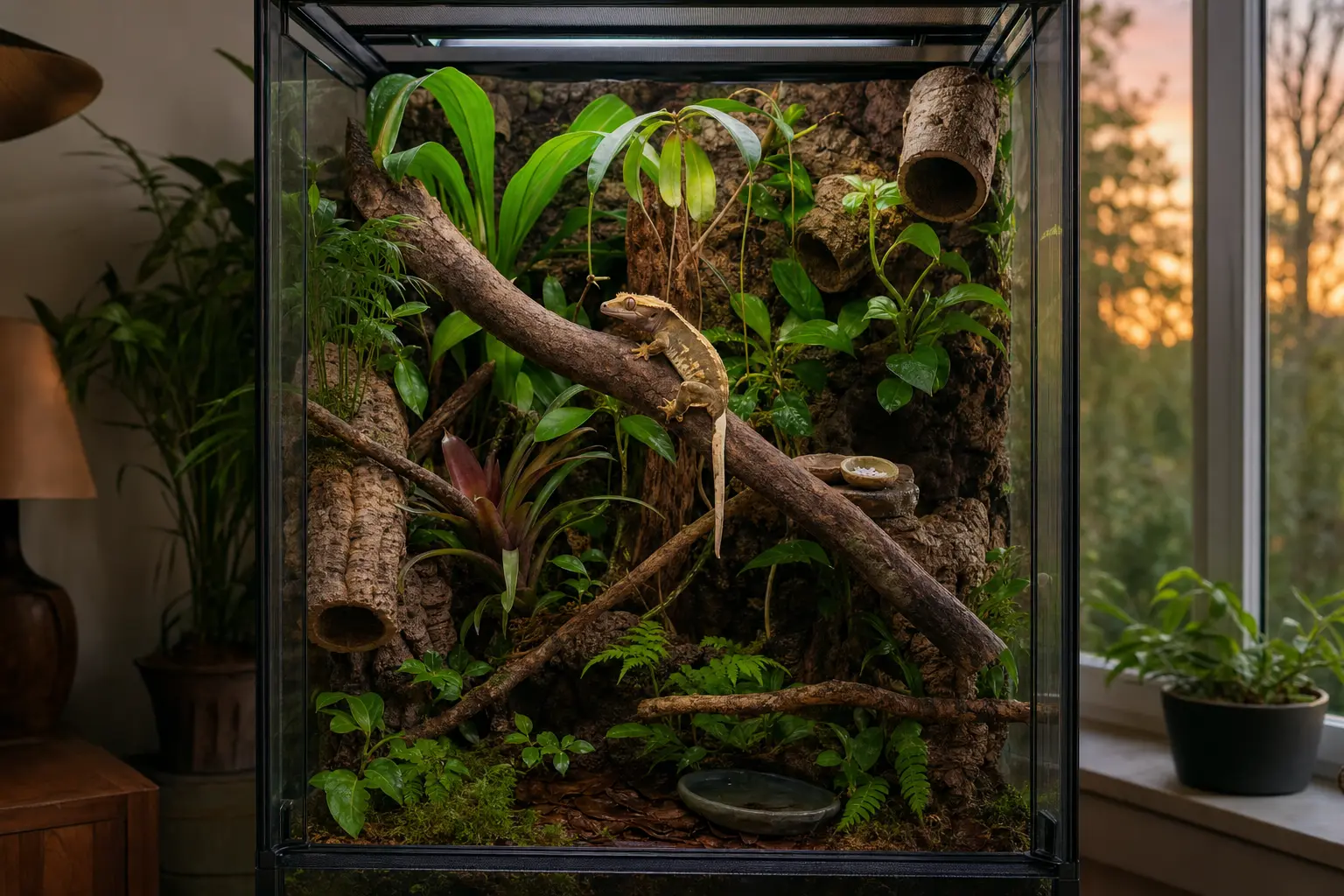
Put it into practice
Treat the crested gecko adult minimum shown above as the starting point, not a target to squeeze beneath. Extra room lets a crested gecko move among warm, cool, bright, shaded, dry, and humid choices.
Set the finished enclosure in its permanent location, away from direct sun and household heat. Run it for at least a week before move-in so readings can be corrected without the gecko inside.
A good crested gecko home is a tall, ventilated canopy with sturdy connected branches, cork retreats, broad leafy cover, a raised feeding ledge, and room to jump. Retreats must continue across the temperature gradient so choosing a safe temperature never means giving up cover.
Secure heavy furnishings, remove narrow traps, and make doors and ventilation escape-proof. Water, feeding access, and spot-cleaning points should remain reachable without dismantling the animal's safest retreat.
Record warm and cool readings, humidity, lighting time, water condition, locks, and waste during a normal week. A beautiful layout is not finished until those checks stay dependable.
Keep one gecko per enclosure. Solitary housing lets you track feeding, droppings, weight, shedding, and daily behavior without another animal competing for cover or food.
Optional equipment matched to this enclosure topic. Start with adult dimensions and species-specific heat, UVB, humidity, and security requirements.
Affiliate links: Furball Cove may earn from qualifying purchases at no extra cost to you.
Keep deciding